
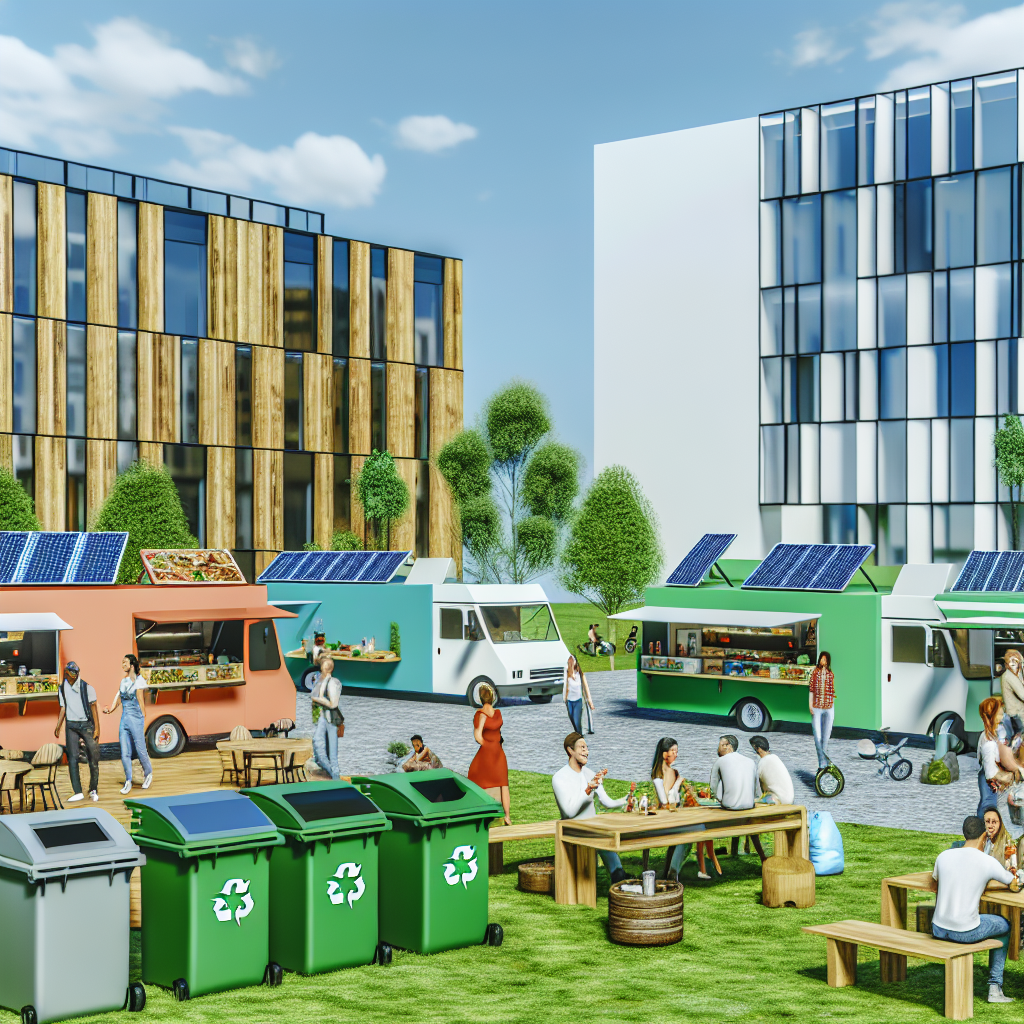
In the lively world of food trucks, where creativity meets business, there is a growing focus on sustainability. This shift is represented by ‘Trucks for Change’, a program that promotes environmental responsibility and encourages food truck owners to make a real impact in their communities.
As food trucks win over urban diners, attention is shifting to their sustainable practices. They are now using eco-friendly materials and working to reduce food waste. The food truck sector is leading exciting sustainability efforts that are changing the food landscape.
Join us as we see how ‘Trucks for Change’ and similar initiatives are helping to make the food service industry greener and more responsible, one delicious meal at a time!
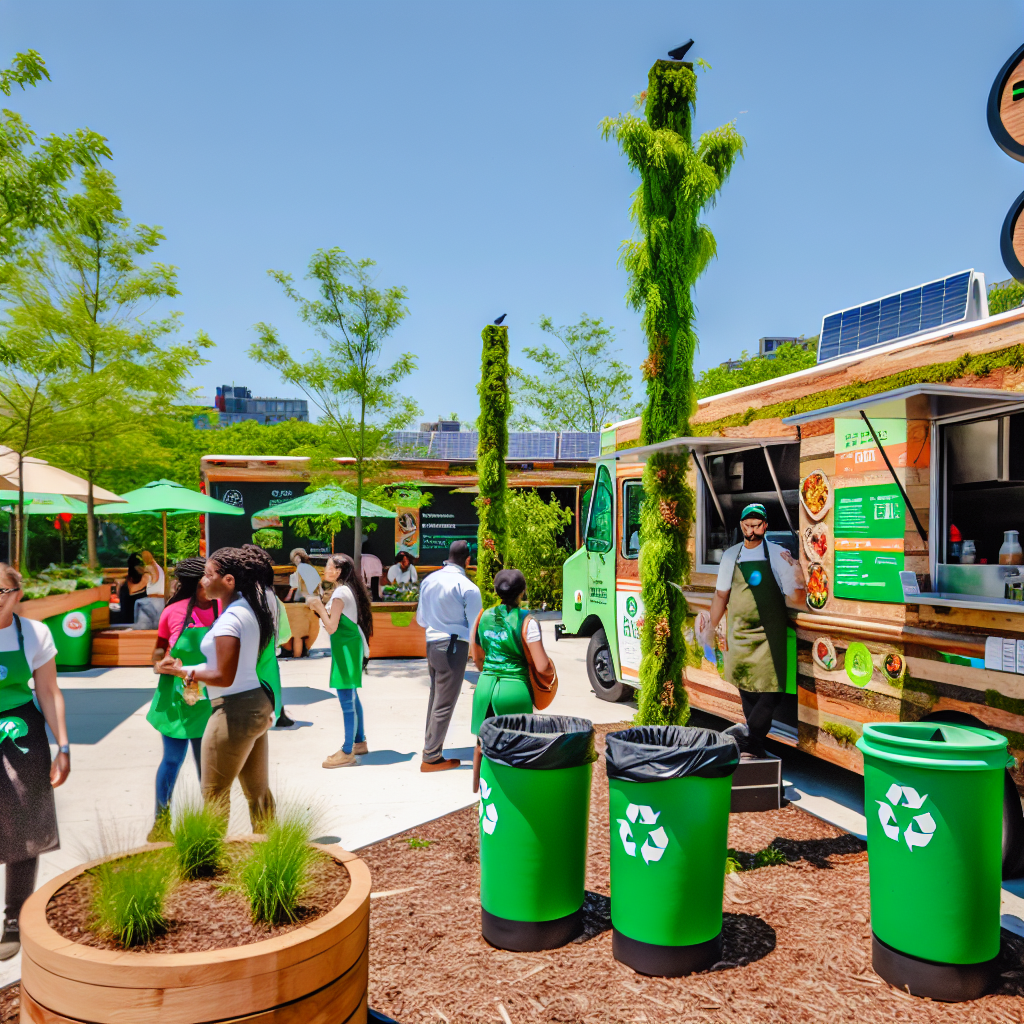
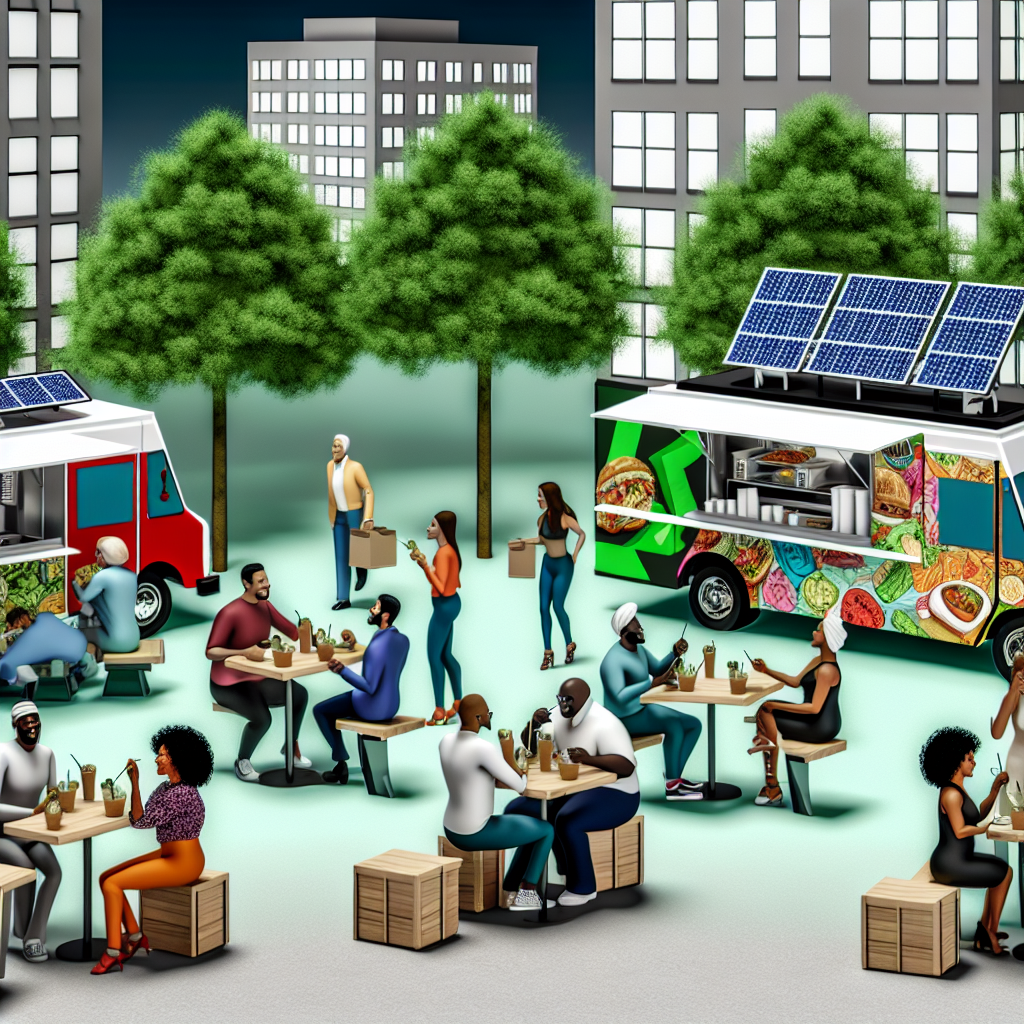
Image showing food trucks in an urban setting practicing sustainability. They serve food in compostable containers and utilize solar panels, showcasing eco-friendly practices in a vibrant community atmosphere.
Trucks for Change Initiatives
Trucks for Change stands at the forefront of community engagement in the transportation sector, demonstrating a strong commitment to social responsibility through collaborations with organizations like Habitat for Humanity. This partnership has not only provided vital support for housing initiatives but has also inspired a culture of volunteerism among industry professionals.
One of the most impactful examples of this collaboration occurred in 2018, when Trucks for Change organized multiple Team Build days with Habitat for Humanity in Waterloo Region. During these engaging events, 35 volunteers from various partner organizations dedicated a remarkable 246 hours of hands-on labor to constructing homes for families in need. In addition to their physical work, these volunteers raised an impressive $10,000, underscoring their commitment to making a meaningful difference in their communities.
Trucks for Change also plays a pivotal role in mobilizing resources within the transportation industry. By leveraging its extensive network, the organization facilitates the donation of crucial services—including the transportation of building materials—to various Habitat for Humanity projects. This logistical support not only lowers costs but also enhances the efficiency of home construction efforts, allowing for faster progress on affordable housing initiatives.
The positive effects of these partnerships extend far beyond the construction sites. The collaborative efforts led by Trucks for Change have transformed local communities by providing families with safe, stable homes. Such initiatives exemplify how trucking and logistics professionals can contribute to social solutions, reinforcing the emotional connections fostered through direct community involvement.
Overall, Trucks for Change’s collaboration with Habitat for Humanity highlights the profound impact industry partnerships can have on addressing social challenges while promoting volunteer engagement and collaborative support within the transportation sector.
Sustainable Practices in Mobile Food Truck Businesses
The mobile food truck industry is increasingly adopting sustainable practices, which aligns with a broader trend within the entire food sector. This transformation is characterized by a commitment to reducing environmental impacts through eco-friendly materials and strategic waste management, demonstrating a proactive approach to sustainability that resonates with consumer demand.
Adoption of Eco-Friendly Materials
A significant trend among food trucks is the transition to sustainable packaging and service materials:
- Biodegradable Packaging: Approximately 60% of food trucks are now using biodegradable packaging, which helps minimize plastic waste.
- Compostable Serving Ware: Around 45% have moved to biodegradable or compostable serving ware.
- Reusable Utensils: About 38% utilize reusable or compostable utensils to address the issue of single-use plastics. This shift in material choice reflects an industry-wide effort towards reducing the ecological footprint of mobile food businesses.
Food Waste Reduction Strategies
Food trucks are also adopting innovative waste management practices to minimize food waste:
- Composting Systems: Around 45% have implemented composting systems for organic waste, turning potential waste into valuable compost.
- Zero-Waste Policies: About 25% are adopting zero-waste policies, aiming to send as little to landfills as possible.
- Food Waste Reduction Programs: Approximately 33% actively participate in food waste reduction initiatives, collaborating with local organizations to repurpose surplus food. These strategies contribute significantly to reducing waste and promoting sustainability in their operations.
Impact on Business Growth
The emphasis on sustainability is not merely a compliance measure; it positively influences food trucks’ market attractiveness and customer loyalty:
- Customer Preference: A notable 73% of food truck patrons report that eco-friendly practices elevate their dining experience.
- Increased Patronage: Food trucks that engage in zero-waste practices have experienced up to a 15% increase in customers, illustrating the tangible benefits of sustainability.
- Willingness to Pay Premium: An impressive 86% of consumers are willing to pay more for meals from sustainably operated trucks, indicating a clear market trend favoring eco-conscious brands.
These statistics highlight a critical synergy between sustainable practices and consumer preferences in the mobile food industry. As food trucks continue to adopt greener operations, the initiative aligns perfectly with ‘Trucks for Change’ and its community-focused mission, ultimately leading to a more responsible and environmentally-friendly business landscape.
| Sustainable Practice | Food Truck A | Food Truck B | Food Truck C |
|---|---|---|---|
| Waste Reduction | Composting 20% of waste | Implementing zero-waste | Recycling packaging |
| Sourcing Local Ingredients | 80% from local farms | 70% from local markets | 60% from local suppliers |
| Using Renewable Energy Sources | Solar panels installed | Biofuel vehicles | Electric generator |
| Eco-Friendly Packaging | 100% biodegradable | Relying on compostable | Reusable containers |
| Community Engagement | Volunteer events | Partnering with nonprofits | Hosting local workshops |
Testimonials and Quotes
To highlight the impact of Trucks for Change’s initiatives, we gathered testimonials and quotes from key figures involved in their projects. Betsy Sharples, the Executive Director of Trucks for Change, expressed, “Habitat for Humanity events are always popular and a highlight for our T4C partners. This initiative shows the trucking sector’s strong commitment to helping vulnerable Canadians in our communities.” This statement underlines the organization’s role in fostering community support through collaborative efforts.
Sharing the sentiment, Rob Voisin, Vice President at Habitat for Humanity Canada, acknowledged the contributions from Trucks for Change, stating, “The impact that Trucks For Change Network is having on our organization is significant from both financial and management resource perspectives.“
Moreover, the tangible benefits of these initiatives are evident in the statistics. In 2024 alone, Trucks for Change helped charities save over $150,000 in transportation costs, delivering over 2.5 million pounds of freight to food banks and charities across Canada. This assistance directly enhances the support these charities can offer to disadvantaged families.
Through sustained volunteer efforts, such as the 2,000 hours contributed over six years to building homes with Habitat for Humanity, T4C exemplifies how the trucking industry is deeply committed to community development. Current projects, such as the substantial housing development in Manitoba set to provide homes for 275 residents, showcase the ongoing impact of these collaborations.
Trucks for Change is not only transforming the logistics and construction landscape but also making vital strides in tackling food insecurity, ensuring that children receive necessary resources during critical times. Such testimonials reveal the profound dedication within the transportation sector to uplift communities in meaningful ways.
Community Impact of Sustainable Practices in Mobile Food and Truck Businesses
The adoption of sustainable practices in mobile food businesses transcends individual benefits and extends to the broader community, significantly enhancing public support, strengthening local ties, and fostering a culture of volunteerism. Initiatives like ‘Trucks for Change’ illustrate how these practices provide a platform for direct engagement with the community while promoting environmentally responsible behaviors.
Importance of Community Support
Community support plays a crucial role in the success of sustainable initiatives within the mobile food and truck industries. Engaging with the local population helps create a sense of belonging and responsibility, vital for the sustained success of eco-friendly practices.
Statistics indicate a deep connection between community and sustainability in this industry:
- Community Recycling Initiatives: Approximately 42% of food trucks actively participate in community recycling programs.
- Educational Programs: Around 62% engage in educational initiatives about sustainability, which not only informs consumers but also encourages them to adopt eco-friendly practices in their daily lives.
- Consumer Preferences: A staggering 80% of diners prefer to support food trucks that visibly demonstrate sustainable practices, which shows that community engagement can enhance customer loyalty.
Role of Volunteers
Volunteers are pivotal in propagating sustainable practices in mobile food businesses. Their efforts not only enrich community engagement but also amplify the impact of sustainability initiatives. For instance, according to ‘Trucks for Change’, volunteers have contributed over 2,000 hours of service, aiding various local projects, including home-building efforts with Habitat for Humanity.
Case Studies in Volunteer Engagement
- Neighborhood Festival: A local food truck sponsored a neighborhood festival, where behind-the-scenes preparations were shared via social media, leading to increased community interaction.
- Charity Drives: Participation in community charity initiatives has yielded high engagement rates, encouraging other businesses to follow suit.
- Zero-Waste Initiative: GreenBite became well-known as Portland’s first zero-waste food truck, offering incentives for sustainable customer practices and seeing a measurable increase in both revenue and customer loyalty.
Conclusion
Through collective efforts and active participation, mobile food businesses can create lasting positive change within their communities. By fostering volunteerism and maintaining a commitment to environmental responsibility, these businesses not only enhance their operations but also create meaningful connections that benefit everyone involved. The intersection of community support and sustainability in food trucking manifests as a potent catalyst for change, promising both ecological and social benefits.

Image depicting a diverse group of volunteers engaging in community service efforts related to sustainable practices in mobile food businesses.
By leaning into these strategies, mobile food and truck businesses can ensure their practices contribute positively to the communities they serve, solidifying their role as community pillars with a commitment to sustainability.
Conclusion
In conclusion, the adoption of sustainable practices within the mobile food and truck industry presents numerous benefits that resonate far beyond just the operational level. By prioritizing eco-friendly materials, implementing waste reduction strategies, and fostering community engagement, food trucks not only contribute to environmental preservation but also enhance customer loyalty and satisfaction. Initiatives like Trucks for Change illuminate the path toward a more sustainable future, demonstrating how partnerships and volunteer efforts can create a rippling effect of positive change in our communities.
As we collectively strive for a greener, more responsible food service industry, it is crucial for patrons and business owners alike to support organizations such as Trucks for Change. By participating in local sustainability initiatives, we can strengthen our communities and uphold values of responsibility and compassion. Together, let’s encourage mobile food businesses to embrace sustainable practices, ensuring that our culinary adventures leave a lasting, positive impact on the planet and future generations.
Growing up in a close-knit neighborhood, Maria always dreamed of sharing her family’s taco recipes with the world. With her food truck, Maria’s Tacos, she was able to turn that dream into a vibrant reality. However, it wasn’t until she became involved with the ‘Trucks for Change’ initiative that her professional journey became deeply intertwined with her commitment to community service and sustainability.
Participating in the ‘Trucks for Change’ initiative opened Maria’s eyes to the remarkable power of collaboration. She began volunteering her time and resources to assist Habitat for Humanity projects within her community. Each weekend, she would serve delicious tacos to hardworking volunteers, providing them nourishment while they built homes for families in need.
Maria recalls the sparkle in the eyes of the children who received new homes, realizing that her efforts were contributing to changing lives. Each taco she served was not only a meal but also a step toward creating a strong, supportive community. “I never realized how fulfilling it would be to use my food truck to give back,” she explains.
Additionally, embracing sustainable practices—such as using compostable containers and sourcing ingredients locally—enriched her business. Maria noted the growing number of loyal customers who appreciated her eco-friendly initiatives, with many expressing their support for her new approach. “Not only did I realize the environmental benefits, but I also found a sense of purpose that resonates with my customers,” she said.
Through ‘Trucks for Change’, Maria forged lasting friendships with fellow food truck owners and volunteers alike. Together, they shared stories, meals, and laughter, creating bonds rooted in a common mission of service. “It feels amazing to be part of something bigger than myself—a family of food truck owners who believe in giving back to society while doing what we love,” Maria reflected, her voice filled with emotion.
As she looks toward the future, Maria is hopeful. The lessons she has learned through her experiences have not only shaped her as a business owner but also as an active, compassionate member of her community. “Sustainability isn’t just about what we serve, but how we serve it. By prioritizing our community’s needs, we can create a brighter, more sustainable future together.”
In closing, Maria’s story exemplifies the profound emotional impact of participating in community initiatives like ‘Trucks for Change’. Her journey illustrates that by integrating sustainable practices into our food businesses, we create ripples of lasting positive change that extend far beyond our menus.
In the vibrant world of food trucks, where culinary innovation meets mobile entrepreneurship, a transformative shift toward sustainability is taking place. The movement is aptly embodied by Trucks for Change, an initiative that champions ecological responsibility and invites food truck operators to engage in meaningful action within their communities. As food trucks continue to capture the hearts—and palates—of urban diners, the spotlight is turning towards their sustainable operations. From adopting eco-friendly materials to minimizing food waste through strategic practices, the food truck industry—especially those involved with Trucks for Change—is at the forefront of exciting sustainability efforts that are reshaping the culinary landscape. Join us as we explore how Trucks for Change and similar initiatives are paving the way for a greener, more responsible food service industry—one delicious meal at a time!
Trucks for Change Initiatives
Trucks for Change stands at the forefront of community engagement in the transportation sector, demonstrating a strong commitment to social responsibility through collaborations with organizations like Habitat for Humanity. This partnership not only provides vital support for housing initiatives but also inspires a culture of volunteerism among industry professionals.
One impactful collaboration took place in 2018, when Trucks for Change organized multiple Team Build days with Habitat for Humanity in Waterloo Region. During these engaging events, 35 volunteers from various partner organizations dedicated a remarkable number of hours to constructing homes for families in need and raised impressive funds, underscoring their commitment to meaningful community impact.
The role of Trucks for Change extends to mobilizing resources within the transportation industry. Leveraging an extensive network allows the organization to donate crucial services—including the transportation of building materials—to various Habitat for Humanity projects. This logistical support enhances efficiency, supporting affordable housing initiatives in local areas.
Trucks for Change’s efforts transcend construction; they help transform local communities by providing families with safe homes. Such initiatives exemplify how trucking and logistics professionals contribute to broader social solutions, reinforcing the emotional connections fostered through direct community involvement.
Sustainable Practices in Mobile Food Truck Businesses
The mobile food truck industry is increasingly adopting sustainable practices. This transformation reflects a commitment to sustainability that resonates with consumers’ demands for eco-friendly business practices.
Adoption of Eco-Friendly Materials
A significant trend among food trucks is the transition to sustainable packaging and service materials:
- Biodegradable Packaging: A substantial percentage of food trucks now use biodegradable packaging to minimize plastic waste.
- Compostable Serving Ware: Many food trucks have moved to biodegradable or compostable serving ware, promoting sustainability through practice.
- Reusable Utensils: A growing number of trucks utilize reusable or compostable utensils, reflecting an industry-wide effort to reduce the ecological footprint of mobile food businesses.
Food Waste Reduction Strategies
Food trucks are adopting innovative waste management practices to minimize food waste:
- Composting Systems: A notable number have implemented composting systems for organic waste.
- Zero-Waste Policies: Many are adopting zero-waste strategies to limit landfills.
- Food Waste Reduction Programs: Numerous food trucks actively participate in initiatives with local organizations to repurpose surplus food, promoting sustainability in their operations.
Impact on Business Growth
Emphasizing sustainability positively influences food trucks’ market attractiveness and customer loyalty:
- Customer Preference: A substantial number of food truck patrons report that eco-friendly practices elevate their dining experience.
- Increased Patronage: Trucks engaging in zero-waste practices see customer increases, illustrating tangible benefits of sustainability.
- Willingness to Pay Premium: A large percentage of consumers are willing to pay more for meals from sustainably operated trucks, indicating a market trend favoring eco-conscious brands.
These statistics illustrate a crucial synergy between sustainable practices and consumer preferences in the mobile food industry. As food trucks and Trucks for Change together foster greener operations, they contribute to a more responsible business landscape.
Testimonials and Quotes
To highlight the impact of Trucks for Change initiatives, we gathered testimonials from key figures involved. Betsy Sharples, Executive Director of Trucks for Change, notes, “Habitat for Humanity events are always popular and a highlight for our T4C partners. This initiative reflects the trucking sector’s commitment to supporting vulnerable Canadian communities.”
Rob Voisin, Vice President at Habitat for Humanity Canada, acknowledges Trucks for Change contributions, stating, “The impact that Trucks For Change Network has on our organization is significant from both financial and management resource perspectives.”
Moreover, statistics confirm these benefits, with Trucks for Change helping charities save significant transportation costs, effectively delivering freight and aiding food banks across Canada.
Through sustained volunteer efforts, Trucks for Change exemplifies how the trucking industry is committed to community development. Current housing development projects extend this impact, showcasing collaborative success stories in social responsibility.
Community Impact of Sustainable Practices in Mobile Food and Truck Businesses
The adoption of sustainable practices in mobile food businesses significantly enhances public support and fosters community engagement. Initiatives like Trucks for Change provide a platform for direct engagement with communities while promoting responsible behaviors.
Importance of Community Support
Community support is crucial to the success of sustainable initiatives. Engaging with the local population creates a sense of belonging and responsibility vital for sustained operations.
Statistics show a deep connection between community and sustainability in this industry:
- Community Recycling Initiatives: Many food trucks participate in community recycling programs.
- Educational Programs: Numerous engage in educational initiatives about sustainability, which inform consumers and encourage daily eco-friendly practices.
- Consumer Preferences: A substantial number of diners prefer to support food trucks that show sustainable practices, indicating that community engagement fosters customer loyalty.
Conclusion
The adoption of sustainable practices within the mobile food and trucking industry presents numerous benefits broadening community impact and promoting eco-friendly initiatives. Trucks for Change exemplifies how partnerships can create positive change in society. By collectively striving for a greener, more responsible food service industry, it’s vital for patrons and businesses to support organizations like Trucks for Change through participation in local sustainability initiatives. Together, we can champion responsible practices in mobile food businesses, ensuring our culinary endeavors have a lasting, positive impact on the planet and future generations.
Supporting Studies on Sustainable Practices in Food Trucks
Several studies have underscored the growth of sustainable practices within the food truck industry. According to a report by Gitnux, 60% of food trucks now utilize biodegradable packaging to minimize plastic waste, and 45% have implemented composting systems for organic waste. Additionally, food trucks that use solar-powered equipment have reported energy cost reductions of up to 30%. You can find more detailed statistics and insights in the full report here: Sustainability In The Food Truck Industry Statistics
Another source from ZipDo highlights that 67% of food trucks are adopting at least one sustainability practice, with notable implementations including local sourcing and recycling initiatives. This shift indicates a growing recognition within the industry of the importance of eco-friendly operations: Sustainability In The Food Truck Industry Statistics
Additionally, Eco Guardian Inc. reports that a staggering 90% of consumers prefer vendors committed to sustainability, emphasizing that there’s a strong customer base willing to support environmentally responsible practices. Check out their findings: 2025 Food Truck Trends You Need to Know
These studies support the assertion that sustainability is not just a trend but a critical component of the modern food truck industry that aligns with consumer values and enhances business prospects.
Community Impact Statistics
The impact of sustainable practices within the food truck industry extends beyond business benefits; they significantly enhance community support and engagement. Current research indicates:
- 80% of consumers prefer to support food trucks that engage in eco-friendly practices, illustrating a clear demand for sustainability.
- Food trucks implementing sustainable initiatives have reported a 70% increase in positive community feedback, with customers appreciating their environmental responsibility.
- Participating in local events and sustainability efforts has led to a 40% increase in customer base for food trucks emphasizing sustainable practices.
- 30% of food trucks utilizing solar energy have seen a 30% reduction in operational costs, showcasing financial benefits alongside environmental responsibility.
- Approximately 67% of food trucks report that involving themselves in community projects enhances their brand loyalty.
These statistics highlight how engaging in sustainable practices not only improves a food truck’s operational performance but also solidifies its relationship with the community, making them integral to local development efforts.