
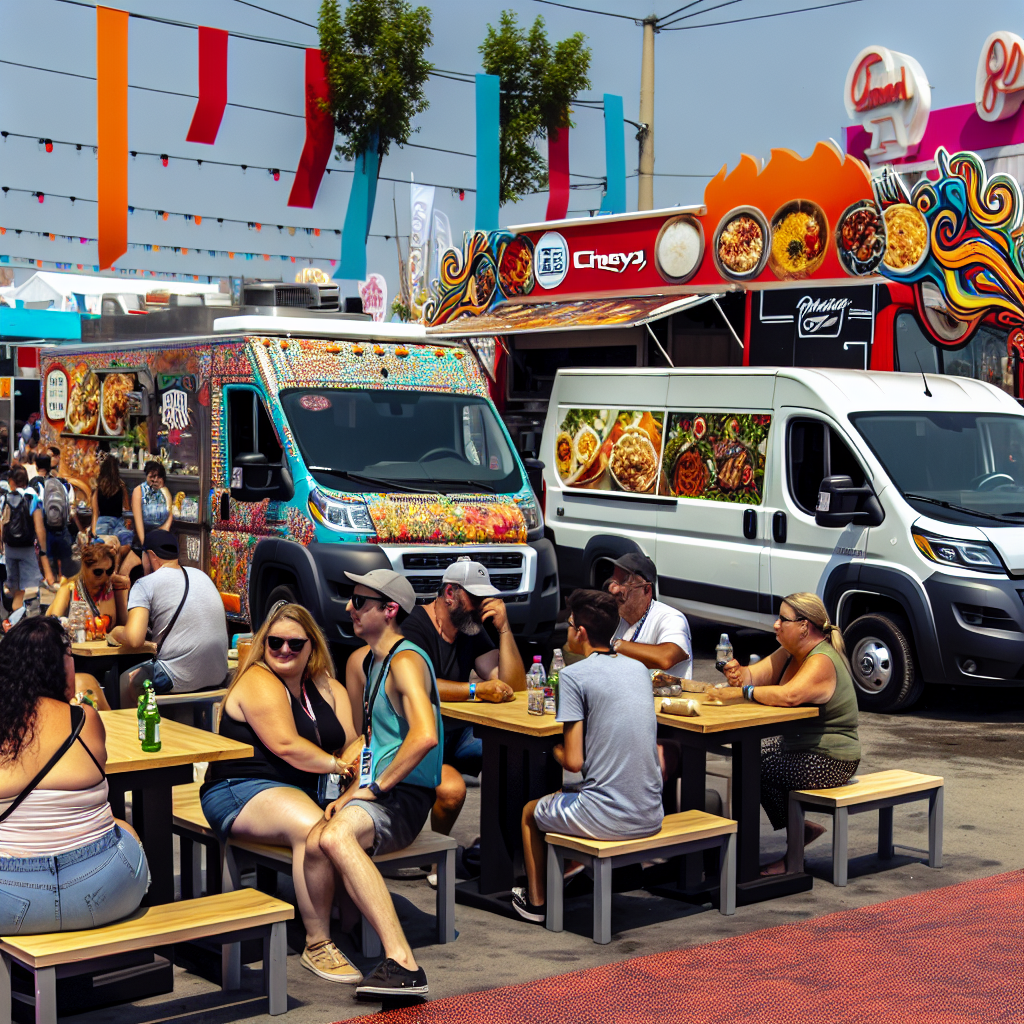
Choosing the right food truck model is a crucial step for aspiring food truck owners. This decision significantly impacts the menu offerings and has a direct correlation with the available budget. With the rise of the food truck trend, which saw about 36,000 food trucks operating in the U.S. by 2023, selecting a model that aligns with operational needs and financial capabilities is more important than ever.
As individuals strive to transform their culinary passion into a successful venture, they must navigate various factors that influence their choice of truck. These include the complexity of the menu, the required equipment, and storage needs. Additionally, the selected truck must cater to the demands of the intended market. A carefully thought-out selection process is essential, as it sets the groundwork for business functionality and profitability. This article aims to provide insight into the critical considerations when choosing a food truck model that suits both culinary creativity and budgetary constraints.
Key Considerations for Selecting a Food Truck Model
When selecting a food truck model, it’s essential to evaluate several key factors to ensure the success and efficiency of your mobile food business. Below are the primary considerations:
-
Budget and Financial Planning
The initial investment for a food truck varies widely, typically ranging from $30,000 to $200,000. This cost encompasses the vehicle purchase, equipment installation, and necessary modifications to meet health regulations. Beyond the initial outlay, ongoing expenses such as maintenance, fuel, insurance, and permit fees must be factored into your financial plan. For instance, monthly location fees can range from $500 to over $3,000, depending on the area and foot traffic. [Source]
-
Menu Complexity and Equipment Needs
The complexity of your menu directly influences the type and amount of equipment required, which in turn affects the size and layout of your food truck. A diverse menu may necessitate multiple cooking appliances, refrigeration units, and prep areas, leading to increased space requirements and higher costs. Conversely, a simplified menu can reduce equipment needs and streamline operations. As noted by industry experts, “Your menu determines the equipment you’ll have to have, as well as how much space you need for food prep and storage.” [Source]
-
Local Regulations and Permits
Compliance with local health codes, zoning laws, and mobile vending permits is crucial. Regulations can vary significantly by location, affecting aspects such as vehicle size, equipment standards, and operational zones. It’s essential to research and adhere to these requirements to avoid fines or operational disruptions. For example, some cities may impose specific size limitations on food trucks, impacting your choice of vehicle. [Source]
-
Space Requirements and Truck Dimensions
The size of your food truck should align with your menu offerings and operational needs. Larger trucks provide more kitchen space and storage but may face challenges with maneuverability and parking, especially in urban areas. Smaller trucks are easier to navigate but may limit menu options and crew size. An efficient kitchen layout is vital for workflow optimization, ensuring that prep stations, cooking equipment, and service windows are strategically placed to enhance service speed and staff comfort. [Source]
-
Mobility and Location Considerations
Your operational strategy—whether you plan to move locations frequently or remain stationary—affects the choice between a truck and a trailer. Trucks offer greater flexibility for daily relocations, while trailers might be better suited for semi-permanent spots or scheduled events. Additionally, consider the typical parking conditions and space availability in your target areas, as these factors will influence the practicality of your chosen vehicle size. [Source]
By carefully assessing these factors, you can select a food truck model that aligns with your business objectives, operational requirements, and budget constraints, setting the foundation for a successful mobile food venture.
Popular Food Truck Models
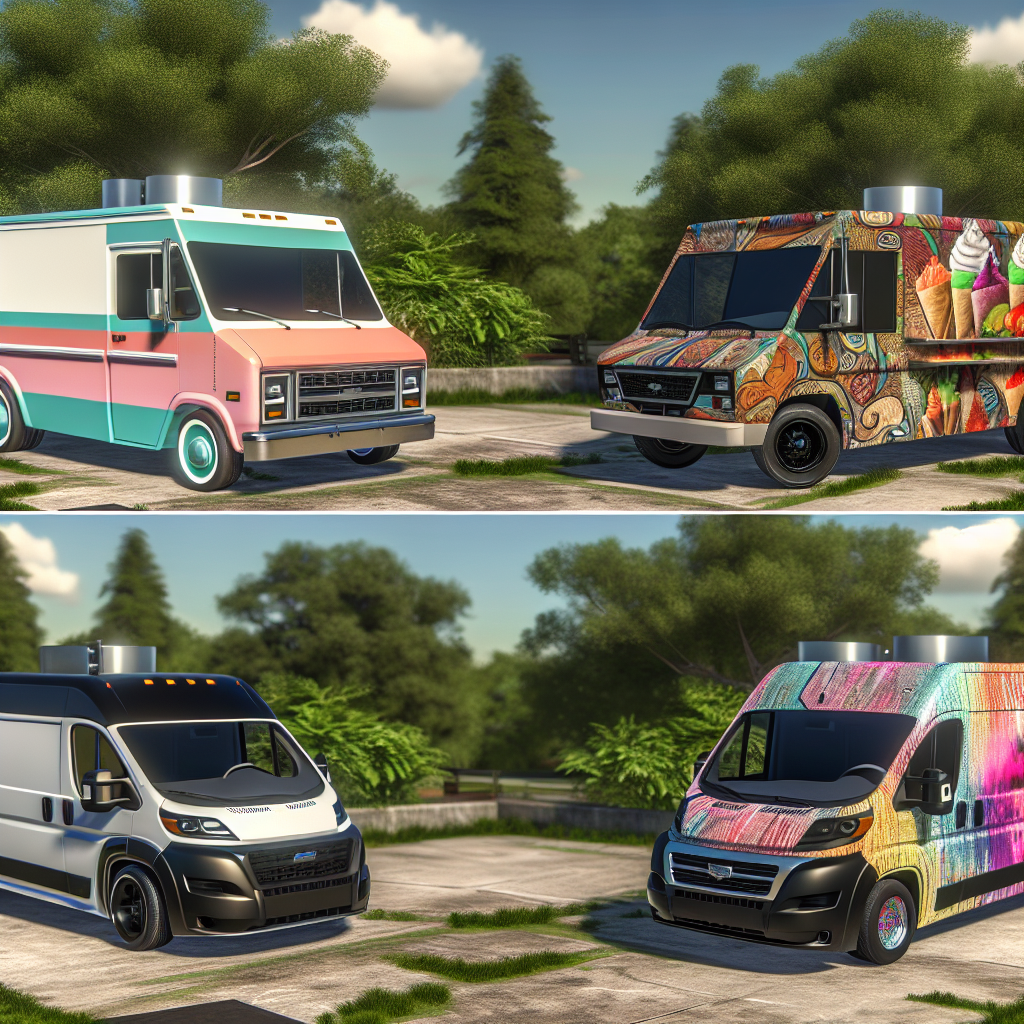
In the competitive food truck landscape, vendors often gravitate towards specific models that balance functionality, space, and reliability. Two of the most favored food truck models are the Chevy P30 and the Freightliner MT45. Each model has distinct advantages that align with different operational needs and budget constraints.
Chevy P30
The Chevy P30, though no longer in production since 1999, remains a top choice among food truck operators. Its spacious interior is designed to accommodate extensive kitchen equipment, making it ideal for varied menus. Moreover, its robust build is known to withstand the rigors of mobile food service. A key benefit of the P30 is its prevalence in the used vehicle market, providing affordable options for aspiring food truck owners. However, potential buyers should be aware that maintenance can be significant and fuel efficiency may not match that of newer models. Source
Freightliner MT45
On the other hand, the Freightliner MT45 is favored for its durability and high payload capacity, suited for heavy-duty kitchen setups. This model boosts extensive customization options, enabling operators to tailor their food truck to specific needs. The MT45 also features a powerful diesel engine, praised for long-lasting performance and efficiency. Users often report minimal issues, although some note the necessity for finding a qualified diesel mechanic, particularly in more rural areas. Source
Both the Chevy P30 and Freightliner MT45 are preferred by food truck vendors for their spacious interiors and durability. The decision between the two will largely depend on specific business requirements and financial capabilities.
| Food Truck Model | Cost Range | Engine Type | Capacity | Features |
|---|---|---|---|---|
| Chevy P30 | $10,000 – $30,000 (Used) | Gasoline | 10-15 people | Spacious interior, ideal for varied menus. Affordable options in the used market. |
| RAM ProMaster | $44,000 (New) | Gasoline/Diesel | 8-12 people | Good maneuverability, customizable interior, commonly used for various cuisines. |
| Ford Transit | $46,000 (New) | Gasoline/Diesel | Versatile design | Efficient fuel economy, widely popular among food truck owners. |
Budget Considerations for Purchasing a Food Truck
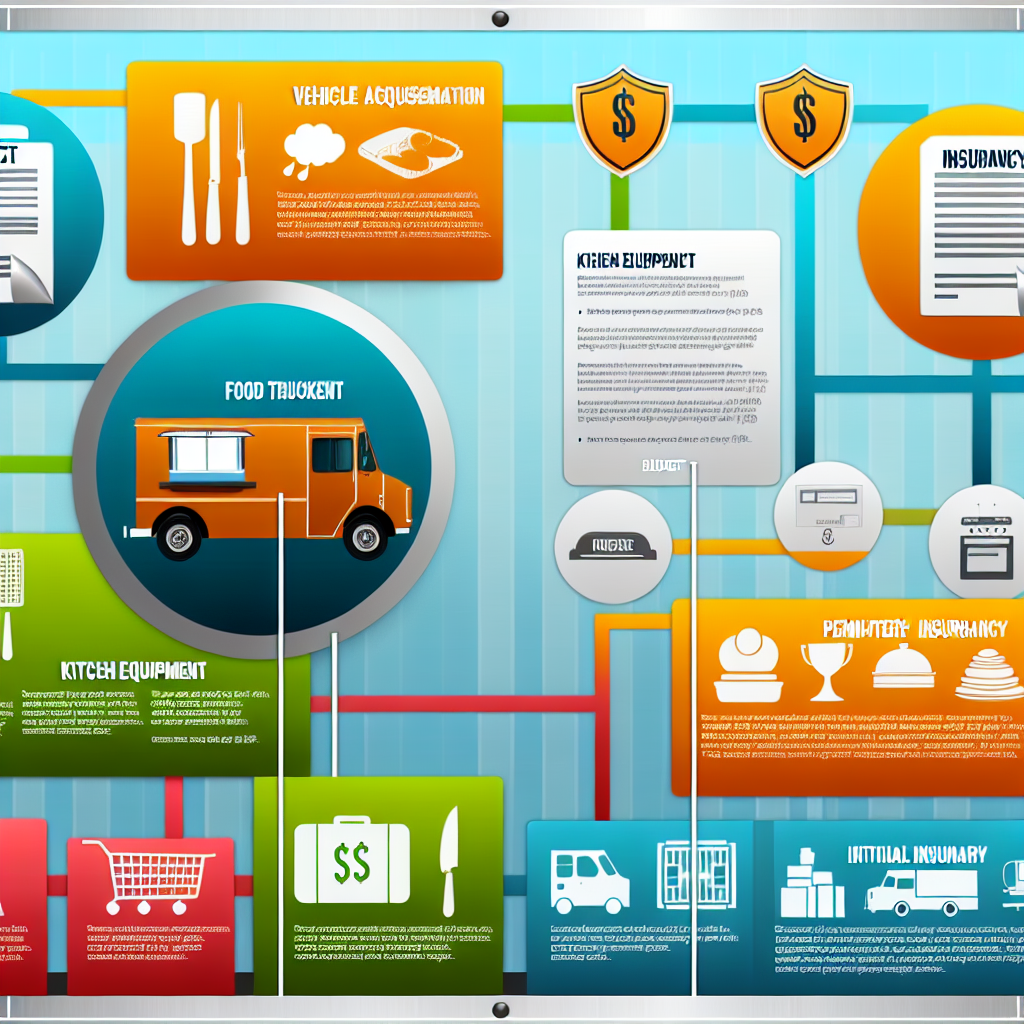
Starting a food truck business requires careful financial planning, taking into account both the initial costs involved in setting up the truck and the ongoing expenses associated with running it. Here’s a breakdown of these essential budget considerations:
Initial Costs
- Vehicle Acquisition and Customization
- Used Food Trucks: Prices for used food trucks start around $25,000 and can go up to $100,000 depending on the condition and age of the vehicle.
- New Custom-Built Trucks: For a new food truck, expect to pay anywhere between $60,000 and $120,000, depending on the equipment and specifications you opt for. [dojobusiness.com]
- Kitchen Equipment and Installation
This usually requires a budget of 15% to 25% of your total startup cost. Key equipment includes:
- Grill: $2,000 to $5,000
- Deep Fryer: $1,500 to $4,000
- Refrigerator or Freezer: $2,500 to $6,000
- Sinks and Plumbing: $1,200 to $3,500 [truckntasty.com]
- Permits and Licenses
Costs here can vary widely. On average, food truck permits can total about $1,864, but in cities like Boston, this could spike to $17,066. [fliprogram.com]
- Insurance
Expect to pay between $2,000 and $5,000 annually for commercial auto and liability insurance. [cart-king.com]
- Initial Inventory
Stocking up with ingredients and packaging supplies typically costs between $2,000 and $5,000. [truckntasty.com]
Total Estimated Startup Cost:
– Low Budget Build: $45,000 to $65,000
– Mid-Tier Build: $65,000 to $95,000
– Premium Build: $95,000 to $150,000 or more. [truckntasty.com]
Ongoing Expenses
- Food and Supplies:
Monthly costs for restocking food can range from $1,000 to $3,000, making up a significant percentage of operational expenses. [cloudwaitress.com]
- Labor Costs:
Hiring staff can be a substantial ongoing expense, with labor typically accounting for over 25% of total operating costs. This can translate to $6,000 to $12,000 per month for 2 to 3 employees. [fliprogram.com]
- Fuel and Maintenance:
Monthly fuel costs can vary from $500 to $1,000, while maintenance should be budgeted at around $500 to $1,000 for upkeep. [cloudwaitress.com]
- Parking and Commissary Fees:
These expenses can vary widely depending on location, with some food truck operators paying $500 to $2,000 per month. [cloudwaitress.com]
- Insurance:
Monthly insurance premiums can range from $500, reflecting the annual costs of $2,000 to $5,000. [cloudwaitress.com]
Conclusion
In total, monthly operating expenses typically range from $5,000 to $10,000 for a food truck, reflecting the inherent costs related to food, staff, maintenance, and fees. These figures can fluctuate based on specific market factors, including the region, complexity of the menu, and the business model. As with any business venture, conducting thorough research and careful financial planning is essential for success in food truck entrepreneurship.
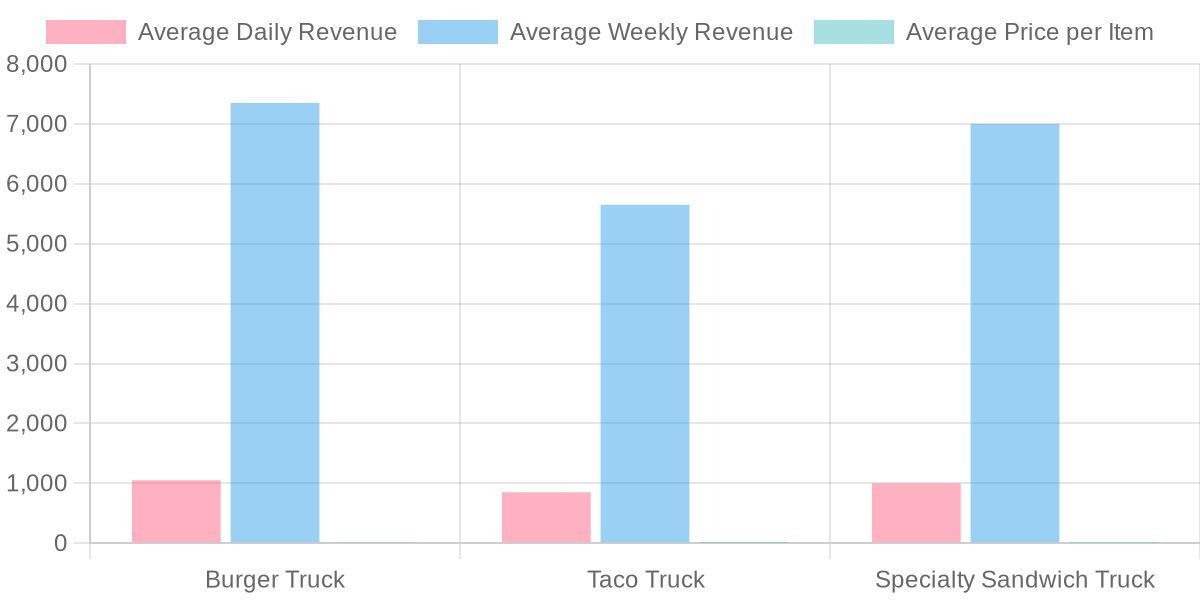
Food Truck Earnings Comparison
Conclusion
In summary, selecting the right food truck model is paramount to the success of your mobile culinary venture. The decision extends beyond mere aesthetics; it impacts operational efficiency, menu diversity, and overall business viability. Key considerations include your budget, which can vary substantially from initial purchase prices to ongoing maintenance fees, as well as your menu’s complexity that dictates the necessary equipment and space requirements. Choosing models such as the Chevy P30 or the Freightliner MT45 can further align your investment with specific operational needs.
Moreover, understanding local regulations and the practicality of your chosen truck’s dimensions will ensure that you can operate smoothly without unexpected setbacks. Ultimately, reinforcing the synergy between your food truck choice, menu offerings, and budget is essential in laying a solid foundation for your food truck business. By making informed decisions in these areas, you position yourself to navigate the challenges of the food truck industry, increasing your chances of achieving both culinary success and financial stability.
Frequently Asked Questions (FAQ)
Selecting the appropriate food truck model is crucial for the success of your mobile food business. Here are some common FAQs to guide you through the decision-making process:
-
What are the budget-friendly options for food truck models?
Budget considerations are paramount when choosing a food truck. Cargo vans, such as the Ford Transit and RAM ProMaster, are often more affordable than larger step vans. New cargo vans typically range from $25,000 to $50,000, while used models can be found for $10,000 to $25,000. Conversion costs vary based on the extent of customization, with basic modifications ranging from $10,000 to $40,000. Source -
How do space requirements influence the choice of a food truck model?
The size of your food truck should align with your menu complexity and operational needs. Larger trucks (18 to 30 feet) offer more kitchen space and storage, accommodating complex menus and larger staff. However, they may face maneuverability challenges in urban settings. Smaller trucks (10 to 14 feet) are easier to navigate and park but may limit menu options and crew size. Source -
What operational considerations should be taken into account when selecting a food truck model?
Operational efficiency is influenced by the truck’s layout and equipment. A well-designed kitchen layout enhances workflow, reducing bottlenecks and wait times. Additionally, consider the power supply options, such as onboard generators or external power sources, to ensure all equipment functions reliably. Source -
How does the choice of food truck model affect maintenance and operational costs?
The model you choose impacts both initial investment and ongoing expenses. For instance, step vans like the Chevy P30 are known for their durability but may have higher maintenance costs due to age. Conversely, newer models like the RAM ProMaster offer better fuel efficiency and lower maintenance costs but may have higher upfront prices. Source -
Are there specific models recommended for certain types of cuisine or service styles?
Yes, the choice of model can align with your menu and service style. For example, a Freightliner MT45 is suitable for equipment-heavy offerings like gourmet meals, while a RAM ProMaster is ideal for simpler menus such as sandwiches or desserts, especially in urban settings where maneuverability is key. Source -
What is the best food truck for a small budget?
When starting a food truck business with limited budget and space, selecting the right vehicle is crucial. Here are some compact and cost-effective food truck models to consider:- The Starter Compact (KN-FR250/300): An 8ft–10ft trailer ideal for solo entrepreneurs offering coffee, ice cream, or juice bars. Priced between $3,000–$6,000.
- Volkswagen Westfalia Bus: A budget-friendly option with surprising cooking space. Used models are available for under $15,000.
- RAM ProMaster: A versatile cargo van suitable for simpler menus. New models price between $44,960 and $62,585, while used options start around $10,000.
- Yituo Mobility Trailer: An 8′ x 6′ trailer priced between $18,000–$25,000, featuring an integrated kitchen layout.
- ETODEVICE 7ft Small Food Trailer: A compact, lightweight option designed for 1-2 operators, customizable and ideal for first-time entrepreneurs.
These models offer a balance between affordability and functionality, catering to various culinary ventures while accommodating space constraints.
Case Studies of Successful Food Trucks
1. Kogi BBQ
- Menu Offerings: Kogi BBQ, founded by Chef Roy Choi in Los Angeles, revolutionized the food truck industry by combining Korean and Mexican flavors to create unique fusion dishes like Korean BBQ tacos and kimchi quesadillas.
- Operational Strategies: Leverage social media platforms like Twitter to announce their locations and specials, building a loyal customer base and generating buzz around their brand.
- Challenges Faced: As pioneers in the fusion food truck scene, they initially struggled to introduce a novel concept to the market.
- Solutions Implemented: They overcame this by engaging directly with customers through social media, creating a sense of community and anticipation around their offerings.
- Anecdote: “I knew we had something special when a customer told us we changed their life with our tacos—those moments keep you going on tough days!”
2. The Halal Guys
- Menu Offerings: This food truck is known for their delicious halal street food, including gyro sandwiches and platters.
- Operational Strategies: They maintained a simple yet flavorful menu to ensure quick service and consistent quality, which helped build a strong brand identity.
- Challenges Faced: Facing intense competition in the food truck scene, they had to distinguish themselves.
- Solutions Implemented: The Halal Guys focused on high-quality food and efficient service, leading to a loyal customer base and eventual expansion into brick-and-mortar locations.
- Anecdote: “It’s amazing to see people from all walks of life enjoying our food—it’s a reminder of why we started this journey.”
3. Urban Eats Food Truck
- Menu Offerings: Urban Eats offers a carefully curated menu balancing culinary diversity with operational efficiency, focusing on popular and easily prepared items.
- Operational Strategies: Utilizes a single vehicle to operate at various high-traffic locations, maximizing customer exposure and sales opportunities.
- Challenges Faced: They faced reliance on a single vehicle and limited geographic reach.
- Solutions Implemented: Urban Eats addressed these challenges by exploring new locations and regularly updating their menu to keep offerings fresh and appealing.
- Anecdote: “Every location we park at is an opportunity to connect with new customers, making every day feel like an adventure.”
4. Vegan & Vegetarian Food Truck in California
- Menu Offerings: Specializes in traditional Indian vegan and vegetarian cuisine, catering to a niche market seeking plant-based options.
- Operational Strategies: Focused on revenue optimization and standardization of operations, including launching official catering services targeting local organizations and community events.
- Challenges Faced: They encountered limited marketing efforts and challenges in brand appeal.
- Solutions Implemented: The food truck overcame these by developing comprehensive implementation plans to improve operations and revamping branding and marketing tactics.
- Anecdote: “Each time we get positive feedback from a customer, it reaffirms our mission to show that vegan food can be delicious and satisfying!”
These stories illustrate resilience and the culinary passion behind each food truck, showcasing the unique journeys and challenges of their owners.
Choosing the right food truck model is a crucial step for aspiring food truck owners. This decision significantly impacts the menu offerings and has a direct correlation with the available budget. With the rise of the food truck trend, which saw about 36,000 food trucks operating in the U.S. by 2023, selecting a model that aligns with operational needs and financial capabilities is more important than ever.
As individuals strive to transform their culinary passion into a successful venture, they must navigate various factors that influence their choice of truck. These include the complexity of the menu, the required cooking equipment for food trucks, and storage needs. Additionally, the selected truck must cater to the demands of the intended market. A carefully thought-out selection process is essential, as it sets the groundwork for business functionality and profitability. This article aims to provide insight into the critical considerations when choosing a food truck model that suits both culinary creativity and budgetary constraints.
Factors to Consider When Choosing a Food Truck Model
When selecting a food truck model for your food truck business, it’s essential to evaluate several key factors to ensure the success and efficiency of your mobile food service. Below are the primary considerations:
- Budget and Financial Planning
The initial investment for a food truck varies widely, typically ranging from $30,000 to $200,000. This cost encompasses the vehicle purchase, cooking equipment installation, and necessary modifications to meet health regulations. Beyond the initial outlay, ongoing expenses such as maintenance, fuel, insurance, and permit fees must be factored into your financial plan. For instance, monthly location fees can range from $500 to over $3,000, depending on the area and foot traffic.
Source - Menu Complexity and Equipment Needs
The complexity of your menu directly influences the type and amount of cooking equipment for food trucks required, which in turn affects the size and layout of your food truck. A diverse menu may necessitate multiple cooking appliances, refrigeration units, and prep areas, leading to increased space requirements and higher costs. Conversely, a simplified menu can reduce equipment needs and streamline operations. As noted by industry experts, “Your menu determines the equipment you’ll have to have, as well as how much space you need for food prep and storage.”
Source - Local Regulations and Permits
Compliance with local health codes, zoning laws, and mobile vending permits is crucial. Regulations can vary significantly by location, affecting aspects such as vehicle size, cooking equipment standards, and operational zones. It’s essential to research and adhere to these requirements to avoid fines or operational disruptions. For example, some cities may impose specific size limitations on food trucks, impacting your choice of vehicle.
Source - Space Requirements and Truck Dimensions
The size of your food truck should align with your menu offerings and operational needs. Larger trucks provide more kitchen space and storage but may face challenges with maneuverability and parking, especially in urban areas. Smaller trucks are easier to navigate but may limit menu options and crew size. An efficient kitchen layout is vital for workflow optimization, ensuring that prep stations, cooking equipment, and service windows are strategically placed to enhance service speed and staff comfort.
Source - Mobility and Location Considerations
Your operational strategy—whether you plan to move locations frequently or remain stationary—affects the choice between a truck and a trailer. Trucks offer greater flexibility for daily relocations, while trailers might be better suited for semi-permanent spots or scheduled events. Additionally, consider the typical parking conditions and space availability in your target areas, as these factors will influence the practicality of your chosen vehicle size.
Source
By carefully assessing these factors, you can select a food truck model that aligns with your business objectives, operational requirements, and budget constraints, setting the foundation for a successful mobile food venture.
Frequently Asked Questions (FAQ)
Selecting the appropriate food truck model is crucial for the success of your mobile food service. Here are some common FAQs to guide you through the decision-making process:
- What are the budget-friendly options for food truck models?
Budget considerations are paramount when choosing a food truck. Cargo vans, such as the Ford Transit and RAM ProMaster, are often more affordable than larger step vans. New cargo vans typically range from $25,000 to $50,000, while used models can be found for $10,000 to $25,000. Conversion costs vary based on the extent of customization, with basic modifications ranging from $10,000 to $40,000.
Source - How do space requirements influence the choice of a food truck model?
The size of your food truck should align with your menu complexity and operational needs. Larger trucks (18 to 30 feet) offer more kitchen space and storage, accommodating complex menus and larger staff. However, they may face maneuverability challenges in urban settings. Smaller trucks (10 to 14 feet) are easier to navigate and park but may limit menu options and crew size.
Source - What operational considerations should be taken into account when selecting a food truck model?
Operational efficiency is influenced by the truck’s layout and equipment. A well-designed kitchen layout enhances workflow, reducing bottlenecks and wait times. Additionally, consider the power supply options, such as onboard generators or external power sources, to ensure all equipment functions reliably.
Source - How does the choice of food truck model affect maintenance and operational costs?
The model you choose impacts both initial investment and ongoing expenses. For instance, step vans like the Chevy P30 are known for their durability but may have higher maintenance costs due to age. Conversely, newer models like the RAM ProMaster offer better fuel efficiency and lower maintenance costs but may have higher upfront prices.
Source - Are there specific models recommended for certain types of cuisine or service styles?
Yes, the choice of model can align with your menu and service style. For example, a Freightliner MT45 is suitable for equipment-heavy offerings like gourmet meals, while a RAM ProMaster is ideal for simpler menus such as sandwiches or desserts, especially in urban settings where maneuverability is key.
Source
These insights emphasize the intricate balance required when launching a food truck business. By addressing key factors in the FAQ section, the article aims to help prospective food truck owners make informed decisions for a successful mobile food service operation.
Conclusion
In summary, selecting the right food truck model is paramount to the success of your mobile culinary venture. The decision extends beyond mere aesthetics; it impacts operational efficiency, menu diversity, and overall business viability. Key considerations include your budget, which can vary substantially from initial purchase prices to ongoing maintenance fees, as well as your menu’s complexity that dictates the necessary cooking equipment for food trucks and space requirements. Noteworthy models such as the Chevy P30 or the Freightliner MT45 can further align your investment with specific operational needs.
Moreover, understanding local regulations and the practicality of your chosen truck’s dimensions will ensure that you can operate smoothly without unexpected setbacks. Ultimately, reinforcing the synergy between your food truck choice, menu offerings, and budget is essential in laying a solid foundation for your food truck business. By making informed decisions in these areas, you position yourself to navigate the challenges of the food truck industry, increasing your chances of achieving both culinary success and financial stability.