
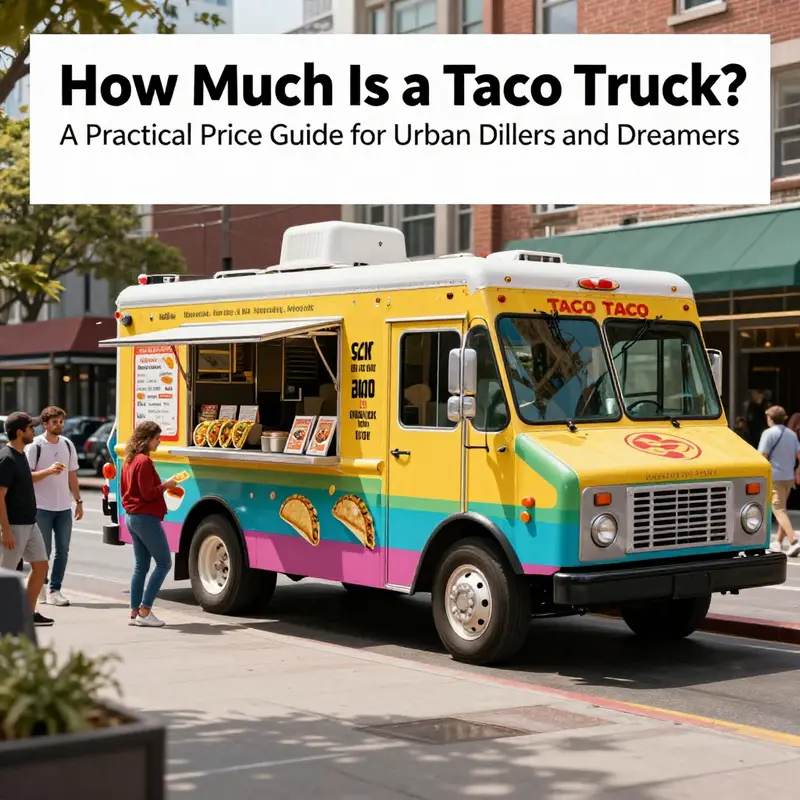
Whether you’re an urban commuter chasing a side hustle, an outdoor enthusiast eyeing pop-up opportunities, a small business owner testing a new concept, or a first-time buyer curious about mobile cooking, a taco truck is more than a vehicle—it’s a flexible, scalable kitchen on wheels. Price isn’t one number; it shifts with age, size, build quality, equipment, and customization. The spectrum runs from a lean, potentially sub-$2,000 trailer to fully equipped, modern trucks that can reach into the five-figure range for premium builds. This guide breaks down price ranges for new versus used units, weighs the impact of equipment and customization, walks through financing and total ownership costs, and maps how market dynamics and regional supply affect what you’ll actually pay. For urban dwellers navigating tight streets, outdoor lovers chasing weekend gigs, and entrepreneurs seeking reliable cash flow, understanding these levers helps you choose a setup that fits both your budget and your business goals. Each chapter ties back to the core question: how much is a taco truck, really—and what drives the price at your corner of the city?
Beyond the Sticker Price: An In-Depth Exploration of Taco Truck Costs From New Builds to Used Rigs
Pricing a taco truck is rarely a single figure. It unfolds as a spectrum that tracks not only the size of the vehicle or trailer but also the depth of its kitchen, the sophistication of its equipment, and the level of customization the buyer insists on. At first glance, the numbers may appear to come from two different universes. Some sources describe entry level, minimal setups that orbit a handful of thousand dollars, while others present six-figure ranges that seem to belong to a different tier entirely. The truth lies in the middle and in the distinctions between a basic, off-the-shelf shell and a turnkey, fully equipped mobile kitchen that meets health codes and brand ambitions. When you step back, the total cost of launching a taco operation becomes a function of what you want to feed people, where you want to park, and how much you are willing to invest upfront to sustain it over time.
For anyone considering a first purchase, it helps to separate the market into two broad categories: a compact, basic mobile setup and a fully built, compliant taco truck that can operate in most jurisdictions without immediate major changes. The most conservative way to think about a new, fully equipped truck is in the six-figure range. A typical new taco truck, with a chassis or van body redesigned into a kitchen, includes refrigeration, cooking appliances, plumbing, electrical systems, exhaust, water supply, and often branding and regulatory compliance features. In many cases, prices stretch from fifty thousand dollars to well over one hundred thousand, and high-end, custom builds with premium finishes or advanced HVAC systems can exceed two hundred thousand. These numbers reflect not only the cost of the truck itself but the efficiency and reliability of a kitchen designed for continuous service, the safety features required by health departments, and the branding that can command premium pricing in crowded markets.
On the used-truck side, the math shifts dramatically. A lightly used unit with a solid maintenance history and modern equipment typically sits in the thirty to sixty thousand dollar neighborhood. A well-preserved, turnkey used truck with updated appliances can reach the upper end of that range, especially if the van or chassis has been repurposed with care and the interior has been upgraded to meet current standards. It is not unusual to find functional, street-ready used trucks priced in the mid teens to mid sixties, but the variance is wide. The age of the vehicle, the mileage, the condition of the kitchen hardware, the reliability of the electrical and plumbing systems, and the presence of a clean health department history all drive the price up or down. The upside of buying used is clear: a lower entry point, faster path to market, and the possibility of a strong return if you manage operations efficiently. The risk, of course, is hidden wear and the potential need for repairs or retrofits to satisfy local regulations and to keep pace with evolving food-safety expectations.
In practice, many buyers encounter a further layer of complexity because not all price snapshots refer to the same product category. Some listings describe basic catering trailers or modular shell units that can be outfitted with a small kitchen. These compact setups can appear surprisingly affordable—sometimes under twenty thousand dollars if purchased as a bare shell or through bulk deals. Yet these numbers can be misleading if you intend to operate as a full-time, mobile taco business. A shell that lacks essential appliances, electrical capacity, or a proper plumbing arrangement will require substantial additional investment to become a viable, compliant food service vehicle. It is easy to underestimate the costs of outfitting a bare shell to a standard that satisfies health codes, passes inspections, and provides consistent service in a busy environment. In other words, the sticker price on the truck is only part of the story; the budget must accommodate equipment upgrades, installation labor, and the time required to integrate a working kitchen.
To navigate these realities, prospective buyers often distinguish between what they can purchase upfront and what they must invest over time to scale. If the goal is a lean launch with a limited menu—perhaps tacos and simple sides—an operator might begin with a lightly used unit that has the essential cooking hardware, a reliable refrigeration line, and efficient waste handling. With careful maintenance and disciplined cost control, this approach can deliver a viable, repeatable product at a lower initial price. If the plan is to offer a broader menu, or to emphasize speed and consistency for high-volume events, a new or custom-built unit with redundancy, upgraded HVAC, and high-efficiency appliances becomes more attractive. In this case, even years of growth may be easier to fund with a higher upfront investment that yields lower maintenance costs, stronger energy efficiency, and more durable branding opportunities.
Equipment level is the hinge point. A truck or trailer that can perform all standard taco kitchen tasks—grilling or flame-searing, warming, cold storage, prep space, handwashing, and cleanable surfaces—needs a carefully designed workflow. The order of operations matters as much as the devices themselves. A well-thought-out layout minimizes cross-contamination risks, reduces throughput bottlenecks, and lengthens the life of both the truck and its staff. This is where a small but telling distinction surfaces: the difference between a vehicle that is merely mobile and a kitchen that is truly functional on wheels. The more ambitious the menu and the longer the service window, the more robust the electrical load, plumbing capacity, and ventilation system must be. It is not possible to skimp on these features without risking inefficiency, safety concerns, or a diminished customer experience.
As you weigh the options, it is worth considering a practical discipline of budget realism. Start with a clear picture of your core menu, your target service model, and the maximum daily sales you anticipate. From there, you can reverse-engineer a price range that leaves room for permits, licensing, insurance, and other startup costs that often come as a surprise to first-time buyers. These startup costs can be substantial, and they are frequently overlooked when people focus solely on the sticker price of the truck. Permits, health inspections, commissary fees, workers’ compensation and general liability insurance, rural or city parking fees, and initial inventory all add to the initial outlay. Moreover, you will want to reserve capital for branding, packaging, point-of-sale hardware and software, uniforms, cleaning supplies, and maintenance contracts. In total, many operators find that a turnkey operation, ready to roll with a complete legal and compliant setup, often requires a budget that eclipses the truck price itself.
For readers who want a practical path to evaluating equipment choices, there is value in a guided approach to assembling the kitchen. The idea is not to chase every possible gadget, but to align the equipment with the menu, service pace, and maintenance reality of your chosen market. This means prioritizing durable, easy-to-clean surfaces, reliable refrigeration, and energy-efficient components that reduce ongoing costs. It also means resisting the urge to overfit a truck with gadgets that promise speed but complicate cleaning or raise service risks. A balanced approach keeps initial costs manageable while preserving the potential for growth. For practical guidance on matching equipment to your budget and business plan, consider the resource that emphasizes choosing gear wisely: Choose food truck equipment wisely.
Another factor that sometimes drives price reality is the sourcing path. In the global market, there are numerous manufacturers that offer both new and used units, including imports that can be priced aggressively. While this can be attractive for operators watching every dollar, it comes with trade-offs. Imported units may require additional time for customization, more intensive regulatory review, or longer lead times for parts and service. They can also pose higher risks if documentation or compliance records are incomplete. For buyers who want a faster route to market and a support structure that aligns with local health codes, it is prudent to weigh the benefits of a locally sourced, fully compliant vehicle against potential savings from overseas options. The core message remains consistent: the price you see is a snapshot, not the full picture. A successful taco business often depends more on disciplined budgeting, strong operating margins, and a plan for ongoing maintenance than on securing the lowest upfront price alone.
Finally, it helps to anchor expectations with a broader cost framework. Even when the truck itself is obtained at a favorable price, there are ongoing costs that must be budgeted from day one. Fuel, generator maintenance if off-grid power is needed, propane if used for cooking, water and waste disposal, routine servicing, and insurance are continuous outlays. Staff wages, payroll taxes, and benefits must be layered onto the meal price structure you design. A well-prepared operator figures the break-even point not only for the first week or month but for the first season, factoring in the variability of foot traffic, seasonality, and event schedules. In this sense, the sticker price is merely the first line item in a longer financial plan.
For readers seeking a reference point on the broader cost structure of operating a food truck business, see the National Restaurant Association study on food truck costs. This external resource offers a comprehensive framework that complements the on-site realities described here and can help you construct a more robust financial model for your taco venture: https://www.restaurant.org/industry-research/food-truck-business-costs
The True Cost of a Taco Truck: Pricing, Size, and Customization
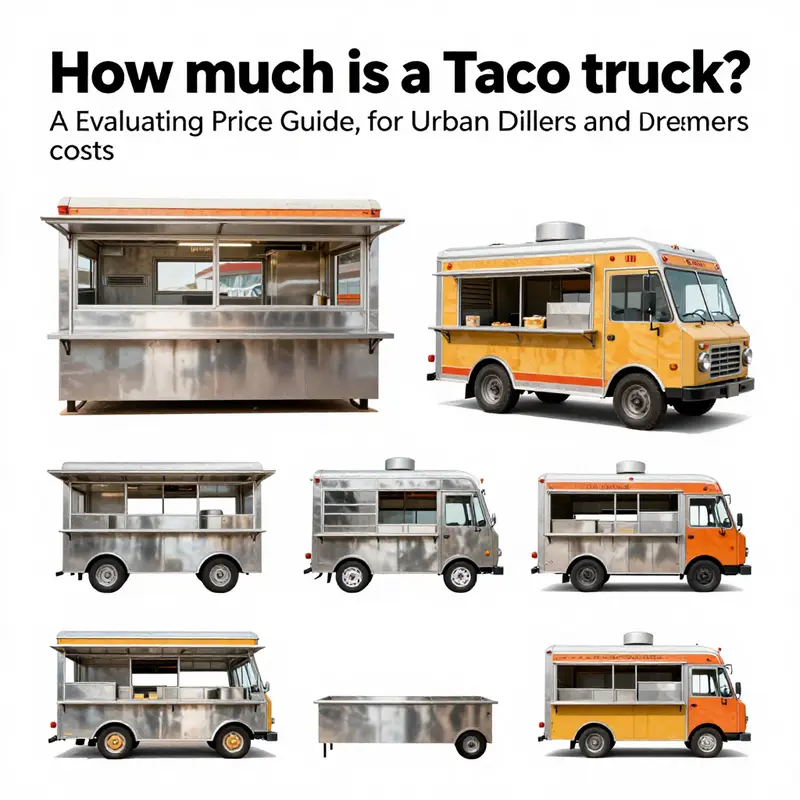
Deciding to launch a taco venture from a truck is both a culinary choice and a financial plan. The sticker price of a taco truck is only part of the equation. Size, equipment, and customization push the total beyond any single figure, and those choices shape daily operations, branding, and long‑term profitability. When people ask, ‘How much is a taco truck?’ they’re really asking how the price translates into throughput, service quality, and compliance. The market ranges from bare‑bones setups meant to hit the streets quickly to bespoke, turnkey kitchens built around a brand’s workflow.
At the low end, a basic, bulk‑purchased trailer can be surprisingly cheap, but it’s rarely practical for serious operations. Mid‑range mobile food trucks offer a more usable baseline with service windows, stainless work surfaces, and essential appliances. These units typically sit in the low to mid five‑figures, a sensible starting point for many new operators who want reliability and room to grow.
From there, curves branch into higher customization. Electric configurations marketed as modern and capable of gourmet offerings can begin around six to nine thousand dollars and climb quickly as you add premium interiors, advanced plumbing, and branding systems. A fully customized, turnkey kitchen designed around your exact menu can push well into the six‑figure range when you account for design, engineering, and permits.
Used trucks offer another path, often delivering meaningful cost savings if you perform due diligence on the vehicle’s condition, compliance, and upgrade needs. A careful, staged approach—inspect, negotiate, plan for upgrades—can help you hit the street sooner while managing risk.
Size and equipment level are closely tied to price but also to speed and efficiency. A compact 10‑to‑12‑foot footprint may suit a lean menu and small staff, while a larger truck (15 feet and up) accommodates more grills, fryers, prep space, and refrigeration, enabling higher throughput at peak times.
Customization is where a lot of operators invest to protect the brand and improve workflow. Branding, interior ergonomics, and power and water systems add cost, but they can also drive higher order values, faster service, and better consistency across events.
Finally, plan for the hidden costs: licensing, insurance, health inspections, maintenance, and ongoing energy or water needs. A practical budgeting approach translates your menu and service model into a design brief with essential versus optional elements, making apples‑to‑apples comparisons across suppliers and preventing surprises in the fine print.
Counting Every Dollar: Financing, Ownership, and the Real Cost of Owning a Taco Truck
The journey from idea to a working taco truck begins long before the first sizzle of the grill. It begins with dollars—how many, where they come from, and how they behave over time. The price you see on the sticker is only the opening move in a longer game that includes financing, insurance, permits, supplies, labor, and the unpredictable rhythms of demand. To think about cost in a vacuum is to miss the reality of daily operation and the longer horizon of total ownership. In this chapter, we weave together the main price levers and the ongoing expenses that shape profitability. We start with the spectrum of purchase prices, move through financing options that unlock those dollars, and then lay out the recurring costs that quietly decide whether a taco truck remains a venture or becomes a durable, scalable business. Along the way, the math helps illuminate strategic choices—whether to buy new or used, how much equipment to invest in, and what revenue targets must be met to sustain growth in a crowded, competitive street-food landscape.
If you are comparing the sticker price alone, you will see a broad range. The market accommodates everything from basic setups designed for quick snacks to fully kitted, road-ready fleets. On one end, basic trailer options marketed to small-scale operators can dip below entry-level figures, with bulk purchases sometimes quoted around the low thousands. These are typically minimal configurations suitable for snacks, drinks, or a handful of simple dishes. Moving up a notch, new standard mobile food trailers with service windows, stainless steel work surfaces, and standard kitchen appliances commonly sit in a mid-range band that can be described as affordable for a first-time operator. These are the units you see parked in neighborhoods and at events with a modest menu and steady turnover. Yet another tier encompasses high-end, customized, or electric taco trucks built to a premium specification. These are the showpieces that combine design, performance, and reliability for operators who want branding, efficiency, and a longer operating life rolled into a single package. In this tier, prices reflect not only equipment but also chassis choices, layout optimization, and compliance with health and safety standards that vary by jurisdiction. Finally, the market for used trucks adds a different dimension. A well-maintained used unit can offer substantial savings but brings questions about age, condition, equipment life, and potential retrofits. Taken together, the literature and real-world listings describe a spectrum from affordable, minimal setups to expensive, turnkey operations. While some catalogs may publish snapshots that appear modest, the more comprehensive assessments—especially for a fully equipped, ready-to-operate taco truck—often point to a higher, professional-grade baseline.
Understanding the financing landscape is essential because many buyers finance most of the cost. Financing does more than spread payments over time; it determines the project’s monthly cash flow, its break-even point, and how long it takes to reach profitability. For traditional borrowing, the paths are familiar. Small business loans from banks or credit unions offer terms typically stretching five to ten years, with annual percentage rates that commonly fall in the mid-to-high single digits to low-teens. These ranges can shift with the borrower’s credit profile, collateral, and the lender’s appetite for a food-service venture. Equipment financing, designed to secure the vehicle and kitchen gear, often requires smaller upfront capital but can carry a higher interest rate or a slightly different amortization schedule. The U.S. Small Business Administration provides programs intended to reduce risk for lenders and borrowers, sometimes through guarantees or specialized products. In practice, many operators end up combining financing with a clear cash plan that accounts for traffic cycles, seasonal demand, and relocation costs. For example, financing a $100,000 taco truck over seven years at an eight percent rate yields monthly payments in the neighborhood of roughly $1,700 to $1,800. That ballpark helps set expectations for monthly operating budgets and the pace at which the business can accumulate equity in the asset.
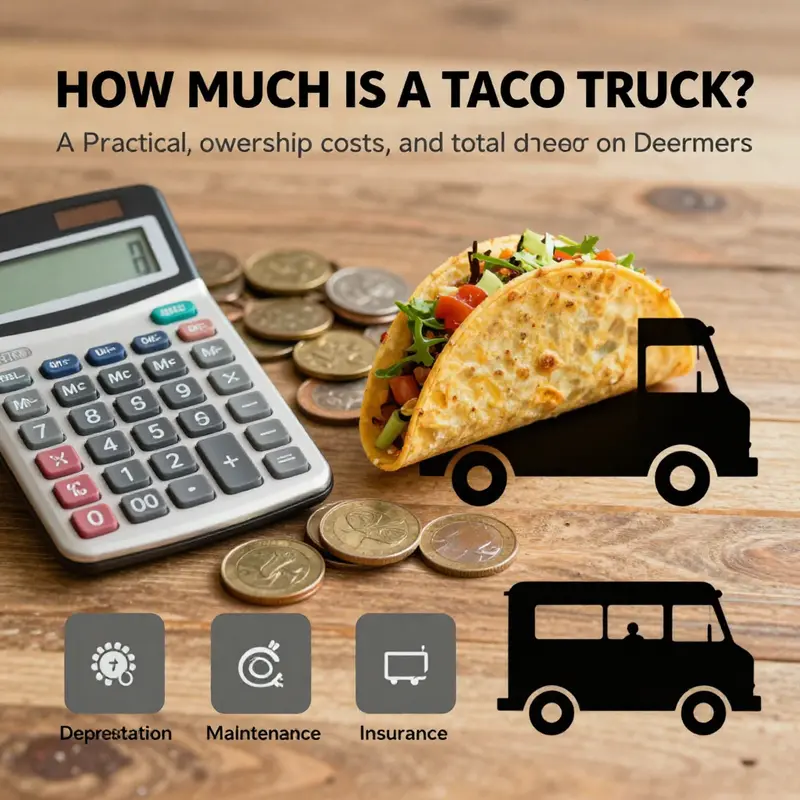
The full cost picture is not confined to the initial balance sheet. Ongoing ownership costs accumulate month after month and can surprise new operators who underestimate them. Fuel consumption and routine maintenance will vary with how aggressively the truck is used, yet a working range of two hundred to five hundred dollars per month is a reasonable starting point for budgeting. Insurance mirrors risk and coverage levels. Commercial auto insurance typically lands in the twelve-hundred-to-two-thousand-five-hundred-dollar annual band, while additional liability and property coverage can push annual costs higher. Permits and licenses fluctuate by city and state but expect a few hundred to a couple thousand dollars per year to cover health permits, vendor licenses, and parking fees. Then there are the lifeblood costs of the menu itself: food and supplies. Depending on menu breadth and volume, ingredient costs can range from about fifteen hundred to four thousand dollars per month. Labor is another critical variable. If you hire staff, payroll—and the accompanying taxes and benefits—can run from roughly eighteen hundred to four thousand dollars per month. Utilities, propane or electrical hookups, and the reality of occasional repairs contribute an additional modest cushion, perhaps one hundred to three hundred dollars monthly, but this line item can spike if a major component needs replacement or if a relocation requires temporary power solutions.
If you step back to evaluate the five-year horizon, the financial picture broadens further. The total cost of ownership, when you aggregate purchase price, financing interest, and operating expenses, can climb to the high hundred-thousand range. A commonly cited envelope for a typical taco truck over a five-year period falls between two hundred fifty thousand and four hundred thousand dollars. The midpoint might be driven by a fully loaded, brand-new unit with favorable financing and robust marketing investment, while the lower end often reflects a solid used platform with careful cost management and a lean operational footprint. Importantly, this TCO does not account for revenue losses during downtime, gaps in marketing rollout, or strategic pivots that require repositioning the business. It is a sober reminder that the asset itself—though central—represents a tool to generate value, not the sole guarantor of success.
The cost story is inseparable from the business model and the market it serves. Location matters a great deal. High-demand urban centers can offer superior revenue opportunities but come with higher permit costs, stricter operating constraints, and more intense competition. A plan that relies on constant street traffic and a predictable calendar may need to invest more heavily in branding, quality control, and consistency. Conversely, buying a reliable used truck might save upfront but increases the probability of downtime, retrofit needs, or more frequent maintenance. Each path has its own risk profile and workload implications. The branding and customer experience you cultivate—your visual identity, the speed and friendliness of service, and the consistency of taste—directly impact repeat business and word-of-mouth growth. A strong brand reduces price sensitivity and can help you capture premium segments even in crowded markets.
The decision about how much to invest in equipment and how much to lean on existing infrastructure is closely tied to your long-term goals. If your aim is a single, high-visibility unit that serves as a stepping-stone to a larger fleet or a brick-and-mortar location, the calculus may favor a higher upfront investment in equipment quality and chef-driven menu development. If you intend to operate lean, run multiple shifts, or relocate frequently to chase festivals and pop-up opportunities, modularity and reliability in the truck become paramount, possibly justifying a more conservative initial investment and careful usage of financing. Either route benefits from a meticulous planning process that includes a cash-flow model, a marketing plan, and a risk register. This is where practical resources and professional guidance matter. For operators who want to ground equipment choices in tested best practices, one internal resource worth reviewing focuses on selecting and prioritizing food-truck equipment wisely, a step that often pays dividends in durability and service life over time.
Beyond the mechanical and financial math, the reader should consider the strategic value of the investment. A taco truck is not simply a kitchen on wheels; it is a mobile brand, a point of presence in a neighborhood, and a flexible asset that can be relocated to capitalize on events, markets, and shifting consumer appetites. The costs, therefore, should be weighed against potential revenue streams: daily sales, catering gigs, special events, and even collaborations with local businesses. Marketing investments—branding concepts, social media presence, loyalty programs, and event partnerships—can amplify revenue and shorten the payoff period. In this sense, the financial planning for a taco truck becomes a blend of financial prudence and entrepreneurial audacity. It requires a disciplined budgeting framework that scrutinizes every recurring expense while preserving enough operational flexibility to respond to demand surges and seasonal ebbs.
Practical decisions emerge from this integrated view. For instance, a buyer evaluating new versus used must assess the expected maintenance costs, the likelihood of warranty coverage, and the reliability of critical kitchen appliances in the field. A buyer choosing between high-end customization and a simpler build should weigh the impact on throughput, service consistency, and brand differentiation. If you want to ground your equipment choices in proven guidance, consider consulting a resource focused on smart equipment decisions for food trucks. The link to this resource provides a concrete, action-oriented approach to evaluating gear, layouts, and upgrades over time: choose-food-truck-equipment-wisely.
As you close the gap between sticker price and actual operating reality, remember that the cost math is not static. It evolves with your menu, your operating hours, and where you decide to park and serve. Permits and licensing can become more affordable when you partner with a city-friendly footprint, while fuel costs can be mitigated by route planning, efficient equipment, and regular maintenance. The best operators build a tight feedback loop: they track what works, adjust menus and pricing in response to costs and demand, and reinvest profits into better equipment, smarter layouts, or process improvements that shave time and reduce waste. This continuous improvement mindset is what sustains a mobile food business beyond the excitement of grand openings and first-month wins.
For readers seeking a broader view of financing options, the landscape remains anchored in accessible programs designed to support small businesses. While the specifics of eligibility and terms vary, the broader point endures: financing can unlock a more favorable structure for cash flow, especially when the investment aligns with a well-constructed business plan and a clear path to customer traction. As you map your trajectory, a trusted external resource can provide structured guidance on loans and repayment. See the U.S. Small Business Administration’s loan programs for general guidance and potential funding strategies: https://www.sba.gov/funding-programs/loans. This external reference underscores that many operators leverage established financial pathways to manage upfront costs and ongoing obligations as part of a deliberate growth strategy.
In sum, the cost story of a taco truck is not a single number but a moving equation that blends purchase price, financing, ongoing operating costs, and strategic execution. A thoughtful operator weighs new versus used, prioritizes reliable equipment and safety compliance, and couples this with a marketing and location strategy that supports sustainable cash flow. The math is not merely about counting pennies; it is about forecasting demand, aligning costs with realistic revenue, and building a brand that travels well with customers. When all these pieces come together, the taco truck becomes more than a vehicle; it becomes a repeatable, scalable platform for entrepreneurship in a world where street food continues to attract hungry communities. The numbers matter, but the story behind them matters more: a plan to serve great food consistently, in places where people are ready to line up, pay, and come back for more.
Counting the Cost of Mobility: How Much a Taco Truck Really Costs Across Markets
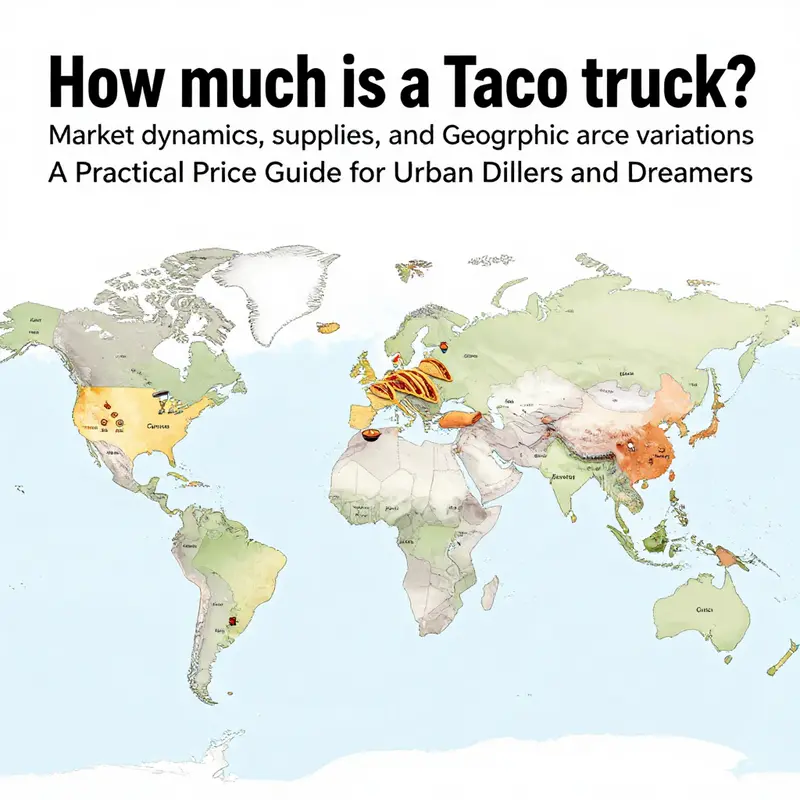
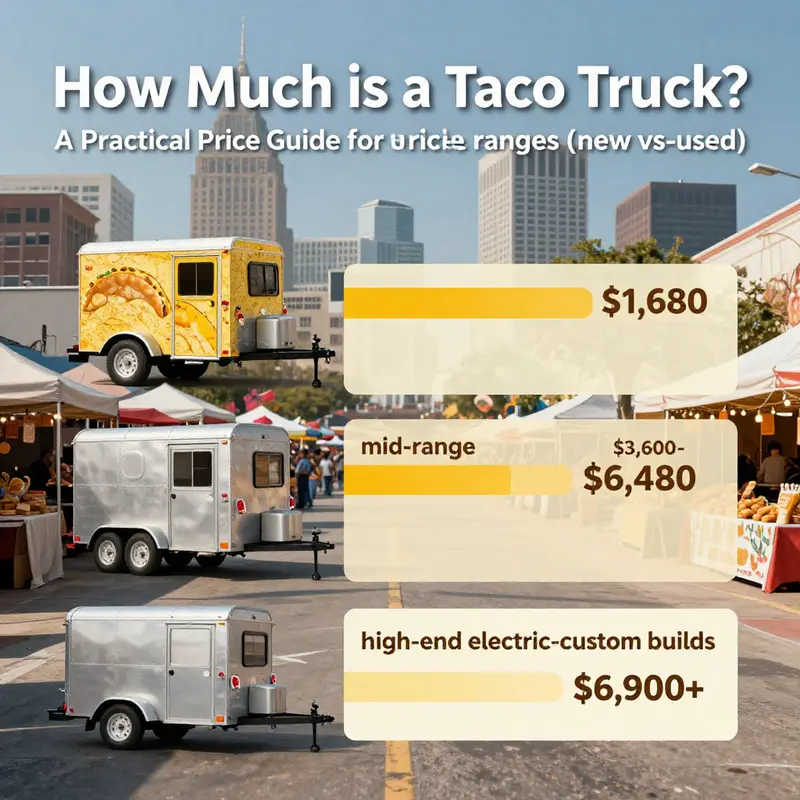
A taco truck is often imagined as a single, simple tool for serving warm, handheld meals on wheels. In reality, the price is a spectrum shaped by choices, geography, and the scale of the operation. The latest market snapshots lay out several clear price bands. A basic, new catering trailer — the leanest entry point for someone testing the waters — starts around 1,680 dollars when purchased in bulk. A more common, fully equipped new mobile food truck usually lands between 3,600 and 6,480 dollars. For entrepreneurs chasing a more stylish or specialized setup, a high-end or customized electric taco truck begins around 6,900 dollars and can easily climb past 8,000 dollars, depending on the level of customization, energy systems, and included appliances. There is also a lively market for used trucks, where price is typically a function of age, mileage, condition, and maintenance history. Taken together, these bands tell a straightforward truth: the fundamental vehicle price is only part of the total investment required to launch and sustain a taco-truck operation.
That truth deepens when we consider how and where you plan to operate. A bare-bones startup unit may suffice for occasional events, farmers markets, or weekend pop-ups. But as soon as you aim for consistent, multi-market coverage or a crew-based operation, the cost picture expands quickly. The sticker price you see on a brochure or listing tends to be the outer shell of a much larger financial narrative that includes permits, kitchen equipment, compliance measures, and ongoing overhead. It is easy to focus on the upfront numbers and overlook the way the running costs, maintenance cycles, and regulatory requirements accumulate month by month. A careful buyer recognizes that many of the most important investments occur after the truck arrives: choosing the right gear, setting up a dependable supply chain, and creating a process that keeps service smooth as demand fluctuates.
Market dynamics further shape price in nuanced ways. In the United States, the broader food-truck sector has demonstrated resilience and growth, underscoring the appeal of mobility and experiential eating. The taco segment, with its portability and adaptability, benefits from the ability to leverage high-foot-traffic zones while avoiding the fixed costs of a brick-and-mortar restaurant. Personal branding, signature recipes, and social-media presence can translate into a loyal crowd and steady revenue, which in turn supports more ambitious price and menu decisions. Geography matters most when the same truck can be deployed in a city with high rents and labor costs or in a market with intense price competition. In high-cost urban centers, operators may raise menu prices to offset overhead, while at the same time racing to optimize throughput and speed to maintain customer flow. In lower-cost markets, the same unit might compete more on volume and value, using promotions and bundles to secure repeat customers.
Beyond the domestic scene, global supply chains exert a quiet but powerful influence on cost structures. A noticeable trend in recent years is the concentration of manufacturing and assembly capabilities in select regions of Asia. Clusters in provinces known for industrial efficiency have built the capacity to deliver turnkey or semi-turnkey mobile-kitchen solutions at competitive prices, especially when buyers are open to some degree of customization. This geographic dynamic can reduce the upfront investment required for a modern taco truck, making it feasible for entrepreneurs to enter the market with lower initial outlay. However, price alone does not determine value. Compliance, safety, and food-safety standards are non-negotiable in most jurisdictions with any ambition of sustained operation. Electric systems, burner configurations, ventilation, and fire suppression must meet local codes, and those regulatory thresholds can add to the cost depending on the jurisdiction and the sophistication of the equipment.
Three cost pillars consistently shape total outlay: the base vehicle or trailer, the interior kitchen fit-out, and the ongoing operating overhead that includes permits, commissary access, insurance, fuel or electricity, maintenance, and consumables. The base price, which many buyers see first, is heavily influenced by the chosen platform. A lean, no-frills truck may sit at the low end of the spectrum, particularly in markets where used options are plentiful or where factory-to-operator pricing applies to bulk purchases. As the kitchen becomes more elaborate, with higher-grade stainless steel, more efficient layouts, and modular components, the interior fit-out climbs accordingly. The last piece—the ongoing costs of doing business—often swallows a surprising share of the budget. Permits vary dramatically from city to city, with typical ranges from a few hundred to over a thousand dollars. Commissary space is another recurring line item; monthly rents can span roughly from five hundred to one thousand five hundred dollars, depending on city, neighborhood, and the quality of the facility. Insurance is not optional in most cases, and it blends liability protection, vehicle coverage, and products liability into a package that can run several thousand dollars a year. When you combine these recurring costs with the upfront hardware and fit-out, the total first-year expenditure typically lands somewhere in the neighborhood of twenty thousand to fifty thousand dollars, with room to push higher in markets demanding premium equipment or larger fleets.
The way pricing translates into the menu offers further insight into how operators balance risk and opportunity. A higher upfront investment in reliable, efficient equipment tends to reduce service times, improve consistency, and lower fatigue for staff. In exchange, the business must support higher menu prices or broader sales volumes to realize a favorable return. But pricing is not simply a function of cost plus margin. It is also a reflection of location, audience, and the overall ecosystem in which the truck operates. In some markets, customers are willing to pay a premium for authenticity, speed, and variation in the daily offerings. In others, price sensitivity is high, and operators lean on value combos, loyalty strategies, and cross-promotion with events or nearby vendors. The most successful taco-truck operators build a dynamic approach to pricing that blends volume with margin, while keeping a steady eye on the cost of ingredients, energy, and labour. The source of ingredients matters too, since regional availability and seasonality can impact both freshness and price. A truck that can adapt to regional tastes while maintaining a lean supply chain gains an edge in overall profitability.
Choosing gear is an early decision with long-range consequences. A well-considered equipment choice shapes throughput, maintenance frequency, safety, and ease of cleaning. It is not merely about buying the most expensive stove or the largest fridge; it is about ensuring that the layout supports a smooth workflow, minimizes cross-contamination risks, and preserves space for prep, assembly, and service. A practical path emphasizes phased investment: start with core capabilities needed for initial operations, then add or upgrade pieces as demand solidifies and revenue grows. In this context, the value of a staged approach becomes apparent. An operator can begin with essential heating and cooking capacity, basic refrigeration, and a service window, and later reconfigure for new menu items or different markets without replacing the entire unit. This strategy aligns with the broader reality that a taco truck is a long-term asset, whose utility is measured less by the first day’s sales and more by resilience, adaptability, and the quality of the customer experience over time.
To ground these ideas in a practical mindset, it helps to steer conversations toward a balanced budget that recognizes both upfront needs and ongoing obligations. A structured budgeting framework often starts with the vehicle and kitchen: what is the minimum viable layout to deliver a consistent product, balanced with the ability to scale? Then comes the license and compliance landscape: permits, health inspections, and the need for a commissary for storage and sanitation. Insurance is layered on top of these essentials, followed by an ongoing plan for maintenance and supply-chain reliability. The result is a clear, staged path from a modest footprint to a robust, multi-market operation. Here is where the notion of price as a moving target becomes most evident: what you pay upfront sets the stage, but your operating choices, shifts in demand, and the evolution of your menu will ultimately determine the profitability of the venture.
Within this framework, it pays to think about the decision not as a single purchase but as a sequence of investments. A first truck may be outfitted with essential heating, cooking capabilities, refrigeration, and a service window. If the business proves itself, you can re-evaluate the menu, add more specialized equipment, or explore shared commissary spaces to optimize costs. This phased approach reduces risk and can make it feasible to enter markets that otherwise would be out of reach due to upfront capital requirements. It also preserves flexibility: the same unit can be reimagined for different cuisines or events, extending its life and widening the potential for revenue streams. Importantly, it places you in a position to adapt to regulatory environments that may shift over time, ensuring that your operation remains compliant as you scale.
As you map out the path, remember that the broader ecosystem matters as much as the truck itself. The regulatory landscape, access to commissaries, the availability of financing, and the social dimensions of your brand all interact with the hardware to determine whether a taco truck becomes a durable business or a short-lived venture. If you want a clearer sense of how geography intersects with pricing and market entry, you can explore external resources that analyze the regional dynamics and the regulatory frameworks that shape mobile food vendors. For a broader view of geographic pricing and market-entry considerations, see the external landscape at this resource: https://www.census.gov/programs-surveys/economic-census/data/2022.html. Within the chapter’s own ecosystem, one targeted step can reinforce long-term value: carefully select equipment. The right gear improves throughput and reliability while reducing maintenance headaches. For readers weighing gear decisions, a practical way to think about the equipment puzzle is to focus on essential services first and remember that a truck is a long-term asset that can adapt with the market. If you want a structured approach to choosing equipment, you can explore guidance on equipment selection and best practices aligned with long-term profitability. A concise route is to begin with the core capabilities and then grow, ensuring that every upgrade serves a clear purpose in the quest to deliver a fast and tasty taco experience to a growing audience.
For readers who want a concrete anchor in budgeting and decision-making, a few practical reminders stand out. The total initial investment typically spans a broad range, reflecting city-specific requirements and the chosen level of sophistication. Permits, commissary access, and insurance, when combined with the base vehicle and interior fit-out, can position a first-year outlay in the ballpark of twenty thousand to fifty thousand dollars. A leaner approach can be financially viable, but it demands a disciplined plan for growth, consistent sales, and an ability to manage risk across multiple markets. The upside is that mobility creates opportunities to build a brand, test menus, and develop a following rapidly. With a phased build and a strong operational plan, you can translate the lure of a mobile kitchen into a sustainable, scalable business.
Internal link note: As you consider gear choices, a thoughtful path to success is to Choose food truck equipment wisely, which offers guidance on aligning hardware with service goals and menu needs. This kind of strategic alignment helps ensure that the upfront investment supports reliable service, easy cleaning, and efficient prep workflows, ultimately contributing to the bottom line.
In sum, the cost of a taco truck is not a single number but a living plan that evolves with the business, the city, and the appetite of the crowd. The low end makes entry more accessible, yet profitability hinges on volume, efficiency, and disciplined cost control. The high end unlocks speed, reliability, and a premium customer experience, but it demands a well-structured plan for growth and sustained revenue. The smart buyer negotiates for a design that fits the intended market, plans for contingencies, and calibrates pricing to the realities of local conditions. Price becomes a dynamic, location-sensitive signal that reflects the economics of mobile food service, not a fixed hurdle to overcome. For anyone navigating this path, the most important move is to start with a practical, staged approach, learn from early operations, and scale with intention. The truck is a tool, but the business is built from your decisions about equipment, permits, partnerships, and customer experience.
External resource: The Role of Geography in Mobile Food Vendor Pricing and Market Entry (https://www.census.gov/programs-surveys/economic-census/data/2022.html)
Final thoughts
In short, there isn’t a single answer to how much a taco truck costs. Your price range starts around a lean entry point for basic, small-scale setups and climbs through mid-market fully equipped trailers to premium, customized electric models. By weighing equipment, size, and customization, and by understanding financing, depreciation, and regional supplier dynamics, there’s a clear path to the right balance of price, reliability, and growth potential. With thoughtful budgeting and a market-aware approach, you can align a taco truck purchase with your city-friendly lifestyle and your business vision—turning a mobile kitchen into a sustainable success story.