
For urban dwellers dreaming of a taco-on-wheels side hustle or a small business testing the waters, the question often starts with one simple query: how much are taco trucks to rent? The answer is not one-size-fits-all. Pricing is shaped by where you park (or roll), how much kitchen you need, how long you’ll run, and the extras you can’t do without. In crowded city centers, demand and operating costs push daily rates higher, while rural or emerging markets may offer more favorable terms. The economics are further influenced by whether you hire a fully equipped mobile kitchen or simply base your setup on a standard vehicle, like a pickup truck, and add your own equipment. Duration matters: a three-hour pop-up can cost a different price than a week-long festival engagement. Finally, add-ins like delivery, setup, permits, insurance, fuel, and staffing can transform a seemingly modest daily price into a sizable total. This article dives into five practical chapters that illuminate the economics of taco-truck rentals—so you can budget confidently, request accurate quotes, and avoid sticker shock. We’ll connect city-specific dynamics to gear choices, scheduling models, and the real-world steps you’ll take to compare offers from local providers. Each chapter builds toward a holistic view: you’ll learn what’s driving costs, what to ask for in quotes, and how to plan for total cost of ownership when you’re chasing flavor and flexibility on the go.
Pricing Without Borders: Geographic Variation and Localized Costs in Taco-Truck Rentals
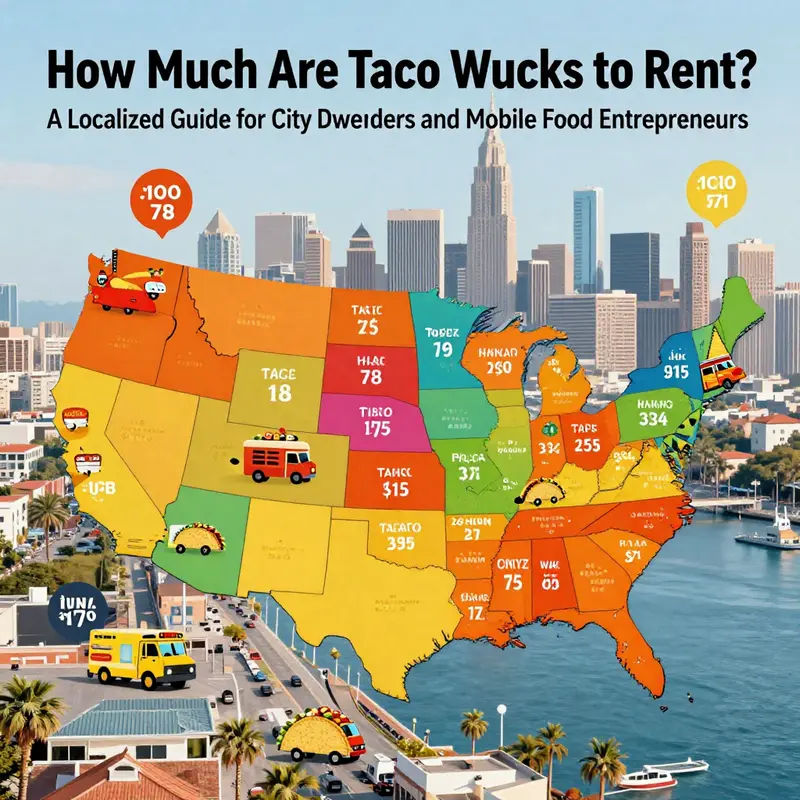
Pricing in the taco-truck space is not a single number but a moving target that shifts with geography, demand, and the scope of what you actually rent. The chatter in industry circles consistently emphasizes the same truth: local markets drive most of the variability. There is no standardized nationwide price tag for a “taco truck” rental, largely because what you are renting is a platform with different levels of capability. At one end you have a base vehicle that serves as the platform for a mobile operation; at the other end you have a fully equipped mobile kitchen, complete with cooking facilities, ventilation, and compliant plumbing. Between those two poles, the spectrum widens as soon as you add delivery, setup, permits, insurance, and staff. The upshot is simple: two events in different cities can look almost alike on a menu of features and still carry markedly different total costs due to location and operating requirements.
The most transparent reference point for pricing, in a practical sense, is the cost of renting a suitable vehicle that can host a taco operation. Across various U.S. cities, the base daily rate for a pickup or small truck often falls into a broad band, with substantial local variation. A representative snapshot shows that in some markets a budget pickup can be found around the low to mid 80s per day, while other cities push higher as competition and operating costs rise. In the Dallas area, for example, budget pickup rentals hover in a range around $83 per day according to recent aggregations, reflecting a baseline usable for a mobile-food setup. Other cities reveal different baselines: smaller markets can feature base vehicle rates in the 50s or 60s per day, and premium or novelty models can pull a higher premium. It is important to emphasize that these numbers capture only the vehicle rental itself and exclude insurance, fuel, mileage, taxes, and the costs of any kitchen equipment or staffing attached to the operation. The same logic applies when you see a higher 70s or 80s daily rate in another city; the delta often reflects local taxes, insurance requirements, and the degree of vendor competition more than a universal “price tag” for a taco truck.
Beyond the base vehicle, the fully equipped mobile kitchen option introduces a separate and often substantial premium. A complete, on-site kitchen unit—ready to operate with grills, refrigeration, ventilation, water and waste systems, and compliance-ready plumbing—transforms the rental from a transport platform into a working food-production facility. Publicly accessible price proxies for such turnkey mobile units are less widely published in the United States, and the data that does exist points to a meaningful premium over base-vehicle rentals in many markets. In a broader sense, the market for mobile-food-truck operations in other regions has shown that the price of the complete mobile unit can reflect demand intensity in urban centers, where higher operating costs and stricter compliance requirements are common. In one European market, a daily rate for a mobile food truck is reported around a few hundred pounds, illustrating the premium associated with a kitchen-on-wheels versus a bare vehicle. While these figures are not a direct apples-to-apples comparison with U.S. base-vehicle rates, they illuminate the structural premium that ownership or rental of a fully equipped kitchen command in most markets.
Seasonality and city dynamics further complicate the math. When festivals, parades, or peak tourist seasons arrive, prices can rise quickly. Demand spikes can appear even within a single weekend or a single event, inviting delivery surcharges, higher minimums for setup, and staggered transportation costs to multiple event sites. Urban centers commonly command higher daily rates, not only because rent and insurance costs are elevated, but also because parking, permits, and access to event infrastructure tend to be more restrictive and costly. Conversely, in smaller markets with lower operating costs, you might find more generous daily or weekly discounts for longer-term leases or multi-event engagements, though the inventory of fully equipped units may be thinner. The practical takeaway is that location and time are not merely background conditions; they actively recalibrate the total cost of renting a taco-truck operation.
Another layer of cost arises from the ancillary elements that accompany the base rental. Delivery and setup fees, permit costs, and insurance terms often appear as separate line items. Fuel, mileage, and potential penalties related to local permit regimes can also shape the final bill. Some rental packages may include staffing or ingredient provisioning as add-ons, while others are strictly vehicle-centric, leaving the operator to source everything necessary to run the unit. When budgeting, it is essential to separate the base rate from these add-ons and to test multiple quotes to understand what is realistically included and what will be extra. This separation becomes especially critical in event-heavy plans, where multiple days of operation or cross-city travel dramatically amplify the cumulative cost.
From a market perspective, there is a recognizable gap between the data available for rental vehicles and the data for fully equipped taco-truck rentals. The pricing discourse tends to rely on proxy figures derived from pickup-truck rentals, which provide a rough proxy for the structural cost baseline. The actual quotes for turnkey configurations are typically region- and vendor-specific, and precise pricing requires direct engagement with local mobile-food-truck providers or platforms that specialize in turnkey kitchen-on-wheels. The Street and other industry observations emphasize that the drivers of price are location, duration, equipment level, delivery and permits, and optional services. This means a precise, reliable number for a given city and event profile must come from targeted inquiries rather than a single published rate.
With this in mind, the practical path to budgeting begins with a careful scoping exercise. Define whether the operation will rely on a base vehicle or a fully equipped kitchen. Specify the kitchen’s capabilities, including gas versus electric operation, ventilation, refrigeration, and the floor and workspace needed for efficient service. Pin down the location and dates, and actively seek quotes from multiple local vendors or rental platforms. Ask explicitly whether delivery and setup are included, or if those are separate charges. Inquire about required permits and insurance terms, and confirm what the event location demands in terms of coverage. Finally, add a reality check: even a seemingly low base daily rate can quickly swell into a significant total cost once you add fuel, mileage, and staff, along with any provisioning or contingency dollars you allocate for unplanned disruptions.
The current pricing landscape mirrors a growing global market for mobile food and street-based dining, where regional differences matter as much as the unit itself. Industry analyses drawn from the broader food-truck sector indicate sustained growth and rising activity in many regions, with cost pressures tied to urban demand and regulatory environments. This context reinforces the core lesson for anyone budgeting a taco-truck rental: local dynamics shape the bottom line as much as the product configuration does. For readers seeking a broader market perspective, this expansion is documented in market analyses that chart the growth of mobile food markets across regions and the evolving economics of operating a taco-focused mobile business. For a broader market context, see the external resource: https://www.grandviewresearch.com/industry-analysis/food-truck-market. In practice, anchoring your budgeting around regional price realities and building a flexible plan for add-ons will yield a more reliable forecast than any single published figure.
Ultimately, the most robust approach to estimating taco-truck rental costs is to treat base daily rates as rough proxies and to layer in the premium associated with a fully equipped kitchen, plus all ancillary charges. The localization of costs means a plan that works in one city will not automatically translate to another. If you want a connected, logistics-aware glimpse into local-operational resources, consider the Freight Ninja secured truck parking network as a practical logistics reference in planning cross-city moves and staging. freight-ninja-secured-truck-parking-network.
In sum, while no universal price tag exists for renting a taco truck, you can navigate the landscape with a disciplined, location-aware budgeting approach. Use base vehicle rates as a starting point, recognize the premium for a fully equipped kitchen, and account for delivery, permits, insurance, and staffing as distinct line items. The result will be a realistic, city-specific budget that reflects the true economics of bringing a mobile taco operation to life. The variability highlighted here—driven by geography, event type, and scope—also explains why a precise quote is the most reliable compass for planning a taco-truck venture.
Renting the Taco Dream: A Practical Guide to Vehicle and Kitchen Equipment Costs
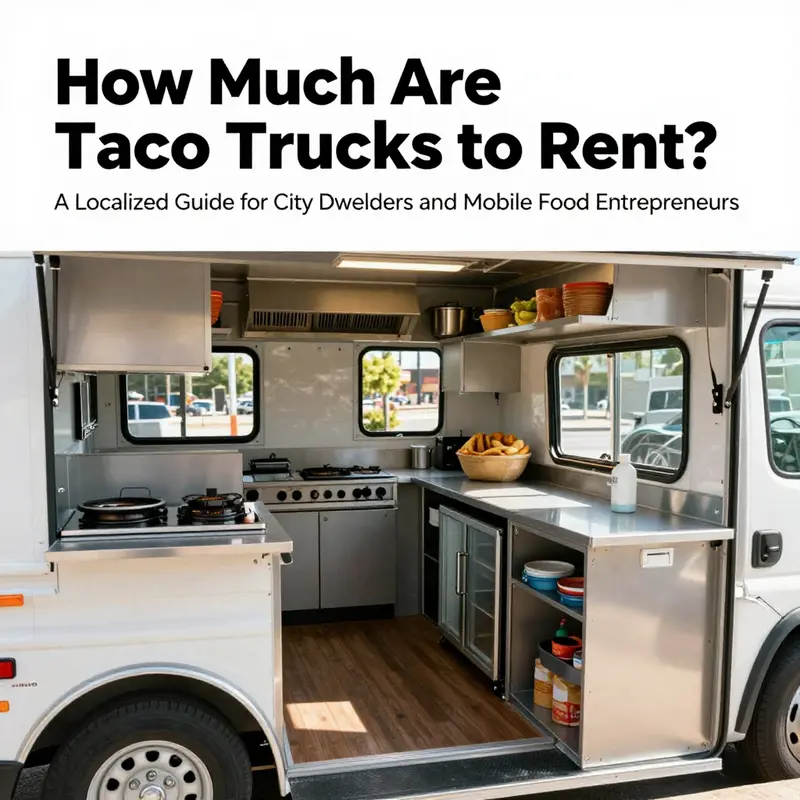
Renting a taco truck or trailer is a layered decision, not a single price. The cost you observe on a daily rate comes from the base platform, the kitchen package, and the service extras that turn a vehicle into a compliant mobile kitchen. Public pricing on taco-truck rentals is sparse and highly local, so planners rely on benchmarks from broader vehicle rental markets and from mobile-kitchen discussions. Those benchmarks provide anchors but require careful interpretation because the base vehicle price is only part of the total cost of running a mobile operation. The real budgeting task is to separate the base platform from the fully equipped kitchen, from delivery and setup, and from insurance and permits.\n\nBase vehicle rates vary by market and by configuration. In many contexts, a basic pickup-based platform can run in the low to mid-range per day, while larger vans or trucks push higher because of payload and electrical capacity. For example, some markets show base rates in the forties to seventy dollars per day for a simple platform, with premium models reaching eighty to one hundred dollars or more. Note that insurance, fuel, mileage, taxes, and delivery fees are often excluded from the headline rate.\n\nFully equipped mobile kitchens command a meaningful premium. A turnkey kitchen with cooking appliances, ventilation, water and waste systems, and compliant electrical infrastructure will push daily rents higher, with regional variations. In many markets the premium reflects fire-safety, sanitation readiness, and the labor to install and test systems.\n\nLocation and season matter. Urban centers with packed event calendars and festivals tend to feature higher rates and more add-ons. Menu complexity, kitchen size, and ventilation demands also drive costs. The overall budgeting approach should separate the base rate, the kitchen package, and the ancillary costs like delivery, setup, insurance, fuel, and permits.\n\nPractical steps: define scope precisely, request itemized quotes, compare apples to apples, and consider multiple vendors. The quotes should break out kitchen equipment, power, water, and ventilation demands, as well as whether staffing or provisioning is included. The quotes will be site-specific and date-dependent.
Pricing on Wheels: Decoding Short-Term and Long-Term Taco-Truck Rentals
If you are planning a taco pop-up, a street fair appearance, or a private event, the first question often looks simple: how much are taco trucks to rent? The reality is more tangled than a sizzling skillet. Public, apples-to-apples price data for fully equipped taco trucks are sparse and highly localized. What exists tends to come in two flavors: base vehicle rental rates that could host a taco operation, and fully turnkey mobile kitchens that arrive as a single rental with cooking, refrigeration, and venting already in place. Between these two extremes lie a host of factors that push the bill up or down, sometimes in surprising ways. The result is a pricing landscape that requires conversations with local providers to arrive at a precise number for a given city, date, and event profile. Yet a careful reading of available proxies can build a credible budgeting framework and prevent sticker shock when the quotes land.
A starting point is to look at vehicle rental proxies rather than direct taco-truck pricing. In practice, many operators think of a taco truck as a base platform that requires a kitchen upgrade rather than an ordinary car or truck with food service slapped on top. The data we do have from nearby transportation markets illustrate the envelope of possibilities. In some locales, a pickup-truck-based base can be rented for around the mid-$50s per day. For example, in Bridgeport, a standard pickup truck has shown an average daily rate near $54, with some operators securing deals around $61 per day through major rental brands. In another part of the country, Twin Falls, Idaho, listings for a Toyota Tacoma or similar pickup hover near the mid-$60s per day. Yet the same city sometimes shows higher sticker prices for larger or more capable pickups, around $78 per day, reflecting size or model differences. The variance is instructive. It underscores that the base platform for a taco operation is not a single fixed number but a range shaped by model, size, and demand at the moment of booking. It also reminds us that these figures exclude a long list of extras that matter once the kitchen comes into play—insurance, fuel, mileage, taxes, and fees for delivery or setup.
To think in more kitchen-specific terms, some public data points exist for what a fully equipped mobile food unit costs to rent. In Edinburgh, the daily rate for a mobile food truck has been observed around £350. That figure is not a direct apples-to-apples comparison with a base pickup rental, but it reveals the premium that a turnkey kitchen commanders a customer to expect, particularly in markets with high demand and strong event calendars. In Dallas, the picture splits again: basic vehicle rentals can start around $74 per day, illustrating how even a simple vehicle price can surface in pricing conversations that also include kitchen components when the rental is marketed as a mobile food operation. Taken together, these proxies highlight a fundamental insight: the fully equipped kitchen adds a substantial premium over a bare vehicle, and the premium compounds quickly in urban centers or during peak seasons.
Beyond raw daily rates, several drivers consistently shape taco-truck rental pricing. Location is a dominant factor. Major metropolitan areas such as Los Angeles, New York, and Miami tend to carry higher operating costs and stronger demand, both of which lift daily tariffs and the likelihood of additional charges for delivery, setup, or cross-city transport. Event type and duration are equally influential. Short-term, high-visibility bookings—weddings, festivals, or private gatherings held for just a few hours—often carry higher hourly or daily premiums, while longer-term leases for a series of events may unlock some volume discounts or more predictable monthly costs. The size of the vehicle and the level of equipment are major levers. A larger truck with a full commercial kitchen, complete with grilling, refrigeration, ventilation, and compliant plumbing, commands a higher rental price than a smaller, simpler, or electric setup. Seasonality matters too. Summer festivals and holiday markets can tighten availability and push up prices, sometimes with surcharges for delivery and per-event permits.
There is also a practical reality to consider: the base rental rate rarely stands alone. Operational costs often rise with the rental agreement. Insurance, fuel, and mileage fees are common add-ons. Permits or compliance costs may appear, especially when the event is in a city with strict health or food-service requirements. Some packages bundle staffing, menu customization, or supply provisioning, while others present these as optional add-ons. In other words, the headline daily rate is only the starting line. The total cost of ownership for planning purposes should include delivery and setup if those are not included, plus any incidental charges tied to the event location or the vehicle’s upkeep during the rental period.
Given the data gaps and the localized nature of pricing, the recommended approach for budget planning is pragmatic and disciplined. First, define the scope with crystal clarity. Decide whether you want a base vehicle with a makeshift or semi-custom kitchen, or a fully equipped, turnkey mobile kitchen that can be plugged in and serving quickly. Specify kitchen specs: gas versus electric equipment, ventilation, refrigeration capacity, serving line length, and storage. Clearly identify whether the rental should include delivery and setup or if those are to be handled separately. Second, pin down the location and dates. Request quotes from multiple local providers who regularly service events in the target city and inquire about how delivery and setup are handled in practice. Third, ask about permits and insurance. Confirm what is included and what remains the responsibility of the renter, including any required liability coverage. Fourth, assess the total-cost-of-ownership. Even if the base daily rate seems affordable, a lower headline price can hide high insurance, fuel, or staffing costs that are essential for planning. In some cases, it makes sense to bundle provisioning or staffing into the rental, but you must verify what is included and whether it aligns with the event’s scale and duration.
The pricing conversation is not purely arithmetic. It is also a negotiation about service level, reliability, and the logistics scaffolding that supports a successful food operation on wheels. A highly public event in a dense urban core may demand a premium not just for the truck but for precise delivery windows, compliant permits, and guaranteed setup times. A multi-day tour in a smaller market could yield more favorable terms, particularly if the operator can guarantee a trackable schedule and lower delivery overhead. In practice, the veteran planners I’ve spoken with treat the daily rate as a starting anchor and then build a ceremony of add-ons that, collectively, map to a predictable budget line. They also recognize the value of asking for a detailed written quote that itemizes each cost component. Without such a breakdown, a quote can hide hidden fees that emerge only after the event is booked.
One practical tip that helps bridge the gap between rough proxies and firm quotes is to view the price through the lens of a simple, shared framework. Start with a base daily or hourly rate for the core platform. Then layer on the premium for kitchen capabilities, the premium for the specific location and distance for delivery, and the premium for labor, if staffing is included. Finally, account for regulatory or permit costs and any contingency for weather or unforeseen delays. When you present this framework to multiple vendors, you create a common language that makes the comparison transparent and the final decision less risky. It also helps you spot when a quote is unusually high due to an inefficient delivery plan or a lack of bundled services that you actually need. For planning resources that emphasize sustainable practices within mobile food operations, you can consult related insights here: Sustainable practices for mobile food trucks.
In short, there is no single price tag that applies across the board for taco-truck rentals. The most reliable route to a precise figure combines local market quotes with a clear specification of the truck size, equipment level, and service inclusions. The 2026 snapshot confirms a broad price range and a heavy dependence on local demand, seasonality, and the scope of the kitchen. For robust budgeting, assume a two-tier model: a base platform rate for the vehicle and a premium for the fully equipped kitchen, then add delivery, permits, insurance, and staffing as line items. Treat the base rate as a rough proxy when you are in the earliest planning stages, but demand formal quotes that itemize every cost element before you commit. If you want to explore broader pricing factors that shape these numbers, see external market analyses and pricing guides such as The Street’s discussion of taco-truck pricing factors: https://www.thestreet.com.
The Real Price of a Taco Truck: Beyond Daily Rates to Permits, Insurance, Delivery, and Staffing
Pricing for renting a taco truck sits at a curious intersection of appetite and administration. Publicly published numbers are sparse, and most planners discover the true bottom line only after quotes from local operators. The basic question—how much are taco trucks to rent?—has no single answer because the market is a constellation of options. You can base a taco operation on a ready-to-run, fully equipped mobile kitchen, or you can anchor a smaller setup on a standard pickup or full-size truck and retrofit it with temporary cooking facilities. The evidence we have from early 2026 shows two broad price tracks: base-vehicle rental proxies that illustrate what it costs to have a mobile platform as the core asset, and the premium attached to any unit that truly functions as a commercial kitchen on wheels. In some places, the most visible numbers point to modest daily rates for generic trucks, while in others the premium to meet food-safety standards and kitchen ventilation pushes the price into a higher range.
City-level proxies paint a rough envelope rather than a precise forecast. In places like Bridgeport, Dallas, and Twin Falls, stand-in pickup rentals can hover in the $50s to low $100s per day, before adding insurance, fuel, mileage, and taxes. A Bridgeport listing around $61 per day or a Dallas full-size truck at roughly $51 per day give a sense of the underlying vehicle platform. In contrast, a higher-demand or novelty model—like a premium pickup in Madison—can reach around $142 per day. Even these numbers are contingent on model, supplier, and the exact rental terms. They are not direct comparisons to a fully equipped taco truck, which includes commercial-grade cooking equipment, ventilation, refrigeration, water supply, fire suppression, and waste handling. On the other end of the spectrum, some international markets report daily rates for mobile food-truck concepts in the £350 neighborhood, underscoring how the kitchen retrofit adds a premium that dwarfs the base vehicle cost. And for domestic benchmarks that anchor the baseline, a basic vehicle rental sometimes offered at around $74 per day still serves as a useful reference point for drivers who prefer to study what a platform might cost if you supply your own cooking module.
These figures reveal that the economics of taco-truck rental are never static. Location and demand exert outsized influence. Urban centers where real estate and labor costs are high tend to push both the base daily rate and the ancillary charges upward. A rental package that seems affordable in a quiet town can suddenly inflate when a festival comes to town or when a wedding season creates a flood of bookings. The nature of the event matters, too. Short, high-visibility gigs—a few hours at a wedding, a city block festival, or a pop-up market—can trigger premium pricing, while longer commitments, with the truck parked for a full week and operating across multiple days, might invite volume discounts or negotiated terms. The size and sophistication of the truck drive price as well. A compact truck with a minimal cooking module costs less to rent than a large, fully equipped kitchen vehicle that requires substantial ventilation, dedicated power, and complex plumbing to comply with health and safety standards. Likewise, the level of service—whether delivery and setup are included, whether staffing is part of the package, or whether you bring your own staff—shows up as line items in the final invoice.
Even when the base rate seems straightforward, the total cost of renting a taco truck often expands quickly once you account for the things that truly enable safe and compliant operation. Delivery and on-site setup are common add-ons, especially for out-of-town events where access may be limited or where operators must transform a venue’s space into a fully functional kitchen. Insurance is not optional in most markets; it’s a baseline requirement for operators who legally operate a commercial kitchen on wheels, and many venues require proof of coverage before a contract is signed. Permits and inspections add another layer of complexity. The health department may require a temporary mobile food service permit, a fire-safety assessment, and sometimes a permit to operate in a specific venue or city block. Liability coverage often comes with a minimum limit, and the insurer may insist on risk-control measures such as temperature logs and equipment commissioning documentation. Taxes, of course, are embedded in the quote, sometimes subtly as a surcharge and sometimes as a mandatory tax assessment that the operator remits on your behalf.
Then there are the ongoing costs that aren’t visible in the sticker price but shape the financial feasibility of a taco-truck venture. Fuel and mileage accrue as the vehicle travels between events, especially if the operator is required to deliver across town or to different counties. The maintenance cycle for a mobile kitchen is more rigorous than for a simple truck: you’re not only maintaining the powertrain but also the kitchen equipment, the ventilation system, the water lines, and the waste disposal arrangements. If the unit includes staffing, you’ll see wages, payroll taxes, and perhaps hotel or per diem allowances for crew members who are on-site for long events. Ingredients provisioning or supply management can be bundled with some rental packages, but more often it’s a separate line item that makes budgeting essential. And because mobile-food operations sit at the intersection of food safety and customer experience, many operators add a modest contingency for spares, last-minute repairs, or weather-related challenges that can disrupt a planned schedule.
For anyone planning a taco-truck rental, a practical mindset is to translate these components into a holistic budget, not a single line item. Start with the base rate for the platform you want—a fully equipped kitchen on a medium-to-large truck or a modular setup that can be mounted on a vehicle you own. Then layer on the premium for kitchen compliance: ventilation hoods, fire suppression, dedicated cold storage, handwashing stations, and water capacity. Add delivery and setup if the venue is not in a straightforward location, and include the insurance coverages that the venue or local regulations require. Then fold in the permits and any licensing fees that may be charged by the city or county; count a margin for fuel, standard maintenance, and an hour of staff time if you’re managing event logistics rather than simply showing up to cook. Finally, build in a small contingency to absorb price fluctuations caused by seasonality or spikes in demand. This is the kind of budgeting approach that reduces surprises and helps negotiators compare quotes on a like-for-like basis, rather than chasing the lowest daily rate in isolation.
In practice, the way you obtain accurate pricing is as important as the number itself. It is essential to articulate the scope with the operator clearly: specify whether you’re hiring a fully turnkey mobile kitchen or just a vehicle base to which you’ll attach your own equipment. Name the exact kitchen specs you require—gas versus electric heat, ventilation needs, whether you need a three-compartment sink, refrigeration capacity, or food-prep counter space. Clarify your city and event dates, because regional demand and permit calendars shape the quote. Ask providers to itemize delivery charges, setup fees, and any “per-event” or “per-day” surcharges, and confirm if there are any minimums or caps on hours of operation. Most importantly, ask about insurance: what coverage limits are included, whether you must obtain additional coverage, and whether the policy extends to the event venue or to cross-city travel. It may seem obvious, but in many cases the quoted price omits insurance or excludes it by misunderstanding the insurer’s requirements. Knowing the total cost of ownership allows you to compare apples with apples and to craft a contract that aligns with your event schedule and budget.
As you map the economics of tacos-on-wheels, consider how logistics ecosystems influence price. A robust network of support services—from mobile culinary units to parking and staging solutions—affects not only what you pay but how reliably you can deliver an on-site cooking experience. For broader context on how networks and mobility platforms shape the economics of moving a kitchen, you can explore resources that discuss the practical dynamics of truck-related logistics, such as Freight Ninja’s secured truck parking network. This links to a broader conversation about how mobility infrastructure interacts with cost, delivery windows, and reliability for any on-site food operation. Freight Ninja Secured Truck Parking Network
In short, there is no single published price for renting a taco truck that applies everywhere. The most reliable way to forecast costs is to translate the base vehicle rate into a kitchen-ready platform, then add the premium that comes with full compliance, the logistics of delivery and setup, the insurance you must carry, and any staffing or provisioning services you anticipate needing. If you want to explore regulatory foundations and guidance that can help shape your budgeting assumptions, turning to established information on mobile vending from the U.S. Small Business Administration is a prudent starting point: https://www.sba.gov
Pricing the Wheels: Demystifying Taco-Truck Rentals in 2026
Understanding taco truck rental costs requires separating base vehicle costs from fully equipped kitchen packages.
Public price sheets are scarce and highly regional, so budgeting begins by defining what you actually rent: a bare vehicle or a complete kitchen-on-wheels.
Base vehicle rental can range from modest daily rates for small pickups to premium charges for larger platforms, with the envelope often in the tens of dollars to around a hundred dollars per day depending on location and demand.
Fully outfitted mobile units command a premium due to kitchen systems, ventilation, compliance, and service add ons such as setup, power, and waste management.
Location, duration, and seasonality all shape the final quote.
Short term bookings tend to carry higher per day costs, while longer leases can unlock volume discounts.
Equipment level and power needs also shift the price, with electric cooking options typically cheaper than gas heavy setups, and with ventilation requirements adding to both base and delivery costs.
Ultimately the path to a reliable quote is to collect multiple local bids, compare apples to apples by breaking out what is included, and verify permits and insurance needs.
For a practical budgeting mindset, treat base rate as a floor, add the kitchen premium, then factor in delivery, staffing, fuel, and provisioning costs.
In 2026 the market is growing but prices vary by city and by event type, so the best plan is to move from rough estimates to formal quotes and validate them against your regulatory and operational needs.
For further context, consult market outlook resources and chef community guides to align expectations with what really happens in mobile catering today.
Final thoughts
Taxonomy of taco-truck rental costs starts with the city you choose, then scales with your vehicle configuration and the kitchen you require. Short-term gigs can carry premium day rates, while longer engagements often unlock discounts—if you’re willing to negotiate, coordinate delivery, and tackle permitting. The most reliable budgeting method combines a clear scope (vehicle type, kitchen specs, and capacity), a short list of anchor cities, and quotes from several local providers. Don’t forget to factor in insurance, fuel, mileage, and staffing as essential line items—these can double or triple a headline daily rate if you’re not careful. By approaching pricing with a structured request and a total-cost mindset, you’ll transform a murky cost question into a practical plan for your taco-on-wheels venture.