
If you’ve ever imagined the sizzle of a taco truck rolling through city streets, you’re not alone. Urban commuters crave fast, fresh bites, outdoor enthusiasts want quick fuel after a hike, small business owners and freelancers look for flexible income options, and first-time pickup buyers want a tangible plan they can actually follow. The truth is, starting a taco truck is less about dreaming and more about budgeting—asking the right questions, assessing upfront costs, and planning for what comes next after you roll out. This guide ties together the core cost drivers you’ll face: vehicle procurement, kitchen setup, permits and insurance, inventory and marketing, and the kind of working capital that turns a spark of an idea into a reliable, repeatable business. Each chapter builds on the last, so you’ll leave with a realistic roadmap tailored to a lean launch or a more ambitious rollout, all while keeping risk in check and operations efficient. Whether you’re eyeing a used truck to minimize risk or plotting a staged upgrade, the numbers below are designed to help you size your venture, compare options, and decide what kind of taco operation fits your city, your schedule, and your budget. The journey from concept to curbside service starts with clear costs and calibrated expectations—and that’s exactly what this five-chapter guide delivers.
The Price Tag on a Taco Dream: An In-Depth Look at Vehicle Costs and Procurement for a Taco Truck
When you weigh the dream of a taco truck against the reality of a starting budget, the most consequential line item tends to be the vehicle itself. The chassis, the kitchen, the wiring, the ventilation, and the safety systems all converge into a single upfront decision that sets the pace for your entire business. In Austin and in many markets, a lean start almost always hinges on choosing a reliable vehicle first and then layering in a kitchen that fits your target menu and your daily rhythms. The vehicle is not merely a conveyance; it is the foundation on which every subsequent cost, permit, and operational decision rests. In practical terms, most newcomers begin by asking how much they can invest upfront without endangering stability in the first six to twelve months of operation. The answer hinges on a few core truths: the age and condition of the vehicle, the scope of the kitchen build-out, and the path to compliance with health and safety rules. Taken together, these factors drum up a broad cost spectrum that can be navigated with methodical planning and disciplined budgeting.
At the lower end, the road to a functioning, compliant taco truck often starts with a used step van or box truck. These chassis, typically in the late model years of the 1990s or early 2000s, are the most affordable entry points for budget-conscious entrepreneurs. The price band here can be as modest as the mid-tens to mid-thirties thousand dollars for a vehicle itself. But any discussion about the vehicle must also acknowledge the kitchen build that will sit inside, which often runs in parallel with acquiring the truck. Even a basic, professionally installed kitchen enclosure with essential appliances and utilities can run from the low tens to the mid-twenties thousand dollars. When you combine these figures, a lean but capable package often lands in the range of forty thousand to ninety thousand dollars for a complete, road-ready unit that can legally operate in a city with appetite for new entrants. This is a pragmatic starting point for the most price-conscious operators who are willing to roll up their sleeves on the conversion or partner with a mid-tier shop that can deliver a compliant layout without premium finishes.
Moving up the ladder, the economics shift as you step toward better-maintained used vehicles from the late 2000s or early 2010s, or you pursue a larger chassis with more interior space. In these cases, the vehicle price can climb into the forty-thousand-to-seventy-thousand range, while the kitchen build-out tends to run parallel with more robust equipment, better insulation, and more sophisticated venting and electrical systems. The total figure for a mid-range used vehicle plus a professional conversion often lands between sixty thousand and one hundred ten thousand dollars. Those numbers reflect a balance between reliability, maintenance predictability, and the smoother path to regulatory compliance. They also recognize that a newer or better-preserved vehicle frequently yields lower downtime and fewer costly repairs in the first year of operation, a factor many operators treat as a form of insurance against missed shifts and lost revenue.
For operators who prefer a turnkey, dealer-built unit—where the vehicle, kitchen, and compliance systems are integrated under one roof—the cost can be notably higher. Turnkey packages typically start somewhere in the range of sixty thousand dollars and can easily exceed one hundred fifty thousand dollars, especially when the build emphasizes premium finishes, larger kitchen footprints, or advanced electrical and ventilation configurations. The advantage of this route is straightforward: less guesswork, warranties on the build, and a smoother path to issuing a compliant, ready-to-drive truck with schedule-ready inspections completed. The trade-off is budget and lead time. Lead times may stretch due to demand for compliant equipment, and the upfront price requires a more sizable initial investment. For many first-time operators, this is a strategic decision: pay more now to reduce risk and accelerate time-to-launch, or invest more conservatively and amortize a longer ramp to a fully equipped, dependable unit.
Procurement decisions inevitably shape the rest of the startup equation. Your choice between self-conversion, DIY refinements, or a full-service conversion has narrative consequences beyond the sticker price. A DIY or semi-professional conversion can offer significant savings on the kitchen portion but introduces risk in terms of compliance and the potential for costly retrofits later. It also demands more time from the owner or the team, diverting energy from menu development and customer outreach. A turnkey, dealer-built solution, in contrast, compresses the timeline and often brings warranties and documented kill-switches for compliance. The broader cost picture must account for financing vs. cash. Financing the vehicle commonly means higher out-of-pocket expense through interest, but it preserves capital for the initial menu, branding, and licenses. Cash offers simplicity and avoids debt service, yet it can constrain cash flow during the critical early months when inventory and marketing demand steady outlays.
Within this landscape, a careful total cost of ownership mindset proves invaluable. Rather than fixating on the headline price, prospective owners should forecast ongoing obligations: fuel, maintenance, insurance, permits, and commissary fees, if applicable. Insurance for a commercial food truck sits higher than for a standard vehicle, reflecting the added risk of mobile operations, the equipment’s value, and cargo exposure. Similarly, permits and licenses, while individually modest, accumulate as you stack the costs of a Mobile Food Vendor Permit, health inspections, and possibly alcohol or entertainment licenses depending on the concept and location. The objective is to anticipate all these elements and set aside a contingency buffer—often ten to twenty percent of the vehicle and conversion budget—to cover unforeseen issues during or after purchase. This is not merely prudence; it minimizes the chance that a mid-launch hiccup derails your momentum.
In practice, the path you choose—used vehicle with DIY or mid-tier conversion, or turnkey dealer build—will align with your appetite for speed to market, risk, and long-term reliability. A lean starting point, widely observed in many Austin start-ups, balances an affordable vehicle with a capable but efficient kitchen, then layers in permits, insurance, and initial stock. It is often realistic to target a total spend in the sixty-thousand-to-one-hundred-thousand-dollar zone for a solid, compliant, lean unit. That range accommodates a dependable used chassis, a practical kitchen footprint, and the essential safety, ventilation, and regulatory elements. For those who want more room to maneuver—larger volumes, premium finishes, or a brand-ready showroom feel—the budget naturally extends beyond one hundred thousand, where the premium value is tied to faster scale-up and stronger brand perception.
As you calibrate your approach, remember that vehicle cost is the anchor certainty in a fluid marketplace. The rest—the specific equipment mix, the utility plan, the commissary arrangement, the licensing calendar—will follow once the chassis is secured. A practical approach is to treat the vehicle as a foundation and your kitchen as a modular growth platform. This mindset allows you to retire risk gradually, reinvest early profits, and steadily improve your setup without destabilizing your operation. To help keep momentum, many operators explore sustainable operational practices as a core part of the build and ongoing management. For example, this resource highlights adaptable, budget-minded practices that can lower energy use and waste while preserving service quality: Sustainable practices for mobile food trucks. Such considerations dovetail with the procurement journey, reminding you that efficiency and compliance are not afterthoughts but integral forces in shaping the cost and success of a taco truck.
Ultimately, the journey from concept to rolling kitchen rests on discipline, foresight, and a clear view of risk and reward. The vehicle is the compass; the kitchen is the engine; permits and insurance are the guardians. When you align all three with a thoughtful budget—and reserve room for the inevitable surprises—the path from dream to daily service becomes more navigable than it might first appear. For operators who want to anchor decisions in well-grounded numbers, a robust cost model that captures vehicle price, conversion scope, insurance, licensing, and operational reserves will be your most valuable tool. It turns abstract dreams into tangible milestones and keeps you aligned with the practical realities of launching a taco truck in a competitive market. If you’d like, I can help tailor a precise cost model to your location, vehicle preferences, and kitchen specs, or outline a vendor comparison template to streamline your procurement process. External regulatory guidance is also essential to consult during planning; for authoritative standards, see the official regulatory resources available at the City’s mobile food program. External resource: https://www.austintexas.gov/department/mobile-food-vendor-program
Chapter 2: The Real Cost of Launching a Taco Truck — Equipment, Kitchen Setup, and the Backbone of a Mobile Kitchen
Launching a taco truck is as much about disciplined budgeting as it is about craving a perfect bite. The romance of sizzling meat, fragrant tortillas, and a line of hungry customers often glosses over the practical backbone that makes a mobile operation possible: three intertwined decisions that shape every dollar you spend. The vehicle you drive, the kitchen you fit inside it, and the regulatory and insurance scaffolding that keeps you in operation together determine not just the startup price, but the trajectory of your early months. When you step back and map these three bets, a clearer picture emerges of what it takes to turn a concept into a functioning, profitable street corner on wheels. Expect a practical range, not a single number, because the cost of entry shifts with taste, scale, and location.
The upfront investment tends to land somewhere in a broad spectrum. A practical starting point for many new operators lands between roughly $50,000 and $150,000. That range reflects choices about vehicle type, the quality of the kitchen fit-out, and how ambitious your first few menus and branding efforts are. If you pursue a fully custom-built mobile unit designed to optimize workflow and branding, the price climbs toward the upper end. A transparent look at the components helps clarify where those dollars go and why some operators finance, lease, or stagger their purchases over time.
The vehicle itself is the first pillar. Some entrepreneurs begin with a repurposed cargo van or a box truck that has already spent years serving other needs. Such options can start in the low five figures but will require careful retrofit to meet sanitation, electrical, and gas code requirements for a commercial kitchen. Moving up the ladder to a new or custom-built food truck can push the price well beyond six figures, yet it unlocks a workflow that is precisely tailored to high-volume production, ergonomic service during rush hours, and streamlined branding. Leasing a vehicle is another route, commonly running $1,500 to $3,000 per month depending on age, size, and included maintenance. A lease can reduce upfront risk, but it comes with long-term commitments that may affect flexibility as your concept scales.
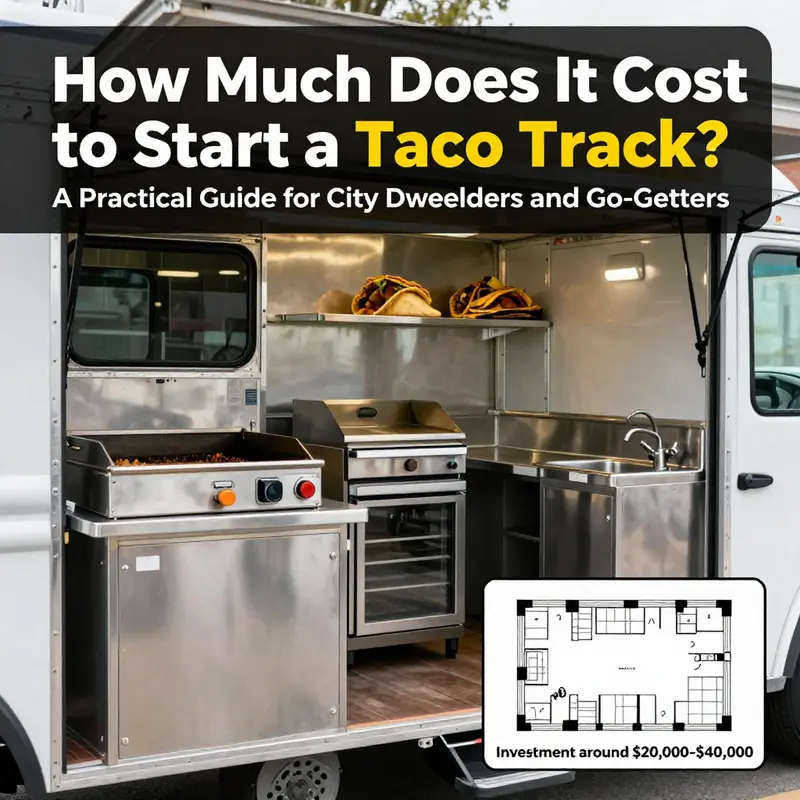
Next comes the kitchen fit-out—the heart of a taco operation. The equipment and layout inside a mobile unit determine both the speed of service and the quality of every bite you serve. For the essential, a comprehensive kitchen fit-out typically falls in the $20,000 to $60,000 range, covering cooking equipment like grills or fryers, refrigeration for meat and produce, hand-washing sinks, and sturdy prep surfaces. The cost drivers here are straightforward: the quality and efficiency of appliances, how much cold storage you need, and whether you require specialized stations for salsa, tortillas, or toppings. A mid-range setup often relies on refurbished or mid-tier equipment bundles that balance reliability with budget constraints, but it’s crucial to design the space to maintain safe, sanitary operations and to support a smooth, high-volume workflow.
Beyond the stove and the fridge, the supporting systems matter just as much. You’ll need proper water supply lines, wastewater handling, and dependable electrical capacity to power all the equipment simultaneously during peak service. A thoughtful layout minimizes backtracking, keeps the sanitation stations accessible, and allows your staff to move quickly from cooking to assembly to packaging. The floor plan becomes not just a convenience but a safety feature; a poorly designed kitchen inside a mobile unit can bottleneck service and raise the risk of accidents. An intuitive, modular design—where components can be swapped or upgraded as demand shifts—offers a way to expand capacity without a complete rebuild. When you plan the fit-out, you’re investing in the reliability of your operation as much as in its capability to produce more tacos per hour.
Licensing, permits, and insurance form the regulatory spine of the enterprise. The upfront line items here are variable by city and state, but the structure is consistent: you’ll pay for health and safety inspections, vehicle registration, and the specific licenses that apply to a mobile food operation. An annual Mobile Food Vendor Permit is a common anchor cost in many locales, often in the ballpark of $1,000 or so, with additional licenses or permissions (such as for alcohol, live music, or specific parking allowances) adding several hundred to a couple thousand dollars. Insurance is another necessary investment, with commercial coverage covering the vehicle, liability, and, if you have staff, workers’ compensation. Expect roughly $1,500 to $3,000 per year for basic commercial coverage, though costs rise with added liability layers and payroll.
Initial inventory and supplies are the fuel that gets you out the gate. A first-time grab of meat, produce, tortillas, condiments, wrappers, napkins, and disposable serving ware typically lands in a range of $1,000 to $3,000. It’s smart to build some cushion into this line item to cover early menus that test different proteins or toppings and to accommodate the inevitable fluctuations in supplier costs. In marketing and branding, you’ll likely allocate $1,000 to $5,000 to create a recognizable identity, design eye-catching signage, set up a simple website, and launch introductory promotions. The practical goal is to achieve a clean, consistent look that makes your truck memorable as you move between markets and events.
All told, the total startup cost lands in a broad but clear band. With vehicle, kitchen, and regulatory requirements folded in, most operators find themselves in the $50,000 to $150,000 space. The distinction between the lower and upper ends comes from a mix of how new or how customized the unit is, how robust the kitchen fit-out is, and how expansive the branding and initial marketing push you choose to fund. A more cautious path—starting with a used truck and a lean kitchen setup—lets you test the concept with less capital at risk. It also leaves room to reinvest profits as you learn your busiest service times, the most popular menu items, and the most reliable locations.
For many here, Austin’s market offers a practical microcosm of the broader mobile food economy: a city with a vibrant street-food culture where operators who carefully balance upfront costs with reliability tend to grow through reinvestment. The risk calculus usually improves when you start with a disciplined, phased approach. Begin with a solid, used vehicle and a dependable kitchen fit-out, then plan to upgrade equipment or expand capacity as sales solidify and flow improves. A phased investment plan helps prevent overextension, preserves cash for essential ongoing costs, and creates a natural path to scale as you gain customers and expand to new shifts, additional markets, or broader menus.
As you map your path, remember that the numbers only tell part of the story. Three silent, persistent forces shape outcomes just as much as price tags do: the tempo of your service, the consistency of your product, and your ability to navigate the local regulatory environment. The tempo of service hinges on the kitchen layout, the power and water infrastructure, and the reliability of your equipment. Consistency in flavor, portioning, and presentation builds repeat customers who come back even when you’ve moved to different spots. The regulatory environment, in turn, can either smooth your path or cause delays that ripple into cash flow. Planning with compliance in mind from day one reduces the risk of costly retrofits and fines, and it helps you protect your reputation in a crowded market.
To keep the loop tight between cost and capability, many operators pair practical budgeting with a commitment to ongoing optimization. A mid-range or refurbished setup can deliver a reliable return fast, while allowing you to test market demand before making larger, riskier investments. If you want to explore the balance between cost, reliability, and future growth, consider reading guidance on selecting equipment that balances durability with cost efficiency. For practical guidance on choosing food-truck equipment wisely, see this resource: Choosing food-truck equipment wisely.
Finally, a word about scope and reference points. The numbers above reflect typical ranges observed in discussions around starting a food truck and taco truck operations, and they are meant to guide planning rather than provide a single, fixed price. Local conditions—permits, insurance requirements, and the price of fuel or electricity—will tilt your figures up or down. If you’re aiming for precision, build a location-specific budget that accounts for your chosen vehicle type, your planned kitchen footprint, and your target launch date. A phased investment plan helps you stay flexible as you test different markets, festivals, and peak hours. And while the arithmetic matters, the real test is turning those tacos, and that truck, into a steady stream of customers who crave your flavors again and again. For deeper regulatory specifics, consider consulting the local program guidelines and official resources in your area.
External reference note: regulatory and permit details can vary by city. For regulatory specifics in a major market, you can consult the City of Austin Mobile Food Vendor Program as a practical example of the kind of governance that shapes every taco truck startup. City of Austin Mobile Food Vendor Program.
Hidden Price Tags on the Road: Permits, Licenses, Insurance, and Compliance in Starting a Taco Truck
When you map out the cost of launching a taco truck, it’s easy to zero in on the obvious line items—the truck itself, the kitchen equipment, and the initial stock. Yet a set of costs often carries more weight than the sizzling pan and the first batch of pork al pastor: permits, licenses, insurance, and ongoing compliance. These elements don’t just pad the price tag; they shape how smoothly you can turn a shaded dream of a street-side eatery into a lawful, sustainable business that can weather inspections, fines, and market shifts. The exact figures hinge on where you plan to operate, but the underlying pattern is universal: you pay for the right to operate, the protection to operate safely, and the discipline to stay within health and safety rules year after year.
Permits and licenses sit at the intersection of legality and practicality. At their core, they certify that you meet local health standards, business requirements, and the specific needs of a mobile food operation. The cost of these documents varies dramatically from city to city. In some markets, a business license may be modest, while in others it can rise into the several hundred or even thousands of dollars. A separate health department permit or certification is often required for anyone handling food, reflecting ongoing oversight of food handler practices, sanitation, and storage. For many mobile vendors, a dedicated mobile food vendor permit is a distinct, essential piece of the puzzle. Registration fees, renewal costs, and the possibility of additional permits—such as a health permit, parking permissions, or even alcohol and music licenses—mean that the annual price of staying compliant can accumulate quickly.
In Austin, a focal example for taco trucks, the Mobile Food Vendor Permit from the city’s health authority anchors the yearly compliance expense. This specific permit typically runs around the $1,000 mark per year, a baseline that reflects both the responsible posture the city expects from mobile cooks and the scale of daily operations on public streets. But the cost doesn’t stop there. Many operators also face charges for general business licensing at the city or county level, plus any health department permits tied to sanitation, waste disposal, or fire safety. Some jurisdictions bundle these requirements into a single catch-all permit, while others itemize them separately, each with its own renewal cadence. And then there are the optional or situation-specific permits—alcohol licenses, outdoor dining permits, or music licenses—that can add another $500 to $2,000 to the annual tally. In short, the permit and licensing landscape is a moving target that tracks where you park most days and how you plan to serve customers.
Insurance represents the other non-negotiable pillar. It is not simply a prudent add-on; it’s the financial safety net that keeps a mishap from turning into a business-ending disaster. General liability insurance protects you against claims of bodily injury or property damage that could arise from a customer bumping into equipment, a sauce spill, or a slip on a slick floor. For most new taco trucks, the annual general liability coverage falls in a broad range—from roughly six hundred to as much as two thousand dollars, depending on factors such as projected revenue, the scope of your menu, coverage limits, and how you structure the policy. Vehicle insurance is another piece of the puzzle because your truck is an asset and a moving platform for operations. Commercial auto insurance for a food truck can add about one thousand to three thousand dollars per year, with higher costs possible for larger, custom-built, or specialty vehicles. These numbers are not mere line items; they calibrate your risk management so that a kitchen fire, a broken payment device, or a slip-and-fall incident doesn’t derail the business.
Compliance costs, meanwhile, form an ongoing habit rather than a one-time expense. Compliance means more than passing a health inspection; it means maintaining cold-chain integrity, proper food storage, and clean equipment between shifts. Most cities require periodic inspections to verify that trucks meet sanitation and safety standards, and they expect you to maintain documentation that proves compliance with temperature controls, allergen separation, cleaning schedules, and safe waste handling. Renewal fees for mobile vendor permits can range from about one hundred to five hundred dollars annually, depending on the jurisdiction. Beyond the official paperwork, budgeting for everyday compliance supplies—gloves, sanitizers, properly labeled packaging, thermometer checks, and training materials for staff—helps prevent violations that could jeopardize your ability to operate or incur fines.
All this sounds like a lot, but the math becomes clearer when you see how these costs interact with the broader startup budget. If you’re starting in a market with Austin-like permit costs, you’re looking at at least a thousand dollars a year for the core mobile vendor permit, plus additional license and health-related fees. In larger metropolitan areas with more complex regulatory webs, the bill easily multiplies as you add health, zoning, and environmental permits, each priced to reflect the local appetite for oversight and the perceived risk of operation on public streets. Then add insurance—both general liability and commercial vehicle coverage—which steadily compounds with your forecasted revenue, vehicle type, and coverage limits. It’s a convergence of risk management, legal compliance, and operational discipline that makes these costs feel unavoidable, even if they are seldom the most exciting line on a business plan.
Understanding this framework helps you plan for a realistic, durable launch. It also shines a light on the strategy many operators adopt to minimize risk while preserving growth potential. A common path is to begin with a modest, used truck that already carries some of the necessary equipment, then upgrade the kitchen gear and branding as profits begin to accrue. This approach reduces upfront cash needs and spreads risk across a longer ramp of profitability, a pattern many Austin and other city operators have used to stabilize cash flow while navigating evolving permit requirements and fluctuating customer demand. The initial, conservative setup is then reinforced by reinvestment from early sales, which funds higher-grade equipment, enhanced branding, and improved compliance infrastructure—items that can improve health inspection outcomes, reduce waste, and raise the overall customer experience.
The narrative above underscores a larger truth: the legal obligations and protections embedded in permits, licenses, insurance, and compliance costs are not merely overhead. They influence menu design, service locations, staffing, equipment choices, and even the pace at which you expand. A plan that ignores these costs at the outset risks creating a fragile business, exposed to fines, temporary shutdowns, or liability claims that could overwhelm even the best-citched recipes. Conversely, a thoughtful, regionally informed approach to licensing and protection increases the odds of steady cash flow, reliable operations, and the ability to scale. It also invites operators to consider sustainable practices that align with regulatory expectations and customer values. For instance, adopting efficient waste management, proper refrigeration protocols, and reusable or compostable packaging not only helps pass health inspections but also resonates with diners seeking responsible street-food experiences. For more on integrating sustainable practices into mobile-practical operations, see this discussion about sustainable practices for mobile food trucks.
If you want more granular guidance on what to expect in your own city, local health departments and small-business development centers are invaluable resources. And while the landscape shifts with local policy, the core truth remains constant: permits, licenses, insurance, and compliance costs establish the framework within which every taco-truck dream moves from paper to pavement. They are the quiet, persistent costs that, if ignored, turn a clever concept into a fragile venture. If you’re charting a plan, map these line items across your first 12 to 24 months, add a contingency for permit renewals and policy changes, and let that budget guide your decisions about location, hours, and menu breadth. In the same way a well-calibrated grill temp protects your carne asada, a well-structured compliance budget protects your business from the unpredictable weather of regulations and the market’s ebbs and flows. For broader context on guidance and formal resources, you can consult the U.S. Small Business Administration, which provides comprehensive information on starting a food truck business: https://www.sba.gov.
In the end, your total startup figure evolves from a simple arithmetic of gear and stock into a more nuanced forecast that includes the safety margin necessary to stay in business when the license renewal, the insurance bill, or the health-code interpretation changes. The upfront cost may be visible—the price tag attached to the permit sticker, the policy declaration, or the inspection appointment. But the ongoing cost—renewals, ongoing coverage, compliance supplies, and the discipline of daily sanitation—defines the true annual cost of operating. When you pair this understanding with a pragmatic acquisition strategy—starting with a solid, used truck, prioritizing essential equipment, and layering in improvements as profits permit—you create a route not just to a tasty menu but to a durable business model. This is the quiet backbone of any taco truck’s ascent, the kind of groundwork that sustains flavor and finances alike over countless service windows, street corners, and busy lunch hours.
Budgeting the Taco Truck Launch: How Inventory, Marketing, and Working Capital Shape Your Start
Launching a taco truck requires more than a single purchase; it is a plan that links the vehicle, the kitchen setup, supplies, and the capital to operate through the early weeks. Understanding cash flow, risk, and speed to market comes from mapping three decisive variables: the mobile unit, the interior equipment level, and the amount of working capital on hand. These choices affect permits, branding, and reliability, and they determine whether you can stay lean or rely on outside funding. Costs should be viewed as a spectrum rather than a single price tag. A used truck or trailer can keep upfront costs modest, while a premium build or new unit pushes the outlay higher. Leasing offers monthly predictability but requires enough cash flow to cover payments and ongoing operating costs. Costs vary by market due to permits, insurance, and ingredient costs. In many cities, a mobile vendor permit sits in the low thousands per year. The budget hinges on your risk tolerance, market demand, and speed to market. The goal of this chapter is to show how the major cost blocks fit together so you can sketch a plan aligned with your goals and local rules.\n\nVehicle and equipment costs anchor the budget. The vehicle is the largest upfront expense, but inside equipment—grills, refrigerators, sinks, prep surfaces—drives reliability and efficiency. A used trailer or truck might cost roughly ten to thirty thousand dollars for basic buildouts. A higher-end build or larger setup can reach sixty thousand dollars or more. Leasing a truck at around $1,500 to $3,000 per month can be attractive, preserving working capital for food costs and initial marketing. Inside, kitchen gear often runs five to fifteen thousand dollars, depending on scope and configuration. Plumbing and electrical typically run two to five thousand dollars, with interior build-outs adding three to ten thousand more. In sum, vehicle plus core kitchen tends to land around ten to thirty thousand dollars for a pragmatic entry point that leaves working capital and initial inventory room. This figure remains deliberately conservative to accommodate essential costs.\n\nInventory and supplies form the next cost tranche. The first shop run centers on what you can reliably produce and procure. For a taco menu, initial stock covers tortillas, meats, cheese, vegetables, sauces, plus disposable packaging and napkins. Plan for about two to three thousand dollars for initial ingredient stock, and five hundred to one thousand dollars for packaging. These numbers reflect keeping ingredients fresh, maintaining consistent portions, and ensuring smooth prep-to-service workflow. A well-planned inventory helps gauge how fast you can scale and reduces waste. Marketing and branding then become the face of your launch. Branding starts with a modest logo or identity package, roughly two hundred to one thousand dollars, followed by signage and vehicle wrap if you want a strong mobile presence. Signage and wrap can range from one thousand to three thousand dollars, and you should reserve funds for a basic website and early social media push. Launch events or free samples can cost five hundred to one thousand dollars depending on ambition and desired impact.\n\nWorking capital sustains the launch in the first months. Expect three to six months of working capital to cover slow-start periods. On a monthly basis, operating expenses such as commissary fees, utilities, fuel, labor, and permits typically range from two thousand to six thousand dollars, depending on location and team size. A reserve fund of six to eighteen thousand dollars provides a cushion against unforeseen expenses and late revenue. Licenses, permits, and insurance complete ongoing costs. A business license may cost fifty to five hundred dollars, a food handler’s permit fifty to one hundred fifty dollars, and mobile vendor permits two hundred to one thousand dollars. General liability insurance often runs one thousand to two thousand five hundred dollars annually, with vehicle insurance adding roughly one thousand to two thousand dollars per year. Together, these ongoing costs reinforce the importance of careful cash management from day one.\n\nIn total, a pragmatic entry path often sits between twenty thousand and sixty thousand dollars, depending on how lean you start and how quickly you scale. A more ambitious build and stronger branding push you toward the upper end, while a conservative approach—starting with a used trailer and incremental upgrades—tends toward the lower end while preserving cash for operations and menu refinement. Local regulations will shape exact figures, so budget for the first quarter and plan to reinvest profits into higher efficiency equipment, better branding, and stronger supplier relationships. For reference, external pricing listings can provide a view of current market points and help calibrate expectations as you plan your first truck. The bottom line: align your budget with a realistic plan to reach customers, cover day-to-day costs, and grow thoughtfully. The next chapter will translate this budget into a practical, step-by-step launch plan that moves you from idea to roadside service with clarity and control.
Chapter 5: The Price of Rolling Taco Power — Mapping Startup Costs, Financing, and Risk for an Austin Taco Truck
When you picture a taco truck rolling into a sunlit pocket of Austin, you may hear the sizzle before you see the lineup. But the allure of a taco on wheels hides a practical math problem: what does it really cost to start, equip, license, and sustain a mobile kitchen? The answer isn’t a single sticker price. It’s a blend of vehicle choices, kitchen needs, regulatory requirements, and the careful planning that turns a great concept into a dependable, repeatable business. In Austin, as in many bustling food scenes, the starting costs reflect not only the cost of the truck itself but the ecosystem that supports safe, compliant, and delicious operation. To map the terrain clearly, it helps to walk through the major cost blocks in a way that connects to your strategy for growth, risk, and eventual profitability.
First, the vehicle sits at the core of the calculation, and it carries the most variance. A used food truck can be a gateway, with prices that begin in the mid two figures and stretch upward depending on condition, miles, and the fit of the kitchen. A ballpark range often starts around the twenty-five to thirty thousand dollars mark for a solid used unit, but that number can drift well past sixty thousand if the truck has been upgraded, repainted, or if it’s a larger platform designed for high-volume cooking. A brand-new or custom-built unit commands a much higher price tag, frequently tipping into six figures and sometimes beyond. Some operators choose to lease, which may run roughly fifteen hundred to three thousand dollars a month, offering a lower upfront commitment but a longer-term revenue math to manage. The vehicle choice shapes everything that follows, because it determines not just upfront cash flow but ongoing maintenance costs, fuel efficiency, and the capacity to store what you need when you need it.
The kitchen, once you’ve parked the truck, becomes the next dominant line item. Essential equipment—grills, refrigeration, fryers, sinks, prep tables, and storage—needs to be sturdy and food-safe, able to handle the day’s load and the pace you expect on a busy Austin corner or festival line. A realistic investment for a fully equipped operation commonly falls in the twenty to forty thousand dollar range, depending on the level of customization and the scope of your menu. You may trade off some items for secondhand units or consolidate equipment to fit a tighter footprint, but the aim is reliability and efficiency. When you’re building a kitchen on wheels, space is a strategic resource; every square foot saved is a second gained during peak service. If you’re weighing options, remember that choosing equipment wisely matters more than chasing the flashiest models, and you can start lean and upgrade as volumes grow. To see how other operators prioritize this aspect, consider the idea of equipment choices for food trucks as a practical guide to prioritizing reliability, serviceability, and throughput equipment choices for food trucks.
In Austin, regulatory requirements shape the cost landscape as well. Licensing and permits are indispensable, and you’ll typically face a Mobile Food Vendor Permit that comes with an annual price tag—often around one thousand dollars. Depending on your plan, there may be additional permits for alcohol service, music playback, or parking arrangements, each adding a few hundred to a couple thousand dollars to the first-year exposure. Insurance is another fixed cost you’ll want to carry with you from day one. Commercial food truck insurance generally lands in the range of one thousand five hundred to three thousand dollars per year, depending on coverage levels, the truck’s value, and your intended operating locations. Then you have the practical cost of staying compliant: health department approvals and inspections, which may involve fees and periodic checks. These are not optional adornments; they’re the guardrails that keep your operation open, safe, and trusted by customers who walk up to your menu.
Beyond regulatory gear, there’s the bread-and-butter of day-to-day operations: initial inventory and supplies. Your first run of ingredients and disposables—tortillas, proteins, vegetables, sauces, and packaging—will usually require a thousand to three thousand dollars to kick off. It’s rarely glamorous to manage cash flow at this stage, but a precise initial stock helps prevent missed service and inconsistent product quality. Marketing and branding also matter early. A lean but deliberate budget—roughly one thousand to five thousand dollars—can establish your voice, color, and presence in the local market. A strong launch plan might include signage, a simple website, social media presence, and introductory promotions that create momentum without breaking the bank.
All told, the typical startup range for launching a fully equipped and licensed taco truck sits roughly between fifty thousand and one hundred fifty thousand dollars. The spread reflects the same truth that sits behind any business in a crowded food scene: the numbers are a function of how far you want to go, how much risk you’re willing to absorb, and how carefully you plan the path from concept to cash flow. If you’re looking to minimize upfront risk, the conservative approach is to start with a solid used truck and then reinvest profits to upgrade equipment and services as you prove the concept in real-world conditions. The Austin market rewards operators who can blend authentic flavor with dependable service, and the early years often hinge on the discipline of cash management, the clarity of your menu, and the ability to move from pop-up or limited hours to a steady, mobile footprint.
Financing is the practical bridge from idea to execution. Traditional bank or credit union loans are common routes for food service startups, with terms that can be favorable when you bring a solid business plan, credible projections, and some startup capital to the table. Beyond traditional lenders, specialized programs exist to make capital access easier for minority- or women-owned businesses and for ventures that fit within community development aims. SBA microloans and related CDFI support can be particularly helpful for operators navigating the early stages of a mobile food business and planning a phased expansion. If you prefer to test the waters without heavy debt, crowdfunding platforms can be effective when paired with a compelling brand story and a concept that resonates with a local community. Bootstrapping—saving and reinvesting personal resources at first—remains a viable path for many families turning a neighborhood favorite into a scalable business.
A thoughtful chapter in your planning is to embrace a phased approach. Rather than chasing full-scale ambition from day one, start with a few predictable services, such as a limited schedule at weekend markets or a pop-up in a high-foot-traffic area near offices or parks. This lets you refine your recipe, calibrate your pricing, and build a reliable base of customers before committing to a larger mobile footprint. Mentorship and networking can play a pivotal role in this phase. Partnerships with an experienced operator, participation in local food truck associations, or guidance from a consultant can help you anticipate common pitfalls and course-correct quickly when the first busy weekend reveals the real costs of demand, pricing, and talent.
As you map costs, you’ll likely find that the biggest leverage is in your planning around equipment and location. Good equipment reduces breakdowns and service time, while a well-researched location strategy increases average check size and frequency. The financial plan you develop should include conservative revenue projections and multiple expense forecasts that account for seasonal fluctuations, permits, insurance renewals, and maintenance. If financing is necessary, your plan should demonstrate how you’ll service debt while reinvesting in equipment upgrades and workforce development. The aim is to create a sustainable cycle where profits fund expansions—without compromising quality, customer experience, or compliance—the trifecta that sustains a taco truck in a city that loves a late-night taco as much as an early-morning one.
To close the loop on costs and strategy, consider the value of a staged build that minimizes risk while preserving growth potential. A practical path is to begin with a dependable used truck, equip it prudently, obtain the essential Austin permits, and pilot a menu with a focused set of items. As revenue grows and cash flow stabilizes, you can upgrade critical components—perhaps upgrading refrigeration, expanding menu capacity, or acquiring a second unit for concurrent locations. This approach aligns with the realities of a dynamic market where consumer tastes evolve, competition is intense, and the regulatory environment requires ongoing attention. It also provides a framework for communicating with lenders, investors, or partners who want to see a clear, measurable plan for capital utilization and return on investment. If you’re seeking a deeper, externally validated lens on the funding landscape, the U.S. Small Business Administration offers a comprehensive overview of starting a food truck business and the financing options that commonly accompany it, which can be a useful reference as you craft your own roadmap.
External resource for further reading: https://www.sba.gov/business-guide/plan-your-business/start-a-food-truck-business
Final thoughts
Launching a taco truck is a multi-step financial journey, not a single leap. By breaking costs into vehicle procurement, kitchen setup, permits and insurance, and the ongoing needs of inventory and marketing, you gain visibility into where money must be allocated now and where you can grow later. The most resilient plan often starts lean: a reliable used truck, essential equipment, and a conservative operating buffer, paired with a paid-off strategy for permits and insurance. From there, incremental upgrades—whether adding a higher-end griddle, better refrigeration, or a targeted standout marketing push—become a controlled, profitable evolution rather than a risky sprint. Remember, your best defense against surprises is a well-documented budget, clear milestones, and contingency funding that covers at least a few weeks of operations. With careful planning and steady reinvestment, a taco truck can transition from a weekend side hustle to a reliable, scalable business that serves busy city dwellers, outdoor lovers, and curious locals alike.