
Urban weddings demand flexibility, flavor, and predictable budgeting. A taco truck brings a mobile, high-energy catering option that fits city venues, outdoor venues with street vibe, and intimate backyard celebrations alike. Costs to rent a taco truck for a wedding vary widely by city, season, truck size, and menu complexity, so understanding the baseline and the drivers helps you plan with confidence. This guide unpacks the essentials in five focused chapters: Chapter 1 covers pricing ranges and baseline costs so you know the starting point. Chapter 2 explains the location, truck size, menu depth, and event duration that push prices up or down in urban markets. Chapter 3 looks at staffing, customization, and service components that can alter the total. Chapter 4 breaks down pricing models and how quotes are constructed, so you can compare apples to apples. Chapter 5 shows how to obtain real-time pricing and vendor options using trusted platforms. Whether you’re commuting between neighborhoods, planning an outdoor ceremony, or running a small business on the event trail, this guide translates numbers into a practical budgeting plan.
Chapter 1: The Taco Truck Equation — Pricing Ranges, Baselines, and the Wedding Budget
Once the decision is made to anchor a wedding menu with a taco truck, numbers begin to shape the day as surely as vows shape a future. Pricing for a taco truck at a wedding varies widely, influenced by location, truck size, menu complexity, and service duration. In most markets, a full-day rental—typically six to eight hours—will land somewhere in the range of roughly $1,500 to $4,000 before add-ons. This baseline reflects the truck’s transportation, labor, and the core experience you are choosing: a set number of tacos per guest, a workflow that keeps orders moving, and the crew who will manage the line, plates, and cleanup.
For many couples, a single price tag is less useful than a budgeting framework. A common approach is to think in two layers: a base rental that covers the truck’s presence and standard tacos, plus a per-guest component that scales the menu to your guest count. Some vendors present a per-person price, typically in the ballpark of $15–$25 per guest, while others offer higher tiers that run up to $25–$35 per guest depending on ingredients and service level. Small weddings around fifty guests often fall into a compact range, with base costs roughly $1,250 to $1,750, while larger celebrations with 150 guests or more can push to $4,000 or more. These numbers are not absolutes, but they sketch a practical edge to the planning and help you frame conversations with vendors.
What sits inside the base cost matters as much as the ticket price. The base usually includes a fixed number of tacos per guest, a standard salsa bar, standard beverages (if offered), the truck on-site presence, and the crew needed to cook, assemble, and serve. Premium ingredients such as house-made tortillas, specialty meats, organic produce can elevate the ticket, and there is often a charge for additional staffing or a manager to coordinate service flow. Then there are logistical add-ons that can affect the bottom line: travel fees if the venue is far from the truck home base, setup and teardown time, and drinks service if you want a taco-and-tips pairing or a custom soda bar. It is common to encounter a menu upgrade or a service upgrade that nudges the all-in price upward by a few hundred dollars or more, depending on the setup and the distance traveled.
A few couples explore themed or interactive elements, like a live-taco-making station or a dedicated guacamole bar, which can elevate the experience but add to the price. Some packages offer decor or branding touches—the truck dressed to align with a color scheme or a gift for guests. These extras can be memorable but they add to the tally, so weigh the emotional payoff against the price tag. The heart of the decision is how you want guests to experience food: a casual, communal feast around a vibrant truck, or a more curated service with high-touch presentation. Either way, expect to negotiate a detailed, itemized quote so nothing feels like a mystery charge when the bill arrives.
The budgeting process becomes practical when you consider venue and date. Locations in major cities or peak seasons can push prices higher, driven by demand, traffic, and the need to accommodate a larger crew or more elaborate equipment. If you are planning a wedding that unfolds across a two-hour cocktail hour followed by a dinner, you might favor a single service window rather than a sprawling, staggered schedule. Distances matter too; travel fees can add up and may require adjustments to the service window or the number of staff on-site. A well-run taco truck can be the right choice for a streamlined timeline and a festive atmosphere, balancing flavor, ambiance, and logistics with financial clarity.
To keep the process grounded, many planners request an itemized quote from each vendor. A good quote breaks out base rental, per-guest catering, staffing, beverages, travel, setup, and cleanup, plus optional add-ons. Tastings and consultations are helpful to test flavors and cooking style if the taco truck is a centerpiece of the reception. Flexible dates or a smaller guest list during off-peak months can unlock lower base rates, as vendors often offer more favorable terms then. For broader context on wedding catering pricing benchmarks, see WeddingWire.
Taco Truck on the Guest List: Decoding the Price of a Wedding-Mobile Feast
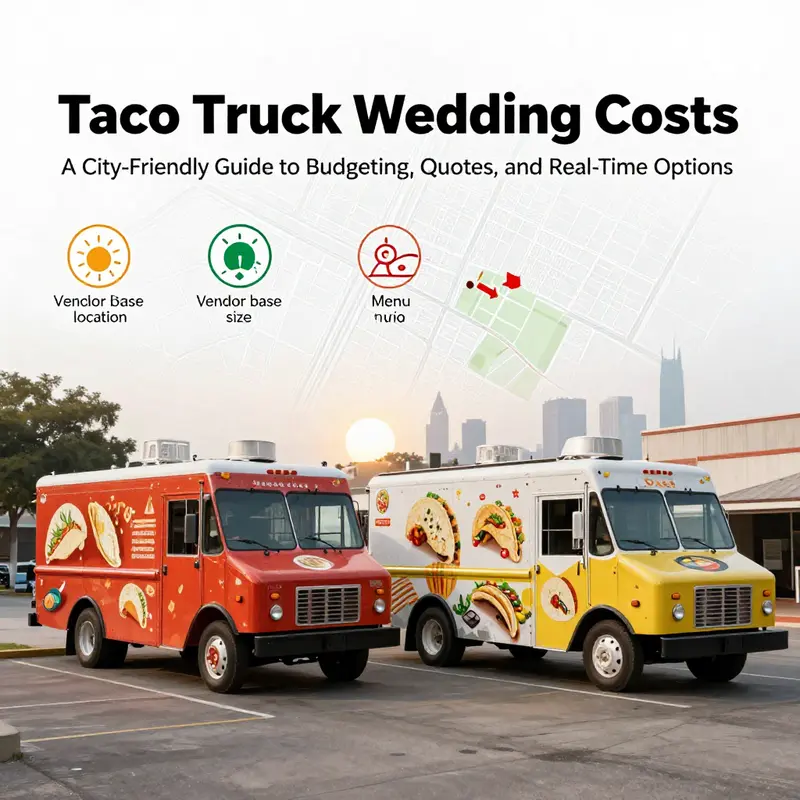
A wedding often gathers around a meal that tells a story, and a taco truck can be the most vivid chapter in that story. The idea is playful and practical at once: fresh tortillas, sizzling grills, vibrant toppings, and a service style that feels bustling and festive. But just as every couple plans for a dream venue, every taco-truck menu comes with a price tag shaped by real-world variables. Understanding those variables helps you budget without sacrificing the flavor or the vibe you want on the big day. The goal is not to chase a single number but to map how the number can drift and how you might steer it toward your priorities, whether you’re in a dense city center or a quiet hill town, whether you envision a streamlined service or a show-stopping, branded culinary display.\n\nOn the broad canvas, most complete taco-truck experiences for a wedding tend to land somewhere in the range of a few thousand dollars for a full day, with the total cost swinging based on location, truck size, menu scope, and how long the truck stays in service. In practical terms, think of a full-day rental—roughly six to eight hours—as the baseline, with many vendors pricing by the hour or by a set block of time. At a glance, it’s common to see a starting point around a thousand dollars and prices rising toward three thousand or more in larger markets or during peak wedding seasons. Yet the exact figure depends on a cluster of interacting factors that shape the final bill just as much as your guest count or the venue itself.\n\nLocation is the first price driver to consider. The market you’re in matters as much as the menu you choose. In major metropolitan areas, demand for mobile catering rides high on peak Saturdays, and operating costs—permits, insurance contingencies, and staff wages—tend to be higher. Those higher overheads push taco trucks toward the upper end of the spectrum, especially if the event is scheduled during a busy season or in a venue with strict time windows. In more rural settings or smaller towns, the same truck might operate with leaner margins and shorter travel times, yielding more affordable options. Travel fees add another layer to the location equation: a venue that sits many miles from a truck’s home base quickly nudges the total price upward, even if the event itself is only a few hours of food service. Permits, on-site setup requirements, and parking logistics all echo back to the bottom line, underscoring how location-sensitive the planning phase truly is.\n\nTruck size and type carry another substantial weight. A larger truck with more kitchen space, better ventilation, and a broader array of equipment can accommodate bigger menus and higher service speed, but those capabilities come at a premium. Custom-designed or highly branded trucks can command premium pricing simply because they’re more eye-catching and more efficient in terms of workflow. Vendors often structure their offerings in tiers—basic versus premium setups—so the same concept (tacos on wheels) can feel like two different experiences with two different price tags. If you’re aiming for a compact, intimate wedding, a smaller, efficient setup may meet your needs without inflating costs; if you’re planning a lively reception with a multi-tantamount taco bar, the extended equipment and staff rail an upcharge.\n\nMenu complexity is the next critical driver. The core appeal of a taco truck is flexible cuisine, but that flexibility isn’t free. A menu built around classic staples with standard proteins tends to be more economical because ingredients are widely available and prep is streamlined. Introduce premium proteins, handmade tortillas, or chef-driven toppings, and ingredient costs climb, along with labor and prep time. Dietary options—vegan, gluten-free, allergen-conscious arrangements—add a layer of sourcing and dedicated prep that vendors price accordingly. A broader menu also means more cooks, longer prep shifts, and the need for more equipment on site. The result is a higher total even if the headline price per hour remains the same.\n\nDuration and service model complete the triad of price drivers. The way the vendor structures the engagement matters almost as much as the raw menu. Some trucks price by the hour, others by a block of several hours, and some include setup, staffing, and teardown in the quoted price. If your plan is a shorter, snack-size service window, you’ll likely pay less than for a longer reception with continuous service. If you want the truck to operate in tandem with other stations, you can sometimes negotiate a more favorable rate by shortening overlap times or consolidating service windows. Travel time is another sometimes-hidden factor: the truck’s time spent driving to and from the venue, plus on-site setup and teardown, often translates into a fair portion of the total. A longer event and more complex service model can quickly inflate the price, even if the base hourly rate stays modest.\n\nStaffing levels and operational requirements also influence the final figure. Some vendors include on-site chefs, line cooks, or attendants as part of the package; others price those roles separately. If the wedding calls for specialized service—such as live grilling stations, coordinated plating, or a dedicated front of house team—the labor cost will reflect those added responsibilities. In parallel, per-person pricing models can surface in some quotes, especially for larger guest lists. A rate like fifteen to twenty-five dollars per person may seem straightforward on the surface, but married to your guest count, it becomes a major line item that can overshadow the base hourly cost. Price transparency matters here. Ask for a written breakdown that separates labor, ingredients, travel, permits, and any discretionary add-ons. This clarity helps you see where you might trim without diminishing the guest experience.\n\nWith all these levers in mind, budgeting becomes less about chasing a single “best” price and more about aligning the package with your priorities. If a dramatic, photogenic service with a robust menu is central to your vision, it might be worth investing more in the truck’s size, customization, and staffing. If you’re more focused on a laid-back vibe and a straightforward taco experience, you could prioritize a leaner setup, a tighter service window, and a per-person model that scales cleanly with guest count. A practical approach is to begin with your location and date, gauge the feasible service window, and then identify two or three menu configurations that fit within your target range. From there, you can request quotes and compare the all-in numbers rather than just the headline price. The exercise also invites you to consider how much flexibility you truly have. If your venue is open to non-traditional catering formats, you may unlock opportunities to reduce travel fees or secure a better time slot, which can have a meaningful impact on the total.\n\nAs you examine options, a single, strategic reference point can help you navigate the landscape without losing sight of your wedding’s character: the idea that the price you pay should reflect not only the food but the entire experience—the ambiance, the interaction, and the sense that your guests are part of a shared moment, not just a meal. For an example of how a mobile catering operation can extend its impact beyond food through community engagement, you can explore a real-world case focused on trucks that partner with local initiatives. This perspective helps you weigh not only the monetary cost but the value of engaging your guests in a story larger than the party itself. Trucks for Change community engagement impact.\n\nTo move from concepts to numbers, reach out to local vendors with a concise event brief—date, venue, approximate guest count, desired service window, and any dietary needs. Ask for a written quote that itemizes labor, ingredients, travel, setup, and teardown. If you’re comparing platforms that connect planners with mobile catering services, use their quote tools to gather standardized estimates, then refine your search by prioritizing the factors most important to you. In the end, the price you pay is a reflection of both market realities and the wedding narrative you want to tell. The taco truck you invite becomes an affordable, memorable, and portable stage on which your celebration unfolds.\n\nExternal resource: https://www.theknot.com
Pricing, People, and Panache: Staffing, Customization, and Service in a Wedding Taco Truck Experience
When couples begin to map out a wedding feast that moves beyond the conventional buffet, a taco truck often rises as a favorite for its warmth, energy, and interactive vibe. Yet the charm of a taco truck hides a pricing framework built from more than just the gleam of chrome and the sizzle of a grill. It hinges on three interwoven strands—the staffing behind the scene, the customization that tailors the truck to a couple’s story, and the service components that shape the guest experience from the first bite to the last crumb. In practice, the cost of renting a taco truck for a wedding generally lands in a per-guest range that reflects those strands, with most full-service packages clustering around a base of roughly twenty-five to thirty-five dollars per attendee. Some vendors present a broader spectrum, where more streamlined or more inclusive arrangements drift toward the lower or higher ends of a larger band, and weddings tend to skew toward the upper end given expectations for quality, consistency, and presentation. The result is not a single price tag, but a bundled proposition that aligns the menu, the service tempo, and the event’s overall atmosphere with a guest experience rather than a mere meal.
Central to this equation is staffing. Reputable taco truck operators typically bring a trained team to the venue, including a chef or lead cook, several line cooks or assistants, and servers who guide guests through the service line, replenish stations, and keep the flow moving during peak moments. For most weddings, this staffing is embedded in the per-guest rate, but there are practical distinctions that can tilt the final invoice. Large weddings or events that extend well into the night may require additional staff—extra cooks for a longer service window, a dedicated supervisor to coordinate timing with other vendors, or even a separate bartender if the menu includes craft margaritas or other specialty drinks. These additions, while enhancing the guest experience, carry incremental costs that add realism to any claims of a fixed per-guest price. Even informed couples who want a lean, hands-off experience should expect a dialogue about staffing layers and how they influence the bottom line. Optional add-ons exist, too, with some trucks offering specialized staff like mixologists for entertainment-forward beverage experiences or a premium server focusing on signature dishes or limited-quantity offerings. The aim is to balance efficiency with attentiveness, ensuring that guests are delighted without creating pockets of fatigue at the back of the reception.
Customization is the second pillar shaping cost and experience. A taco truck that feels bespoke to a wedding is not just about carving a logo into a napkin or threading a color scheme through the signage. It’s about translating the couple’s theme—whether rustic, coastal, bohemian, or modern minimalist—into visual cues, service style, and even the pacing of the meal. Custom branding can take many forms, from branded signage and menu boards to color-coordinated serving stations and lit decor that complements outdoor lanterns or string lights. In practice, many couples invest in these design-focused add-ons to make the truck blend seamlessly with the venue’s aesthetic. The investment for such touches can range from a few hundred dollars to a thousand or more, depending on the scope and materials chosen. The goal is cohesion: the taco truck becomes a mobile stage that reinforces the wedding’s mood rather than a solitary food stop.
Beyond branding, customization also covers menu design and how the truck presents its offerings. Some couples opt for a curated menu that highlights a few signature tacos, precise toppings, and a curated beverage pairing concept, while others request broader menu flexibility to accommodate dietary needs and guest preferences. The service footprint—how food is cooked, plated, and served—also falls under customization. A basic setup might deliver hot, ready-to-assemble tacos at a standard service line with disposable ware and standard cleanup. A more elaborate configuration could feature live-action stations, chef-led demonstrations, plated or token-for-tasting portions, and elevated serving ware. Each of these choices translates into costs that accumulate with the complexity of the setup, the equipment required, and the level of on-site coordination demanded by the event timeline. In short, the more the truck aligns with a wedding’s theme, the more the design and service lift the price, even before we tally the actual food costs.
The third pillar concerns service components—the practical aspects that ensure the taco truck not only feeds guests but does so smoothly and with a sense of ceremony. Service components begin with the basics: on-site setup, food preparation, and ongoing maintenance of the stations throughout the event. They extend to provisioning and operating equipment, from grills and refrigerators to serving stations, heat lamps, and the clean, efficient disposal of waste. A full-service package often includes the use of disposable or reusable tableware, utensils, and napkins, as well as post-event teardown and cleanup. For weddings with longer reception hours, planners frequently negotiate for extended service windows, which can drive additional labor costs and, in turn, the overall per-guest price. Waste management, a sometimes overlooked logistics element, becomes a meaningful part of the equation when the guest count is high or the venue has stringent cleanup expectations; even small decisions about compostable versus reusable wares and composting arrangements at the venue can exert price pressure. The nuance here is that service is about reliability as much as it is about flavor. A smooth service experience reduces chaos, minimizes line bottlenecks, and preserves the memory of the night as one of effortless celebration.
Another layer to consider is the regulatory and thematic integration that affects both cost and execution. If the wedding scenario includes craft cocktails or a Western-inspired ambiance, the taco truck becomes part of a broader narrative that requires alignment with licensing, permits, and venue policies. Alcohol service, in particular, can entail additional compliance and oversight, sometimes prompting a separate licensing discussion or a formal arrangement with the vendor to ensure seamless operation within local regulations. In practice, couples who embed a strong thematic thread into their wedding find that the truck’s role expands beyond food—the vehicle becomes a storytelling device, a kinetic backdrop for photos, and a catalyst for guest interaction. The upside is a more immersive experience; the downside is a more elaborate setup that contributes to the price through staffing, décor, and coordination efforts.
Given the breadth of variables—from base pricing to staff and décor—couples should expect a detailed, itemized quote that breaks out staffing, customization, and service components. A well-constructed quote will call out the chef’s lead time, the number of attendants, the exact scope of customization, and the duration of service. It will also address ancillary costs such as travel fees, setup and teardown time, equipment provisioning, and the type and number of serving stations. With such a breakdown, a couple can understand how much of the price is driven by the labor force, how much stems from design choices, and how much depends on the scope of service—letting them decide where to invest for the most meaningful impact on guest experience.
For couples who want to explore sustainable or eco-conscious options, many taco truck operators can integrate greener practices into the package. This can include sourcing locally, using compostable or recyclable wares, and implementing streamlined waste management. These choices not only align with values but can also influence cost and logistics in meaningful ways. sustainable practices for mobile food trucks can serve as a useful reference for couples seeking to balance aesthetics, experience, and environmental responsibility within the wedding taco truck package. While sustainability may add a touch of effort and expense, it often results in a cleaner footprint and a story that couples are proud to tell their guests.
In the end, the final price for renting a taco truck for a wedding reflects the interplay between staffing, customization, and service. It’s a composite score rather than a single line item. The most effective approach is to secure a transparent quote that itemizes every element—staffing levels, menu design consultations, on-site setup and teardown, equipment provision, and the scope of any branding or décor. It’s also prudent to verify licensing and experience with events of similar size and scope, ensuring the vendor can deliver both quality and reliability on the big day. For those who want broader guidance on catering practices, industry resources offer a framework to evaluate what good catering looks like in a live event setting. External resources from the broader industry can provide additional context and standards to inform the decision-making process. As with any wedding purchase, the goal is to align cost with the guest experience—so the night feels effortless, memorable, and uniquely yours. External resource: https://restaurant.org
Pricing in Motion: Understanding Taco Truck Costs for Weddings
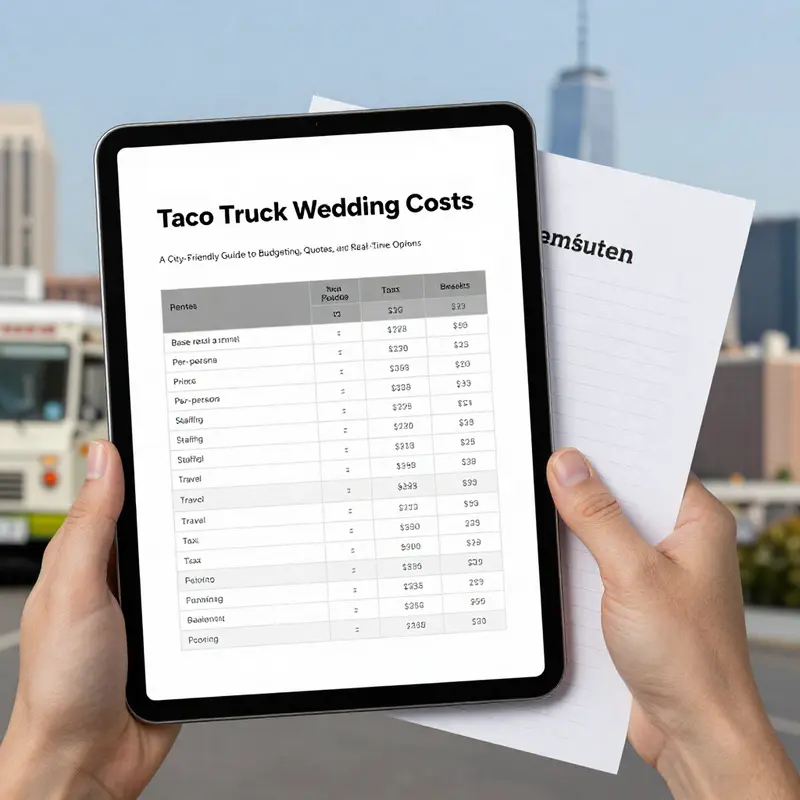
Choosing a taco truck for a wedding is exciting, but budgeting can be tricky. Prices vary by location, truck size, menu, service length, and extras. Many quotes mix base food costs with delivery, setup, staffing, travel, and overtime. A typical range for a 100-guest wedding might start around $3,000 to cover food, with additional $500-2,000 for logistics and premium options. Per-person pricing is common, often in the $25-40 range, with minimum guest requirements and possible base fees for small events. When gathering quotes, ask for a detailed, itemized breakdown and check what’s included: staff, equipment, permits, power, water, and whether travel time or peak-date surcharges apply. Compare several vendors to confirm value, quality, and reliability. The right quote balances cost with guest experience and service quality, delivering hot, flavorful food and professional service without surprises in the final bill.
Chapter 5: Real-Time Realities of Renting a Taco Truck for a Wedding — Navigating Price, Options, and Accurate Quotes
Choosing a taco truck for a wedding can feel like solving a delicious puzzle. The charm of a live, mobile kitchen presenting a menu that evokes a shared feast is undeniable. But the price tag behind that charm matters just as much as the sizzle of the grill. In this chapter, we pull back the curtain on real-time pricing and the practical routes to solid vendor options. Prices for renting a taco truck are not fixed numbers you can memorize once and carry through the planning process. They shift with location, the size and condition of the truck, the complexity of the menu, and the length of the service. What you’ll commonly see are ranges rather than precise figures, since each vendor builds a quote from a unique mix of elements. For a full-day event, you might see a baseline in the neighborhood of a couple thousand dollars, with significant variation based on the factors at play. In major cities or during peak wedding seasons, those numbers can creep higher as demand climbs and the trucks balance travel, labor, and food costs. The practical takeaway is simple: expect a price band, but verify the current numbers for your date and venue before you commit. The difference between a one-venue, off-peak weekend and a marquee wedding weekend can be the gap between a comfortable fit and a stretch that forces an important decision elsewhere on the budget.
Beyond the base rental, several knobs tune the final price. The basic rental could be inclusive of a set service window, or it could be a lean framework that requires additional staffing, more time, or add-ons. If the taco truck includes a chef, specialized ingredients, or a custom menu, the price climbs accordingly. Some vendors price per hour, while others quote a flat rate for a defined block of time. Regardless of the approach, the trend is toward transparency on what’s included and what carries an extra charge. Travel from the vendor’s base to the venue can also push the bill upward, especially if the route traverses challenging terrain, multiple delivery points, or a long drive that eats into the service window. The logistics matter as much as the flavor, because a smooth setup requires time and space to park, stage, and connect utilities.
Another layer to consider is per-guest pricing. Some taco trucks offer a per-head model, often in the range of roughly $15 to $25 per person. This approach can simplify budgeting when guest counts are fixed, yet it can spiral if attendance shifts. A small wedding may stay well within a flat-rate range, while a larger guest list can propel costs quickly under a per-person scheme. When you’re weighing options, it’s essential to ask for a clear, itemized quote—one that separates the base rental, any staffing, menu costs, travel fees, equipment charges, and the per-person portion if applicable. A detailed quote is your best defense against budget surprises and misaligned expectations on the wedding day.
The practical path to accurate pricing starts with a straightforward toolkit. First, gather basic details: the event date, venue address, total guest count, and the approximate service window. Then sketch out your menu priorities—will you keep it simple with a signature lineup, or are you aiming for a more elaborate spread with multiple proteins, toppings, and sides? Also be explicit about power and water needs, access hours, and any local restrictions that could affect a food truck’s setup. Some venues impose quiet hours, parking limitations, or generator requirements; these constraints can trigger added fees or limit the hours a truck can operate. Vendors will want to know these particulars to deliver a precise quote rather than a placeholder number.
With these details in hand, you’ll begin to see how quotes diverge. A key distinction is whether a vendor is offering a complete turnkey package or a base rental with optional add-ons. Turnkey packages can feel more reassuring—the truck arrives with staff, uniforms, and a prepped menu, and the price includes setup, service, and cleanup. But turnkey can also price out higher than a lean, do-it-yourself approach where you contract separately for staffing or equipment. If you opt for a per-hour approach, the math becomes simple: multiply the hour count by the rate, then add any mandatory minimums or travel charges. If the vendor uses a per-person model, multiply the guest count by the per-person rate and then add the base or minimum service charge. Either way, insist on an itemized quote so you can trace every line item back to a specific need.
A practical negotiation strategy is to frame the discussion around your non-negotiables and your flexibility. If your priority is maple-glazed tacos and craft toppings, that can affect ingredient costs and lead times. If you’re working within a strict timeline, you might negotiate a shorter service window rather than paying a premium for extended hours. Some couples discover that combining a taco truck with lighter hors d’oeuvres from another source can balance a robust main course with a more manageable budget. The point is not to cede control, but to balance flavors, service quality, and cost in a way that serves the couple’s vision of the day.
When you begin contacting vendors, you’ll hear the same refrain from seasoned operators: real-time pricing is only as good as the information you provide. Vendors can’t quote accurately without your date, location, guest count, and menu preferences. The more precise you are, the closer the quote will be to the final bill. To navigate the market efficiently, target several vendors in the venue’s radius and ask for side-by-side comparisons that include both what is included and what will incur extra charges. It’s also worth asking about tasting options or sample menus, even if those are priced separately. A good test of value isn’t only the price; it’s the confidence you gain in the vendor’s reliability, timeliness, and willingness to customize within your constraints.
As you search, a note on sustainability and operational practices can subtly affect both price and experience. Mobile food trucks that operate with careful waste management, efficient fuel use, and thoughtful packaging often maintain steadier costs and less spillover in the budget due to fewer post-event charges or cleanup demands. For a practical reference on responsible practices and scalable solutions for mobile food trucks, you can explore related guidance at this resource: Sustainable practices for mobile food trucks. This kind of diligence can also influence your planning timeline, since trucks with strong practice credentials sometimes require longer lead times for customizations or availability, especially during peak seasons.
Reading the market means recognizing that real-time pricing is not a single number but a window into a vendor’s approach. Some operators price aggressively to win the business, while others emphasize premium service and build in higher minimums. The sweet spot is a quote that aligns with your guest count, your menu ambitions, and your event’s logistical reality. If you receive a price that seems surprisingly low, scrutinize what is included and what is omitted. If a quote feels high, compare it against the level of service and the inclusions. A well-structured quote should specify the exact hours of service, the staffing levels, the menu components, setup and teardown time, travel and parking considerations, any required permits, and the contingency for weather or schedule shifts. The goal is clarity that makes decision-making straightforward, not bewildering.
Ultimately, renting a taco truck for a wedding is as much about the experience as it is about the price. The right truck can become a focal point of your reception, delivering memorable flavors and a unique vibe that echoes your shared story. The price you pay should reflect a balance of taste, service, reliability, and the joy you want guests to feel as they gather around the glow of a festive street-food experience. As you navigate quotes, keep your expectations grounded in real-world ranges, but stay open to vendors who can tailor a package that fits your budget and your wedding’s rhythm. The market supports both straightforward, value-driven options and more elaborate configurations, so long as you enter the process with precise details, a clear sense of your priorities, and a willingness to compare thoughtfully. For accurate quotes, for your date and your venue, reach out to multiple providers and request itemized estimates that reflect every aspect of the service you expect. This approach keeps pricing transparent and helps you focus on what matters most: the flavor, the moment, and the magic of saying “I do” around a shared, celebratory meal.
External resource for broader context: https://www.weddingwire.com/wedding-trends/mobile-food-truck-pricing-2025
Final thoughts
Renting a taco truck for a wedding can be a cost-effective, flexible, and memorable option—especially in urban settings where space is at a premium and flavor matters. By understanding baseline pricing (Chapter 1), recognizing the major price drivers (Chapter 2), accounting for staffing and customization (Chapter 3), knowing common pricing structures (Chapter 4), and using trusted platforms to capture real-time quotes (Chapter 5), you can build a realistic budget and compare options with confidence. The result is a wedding menu that delights guests without surprise charges, paired with a smooth booking process that respects your city schedule and your guests’ appetite.