
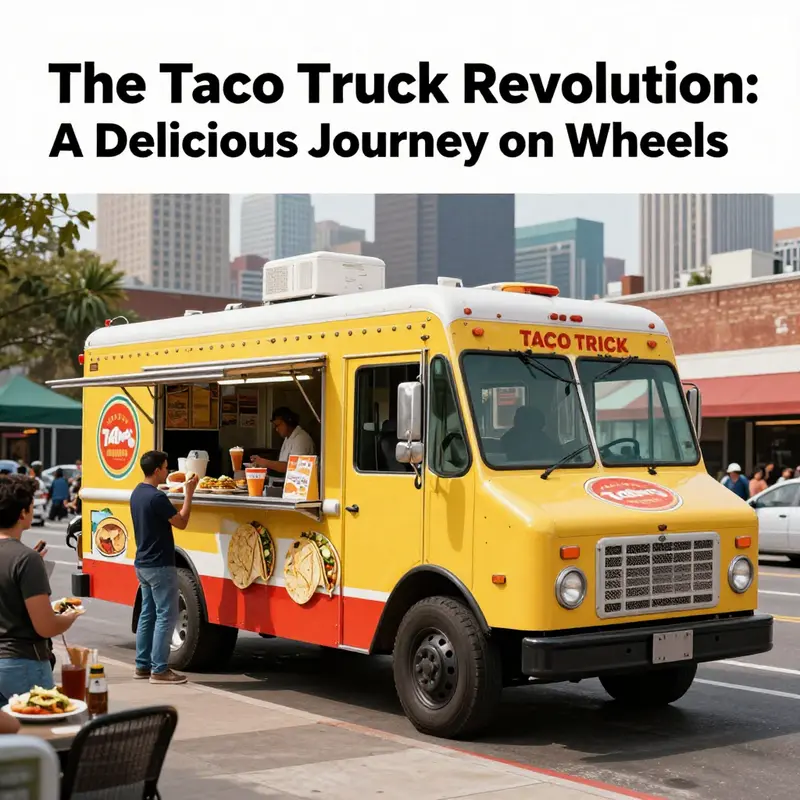
Taco trucks have become an emblem of culinary exploration and community pride in cities across the United States. Originating from humble beginnings in Mexican and Latino communities, these mobile food vendors have evolved into integral parts of urban life, offering quick, delicious meals to busy city dwellers and outdoor enthusiasts alike. In this engaging exploration, we will uncover the rich history behind taco trucks, delve into the technology that powers these mobile kitchens, examine their economic impact on local communities, celebrate their cultural significance, and understand the regulations ensuring food safety. Each chapter reveals a layer of the taco truck experience, illustrating why they are more than just a meal but a vibrant piece of community identity.
Tracing the Origin of Taco Trucks: How a Weekend Stand Became a Citywide Culinary Movement
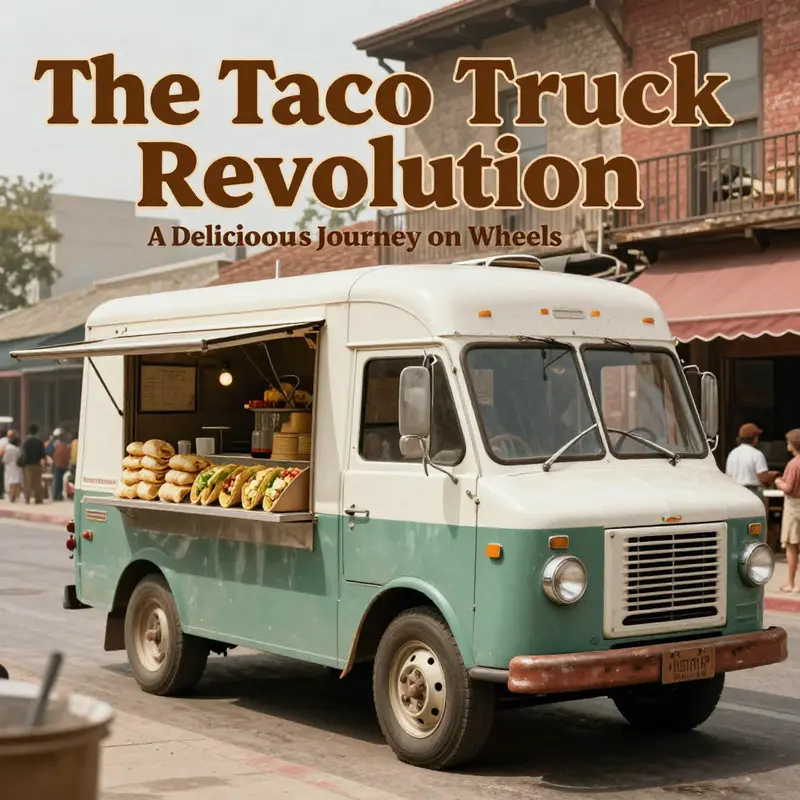
When people ask what a taco truck is, they are not simply describing a vehicle with a grill and a canopy. They are pointing to a portable kitchen that travels through a city’s rhythm, turning streets into open-air dining rooms and neighbors into willing patrons. The modern taco truck grew from a convergence of immigrant labor, culinary repertoire, and a social appetite for affordable, flavorful food that could reach people on the move. In the mid-20th century, Mexican communities in American cities began to translate home-cooked traditions into a mobile format that could bypass the overhead of brick-and-mortar restaurants while preserving the soul of the cooking. The idea was simple in practice but transformative in effect: bring the kitchen to the people, rather than insisting that people come to the kitchen. Over time, these mobile kitchens did more than feed; they redefined urban food culture by making Mexican street fare accessible in places where fixed eateries were scarce or costly, especially for working families and lower-income neighborhoods.
From this starting point emerged a family-driven, entrepreneurial spirit that fueled a shift in how food business could be organized. Early taco stands often took the shape of weekend pursuits—small carts or improvised stalls set up in markets, near churches, or beside factories where workers sought a quick, satisfying meal after long shifts. These informal spaces served as incubators of culinary technique and business savvy. As cooks and family members refined recipes, the push to increase capacity and mobility grew stronger. A truck, trailer, or van offered more than a bigger stove. It carried a modular kitchen that could pack and unpack as the crew moved from one event to the next. Grills, prep stations, refrigeration units, and storage were built into the vehicle in such a way that a compact footprint could yield a full, reliable service. This equipment mattered not only for food safety and quality but also for speed and consistency in bustling street settings.
What began as a practical solution soon carried cultural significance. The taco truck became a symbol of resilience—a way for immigrant families to sustain themselves while preserving the flavors and techniques of their homeland. It also created a social relationship with the city itself. Vendors learned the geography of neighborhoods, the patterns of foot traffic, and the moments when a meal could become a welcome pause in a busy day. In cities like Austin, Los Angeles, and San Francisco, mobile kitchens stitched together disparate communities through shared meals, offering a sense of place where one could find familiar tastes even in unfamiliar surroundings. The mobility of these kitchens allowed chefs to test ideas with impunity and to merchandise a constantly evolving menu. Beyond tacos, many trucks introduced burritos, quesadillas, tamales, and beverages, expanding the street-food repertoire while remaining anchored in core traditions.
As the practice matured, the taco truck also began to influence how urban space was used. It did not demand a storefront, parking lot, or fixed address. Instead, it required permission to operate in different zones, adherence to health and safety standards, and a reliable supply chain. The emphasis on compliance—ranging from food-grade materials to safe gas and electrical hookups—became a baseline for legitimacy. Vendors learned to navigate municipal permitting, fire codes, and vehicle inspections, all while maintaining the flexibility that made mobile food so appealing. The design of the trucks themselves reflected an improvisational ethos. They featured modular layouts that could be reconfigured for different menus or customer flows, allowing a small business to pivot in response to taste trends or neighborhood demographics. The result was a new urban form: temporary, seasonal, and adaptable, yet deeply rooted in the conviviality of a shared meal.
The economic logic behind taco trucks also deserves attention. Low overhead compared to brick-and-mortar restaurants lowered barriers to entry, enabling aspiring cooks to launch with limited capital. A single truck could be financed through family savings, a community loan, or a local cooperative, and the same vehicle could chase business from street fairs to office parks and festival grounds. This mobility enabled a form of micro-entrepreneurship that could scale up in small increments. It also encouraged experimentation: menus could be tweaked day by day, allowing cooks to refine recipes based on feedback from diverse neighborhoods. In turn, communities benefited from access to inexpensive, high-quality food that remained fresh and flavorful from one stop to the next. The cultural exchange embedded in these choices—spicy salsas meeting urban constraints, regional Mexican techniques meeting California produce—became a signature feature of the taco-truck phenomenon.
The evolution of the taco truck mirrors broader social and culinary currents in American cities. As family operations became more established, some vendors expanded their reach by attending festivals, sourcing partnerships, and even collaborating with local farmers to secure seasonal ingredients. The trucks’ mobility supported a form of culinary diplomacy, introducing residents to flavors they might never have encountered in a fixed restaurant setting. This cross-pollination helped redefine what a neighborhood can offer: a continuous, rotating menu that reflects the city’s diversity while staying true to core techniques like slow-cooked proteins, carefully toasted tortillas, and bright salsa-makers’ balancing acts. The truck, in this sense, became an itinerant ambassador for Mexican street food—one that could travel across towns and regions, yet always return to its roots in family lore and shared memory.
To connect these threads of origin with the contemporary landscape, it helps to see how design and sustainability have entered the conversation. Modern taco trucks and trailers are not just about flavor; they are about responsible practice, efficiency, and longevity. Some operators emphasize energy-efficient equipment, waste reduction, and responsible sourcing as part of their daily routine. The practical design choices—such as reliable refrigeration that minimizes food waste and modular workstations that reduce motion and time—reflect a broader trend toward more professional, durable mobile kitchens. This attention to sustainability and efficiency does more than cut costs; it preserves the cultural heritage the trucks carry by keeping the operation clean, safe, and reliable for the communities they serve. The way a truck is built and run can tell you as much about its owners’ values as about the recipes they deserve to claim as their own. For readers curious about how these practices are being integrated into the mobile-food landscape, see the discussion of sustainable practices in mobile food trucks.
The scholarly and cultural significance of the taco truck is not only a matter of taste or business. It sits at the crossroads of migration, urban life, and gastronomic identity. In cities that have become laboratories for street-food innovation, these mobile kitchens have helped reshape who eats where and when. They invite residents to engage with food in public spaces, to assemble meals on the street, and to rethink the boundaries between camping, markets, and dining rooms. The taco truck’s origin story—rooted in weekend stands, immigrant families, and the city’s appetite for quick, affordable, and flavorful meals—remains a living narrative. It continues to evolve as new neighborhoods seek to claim a piece of the tradition, as laws and incentives shape who can participate, and as designers and cooks collaborate to make mobility a lasting part of the urban food ecosystem.
This origin-heavy chapter connects to a broader conversation about how street food adapts to local ecosystems while remaining tethered to a shared culinary language. The mobile kitchen is both artifact and idea: a modular workshop that makes cooking more accessible, a cultural beacon that signals hospitality in a bustling city, and a testbed for flavors that travel well. When you walk past a truck and sniff the aroma of searing meat, charred tortillas, and bright cilantro—when you see a line forming in a park, at a festival, or near a busy office plaza—you’re witnessing not just a meal but a living history. The taco truck’s origin is the starting line of a longer story about how food, mobility, and community can intersect in cities across the United States, turning a simple truck into a mobile stage for culture, resilience, and shared delight.
External resource: https://www.jstor.org/stable/10.1525/9780520963428
Inside the Mobile Kitchen: The Technology That Powers a Taco Truck’s Kitchen on Wheels
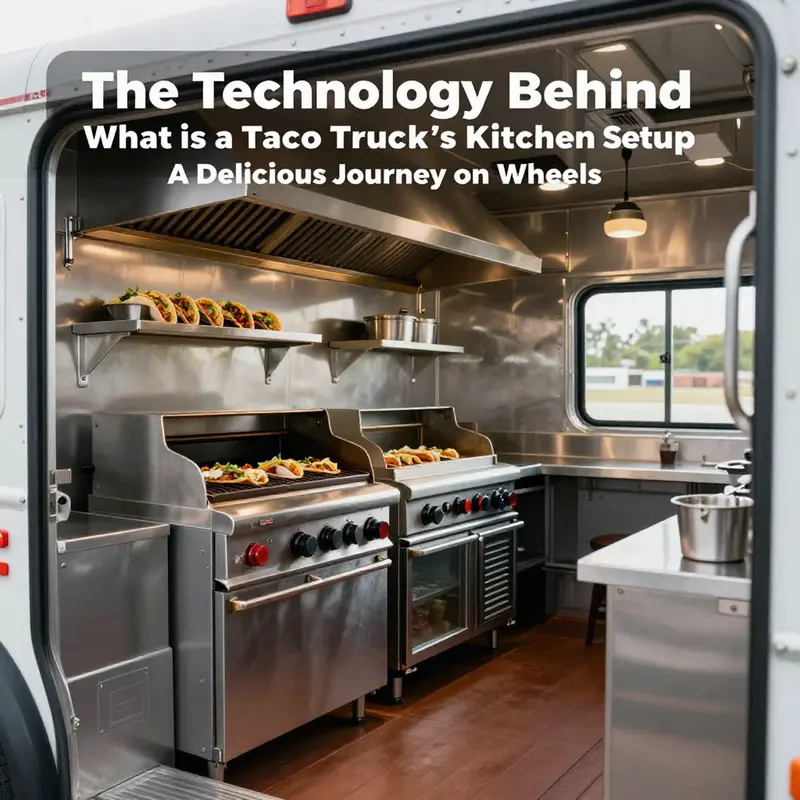
The taco truck is more than a food truck with a portable menu; it is a compact, purpose-built kitchen that travels as easily as it serves. When you walk up to one of these mobile eateries, you glimpse a small but serious workshop where planning, physics, and culinary craft converge. The kitchen is the heartbeat of the operation, engineered to deliver the speed, flavor, and consistency that customers expect, while accommodating the constraints that come with cooking on four wheels. In its essence, a taco truck kitchen is a carefully choreographed system: a modular, stainless steel workspace that packs in all the elements of a full-scale kitchen without the luxury of a spacious footprint. Every inch is planned to support a smooth flow from raw ingredient to finished bite, from weatherproof exterior to a safe, clean interior that can endure the road, the heat, and the hustle of urban street service.
At the core of the setup sits the basic triad of cooking, storage, and sanitation, each represented by purpose-built equipment chosen for reliability and efficiency in a mobile environment. Commercial grills anchor the cooking zone, where carne asada, al pastor, and chorizo receive rapid searing that creates the coveted caramelized crust and deep, smoky aroma that signals to customers that good food is arriving. In mobile kitchens, the choice of heat source matters as much for control as for safety. Gas-powered grills dominate the scene for their responsive heat, consistent temperatures, and straightforward ventilation, all critical when you are cooking with gas inside a moving vehicle where any variation in flame or fuel handling can ripple into service delays or safety concerns. The grill area is often paired with a compact cold section that accommodates marinated meats, chopped vegetables, and sauces, preserving freshness between rounds of orders.
A second anchor in the kitchen is the deep fryer, a tool that expands the menu beyond straight tacos to crisp offerings that delight patrons who crave texture as well as flavor. Fryers in taco trucks are typically gas-powered and compact enough to fit within the trailer’s footprint while still offering enough capacity to handle a lunch rush. Oil management becomes an essential part of the design: an effective filtration and drainage system, proper venting, and a grease trap are not luxuries but prerequisites for safety and speed. The ability to swap or reheable fry components without interrupting service varies with the model, but experienced operators design the workflow so that frying happens in a dedicated zone, away from ready-to-assemble components, to minimize cross-contamination and keep the front line moving.
Refrigeration follows the same logic of compact efficiency. A mobile kitchen must hold fresh produce, dairy, sauces, and proteins at safe temperatures while remaining accessible to the cooking and assembly stations. Refrigeration units in taco trucks are selected not only for their capacity but for their reliability in bumpy conditions. They must maintain stable temperatures during accelerated starts, sudden stops, and long days of service, all while fitting within the vehicle’s geometry. This often means relying on vertically arranged or modular units that can be stacked or configured to maximize usable space. Sanitation is a parallel concern, and sinks play a dual role: they support cleaning of hands and tools and provide a dedicated station for prepping ingredients without risking cross-contamination with cooking surfaces. The design philosophy here is simple—separate zones for raw and cooked components, clear workflows from storage to prep to service, and surfaces that can be wiped down quickly between orders.
Ventilation and safety threads run through every choice in a taco truck kitchen. The smoke from grills and the steam from hot pans require proper exhaust to keep the work area comfortable and to prevent smoke from drifting into customers’ faces outside the truck. Ventilation systems are matched to the type and intensity of cooking, with filters and ducting designed for compact spaces. Electrical and fuel handling in a mobile kitchen demand strict controls. The electrical system must power lighting, refrigeration, and small appliances while remaining within safe load limits for a trailer or van. Fuel handling requires secure lines, leak detection, and proper separation from heat sources. Waste disposal is not an afterthought; grease management and wastewater handling must comply with local health codes and environmental standards because a well-managed kitchen reduces odors, improves hygiene, and protects the truck’s reputation as much as it protects public spaces.
All these components live inside a shell that must travel across uneven pavement, fit into crowded parking lots, or be deployed at festivals where space is limited. To maximize efficiency, designers rely on modular kitchen systems that allow crews to assemble, adapt, and reconfigure quickly. The philosophy is to build a micro-assembly line: a sequence from cold storage to prep counter to hot line, all arranged to minimize movement and maximize speed. In practice, this translates to pre-planned stacking of tasks, where ingredients are prepped in a staged fashion to reduce on-demand chopping during peak orders. Early setup and pre-cooking prep, especially for common items such as breakfast sandwiches or quick coffee rounds at certain stops, ensures a steady cadence once service begins. It is this kind of disciplined workflow that transforms a rolling kitchen into a reliable, repeatable dining experience rather than a merely portable one.
The sourcing of materials and the engineering of trailers themselves contribute to the durability and safety of the kitchen. Regions known for stainless steel fabrication and trailer engineering have become focal points for owners seeking cost-effective yet robust kitchen frames. The choice of materials—especially food-grade stainless steel—affects not only sanitation and ease of cleaning but also longevity under the vibrations and weather exposures that come with mobility. A well-designed trailer uses corrosion-resistant components, sealed joints, and modular panels that can be replaced or upgraded as needed, extending the life of the truck in an industry where equipment is both a business and a statement of quality.
Beyond the practicalities of equipment and design, the kitchen in a taco truck carries cultural significance that shapes procurement, menu development, and customer interaction. This kitchen is a workplace as much as it is a stage for family stories and neighborhood recipes. The pace of service, the aroma of sizzling meat, and the visible craft—watching a carne asada sear or a tortilla crisp in oil—generate a sense of immediacy and belonging that brick-and-mortar restaurants sometimes struggle to match. The mobility of the truck mirrors the mobility of the flavors themselves, allowing operators to respond to local demand, attend events, and connect with diverse neighborhoods. The business model rewards flexibility but demands discipline: a consistent product, a predictable service radius, and a kitchen that can be trusted to perform under changing conditions.
In planning and operating such a kitchen, many owners weigh the trade-offs between speed, cost, and reliability. Procurement choices extend from the core cooking gear to the ancillary elements—ventilation, electrical infrastructure, waste systems, and even the awning or tent that protects customers during outdoor service. A crucial early decision concerns compliance with health and safety regulations, including standards for electrical safety, fuel handling, and waste disposal. These rules are not mere formalities; they define the boundaries within which a successful taco truck can operate. A kitchen built with robust safety in mind not only protects staff and customers but also reduces downtime stemming from inspections or violations. The emphasis on safety also filters into the sourcing process. Different regions and manufacturers have varying certifications, and suppliers in international markets are often evaluated for reliability, lead times, and the ability to meet food-grade standards under mobile use. The result is a kitchen that is not just a collection of devices but a cohesive system that supports a business model built on consistency, speed, and local flavor.
For operators who approach this kitchen as a design problem rather than a collection of appliances, there is a practical path to excellence. It begins with an honest assessment of space and a clear map of the menu and service style. Then comes the layout, which is tested not in theory but in practice, with time-and-motion thinking applied to every action—from pre-batching sauces at the prep station to aligning the grill’s heat zone with the patter of orders. The choice of equipment is guided by reliability under road conditions, ease of cleaning, and minimal downtime for maintenance. It also involves a willingness to invest in modular components that can be upgraded as the business grows. Operators who master this balance frequently end up with a kitchen that looks simple on the outside but performs with remarkable precision on the inside.
As the chapter moves from concept to execution, it helps to consult resources that address equipment standards and performance. For those who want a practical gateway to smarter buying and better configuration, a widely used guide emphasizes the importance of thoughtful equipment selection and layout—an invitation to think of the mobile kitchen as a system rather than a collection of gadgets. Choose food-truck equipment wisely is a starting point for many operators who seek a balance between cost and capability, and who aspire to a kitchen that remains resilient across seasons and neighborhoods.
In the end, the technology behind a taco truck’s kitchen setup reveals as much about taste as it does about engineering. It is the convergence of culinary craft, modular design, and pragmatic regulation—an ecosystem that makes street food possible at scale. The kitchen equipment is more than a means to an end; it is the engine that powers a neighborhood’s appetite and a chef’s dream: to serve good, dependable, flavorful tacos from a vehicle that can roll from block to block and become a temporary, wandering community hub. The taco truck, then, is not simply a method of selling food; it is a way of delivering culture—compact, efficient, and deeply connected to the places it visits. For those who want to learn more about the science and standards behind this portable cuisine, further reading on the engineering and practical applications of food-truck kitchens can provide a deeper map of how these rolling kitchens stay compliant, productive, and safe while feeding the cities they roam.
External reference for further reading: https://www.holden.com/food-truck-equipment-standards-performance
Rolling Economies on Four Wheels: The Taco Truck’s Role in Local Prosperity
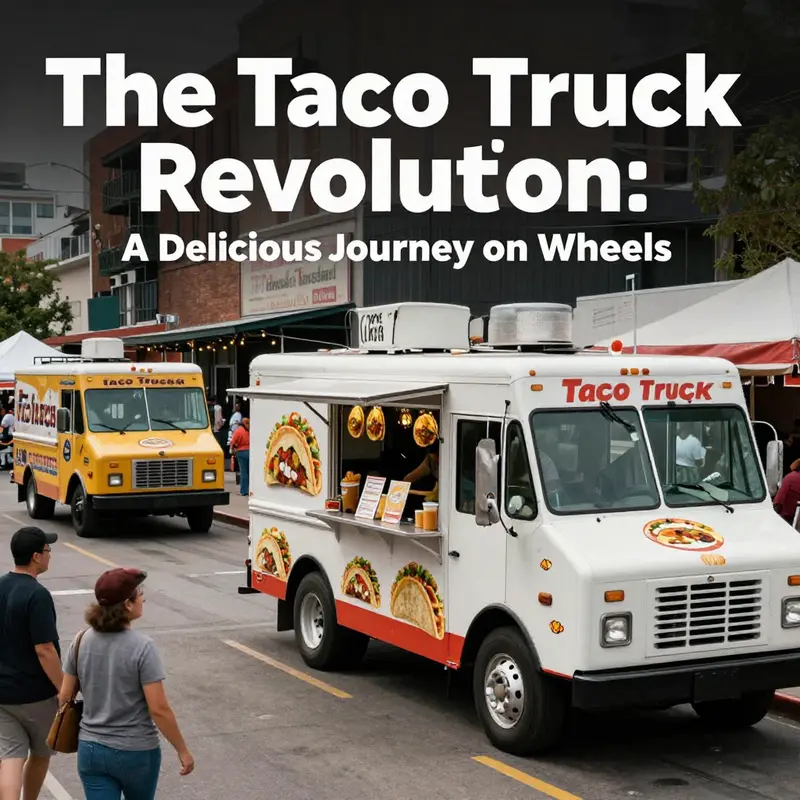
A taco truck is more than a kitchen on wheels; it is a small, portable economy that travels through neighborhoods, blending food, culture, and commerce into a single mobile enterprise. The sight of a stainless-steel rig, smoke curling from a grill, and a line of curious customers can signal more than a quick meal. It marks a living system that sustains livelihoods, expands access to affordable food, and nudges urban life toward entrepreneurial possibility.
A truck’s modular kitchen fits into a compact footprint, but its economic footprint can be disproportionately large. The mobility lowers fixed costs and enables operators to test menus, adjust pricing, and respond to changing neighborhood tastes with speed. This flexibility invites cooks who may not have the capital for a storefront to translate culinary skill into a scalable business with opportunities to grow over time.
In cities that embrace street food, taco trucks become part of the local economy: they attract foot traffic, support nearby shops, and create informal pathways to employment and skill-building. The mobility also shapes labor, often opening doors for immigrant and minority entrepreneurs who bring expertise and community ties to the street. While romance lures people to the idea of independence, sound bookkeeping, food safety, and reliable equipment keep the venture sustainable over the long run.
Cultural Significance of Taco Trucks: How a Taco Truck Defines Community Identity
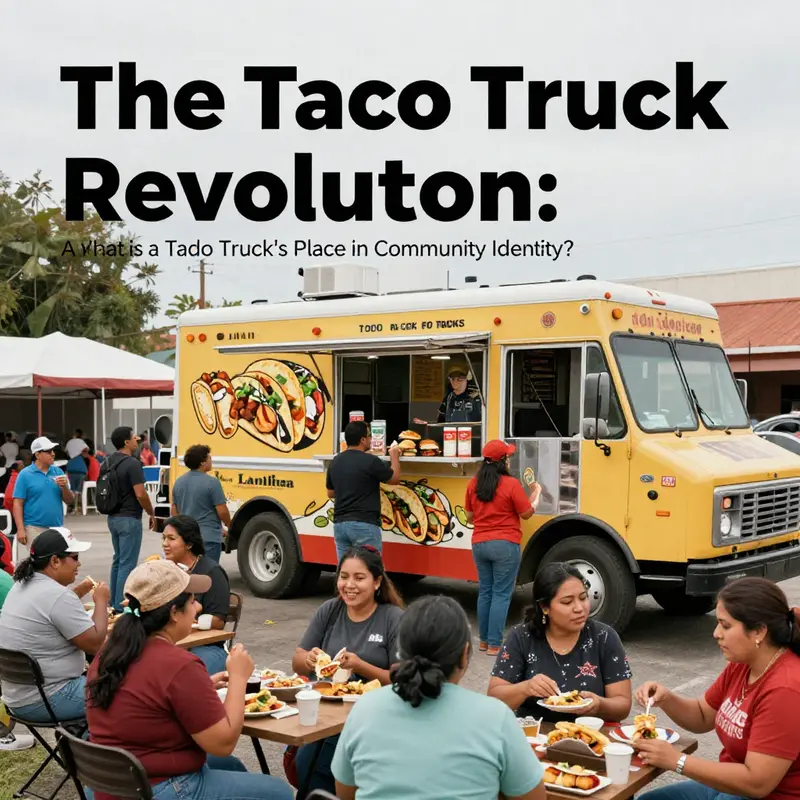
Taco trucks are not merely kitchens on wheels. They are moving living rooms where the day’s appetite is served with a side of memory and belonging. Across cities, especially in Austin and Denver, these tiny restaurants on tires anchor a culture that blends immigrant history with urban improvisation. The sight of a gleaming truck, its window rolled down, warms the curb with the scent of grilled corn, charred peppers, and lime. It is a scent that travels farther than the vehicle itself, wrapping around sidewalks, courtyards, and the corners of late-night streets.
In this sense, a taco truck functions as a social hub as much as a culinary one. Families bring recipes that have traveled generations, and food becomes a shared ritual rather than a private privilege. The act of queuing, ordering, waiting, and then enjoying a quick meal together becomes a micro event, a tiny festival in which strangers momentarily become neighbors. The mobility of these trucks contributes to this social drama. They can be anywhere—at a farmers market, outside an office park, or beside a stadium after a concert—then vanish to another location in hours, leaving behind a string of impressions and community ties. This flexibility allows cooks to respond directly to perceived demand, to chase a shift in weather, a festival, or a neighborhood’s changing tastes, without the heavy commitments of a brick-and-mortar restaurant.
In Austin, the story is often told as a family tale. Operators began as weekend stands, renting a simple space on Saturdays or Sundays, and gradually turning daily servings into a family enterprise. The trucks become a mobile stage for heritage, a portable room where stories are told with tortillas and salsa as the lingua franca. The act of moving between sites creates a rhythm that is less about speed and more about continuity: the same customers return, not just for food but for familiarity. The aroma of searing meat and citrus, the rhythm of sizzle and laughter, and the unspoken ritual of tipping a hand toward a friendly face across the window—these are the threads that bind a community to its taco truck.
This social glue side of the phenomenon is echoed in Denver, where owners emphasize a direct, almost intimate relationship with people who live nearby. As Lena Patel, founder of Green Sprout Kitchen, puts it, “We’re not just serving food—we’re building community, one meal at a time.” The truck becomes a halfway house between home cooking and urban commerce, a place where a grandmother’s recipe can be adapted to the constraints of a mobile kitchen and a young chef can improvise with local produce, creating dishes that honor tradition while inviting novelty. The encounter at the window is not a transactional moment alone; it is a doorway into a conversation about place, memory, and mutual care. The chef shares a little of the day’s story, the customer offers a nod, a smile, or a suggestion, and soon the same faces gather again at a different corner, drawn by the promise of something both comforting and new.
Mobility, in this sense, is not a mere practical feature; it is a cultural instrument. The truck’s ability to relocate makes it an agile ambassador for community life, able to serve neighborhoods that may lack affordable, quick, culturally resonant meals. It also creates a dynamic where culinary experimentation can flourish. Menus can be tweaked to respond to seasonal ingredients, to honor a regional palate, or to honor a family’s own heritage. A truck might introduce a dish that riffs on a grandmother’s salsa or a street corn recipe passed down through generations, offering a tangible bridge between the old country and the new urban life. The result is more than taste; it is a shared language spoken in spice, aroma, and the crackle of a grill.
Yet the story of taco trucks is also a story of resilience. The historical arc that leads from 19th-century lunch wagons and cowboy carts to today’s mobile kitchens is marked by adaptation. Economic shifts, technological advances, and the ebb and flow of immigration narratives have shaped what customers expect from a street-level eatery. During the Great Depression, such mobile vendors supplied affordable sustenance when options were scarce. After World War II, improvements in materials and fabrication made trucks safer, cleaner, and more efficient, enabling more elaborate kitchen setups without sacrificing mobility. The surge of gourmet food trucks after 2008 demonstrated that mobility could coexist with refinement, turning humble street food into a canvas for culinary artistry. Across this arc, taco trucks have repeatedly proven that they can be both practical economic ventures and vessels of cultural expression.
On the ground, these vehicles embody a blend of craft and strategy. The kitchen is designed to function in a compact space, with modular systems that can be cleaned quickly and reassembled as needed. The careful selection of food-grade materials ensures safety while keeping costs manageable for small operators. The portable kitchen is not simply a set of equipment; it is a platform for memory-making, where a grandmother’s quarter-turn of the wrist and a chef’s insistence on precise searing intersect to create a reproducible experience that feels intimate regardless of how many customers pass through. The social dimension of this practice—the way customers gather, exchange recipes, and share stories—turns meals into an exchange of culture as much as a exchange of money.
In telling this story, it is crucial to acknowledge that the phenomenon sits at the intersection of immigration, urban policy, and creative enterprise. Taco trucks provide a space where heritage can be practiced in a modern city, where generations of families can contribute to a shared urban life without the infrastructure of a large restaurant. They offer a counterpoint to the stereotype that street food is disposable; instead, they reveal how mobility, careful craft, and community expectation can elevate humble street fare into a durable civic ritual. The trucks become markers of local identity, not just because of what they serve, but because of who serves it and how they choose to connect with those who gather around their windows. They reflect a city’s tolerance for diversity, its willingness to adapt, and its capacity to turn shared meals into a public language of welcome and belonging.
For those who study the social functions of food, the taco truck presents a vivid case of how everyday meals shape collective memory. It is a reminder that people don’t just eat to satisfy hunger; they eat to participate in a social practice that reaffirms kinship, hospitality, and a sense of place. The act of standing in a queue, sharing a table under a canopy, and then watching the city move on while one’s plate remains a shared memory—these are routines that sustain a community’s identity. In this light, the taco truck becomes less an object and more a social institution: a mobile branch of home and hospitality that travels through neighborhoods, inviting everyone to partake in a story that belongs to no single family alone but to a wider chorus of communities that keep it alive.
For scholars and practitioners alike, the ultimate lesson is this: a taco truck is a living artifact of cultural expression, a portable space where food, memory, and mobility converge. It is where recipes travel as they do, through hands that carry years of practice and hearts that carry hopes for the neighborhoods they serve. In the end, a taco truck is a testament to how a simple meal can carry complex meanings—of family, of migration, of urban survival, and of shared belonging. The street becomes a gallery for daily life, with the kitchen at the center, and the city itself a patient audience.
One practical path for communities and operators is to adopt sustainable practices for mobile food trucks. This approach foregrounds environmental responsibility while strengthening ties to local producers and neighbors. The modern taco truck can be a partner in urban stewardship, balancing flavor with footprint, and turning everyday meals into a model of collective care. For those who want to learn more, a range of resources on sustainable mobile food-truck operations can be explored through relevant professional networks and case studies.
External reading: For a deeper scholarly exploration of how the taco truck shapes cultural identity, see https://www.jstor.org/stable/10.1086/430738.
Rolling Under Regulation: How Taco Trucks Meet Health Standards While Keeping the Menu On the Move
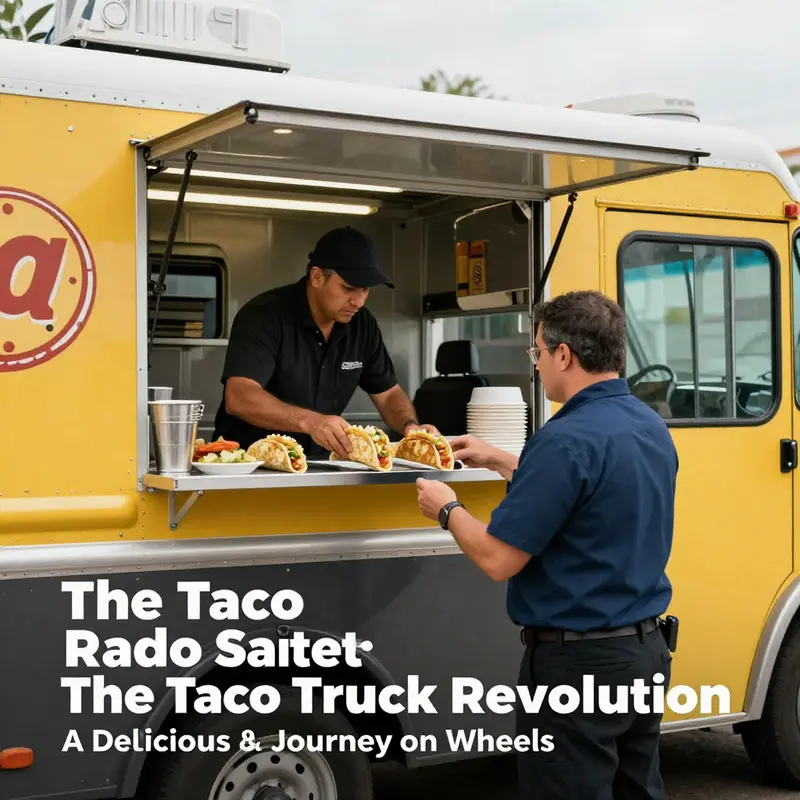
A taco truck is more than a kitchen on wheels; it is a portable system designed to deliver fresh, flavorful food while navigating a dense landscape of health rules and safety expectations. The mobility that makes these shops so appealing also concentrates the responsibility to keep food safe in a compact space. In cities across the country, operators must translate big-picture public health requirements into daily practice on a narrow counter, inside a truck that may vibrate with street noise, pedestrians, and the clock. The journey from curbside curiosity to compliant, trusted vendor is a story of disciplined routines, modular equipment, and a constant conversation with local health authorities. Across this journey, the core question remains the same: how does a taco truck stay within health standards without turning the menu into a safety compromise?
At the heart of any regulatory framework for mobile kitchens lies Food Safety Practices. Temperature control stands as a sentinel for both safety and quality. Hot foods must stay above 140 degrees Fahrenheit, cold foods below 41 degrees, and both must be monitored with accuracy and consistency. The challenge is not only reaching the right temperatures but maintaining them through service shifts that can stretch into unpredictable hours. Cross-contamination prevention is another critical pillar. Separate storage for ready-to-eat ingredients and raw components reduces risk, while color-coded cutting boards, dedicated utensils, and clean hand-washing protocols help to minimize everyday missteps. In a compact truck, the mental map of where each ingredient lives and where a pan should return after a quick flip matters as much as the recipe itself. Operators often build a mental inventory of what must travel together and what must stay apart, a habit that becomes second nature after a few seasons of service.
Sanitation standards reinforce that habit with regular cleaning rituals. Routine cleaning schedules cover not just the visible surfaces but the components that see the most action—griddles, fryers, refrigeration units, prep surfaces, and the often-used drain lines. Sanitation is a moving target in a mobile kitchen; grease, flour dust, and sauce splashes accumulate in different patterns depending on the day’s weather, crowd, and menu changes. Health inspectors routinely verify that equipment, seals, and gaskets are intact and that cleaning agents meet safety specifications. The goal is not perfection in a single moment but consistency over time: a clean kitchen at opening, during peak service, and after closing, when waste and residue should be reduced to a minimum and all surfaces shine in the proper light.
Structural and equipment requirements bring a truck into alignment with safety science. A well-ventilated space reduces the risk of fumes and heat buildup, while a compliant fire suppression system or portable grease fire extinguishers provide a necessary shield in kitchens that run at high temperatures. Adequate potable water supply is non-negotiable, both for handwashing and for cleaning dishes and surfaces. Waste disposal, including grease management, must be designed to prevent leaks and environmental contamination, often through grease traps or holding tanks that are emptied at approved facilities. The equipment layout matters as much as the equipment itself: a logical workflow—from cold storage to prep to cooking to plating—minimizes backtracking and potential stalls that create unsafe improvisations.
Licensing and permits are the first gatekeepers to operation, but they are also the most enduring proof of legitimacy. A valid business license, a food handler’s permit, and a mobile vendor permit are essential prerequisites. In many jurisdictions, a health inspection certificate is issued only after a successful inspection, which occurs on the date the truck is deemed ready to serve the public. These formalities do not simply authorize a single day of business; they establish a framework for ongoing accountability. The paperwork becomes part of the kitchen’s rhythm—a reminder that every shift is a test of compliance as well as culinary craft. The process also signals to customers that safety is being taken seriously, which matters in a culture that often evaluates a vendor by trust as much as by taste.
Waste Management introduces another layer of responsibility. Proper disposal of grease, trash, and wastewater is not merely an environmental concern; it is a public health issue. The grease must be contained and removed according to local rules, preventing blockages and odors that could attract pests and degrade the surrounding neighborhood. Greywater, if present, requires appropriate containment and discharge to approved facilities. The discipline of waste management is a practical manifestation of the broader principle that health standards are not abstract rules but real, daily practices that protect workers, customers, and the community. In some places, the language of compliance even extends to the truck’s exterior features—the way the service window is designed to minimize exposure to customers, the placement of handwashing stations, and the presence of clearly marked sanitation zones that separate raw and ready-to-eat areas.
Beyond the letter of the code lies a culture of safety that is learned through training and daily habits. Many operators think of compliance as a competitive advantage rather than a burden. A well-trained crew understands why a clean grill matters, how to calibrate a thermometer, and why a tidy work surface improves both speed and safety. This mindset yields a kitchen that can pivot with the city’s rhythms—from late-night curbside service to weekend market bursts—without compromising hygiene. The learning curve is steep, but it pays off in fewer violations, steadier health scores, and a customer base that gains confidence from consistent performance. In communities with strong street-food traditions, this confidence translates into repeat visits and word-of-mouth growth, especially when the truck offers a reliable, high-quality product that is prepared under the most careful conditions.
In practice, a taco truck’s compliance story also hinges on the choice of gear and the reliability of suppliers. The modular, vehicle-based setup often features stainless steel worktables, sealed refrigeration units, and portable cooking equipment designed for quick cleaning and straightforward maintenance. Materials quality matters because food-contact surfaces must resist corrosion, staining, and harboring bacteria. The choice to invest in robust, food-grade components is not solely about aesthetics; it is about long-term safety, ease of cleaning, and predictable performance that inspectors recognize and appreciate. The mobility advantage—being able to relocate to popular neighborhoods, office parks, or events—becomes a responsibility to maintain high standards wherever service takes place. A truck that travels with a strong compliance record becomes a trusted partner to the communities it serves, symbolizing not just good food but a shared commitment to health.
As regulations evolve, many operators maintain a proactive stance by staying informed about local health department expectations and national guidance. While the FDA’s guidance—the FDA Food Code—serves as a foundational reference, municipal rules may add special requirements for mobile units, such as temporary permits for special events or unique waste-disposal provisions near waterfronts or busy transit corridors. The interplay between federal guidance and local specifics means operators must cultivate both a solid baseline and a nimble, city-aware approach. For those who want a formal touchstone, consulting the FDA Food Code offers a comprehensive framework for safe handling, storage, and sanitation practices that mobile kitchens can adapt to their day-to-day reality.
Within this landscape of rules, the design and operation of a taco truck become a living example of how safety, practicality, and culinary ambition can coexist on four wheels. When a truck rolls out with a full menu—tacos, burritos, quesadillas, perhaps tamales and beverages—the operator has to ensure every item on that menu is prepared in a way that honors safety standards without sacrificing flavor or speed. This balance is not magic; it is the result of thoughtful planning, disciplined routines, and a genuine respect for the people who will enjoy the food. The truck’s reputation rests on the confidence that a customer’s first bite is not only delicious but safe. That confidence, built through consistent compliance, turns a simple street meal into a consistent, dependable experience.
For readers looking to explore practical resources beyond in-house practice, a look at sustainable practices for mobile food trucks can offer actionable ideas for reducing risk while staying efficient and environmentally conscious. Sustainable practices for mobile food trucks provides context on durability, maintenance, and clean operations that reinforce safety as a daily discipline. And for a formal, external reference that codifies the expectations operators strive to meet, the core standards and recommendations you’ll want to consider align with the broader framework described in the FDA Food Code, which can be reviewed here: FDA Food Code.
Ultimately, regulations and safety are not gatekeepers but guardrails that empower taco truck culture to flourish. They ensure that the mobile kitchen remains a trusted neighborhood asset—an emblem of entrepreneurship, craft, and communal sustenance. The best operators translate compliance into clarity for their teams and transparency for their customers. They commit to consistent hygiene, precise temperature control, clean and orderly workspaces, and responsible waste practices. They design their trucks, their menus, and their workflows around the idea that safety should be felt as confidently as flavor. When a lunch crowd parts with a smile and a full plate, it is because the experience delivered both quality and assurance in equal measure, across the road and into the next stop on the route.
Final thoughts
In essence, taco trucks are not just a convenient source of food; they represent a melting pot of culture, innovation, and entrepreneurship. Their rich history, cutting-edge kitchen technology, significant economic contributions, and vital role in community identity make them a beloved fixture of urban life. As we navigate our bustling cities, let’s celebrate the taco truck experience that offers not only a quick bite but also a connection to our communities. Whether dishing out traditional flavors or contemporary twists, these mobile kitchens are here to stay, proving that great food on wheels is indeed a recipe for success.