
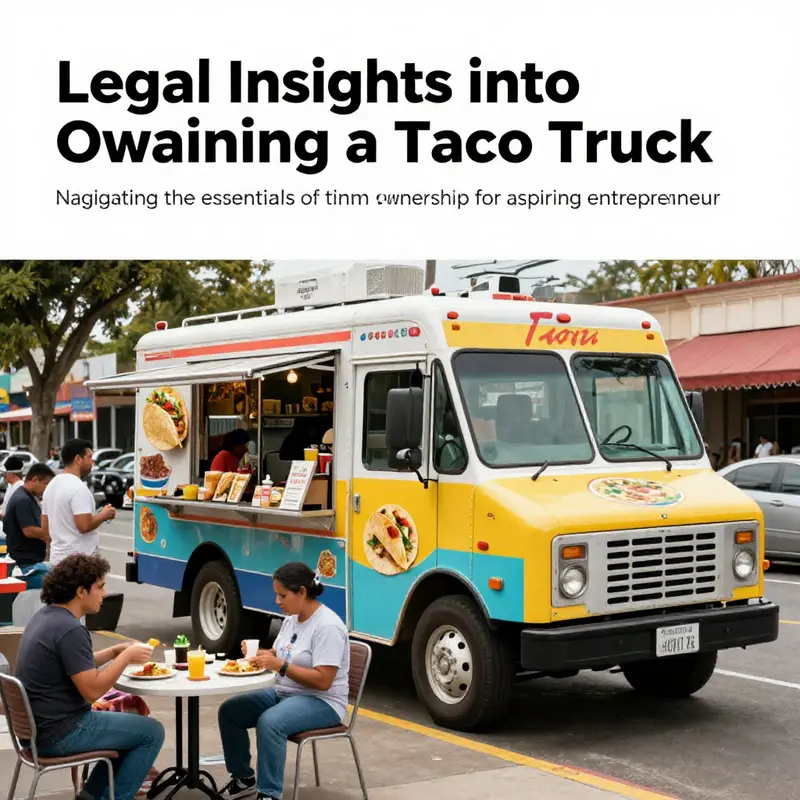
Owning a taco truck is not just a culinary dream; it’s a viable business opportunity in urban spaces like Austin, Texas. However, stepping into the world of mobile food services involves knowing the legal, health, and zoning requirements to ensure smooth operations. This guide provides you with the insights needed to make your taco truck dream a reality. From securing permits and licenses to understanding health regulations and community engagement, each chapter unpacks the essential elements that contribute to successful taco truck ownership. Prepare to explore the intricate layers of legality and compliance that will enable you to operate your taco truck effectively and legally.
Riding the Legal Route: Can I Legally Own and Run a Taco Truck?
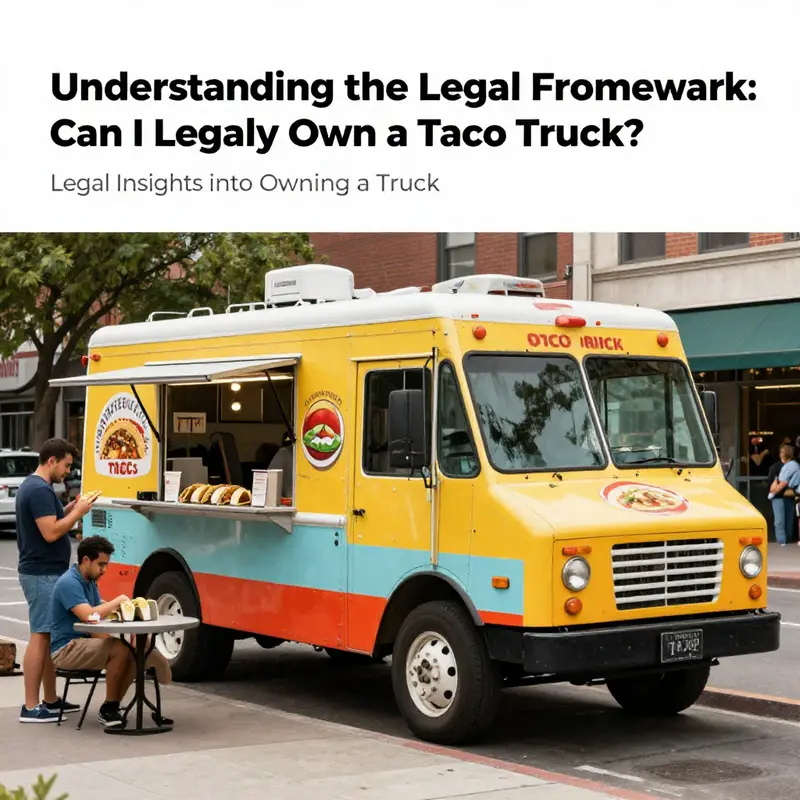
Owning a taco truck sounds like a dream on wheels, a blend of counter-service convenience and culinary craft a modern street-food culture cherishes. Yet turning that dream into a legally compliant business requires more than a sizzling grill and a good sauce. In the United States, you can own a taco truck, but operating one involves navigating a mosaic of local, state, and federal regulations. Ownership itself is not illegal; it is the act of operating in public spaces, handling food, and interacting with customers that triggers a broad regulatory framework. This chapter guides you through that framework, linking practical steps with real-world realities in places where taco trucks have become more than a trend.\n\nFirst comes the recognition that licensing is not a single act but a package. You will typically need a business license from the city or county and, if you plan to sell food, a health department permit that attests your kitchen practices meet public-safety standards. Many jurisdictions also require a seller’s permit for collecting sales tax and a DBA filing if you operate under a name other than your own. In practice, this means a short sequence of visits to city hall or the local business hub, followed by paperwork that establishes you as a legitimate vendor who will collect, report, and remit taxes. In Texas, for example, you would check in with state and local agencies to understand which licenses apply to a mobile food operation and how to renew them as rules change.\n\nNext, zoning and location rules shape where you can park and cook. Zoning determines whether a mobile food unit can operate in a given district or on specific streets, and many cities require a dedicated mobile-vendor permit to show you have earned a spot within a regulated framework. Cities differ greatly in how they balance street-food vitality with neighborhood concerns. Austin, a city famous for its taco culture, has a well-documented system linking the Health Department and Municipal Court to regulate mobile food vendors. The city’s approach underscores a broader truth: the legal path is not about stifling flavor but about coordinating safety, traffic, waste management, and neighbor harmony.\n\nYour vehicle is itself a regulatory subject. A taco truck is usually registered as a commercial food service unit. That means the vehicle must meet road-safety standards, pass inspections, and carry appropriate insurance. In some regions, the DMV or equivalent agency will verify that the truck is mechanically sound and compliant with emissions rules before it can be used for paid service. You may be asked to display permits visibly on the vehicle and to maintain records of maintenance and inspections. The registration process integrates with insurance requirements, which often include general liability, products liability for the food you prepare, and possibly additional coverage for leased equipment, propane gas lines, and outdoor service setups. The insurance piece is not merely a formality; it is a practical shield against accidents, customer slips and falls, or equipment mishaps that can happen in busy, high-traffic settings.\n\nHealth and safety sit at the heart of every food operation. Your operation will likely be subject to health inspections. These inspections look at how you store and prepare food, where you wash dishes, how you dispose of waste, how you keep cold and hot foods at safe temperatures, and how you prevent cross-contamination between raw and cooked ingredients. Staff training is common, with certifications for food-handling hygiene and safe cooking practices. A well-run truck will have a documented clean-in-place routine, proper refrigeration, seasoned storage for ingredients, and clear processes for waste disposal and grease handling. Keeping your system transparent not only satisfies inspectors; it builds trust with customers who judge you by the visible cleanliness of the cart and the speed of service.\n\nIf you plan to sell alcohol alongside your tacos, you will encounter a different tier of licensing, with its own approvals, fees, and compliance burdens. Alcohol sales invite layered oversight, with separate permits and potential intake restrictions. The absence of alcohol is often simpler, especially for new operators who want to prove their concept before expanding into regulated beverage service. Even if you never intend to pour a margarita, understanding where alcohol licensing fits in your business plan can save you from surprises later on when you decide to diversify.\n\nTaxes, entity structure, and long-term planning weave into the regulatory picture as well. You will have to decide whether you want to operate as a sole proprietor, form an LLC, or register another business entity. This choice affects liability, tax treatment, and the way you manage contracts with event organizers, landlords, or festival organizers. Many small-business development centers and the SBA emphasize that choosing an appropriate structure from the start can protect your personal assets and provide a clear framework for growth. After your business is registered, you will need to obtain an employer identification number (EIN) for tax reporting, payroll if you hire staff, and a business bank account that keeps personal and company finances separate. In practice, this is not just paperwork; it is the backbone that supports growth, permits expansion to multiple locations, and ensures you can handle seasonal demand or a busy festival schedule.\n\nAs you map out the practical deployment of a taco truck, you will also need to align with waste management, fuel safety, and environmental considerations—areas that increasingly shape city policy and consumer expectations. The regulatory picture is not static. It evolves with new health standards, stricter emissions rules, and the growing use of digital permits and online dashboards. A careful operator keeps a calendar of renewal dates, price changes in permits, and any local ordinances that affect where and when a truck can operate. The end-to-end path is not a trap; it is a framework that, when followed, can reduce risk, open doors to more venues, and create sustainable routines for a business that thrives on mobility and flavor.\n\nThe process is navigable with the right guidance. Local governments publish their requirements, and most cities offer help for new entrepreneurs through small business development centers or neighborhood bureaus. A good starting point is to consult your city or county government website or contact the relevant department directly—such as the health department for inspections or the licensing office for permits. In Texas, for example, the Department of State Health Services maintains guidelines for mobile food vendors that outline what health codes require and where to find the latest inspection criteria. This is a living document, updated as kitchens evolve and as communities seek greater safety and accountability while preserving their street-food culture.\n\nOf course, every location has its quirks. Some markets encourage food-truck infiltration with designated pop-up zones and permitted curbside slots, while others insist on fixed vending lots or calendar-based permits. The flavor of the regulatory atmosphere—how strict or how permissive—depends on local priorities, budgetary constraints, and the capacity of enforcement agencies to monitor busy streets. The best way to approach this reality is to anticipate the bureaucratic cycle the way a chef anticipates the dinner rush. Plan ahead, gather the required papers, and build a network of mentors, fellow operators, and licensing staff who can translate regulatory language into practical steps. This approach will also help you understand how to balance city, county, and state rules with your own business plans, event calendars, and long-term ambitions.\n\nIf you want a tangible example of the path, consider how Austin has built a supportive infrastructure for mobile vendors. The citys framework acknowledges the culinary and cultural value of taco trucks while maintaining health, safety, and traffic standards. While other cities may emphasize different priorities, the underlying architecture—licensing, zoning, vehicle compliance, health inspections, and contingency planning—remains common ground. The combination of practical permit pathways, clear guidance from public health officials, and a culture of collaboration with operators makes the barrier to entry manageable rather than prohibitive. To keep your plan grounded in the most current reality, always check the latest official guidance from your local health department and the state health services. For official guidelines on operating a food truck in Texas, see the Mobile Food Vendors page of the Texas Department of State Health Services: https://www.dshs.texas.gov/food/mfv.shtm.\n\nAs you finalize your dream, make room for the broader responsibilities that come with owning a mobile business. You will be juggling customer service, food quality, schedule coordination, and regulatory compliance all at once. Building a compliant operation is not a one-time event; it is an ongoing discipline that informs every shift. It also opens doors to longer runs, larger events, and partnerships with organizers who want reliable vendors at their venues. In that sense, legal compliance becomes a competitive advantage—an assurance to event organizers and customers that your taco truck is not only delicious but dependable and safe. And the more you invest in regulatory literacy, the more you protect your investment, your staff, and your community.\n\nSustainable practices for mobile food trucks can also sharpen your edge while aligning with public expectations. Exploring this topic through targeted resources can yield practical gains in efficiency, waste reduction, and customer perception. Sustainable practices for mobile food trucks can be a valuable companion as you design your fleet, pick your equipment setup, and plan your service flow. The right combinations of equipment, layout, and cleaning routines reduce the risk of violations and improve the overall customer experience.\n\nFinally, remember that your journey from concept to compliant operation is not a solitary one. Reach out to local small business centers, veteran operators who have navigated the licensing maze, and inspectors who can walk you through the practical steps. It might take months of preparation, but the long-term payoff is a stable, scalable business built on culinary craft and a solid legal foundation. For those seeking formal guidelines in Texas, the state’s official mobile food vendor resources provide clear, up-to-date rules and contact points. The page is publicly accessible at this link: https://www.dshs.texas.gov/food/mfv.shtm.
Safe Wheels, Fresh Facts: Navigating Health and Safety for Legal Taco Truck Ownership
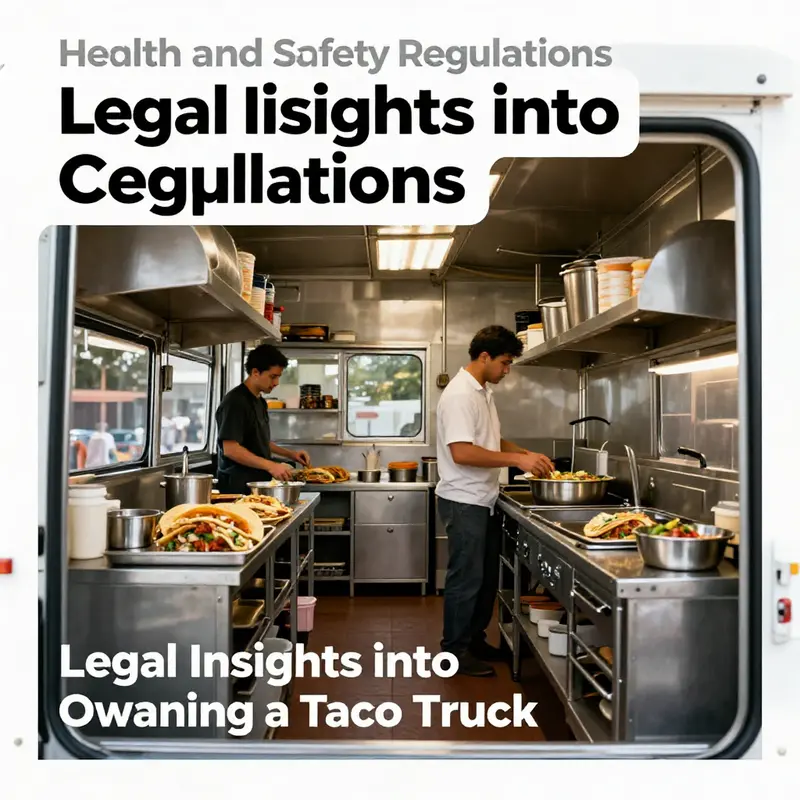
Owning a taco truck is more than a dream of sizzling peppers and bright cilantro lining a curved steam line; it’s a contract with public health, a pact that binds you to precise rules designed to keep customers safe and your business financially sound. When you stand at the curb before the first service window opens, the questions you ask yourself about legality aren’t merely about permits they’re about reputation, continuity, and the daily discipline that separates a beloved lunch spot from a flash-in-the-pan. Legal ownership begins with a framework of health and safety obligations that shape every decision you make, from where you park, to how you store ingredients, to how you train the people who touch food. In many places, including bustling culinary hubs in Texas, the path is clear but the terrain shifts with each city’s or county’s regulations. The core idea is simple, even if the practice takes careful attention: you must prove you can protect people from harm as part of running a business that serves food on wheels.
To begin this journey on solid ground, you have to secure the right licenses and permits. A general business license legitimizes your operation in the eyes of the city or county, but food service brings its own layer of oversight. A food service permit, often issued by a local health department, signals that your kitchen—albeit mobile—meets core sanitation and safety standards. Many jurisdictions also require a mobile food vendor permit, a specific tag that acknowledges your vehicle as a mobile kitchen with its own set of rules about where and when you can operate. The exact mix of licenses and permits differs from place to place, but the pattern is consistent: paperwork first, then steady compliance that proves you can maintain a safe, reliable service day after day.
In Texas, and particularly in cities with mature food-truck ecosystems, state guidance and local enforcement intersect in meaningful ways. The Texas Department of State Health Services provides the formal guidance on mobile food vendors, but it is the local health department and the municipal court that translate that guidance into practical requirements for your taco truck. Austin serves as a notable example of this model. The city’s regulatory framework emphasizes not just compliance with health codes, but the ability to operate within a system that values mobility, community engagement, and predictable safety outcomes. Understanding this interplay matters because the rules you comply with at the start can reduce friction later, such as when you seek permits for events, parking permissions, or even access to certain designated vendor zones. When you pursue these licenses, you’re threading yourself into a network of inspectors, permit reviewers, and business registrars who collectively decide when your truck can legally roll through town.
Health and safety rules are not abstract checklists; they are active standards that shape your daily operations. Everything you serve must be kept at safe temperatures to prevent bacterial growth, a fundamental requirement that governs how you store perishables, how you cook, and how you hold foods before service. The temperature control rules extend beyond what you serve; they cover the entire cold chain—from the moment you retrieve refrigerated ingredients to the moment a customer bites into a finished taco. Surfaces must be cleaned and sanitized regularly, not just briefly before a health inspection. A clean kitchen isn’t just about appearance; it’s about predictable, reproducible hygiene that protects customers who might be particularly vulnerable to foodborne illness. Regular sanitation schedules, validated by your staff, create a culture where hygiene becomes second nature rather than a last-minute concern.
Beyond temperature and surface cleanliness lies the broader discipline of preventing cross-contamination. This means separating raw proteins from ready-to-eat components, using dedicated cutting boards, and enforcing stringent handwashing practices for every employee who handles food or return to service areas. Training is at the heart of this discipline. Staff must understand why handwashing matters, how to minimize contaminant transfer, and why pest control and waste management are not ancillary issues but integral. A taco truck’s compact space can intensify risk if storage and workflow aren’t carefully designed. You’ll learn to map your kitchen’s workflow in a way that minimizes backtracking and limits exposure to contamination sources. This is where the long-term value of safety training reveals itself: compliance is not a one-off event but a habit that protects your customers and sustains your brand’s integrity.
Equipment and maintenance are equally pivotal. Refrigeration units must work reliably, with backup plans for power failures or compressor malfunctions. Shelving, food-contact surfaces, and ventilation must meet health expectations and withstand the rigors of daily use in variable weather. A well-maintained vehicle is a safer vehicle, and in the context of a mobile kitchen, it also prevents downtime that can derail a busy service window. Routine checks—thermometers calibrated, sinks operational, waste disposal systems functioning—become part of a disciplined routine rather than a list of potential problems. Routine maintenance protects your staff from accidents and protects customers from avoidable hazards. When you are financially planning for your taco truck, you should treat maintenance as a fixed cost that preserves both safety and reliability.
Employee training threads through all of this. A well-trained crew understands safe handling, the importance of personal hygiene, and how to respond if something goes wrong. Training isn’t limited to food safety; it includes safety procedures in the work environment, such as how to handle hot surfaces, how to respond to a grease fire, and how to manage waste responsibly. You’ll find that creating standard operating procedures around each step of service helps new hires onboard quickly and ensures consistent performance during peak hours. The goal is not merely to avoid penalties; it’s to build a business with a reputation for care, which translates into repeat customers and a competitive edge in a crowded market.
In practice, the health and safety framework for a taco truck is a living system that evolves with inspections, audits, and day-to-day feedback. Inspections typically occur at regular intervals, with inspectors evaluating your refrigeration temperatures, the cleanliness of your prep areas, the effectiveness of pest control measures, and the adequacy of your waste handling. The results can differ by jurisdiction, but the underlying expectations tend to align: you must demonstrate control over the major risk factors that affect food safety. The more consistently you meet or exceed these expectations, the smoother your operations will feel. It’s a virtuous cycle—strong safety practices reduce risk, which reduces the likelihood of penalties, which in turn supports ongoing licenses, venue access, and customer trust.
An important dimension that often gets overlooked is the role of regulatory guidance in shaping best practices. Agencies at the state and local level publish standards that are intended to unify expectations across vendors while allowing for the versatility of mobile kitchens. The FDA’s Food Code, widely used as a reference by local jurisdictions, provides detailed guidance on temperature control, personal hygiene, pest control, and facility design. While the Food Code is not a regulatory document in every sense—local authorities adapt it to their own rules—it remains a critical reference point for understanding how the pieces fit together. The broader takeaway is that compliance isn’t about chasing a moving target; it’s about aligning with a well-established framework designed to protect public health and support responsible business growth. As you plan your operations, keeping the principles of the Food Code in mind can help you design processes that are robust, auditable, and scalable as you expand your route, your team, and your menu.
The practical implications of health and safety regulations extend to everyday decisions about where you park, how long you stay in a single location, and which events you can attend. Zoning and parking rules matter because even the most delicious taco can be curtailed by a permit denial if your truck is not in the right place at the right time. In cities with mature mobile food ecosystems, there are designated zones or hours when trucks can operate, and there are sometimes restrictions on how long you can occupy a particular space. This is less about punitive measures and more about ensuring a predictable rhythm of street life—where pedestrians, delivery trucks, and other vendors can move safely and smoothly. For you, this translates into planning your schedule with a legal and logistical lens. You’ll want to map out your routes, identify permitted areas, and understand the costs of compliance as part of the operational plan rather than an afterthought.
Another essential consideration is the financial and structural side of compliance. You must register your business, choosing a structure that aligns with your growth plans—sole proprietorship, limited liability company, or another entity type. This decision affects your personal liability, tax obligations, and, potentially, your access to certain insurance products. Liability insurance, broadly, is a standard requirement or at least a strongly recommended one in many jurisdictions. It provides protection in case of accidents or incidents related to food service, vehicle operation, or premises where you park and serve. Insurance isn’t just about coverage; it’s a signal to customers and partners that you take responsibility seriously and intend to operate with accountability. In the long run, this contributes to sustainability by reducing risk exposure and improving your ability to participate in events, municipal markets, and long-term vendor programs.
Where does all of this leave a aspiring taco truck owner who wants to keep a foot on the accelerator of growth? The answer lies in balancing ambition with diligence. You can absolutely own and operate a taco truck legally, but you must align your business plan with a rigorous safety program, maintain meticulous records, and stay in regular contact with the local regulatory ecosystem. This means maintaining up-to-date licenses, scheduling and passing health inspections, implementing robust sanitation and equipment maintenance routines, and training staff to execute those routines consistently. It also means building a culture that values transparency with customers and authorities. When you do that, the story of your taco truck becomes one of reliability and trust as much as it is a story about taste and speed. The regulatory landscape, rather than being a gatekeeper that blocks entry, can become a framework that supports durable growth by preventing avoidable mishaps and creating a level playing field for all vendors.
As you integrate these practices into your business model, you’ll also find ways to connect with the broader ecosystem of mobile food vendors. There is growing recognition that good health practices and responsible operations contribute to the vitality of street food culture. You can leverage that with your marketing and community engagement, highlighting how your operation adheres to health standards while delivering vibrant, affordable meals. In turn, festivals, markets, and events may look more favorably on vendors who demonstrate consistent compliance and a clear commitment to safety. This is not simply about avoiding penalties; it’s about contributing to a thriving street-food economy, where customers return because they feel confident in what they eat and how it’s prepared. If you want a practical, forward-looking resource that frames these best practices within the wider landscape of mobile food operations, consider exploring more about sustainable practices for mobile food trucks, which remains a useful touchstone for aligning daily routines with long-term goals. https://pockettacotruck.com/sustainable-practices-mobile-food-trucks/
All of this points toward a central insight: legality in taco truck ownership is a dynamic balance between compliance and entrepreneurship. The licenses and permits you obtain are the scaffolding of your operation, but the daily discipline you sustain—how you store, cook, and serve food; how you maintain your truck; how you train and protect your team—are the elements that ultimately determine whether your business thrives. The law sets the minimum standards, but your choice to exceed them, to innovate safely, and to engage with customers and regulators in good faith defines your reputation. In practice, legality is less a destination and more a continuous practice of accountability and care. You can pursue the dream of owning a taco truck with confidence when you embrace health and safety not as a burden but as the backbone of a sustainable, beloved community favorite.
External resource: For a comprehensive framework on safety standards and regulatory expectations, you may consult the FDA Food Code, which provides authoritative guidance on temperature control, personal hygiene, pest control, and facility design. https://www.fda.gov/food/fdcc/food-code
Permits, Plates, and Pop-Ups: The Legal Roadmap to Owning a Taco Truck
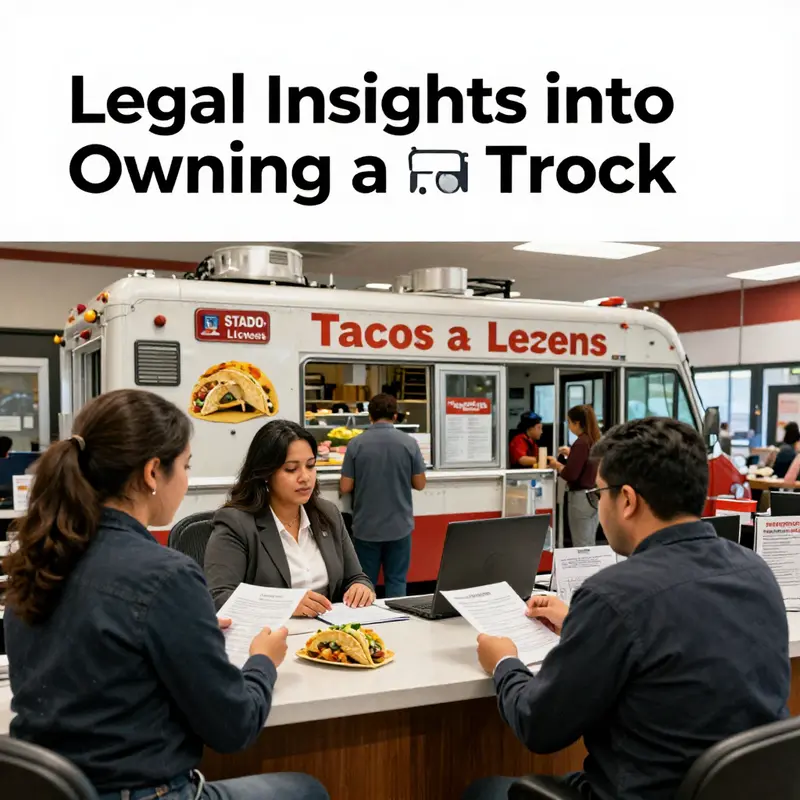
Owning a taco truck is a dream that blends street-level gastronomy with the logistics of a mobile operation. The scent of peppers, the sizzle of the grill, and the chance to bring handmade tortillas directly to neighborhoods are powerful draws. But the dream rests on a bedrock of rules that are not uniform across the country. In practice, you will walk into a landscape where what you must do in one city may look very different in the next. This is not a matter of ambition alone; it is a matter of navigating a patchwork of local regulations, health codes, and zoning rules that collectively govern where you can cook, how you can operate, and when you can serve customers. To approach ownership with confidence, you start by understanding that the law sees a taco truck not as a simple kitchen on wheels but as a business—an entity that moves through varying jurisdictions with distinct expectations. The path to legitimacy is therefore not a single prescription but a carefully tailored map that begins with research and then unfolds with practical steps that fit your chosen locale.
The first mile of that map is research. Location matters more than many aspiring operators expect. A city’s appetite for mobile food comes with its own guardrails. Some places encourage vibrant street food scenes with generous hours and flexible parking; others limit where a truck may operate, when it may stay in a location, or how many days it can be parked in one spot. That variance is not a nuisance; it is the engine behind legal compliance. The moment you settle on a target city or county, you should treat that jurisdiction as your primary mentor. Read the official codes, attend a few local vendor meetings if possible, and speak with the health department early. The aim is not to guess the requirements but to understand them in the language of the people who enforce them. This proactive approach often saves money and reduces the risk of costly missteps later in the process.
Once you have a sense of the local expectations, the core step is to obtain the necessary permits and licenses. Most taco truck ventures start with a basic business license from the city or county where the truck will be registered. This license authorizes the operation of the business itself, separate from what you cook. In parallel, you will typically need a food handler’s permit or a similar credential. These credentials confirm that you and your staff understand core food safety concepts, from proper temperature control to preventing cross-contamination. A mobile food vendor permit is almost always required for a vehicle-based operation. This permit is specifically tailored to vehicles that move between locations and often comes with its own set of conditions about where and when you can serve customers.
Health department approvals are the hinge of the entire enterprise. Before the first customer is served, your truck will be inspected to ensure it meets local health and safety standards. The health inspection is not a formality; it is an assessment of how you manage food storage, refrigeration, handwashing facilities, waste disposal, and general sanitation. The inspector will look at your refrigeration temperatures, the cleanliness of the prep areas, the availability of hot and cold water, and your maintenance practices. A clean bill of health means you can move forward; a failed inspection means you return to the kitchen, fix the issues, and schedule a new inspection. This process is ongoing as long as you operate. Regular inspections are common, and they create a disciplined routine around upkeep that benefits customers and operators alike.
Beyond licenses and health approvals, you will almost certainly need to secure liability insurance. General liability coverage protects you in the event of a customer slip, a property damage incident, or a foodborne illness claim. Insurance requirements vary by city and state, but many municipalities view proof of coverage as a baseline obligation. Some may require additional coverages, such as product liability or workers’ compensation if you hire employees. It is worth budgeting for a policy that reflects the realities of a mobile operation, including the risk profile of a hot grill, busy street corners, and proximity to pedestrians. Insurance is not a bureaucratic checkmark; it is a financial safety net that can influence your ability to obtain a permit, win contracts, or participate in certain markets.
Another foundational step is registering your business. Depending on your goals and structure, you may operate as a sole proprietor, form an LLC, or establish another legal entity. State registration with the secretary of state or a similar agency is common, and you may also need a federal Employer Identification Number (EIN) from the IRS for tax purposes and to open a business bank account. Even in the earliest days, separating personal and business finances helps protect you and makes growth tasks—like hiring, accounting, and licensing—much more straightforward.
Zoning and parking rules complete the legal triad that governs every mobile food business. Zoning determines where a food truck can park and operate, while parking rules govern the duration of stays, the proximity to brick-and-mortar restaurants, and the need for permits when parking in certain districts. In practice, you will likely encounter designated zones or permitted areas that rotate according to the city’s public safety and traffic considerations. Some jurisdictions require a permit to park in a particular district, while others limit the number of hours a truck can remain in one location. The result is a flexible, sometimes complex framework designed to balance vibrant street food culture with neighborhood concerns, traffic flow, and sanitation expectations. In a city like Austin, the system for regulating food trucks has been built out with a supportive infrastructure that makes mobility easier while preserving safety and public health. The Health Department and Municipal Court play pivotal roles in enforcement and compliance, and the city’s approach reflects a long-standing cultural embrace of food trucks as an integral part of the urban landscape. For operators, this means that success often hinges on building relationships with inspectors and hearing officers, understanding the rhythms of street activity, and planning routes that align with zoning and permit windows rather than chasing last-minute opportunities.
Navigating these layers is not about luck; it is about a proactive, educational approach. Early engagement with local authorities tends to pay off. A simple conversation can clarify whether you will need a specific health permit in addition to the standard business license, what the inspection schedule looks like, and where your truck can legally park during setup and service hours. In many communities, this early dialogue helps you avoid common missteps, such as misinterpreting the requirement for a mobile vendor permit or misplacing a truck within an area that cannot legally accommodate a startup kitchen on wheels. The regulators appreciate preparedness, and the lesson is practical: treat the licensing journey as a collaborative process rather than a gatekeeping obstacle. This mindset reduces friction and accelerates the path from concept to serving your first customers.
As you map out the path, remember that you do not have to navigate it in isolation. A comprehensive, area-specific guide can be a reliable companion. For prospective operators who want a thorough, well-structured overview of legal requirements, zoning, insurance, and operational best practices, a trusted resource offers a practical roadmap from concept to serving that first customer. The guide includes step-by-step narratives, checklists, and insights drawn from real-world experiences that can complement the official city pages and health department advisories. This combination of official guidance and practitioner wisdom helps ensure you are not learning the hard way through trial and error but rather building on a solid foundation of best practices. And as you prepare to embark on this journey, consider how sustainability and responsible operations will shape your brand from day one. You can explore how mobile food operations are integrating eco-conscious practices and community impact into their daily routines through dedicated resources that emphasize long-term viability and responsible growth.
Within this broader frame, you will also encounter promotional and educational content that speaks directly to new owners about the realities of permits, zoning, and compliance. A useful, practical synthesis can be found in guided material that walks through everything from origin ideas to the moment you serve your first customer. This kind of resource is especially valuable because it translates policy language into actionable steps, clarifying what it means to be a legitimate mobile vendor in a given jurisdiction. It is not merely about ticking boxes; it is about building a business that can weather regulatory changes, adapt to local tastes, and operate safely amid the bustle of city life. To integrate practical knowledge with everyday operations, consider how your kitchen routines, supplier relationships, and customer experiences can align with the regulatory expectations you have studied. By foregrounding compliance as a core value rather than a hurdle, you create a resilient enterprise that can grow with confidence while preserving the trust of customers and the communities you serve. This approach often reveals a consistent thread: success in the taco truck world is as much about disciplined operations as it is about sizzling recipes.
In crafting this roadmap, the practical takeaway is simple: begin with local regulation research, pursue the standard licenses in tandem with health department approvals, secure appropriate insurance, and formalize your business structure. Then, recognize that zoning realities will guide where you can operate and when. In Austin, for example, a mature regulatory framework supports mobile food vendors while maintaining hygiene, safety, and orderly street life. The approach there illustrates how a city can cultivate a thriving taco truck culture without compromising public safety or neighborhood livability. For anyone contemplating this path, the message is hopeful but grounded. Legal ownership exists; it is a matter of aligning your business plan with the laws that govern your preferred place to work, speaking the language of regulators, and treating compliance as a strategic resource rather than a box to check.
If you want to deepen your understanding of the full lifecycle of owning a food truck—from concept development through the moment you serve your first customer—there is a comprehensive guide that distills legal requirements, zoning considerations, insurance needs, and operational best practices into a coherent roadmap. This resource provides practical, actionable advice that complements the formal requirements described above and helps you translate policy into day-to-day success. For readers seeking a structured, buyer-friendly perspective on launching a compliant taco truck, this guide can be a valuable companion on the journey toward a legally sound and sustainably run business. As you plan the next steps, remember that the regulatory landscape is dynamic; staying informed and maintaining open lines of communication with authorities is essential to long-term success. And if you are ready to reference a concrete, organization-wide framework as you design your operations, you can consult the linked guide that offers a systematic approach to every stage of the process.
For additional context and practical insights, explore the resource that compiles legal requirements, zoning and insurance considerations, and operational best practices for food trucks, helping you navigate from concept to your first service with greater clarity. As you read, you will find that the advice aligns with the broader themes of responsible entrepreneurship and community engagement, which are essential to sustaining a taco truck venture in today’s regulatory environment. The wisdom of experienced operators and regulators alike points to a common truth: success in mobile food hinges on preparation, compliance, and the ability to adapt to local expectations while delivering a consistently high-quality product. If you take that to heart, your journey toward owning a taco truck becomes not just feasible but rewarding, with a foundation built to endure the evolving tastes and rules of the places you serve.
To tie practical guidance to an actionable path, you can also refer to a curated resource focused on the full lifecycle of a mobile food business, including regulatory steps, zoning realities, insurance, and operational routines. This content complements the local precedents you will encounter and provides a structured framework you can adapt as you grow. In the end, the core message remains constant: legality is not a barrier to entry but a map of conditions that, when understood and followed, enables a taco truck to thrive in any community willing to welcome it.
Internal link: sustainable practices are a core part of a resilient operation, and you can explore practical guidelines in this dedicated piece on mobile food truck sustainability: sustainable-practices-mobile-food-trucks.
External resource: for a comprehensive, step-by-step guide that complements the jurisdiction-specific requirements, consult the Ultimate Guide To Owning A Food Truck From Concept To Serving Your First Customer, which offers practical insights into legal requirements, zoning, insurance, and best practices (published February 18, 2026). https://www.foodtruckbusiness.com/ultimate-guide-owning-food-truck/
On the Open Road to Legality: Zoning, Parking, and Community Ties for a Taco Truck
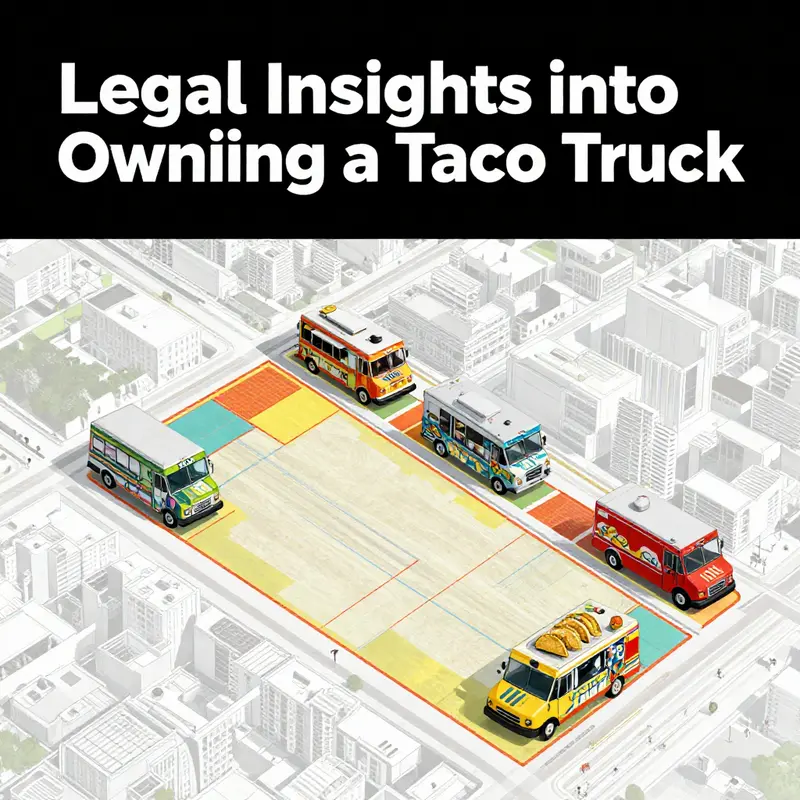
Owning a taco truck in the United States is legally possible for many people, but it is not a free-for-all. The dream of turning wheels, grills, and a signature salsa into a mobile corner shop is appealing, yet it sits on a lattice of local rules, health codes, and neighborhood expectations. The path to legitimate operation in cities like Austin—where food trucks are woven into the cultural fabric—is less about a single license and more about a choreography of permits, inspections, insurance, and social engagement. Those who navigate this terrain well come to understand that legality is not merely about compliance, but about reliability, respect for the community, and a disciplined approach to day-to-day operations. The result is not just a permit to sell food, but a sustainable practice that can endure the shifting tides of city planning, health standards, and local politics.
Legal legitimacy begins with the basics that apply to many small businesses, yet those basics take on distinct shapes when the product is prepared and sold from a mobile kitchen. At the core, a taco truck owner must secure the same foundation as any small business: a legitimate business entity, appropriate branding, and tax compliance. In practice, this usually means choosing a business structure (such as a sole proprietorship, an LLC, or another entity type), registering with the state, and obtaining a federal employer identification number if needed. It also means obtaining the necessary local licenses and permits to operate as a mobile food vendor. The concrete list typically includes a general business license, a health department permit specific to food service, and a mobile food vendor permit or similar authorization from the city or county. These licenses and permits are not mere formalities—they set the stage for inspections, standard operating procedures, and accountability for the business. In many places, these are renewed annually or biennially, often in tandem with updates to health codes or zoning rules. The effort to stay current with renewals becomes part of the business’s rhythm, a reminder that legality is a moving target rather than a one-time achievement.
The regulatory landscape diverges by city and county, sometimes dramatically. Health and safety requirements are universal in principle but vary in detail. A vehicle used as a kitchen must meet standards for refrigeration, proper food storage, sanitation facilities, and waste disposal. The health department may require regular inspections of the cooking area, handwashing stations, pest control measures, and the integrity of cold and hot holding temperatures. These standards are not aimed at stifling entrepreneurship—they are designed to protect the public and the workers who operate in close proximity to high-risk foods. A taco truck, with its steam and sizzle, becomes a mobile concern that must be kept as clean and safe as any brick-and-mortar restaurant. The rules also often govern how food is transported, kept at safe temperatures while in transit, and how waste is managed. Adherence to these rules reduces the risk of foodborne illness and helps build trust with customers who may encounter the truck at a park, a farmers market, or a curbside pop-up.
Insurance is another pillar of legitimacy. Local jurisdictions frequently require proof of general liability insurance to cover accidents or incidents that could occur while the truck is in operation. The coverage, limits, and the specifics of what is insured can vary, but the core idea remains the same: a safety net that protects the business, its workers, and the public. In practice, the insurance discussion often begins with a broker or an agent who understands both the food service landscape and the realities of mobile operations. The policy may need to address not only liability for food-related incidents but also property damage, vehicle liability, and potentially workers’ compensation if there are employees. The cost of insurance is a real consideration, and it should be viewed as an investment in business stability rather than a burden. A well-documented risk management plan—outlined in the operating manual and shared with staff—helps in negotiations with insurers and in conversations with city officials who want to see a responsible operator.
Beyond the health codes and the ledger of licenses, the legal framework for taco trucks is deeply intertwined with where you can operate. Zoning laws regulate land use across the city, and for mobile vendors the rules become a moving target themselves. Some jurisdictions carve out designated zones where trucks can set up, while others impose time limits on where a truck may park in a given block, or require advance permits for each location. Enforcement mechanisms may include signage, parking restrictions, and penalties for operating outside the permitted zones. In practice this means that a truck is not simply free to pull up anywhere and start grilling; it must be positioned in a way that complies with zoning and parking rules while also aligning with public safety guidelines. The experience of working within these rules often requires a blend of strategic planning and on-the-ground adaptability. For example, some cities maintain a predictable network of permitted corridors or hours when mobile vendors can operate in busy districts, parks, or event spaces. Others rely on a rotating system tied to city events or temporary use permits. What remains constant is the expectation that operators will anticipate conflicts, coordinate with property owners and organizers, and secure the necessary approvals before setting up near a school, hospital, or other sensitive sites.
A practical reality of zoning and parking is the challenge of locating spots that balance foot traffic with the logistics of a mobile kitchen. Parking constraints influence not only where you sell, but when you sell. In dense urban centers, the competition for curb space is fierce, and the ability to reserve an optimal location at peak hours can determine a truck’s profitability. Some operators optimize by establishing reliable routines—visiting the same market or event at predictable times, building relationships with property managers, and working with event organizers who can provide space and electrical hookups. Where space is scarce, smaller footprints gain an advantage. Mini taco carts, for instance, can squeeze into tighter corners or pedestrian-heavy zones, offering agility that helps them maintain a steady presence. Still, even smaller units must comply with the same health and safety standards and must obtain the corresponding licenses, a reminder that simplicity in size does not replace regulatory responsibilities.
The path to compliance also entails a proactive stance on community relations. A taco truck is a mobile business that will intersect with neighborhoods in a variety of ways—residents, school groups, business districts, and event organizers all become potential allies or sources of friction. The most durable operators treat community engagement as a core part of the business strategy rather than an afterthought. Regular participation in farmers’ markets, food festivals, and neighborhood gatherings helps establish a rhythm of visibility and credibility. Community engagement is not only about selling more tacos; it is about building trust, creating a recognizable local presence, and contributing to a neighborhood ecosystem where businesses support one another. Positive engagement can expand opportunities beyond regular curbside sales into collaborations with local businesses, sponsorship of youth teams, or participation in charity events. The outcome is a brand that is seen as an active and valued member of the community rather than a temporary intruder in the public space. Social media becomes a natural amplifier for these efforts, enabling real-time updates about location shifts, menu changes, or special events and giving the community a sense of shared experience around the truck’s movements.
For operators who want to deepen this dimension of their business, there is a wealth of practical inspiration in dedicated community-oriented resources. For example, the concept of “Trucks for Change” highlights how mobile vendors can contribute to community outcomes and demonstrate social responsibility. See Trucks for Change: Community Engagement Impact for ideas on sponsorship, partnerships, and civic-minded activities that align with a legal operating framework. This kind of engagement is not merely philanthropic; it is a strategic approach to building a loyal customer base that understands and supports the truck’s role within the neighborhood. It also helps address potential tension around noise, parking, and traffic by framing the truck as a contributor to local vitality rather than a disruptor. The insights you gain from such resources can be integrated into the truck’s operating manual, training materials, and community-facing communications so that every shift on the street reinforces a shared investment in the neighborhood’s well-being.
The regulatory journey does not end with obtaining licenses and setting up in a permitted zone. The operating reality includes ongoing compliance, regular health inspections, and periodic renewals of permits and registrations. It also involves staying informed about changes in local ordinances that may affect when and where you can operate. Cities periodically update rules in response to traffic patterns, public safety concerns, or shifts in neighborhood character. A responsible owner keeps a routine for monitoring these developments, whether by scheduling quarterly check-ins with a local health department, subscribing to city updates on licensing, or establishing a relationship with a city planner who can provide early notice of anticipated changes. Because laws are not static, the best operators build a culture of proactive compliance, not reactive patchwork. They document procedures, maintain up-to-date manifests of equipment and certifications, and implement consistent staff training on safety, sanitation, and customer interaction. In doing so, they reduce the likelihood of penalties and interruptions, and they create a reliable experience for customers who expect quality and consistency from a mobile vendor.
Understanding the legal framework is not an obstacle to opportunity; it is a doorway to sustainable growth. The combination of proper licensing, health-conscious operation, appropriate insurance, and thoughtful engagement with the community creates a foundation that can withstand regulatory scrutiny and neighborhood scrutiny alike. It also enables the owner to scale thoughtfully, whether by expanding to multiple trucks within the same licensing structure, or by entering new zones with confidence in the process. The road to legality is a long, careful, and ongoing process, but it is not a road without options. With attention to the letter of the law, a well-managed menu, and a steady relationship with the community, a taco truck can become a dependable business model rather than a risky venture.
As you plan your own venture, keep in mind that each city is a stage with its own script. In some places, the script favors nimble vehicles that can navigate tight spaces and quickly adapt to walk-up crowds. In others, it prizes long-standing relationships with event organizers or parks that offer recurring permit opportunities. Both patterns require preparation: a clear schedule, a robust set of operating protocols, and a willingness to engage with the people who will share your space on the curb. If you are serious about building a legal, resilient taco truck business, start with the fundamentals and then layer in the extra elements that will help you thrive: professional certifications, a transparent menu and pricing, consistent food safety practices, and a communications plan that keeps neighbors, customers, and city officials informed about your intentions and impacts. The combination of regulatory discipline and community alignment is what sets enduring mobile food businesses apart from short-lived curbside curiosities.
For readers seeking actionable, field-ready guidance on community integration and the legal basics, consider exploring community-oriented resources and practical case studies that reflect how mobile vendors can contribute to local economies while maintaining compliance. In particular, a focused examination of community engagement in the truck ecosystem can illuminate strategies for sponsorship, partnerships, and neighborhood-friendly operations. This is not just about selling tacos; it is about embedding a mobile kitchen within the fabric of the city in a way that respects, serves, and strengthens the surrounding community. By weaving regulatory awareness with authentic community presence, a taco truck can enjoy a durable license to operate and a durable place in the hearts and streets of its city.
Internal link reference (for further ideas on community engagement): Trucks for Change: Community Engagement Impact
External resource for broader regulatory context: https://www.sba.gov/business-guide/starting-a-business/understanding-local-laws-and-regulations
Final thoughts
Navigating the legal landscape of taco truck ownership is essential for anyone looking to bring their culinary creations to the streets. Understanding the necessary permits, health regulations, and community engagement practices not only ensures compliance but also enhances your business’s reputation and success. As you gear up to hit the road, remember that every legal step you take lays the foundation for a thriving taco truck business. Embrace the journey, engage with your community, and serve delicious meals with the confidence of knowing you’re operating within the law.