

Selling delicious tacos from a food truck at a private party may sound like a fun and lucrative gig, but before you grab that spatula, there’s important legal ground you need to cover. Although the concept of selling food to friends and family seems harmless, regulations exist to ensure public health and safety. In this article, we will explore the legal requirements, health regulations, potential consequences of non-compliance, local variances, and resources available for those looking to sell food at private events. Each chapter will provide a detailed insight into these matters, helping you understand the significance of obtaining the necessary taco truck permits and how to navigate this evolving landscape.
Private Parties Aren’t Permit-Free: Why Selling Food at Private Gatherings Still Requires Licensing
When people plan a private party, the instinct is to assume that the walls of the venue somehow shield them from the ordinary rules that govern food service. A birthday, a wedding, a neighborly cookout—these gatherings feel intimate and off the radar. Yet the act of selling prepared food at any gathering, private or public, triggers a web of health, safety, and regulatory obligations designed to protect guests, ensure fair business practices, and keep tax systems working as they should. The core message from most state and local health frameworks is clear: if you are preparing and selling ready-to-eat food, you need a license, not just a good recipe. The private nature of the event does not transform your operation into a lawless kitchen; it simply relocates the risk and the scrutiny from a public marketplace to a private one. And in practice, that distinction matters little to health inspectors, insurance underwriters, or the host who invites liability into their space. The takeaway is straightforward: private parties do not grant a free pass for food sales.
To understand why, it helps to trace the usual regulatory pathway. At the center is the food service license, a credential that signals the vendor’s commitment to basic sanitation, safe food handling, and reliable recordkeeping. This isn’t a ceremonial badge; it is a practical framework that governs where food is prepared, how it is stored, and who is allowed to touch the ingredients. The license typically accompanies broader program requirements, including facility inspections, equipment standards, and documented temperature controls. In many jurisdictions, the license is issued by the county or city health department and is tied to the business rather than to a single event. Even if you intend to operate from a portable setup, such as a makeshift kitchen at a private party, the regulatory system treats the venture as a continuous business activity that must meet ongoing standards.
A closely related requirement is the health and safety compliance standard. Health departments do not simply check that food tastes good; they verify that it is prepared, stored, and served in a manner that minimizes hazards. This includes proper handwashing facilities for staff, clean and sanitized preparation surfaces, safe storage temperatures for perishable ingredients, avoidance of cross-contamination between raw and cooked foods, and secure handling of allergen information where applicable. It also means that even if your setup is temporary, you must demonstrate that you can maintain a hygienic environment from prep through service. In practice, this translates to controlled cooking temperatures, calibrated thermometers, separate utensils for different foods, and a plan for clean-up that prevents any lingering contamination risk. The standard is not optional; it is a baseline designed to protect guests who may not know or notice every potential hazard.
Insurance is another practical pillar of compliance that hosts and vendors should not overlook. General liability insurance is commonly required by venues and event organizers to cover potential claims arising from food-related issues, slip-and-fall incidents, or allergic reactions. The presence of insurance helps allocate risk in a way that supports the hosting party and the vendor, smoothing disputes and facilitating a quicker resolution if something goes wrong. Even when a party is small, a reasonable insurance policy is a prudent safeguard; it is not a formality to be skipped. In many cases, the cost of insurance is modest in comparison to the reputational and financial exposure posed by a single adverse incident. The idea is not to create a barrier to entry, but to establish predictable responsibility boundaries for all parties involved.
In addition to these core requirements, many locations require a temporary or event-specific permit when food is sold at a location that is rented, public, or features a large gathering. A private party at a rented hall, a park with a special event permit, or any venue that anticipates a higher volume of guests may trigger a temporary food sales permit. The temporariness of the event does not erase the need for proper licensing; rather, it often changes the administrative path. The host may need to coordinate with the venue and local authorities to ensure compliance for a defined window of time. This is especially true when the event draws a crowd that exceeds typical neighborhood norms, or when the service is marketed beyond the immediate circle of attendees. The bottom line is simple: the more public the look and the larger the risk, the more likely regulators will require formal permissions.
The landscape of local regulation is inherently variable. While the mechanistic steps—obtain a food service license, ensure health and safety compliance, secure insurance, and consider a temporary permit—are common threads, the specifics shift from city to city and state to state. A vivid illustration is the degree of enforcement and the exact licensing taxonomy, which can be dramatically different between jurisdictions. In environments with dense regulatory networks, such as major metropolitan areas, inspectors may treat every on-site food preparation operation with heightened scrutiny, even for private or invitation-only events. In other places, the approach may be more lenient yet still wired to health department oversight. The common thread across these differences is certainty: you cannot assume exemption because the sale occurs behind closed doors. You must verify the local requirements before you plan to serve. The risk of assuming exemption is not merely a paperwork hassle; it is potential fines, business closure, or legal action should an incident occur.
The practical implications of this regulatory reality begin long before the first dish is plated. The planning stage should involve a careful check with the appropriate local health department or licensing authority to map out the exact paperwork, fees, and timelines. An accurate starting point is to determine whether a standard food service license covers temporary or event-based operations or whether a separate temporary food permit is required. The process may ask for a business license, proof of sanitation facilities, a description of the cooking and refrigeration equipment, and a plan for waste management and pest control. Even a seemingly small portable kitchen must be described in detail, including the layout, the flow of food from raw ingredients to finished servings, and the routes for staff to wash hands and sanitize surfaces. Collecting and presenting these details not only helps you navigate the permit process but also demonstrates an awareness of food safety risks that can reassure a venue host and protect guests.
From a host’s perspective, the expectation is equally clear. Planning a private event that includes food sales invites a shared responsibility for safety. The host’s role may include verifying that the vendor holds all required licenses and insurance, and that the event space complies with local health and fire codes. Some venues may require the organizer to contract with a licensed caterer or food vendor as a condition of use. Even when the host is merely facilitating a social gathering, the decision to allow on-site food sales can become a matter of public health concern for which the host could be held liable if due diligence was neglected. This is not about policing private joy; it is about ensuring guests, especially vulnerable individuals such as children or elderly guests, do not encounter avoidable risks.
For anyone who imagines that the private nature of a party grants a loophole, the message remains firm: there is no free pass. The basic licensing and safety framework travels with you, whether you are selling from a commercial truck, a portable cart, a makeshift kitchen, or a borrowed backyard setup. The specific license you need may depend on where you are operating and how you are operating, but the obligation to be licensed, to practice safe food handling, and to carry appropriate insurance does not disappear at the threshold of a private venue. The practical upshot is that if you intend to sell food at any private event, you should plan for compliance as if you were serving a regular customer base. Make contact with the local health department early, gather the required documents, and build a compliance timeline into your event plan so what happens at the party does not trigger a late-night regulatory scramble.
When one looks at the broader picture, the prudent path becomes evident. Staying compliant does more than avoid penalties; it supports sustainable cooking ventures that can grow beyond a single party. It means you can scale your operation with a clearer understanding of the regulatory environment, reduce unpredictable interruptions, and position yourself to collaborate with hosts who want to provide safe, reliable food experiences. It also encourages responsible business practices that protect public health, which is the ultimate purpose of these rules. If you are serious about offering delicious, portable foods at private gatherings, treat licensing and safety not as bureaucratic hurdles, but as a framework that enables trust with guests, venues, and communities. In this sense, the question of whether private parties can operate without permits dissolves into a larger conversation about professional cooking, accountability, and the long arc of a responsible business venture.
For readers who want a concrete starting point, a practical approach is to reach out to the local county health department or city licensing office to confirm the exact requirements and deadlines. California, for example, offers specific guidance on temporary food service permits for small events, with clear steps for application, required documentation, and associated fees. Engaging with the official resources early helps avoid last-minute surprises and aligns your event with all applicable rules. This proactive stance is not only about compliance; it’s about safeguarding guests and ensuring the event runs smoothly, without last-minute interruptions that can derail plans or undermine the host’s good intentions. The path to legally selling food at private gatherings, therefore, is not a maze to be navigated in a panic but a process to be understood, planned for, and executed with professional care.
If you are curious about how best to embed responsible practices into a portable food operation, you can look to general guidelines that emphasize sustainability and safety in mobile food settings. For instance, resources that discuss sanitary kitchen setups, efficient waste management, and safe cooking workflows offer valuable, transferable insights that fit both private events and formal venues. A related discussion on sustainable practices for mobile food trucks provides a thoughtful blueprint for operating cleanly and efficiently, even in intimate settings. See more at Sustainable Practices for Mobile Food Trucks. By adopting such practices, you not only meet regulatory expectations but also build guest confidence in your commitment to quality and safety. In supporting your planning, it is useful to keep in mind a practical external reference that outlines temporary permit considerations, such as the Los Angeles County Department of Public Health’s temporary food service guidelines, which detail the application process, eligibility, and conditions for small-scale events: https://publichealth.lacounty.gov/eh/food/.
The honest takeaway, then, is layered. Yes, you can operate at private gatherings in some circumstances, but only if you secure the appropriate licenses, meet health and safety standards, carry insurance, and navigate any temporary permit requirements that apply to the event’s specifics. Skipping these steps invites penalties that range from fines to forced shutdowns and potential legal action. For vendors who see private events as stepping stones to broader opportunities, treating compliance as a foundational practice rather than an afterthought is essential. And for hosts who want to offer food as part of a celebration, insisting on licensed, insured vendors protects guests and simplifies planning, making the experience safer and more enjoyable for everyone involved. In sum, the rules exist not to punish private gatherings but to ensure that every bite served in a social setting meets minimum safety and accountability standards. This is the predictable, prudent path for anyone who is serious about selling food at private events, even when the truck or cart sits discreetly at the edge of the party yard.
Guardrails of Flavor: Health and Safety Rules for Taco Trucks at Private Events
The scent of sizzling peppers and warm tortillas can make a private party feel festive and intimate, but the appeal of a private gathering should never obscure the realities that govern how food is prepared, served, and kept safe. When a taco truck or any mobile kitchen rolls onto a private property, it steps from the realm of personal hospitality into a domain governed by health and safety regulations designed to protect every guest. The equation is simple in theory but demanding in practice: flavor and hospitality must be paired with proper permits, trained personnel, sanitary facilities, and ongoing vigilance to prevent contamination, spoilage, and avoidable illness. The moment you start selling food at a private event, you enter a regulatory landscape that treats the event the same as any public venue in terms of food safety expectations. This is not a matter of discretion or preference. It is a matter of public health, liability, and long‑term business viability.
From the first moment you consider offering tacos at a private party, you should acknowledge that the law generally requires a set of permits and licenses that verify you meet basic standards for food handling, equipment sanitation, and safe operation. These are not merely ceremonial; they are the day‑to‑day guardrails that reduce risk for your customers and your operation. The core requirement most jurisdictions share is a combination of a mobile food vendor permit and health department approval, plus a business license. Even events such as intimate weddings or family birthdays can fall under the same framework as a street fair or festival when food is being sold. It is easy to underestimate the scrutiny of health inspectors who arrive with a checklist that includes how you store ingredients, how you maintain temperatures, and how you clean and sanitize surfaces between tasks. The practical implication is straightforward: do not assume private property exemptions exist simply because the guest list is small or the audience is known. In truth, the private nature of the party does not nullify the need for proper licensing or the obligation to comply with safety standards.
The health and safety requirements that govern mobile food vendors, including taco trucks, are not abstract guidelines. They crystallize around four always‑present pillars: facility and equipment standards, personnel training, process controls, and documentation. First, facility and equipment standards demand that you operate in a space that can sustain safe temperatures for cold and hot foods, that all cooking and cooling equipment is clean, properly maintained, and protected from cross‑contamination. This means reliable refrigeration for perishable items, accurate hot‑holding temperatures, and a plan for separate work zones to minimize the risk of raw ingredients coming into contact with ready‑to‑eat foods. The second pillar—personnel training—ensures that every person touching food knows how to prevent contamination, how to wash hands effectively, and how to respond when a problem appears. In many jurisdictions, food handlers must obtain certified training, such as ServSafe or an equivalent program, before they are permitted to work at a food service operation. The third pillar—process controls—covers the day‑to‑day routines that safeguard food quality. It includes how ingredients are transported, stored, thawed, cooked, cooled, and held, along with how waste is managed and how equipment is cleaned and sanitized. The fourth pillar is documentation: permits, inspections, and proof of compliance must be available for review by health officials, and often for the event host who is coordinating the appearance of the truck on private property.
These requirements are not merely bureaucratic hurdles; they are integrated into the realities of everyday operations. A taco truck that can’t keep food at safe temperatures risks rapid bacterial growth that can cause illness within hours. A truck that ignores sanitation protocols may inadvertently contaminate surfaces, utensils, and the hands of staff, creating a heightened risk for guests with allergies or sensitivities. The practical upshot is that preparing for a private event begins long before the first taco is heated. It begins with a proactive plan to secure the right permits, arrange for a compliant kitchen setup, and train staff to execute safe food handling from the moment the vehicle arrives on site until the last plate is served and the site is cleaned. Without that plan, the lure of a private party can quickly give way to a parade of regulatory issues, fines, or even shutdowns, which can be devastating to a small operation that relies on word‑of‑mouth referrals and repeat private gigs.
Beyond the permits themselves, private events ask the operator to come prepared with strategies that address the unusual challenges of a temporary kitchen. Handwashing facilities, for example, are a nonnegotiable detail in most health codes. A mobile setup must provide a proper handwashing station or an acceptable alternative, such as a no‑touch sink or a hand sanitizer option that is approved for use in food service. The goal is to ensure staff can clean their hands at key points—before starting, after handling raw foods, after any break, and between tasks that involve different food components. These facilities are not decorative touches; they are essential parts of the sanitation chain that helps prevent cross‑contamination and keeps guests safer. The same attention to hygiene extends to waste disposal, which must be managed in a way that does not attract pests or create sanitary hazards on site.
Insurance and licensing also come into sharp relief when private property is involved. The host may need to confirm that the taco truck has valid business licenses and adequate insurance coverage that protects both the operator and the property owner in the event of an accident or incidents related to food safety. Local jurisdictions frequently require a temporary food service permit for events on private property, a permit that sometimes involves a pre‑event inspection of the mobile kitchen to verify that it meets the necessary health and safety standards. The interplay between host responsibilities and vendor obligations can be delicate. A thoughtful host will insist on seeing proof of licenses and coverage well before the event date, while the operator should be prepared to facilitate any inspections or on‑site checks that authorities deem necessary. This is not a problem of rigidity but of clarity and risk management; it helps everyone anticipate issues rather than reacting to sanctions after the fact.
Allergen management is another facet that deserves careful attention in the private party context. In a rush to please guests and keep service moving, it is easy to overlook the subtle but crucial steps of labeling ingredients, maintaining separate preparation areas for allergen‑free options, and having a plan to accommodate guests with dietary restrictions. Clear labeling at the point of service, cross‑contact prevention in the kitchen, and an accessible staff member who can answer questions about ingredients are all essential elements. The goal is not to create a labyrinth of ban on flavors, but to ensure guests can enjoy the offerings with confidence that their safety is being considered. The FDA and local regulators often emphasize allergen awareness as part of broader food safety programs, reinforcing that transparency and careful handling are central to responsible service.
As operators assess whether a private event is worth the perceived convenience, the practical takeaway is plain: private parties do not provide a free pass from regulation. If you plan to sell food, you must be prepared to demonstrate compliance—in advance, not after an unexpected visit from a health inspector. The consequences of non‑compliance can be severe, ranging from fines to forced cessation of operations, and in some cases, legal action. The reputational cost of hosting or participating in a private event without adequate permits can be enormous, often longer lasting than any financial penalty. That is why many operators treat event permitting as a critical part of their business planning, not a one‑off formality.
Regulatory landscapes do vary by location, and the specifics can change with neighborhood, city, or state priorities. While some places maintain stricter enforcement for mobile vendors, others may offer streamlined pathways for temporary events on private property. The key for vendors is to consult the local health department well in advance and to verify whether a temporary permit is required, whether inspections are anticipated, and what particular documentation will be needed on the event date. Even in cities with robust private event markets, the underlying principle remains constant: food safety demands attention, resources, and a proactive compliance mindset. In places like major metropolitan areas, the energy around health inspections and permits is high, reflecting a public policy emphasis on protecting consumers amid bustling food scenes. This means that the person serving tacos at a private soirée must be not just a skilled cook but a meticulous regulator of processes, temperatures, and cleanliness.
For operators who want practical guidance, the path is clear. Begin by engaging with the local health department’s resources to identify the exact permits and certifications required for your operation in private event settings. Seek out approved food safety training for your staff, preferably programs that provide recognized certification upon completion. Prepare your kitchen setup with verifiable sanitation stations, precise temperature control devices, and a plan for ongoing cleaning and waste management. Have a pre‑event checklist that you and the host can review together, ensuring that all permits, insurance documents, and inspection notifications are in place and accessible on the day of the event. Keep copies of permits and license cards in a readily available place on the truck, and be prepared to present them to event organizers or authorities without delay. And remember, allergen and dietary accommodations require clear communication with guests and with the kitchen team, so that everyone can enjoy the offerings without unintended risks.
In addition to these practical steps, it helps to anchor your planning in credible frameworks. The FDA’s Food Code offers widely used guidance that many local jurisdictions adopt or adapt. It provides a model for safe food handling, storage, and service that can inform your day‑to‑day operations as well as your pre‑event planning. While you should always defer to your local authority for the precise requirements, aligning your practices with the Food Code can help you build a robust baseline of safety and accountability. For those who want to deepen their understanding, examining the code can illuminate how temperature controls, cross‑contamination prevention, and cleanability of equipment are prioritized in regulatory thinking. The goal is not to replicate a full municipal inspection in a private party setting, but to internalize the standards that underpin safe food service and to demonstrate, through consistent practice, that you take those standards seriously.
If you are curious about more evidence‑based practices and how they translate into daily operations, a reliable starting point is the broader conversation about sustainable practices in mobile food services. See resources that discuss how to implement environmentally responsible routines without compromising safety or efficiency. For a practical, practical example of how to integrate safety and sustainability in a mobile kitchen, consider resources that explore how mobile food operations can balance waste reduction, energy efficiency, and rigorous hygiene. As you prepare for private events, these considerations can inform not just compliance, but your broader business ethos and client satisfaction.
Ultimately, the question of whether you can sell at a private party without permits hinges on a simple truth: the moment you take money for food, you enter a regulated space that expects you to prove you meet health and safety standards. This is a matter of protecting guests, preserving your own license to operate, and maintaining trust with hosts who rely on you to deliver both taste and safety. When in doubt, err on the side of precaution. Confirm the requirements with local authorities, secure the necessary permits, ensure your staff are trained and equipped to handle food safely, and establish a transparent communication channel with the party host about what is legally required and what is logistically feasible for the event. The private party can still be a wonderful setting for sharing flavorful tacos, but it must be backed by a foundation of health‑and‑safety diligence that stands up to scrutiny and protects everyone who comes to eat.
For further reference, you may explore related guidance on sustainable practices for mobile food trucks and read about the public health standards that shape private event service. You can also consult the FDA Food Code for general safety principles that inform local regulations and inspections. See external resource: https://www.fda.gov/food/fda-food-code/food-code-2022.
If you want to explore more about how operators are meeting these standards in practice, consider looking at industry resources that discuss the balance between regulatory compliance and entrepreneurial growth. For additional context on how operators plan around compliance in trucking and mobile service contexts, you can review broader discussions on industry trends and safety best practices.
Internal note: for readers interested in practical sustainability and safety integrations for mobile food services, see this resource on sustainable practices for mobile food trucks for concrete ideas you can adapt to a private event setting. sustainable practices for mobile food trucks.
When Private Parties Meet Public Health: The Real Cost of Selling Without Permits
A private gathering may feel intimate, almost conspiratorially cozy, but the rules that govern food service do not wink at those gatherings. They are written to protect strangers as well as friends, to ensure that every plate served outside the home kitchen meets basic safety standards, and to keep the tax ledger in order. The moment a guest buys a taco, a bite of a regional specialty, or any prepared food at a private event, the transaction shifts from a casual favor into a regulated business activity. That shift carries responsibilities that extend far beyond the moment of serving. In practical terms, selling food at a private party without the proper permits is not merely a breach of etiquette; it is, in almost all jurisdictions, illegal. Health departments, licensing authorities, and even local zoning rules treat such activity as a public health matter, not a lifestyle choice. The consequences can ripple through personal finances, business prospects, and future opportunities for anyone who treats a private celebration as a loophole in the system rather than a carefully planned commercial event. To understand why, it helps to look at how the system is designed to function and what happens when an operator acts outside of those boundaries.
At the heart of the matter lies the recognition that food safety is a continuum. It begins with the sourcing of ingredients and extends through storage, preparation, cooking, and transport to the consumer’s plate. Even if the setting is a home or a small, seemingly private venue, the consumer is still exposed to the risks associated with food handling. Local health departments typically require a sequence of approvals for anyone who regularly conducts food sales, and that requirement does not evaporate simply because the event is private. The most common entry points for legal compliance are a mobile food vendor permit, health department approval, and a business license. These are not bureaucratic obstacles designed to slow ventures; they are gatekeepers intended to ensure that kitchens, whether on wheels or in a storefront, adhere to hygiene standards, proper temperature control, cross-contamination prevention, and safe handling of ingredients. The principle is straightforward: when food is sold to the public, someone is accountable for the safety of that food, regardless of where the sale takes place.
The discipline of health and safety regulations serves a practical purpose. They require inspections of preparation areas, equipment, and the handling of ingredients. They set standards for cold holding and hot holding, dishwashing practices, handwashing facilities, and the cleanliness of the environment where food is prepared. These requirements are not arbitrary. They reflect decades of public health experience and are designed to minimize the risk of foodborne illness, which can have serious, even life-altering consequences for individuals and their families. When a person chooses to operate without the necessary permits, they not only expose themselves to penalties, but they also create risk for customers who may have no way to ascertain the safety of the food they are consuming. The problem is not merely a lack of paperwork; it is a gap in safety, accountability, and traceability that can complicate any later effort to address an adverse outcome.
In this framework, the consequences of non-compliance are swift and tangible. Fines are common when authorities discover unpermitted activity, and a shutdown can be issued on the spot if conditions are deemed unsanitary or unsafe. The power to seize unsafe food items is seldom exercised lightly, but it is a legitimate and practical enforcement tool. The penalties multiply when a customer contracts an illness after eating at a private event where the vendor operated without a permit. Civil liability becomes a real possibility, as hosts, organizers, or even guests could pursue damages for medical expenses, lost wages, and other costs associated with the illness. Without proper licensing, many vendors also lack access to typical insurance coverage that might shield against such claims, leaving the operator personally responsible for significant financial exposure. The risk calculus changes dramatically when a single incident could lead to medical bills, legal fees, and potential damages that threaten a venture’s viability. Repeated violations can result in permanent bans on future licensing, effectively ending a food service dream before it has a chance to mature. These are not hypothetical concerns; they are practical realities observed in jurisdictions across the country.
Local differences matter. While some cities have streamlined pathways for temporary or event-based food service, others enforce stricter regimes that apply even to intimate gatherings. A prominent example is a major metropolis where health permits are stringently enforced; a mobile food vendor cannot operate at an event in most cases without securing city approvals. The takeaway is simple: do not assume that a private party is exempt from licensing or health-safety oversight. The rules vary, but the underlying obligation to protect public health does not. This is not about fear of fines; it is about recognizing that food service creates shared risk, and the system exists to manage that risk through standardized processes. To navigate this landscape, prospective sellers should begin by contacting local health authorities, or a licensing office, to understand what licenses are required and what inspections or food-handling training may be necessary.
The practical path to compliance begins with clarity and documentation. Rather than improvising a temporary setup for a private event, an operator should treat the occasion as a potential commercial venture and prepare accordingly. This means securing the necessary permits well in advance, arranging for health inspections of the preparation and service areas, and ensuring that equipment and facilities meet sanitation standards. It also means obtaining a business license and staying compliant with tax obligations. These steps, while sometimes viewed as burdensome, create a foundation of legitimacy that benefits all parties involved—the host, the guests, and the vendor alike. A host who understands the regulatory landscape can facilitate a smoother process by coordinating with the vendor to confirm that all health and safety expectations are satisfied and that any required permits are in place before the event date.
For individuals who are curious about best practices in mobile food operations, there are resources that outline how to integrate safety, efficiency, and community responsibility into everyday practice. One helpful starting point is a resource focused on sustainable practices for mobile food venues. The guidance emphasizes not only the need for proper permits and training but also how to minimize environmental impact, manage waste responsibly, and maintain consistent food quality in different environments. This approach reframes compliance as part of a comprehensive professional standard rather than as a punitive constraint. The aim is to support operators who want to run responsible, compliant, and customer-centered services that can thrive in a variety of settings, including private gatherings.
It is worth noting that the decision to operate legally does not have to compromise the personal or intimate feel of a private event. A well-planned, permitted service can be integrated into a celebration with just as much warmth and personalization as an unregulated arrangement—perhaps even more, because guests can enjoy the food with confidence in its safety and handling. The host benefits from knowing that a licensed vendor has passed health inspections, carried appropriate insurance, and is operating in a way that aligns with tax and business obligations. The vendor benefits from reduced risk and more predictable operations, which translates into reliability for menu planning, equipment needs, staffing, and service timelines. In turn, guests experience a higher level of trust in the food they are offered and a clearer understanding of who is responsible should anything go wrong. That clarity helps preserve the social atmosphere of the event without turning it into a legal guessing game.
For those who want to explore more about the broader landscape of food safety for vendors and event organizers, formal guidance from national health authorities provides a comprehensive overview. The text emphasizes that all vendors, regardless of whether they operate at a permanent facility or a temporary setting, must adhere to established safety standards. The emphasis on inspections, training, and ongoing compliance is not a bureaucratic trifle but a practical framework designed to prevent harm and support responsible business operations. The reality is that private parties, wedding receptions, and family gatherings can be excellent opportunities for culinary creativity, but they still fall under a system designed to protect the public and to ensure that the food people eat at such events is safe and properly managed. The decision to sell at private parties without the required permits is a decision with serious potential fallout—financial, legal, and reputational—and it is a decision that courts and health departments generally do not treat as merely a minor infraction.
The path forward is straightforward. If you are contemplating offering prepared foods at a private event, begin by talking with your local health department to determine what licenses and permits are required. Ask about temporary food service permits, inspections, and any training that may be needed. Review the business licensing requirements, and consider consulting a professional who understands the local regulatory environment. Collect and maintain the records that demonstrate compliance, including receipts for permits, inspection reports, and any relevant insurance documentation. Involve the host early in the process so they understand what must be arranged and why. A successful, lawful private event is not about bending rules; it is about transforming a gathering into an occasion that is enjoyable, memorable, and safe for everyone involved.
As a practical touchpoint for readers seeking further guidance on the regulatory side of mobile food operations, consider the resource that discusses sustainable practices for mobile food venues. It provides a gateway to understanding how responsible operations balance customer satisfaction with compliance and environmental stewardship. The resource can be found through the following link: sustainable-practices-mobile-food-trucks. While the world of private events may feel intimate, the rules that protect health and safety apply with equal force. Treat compliance as part of the craft of serving good food, and you will reduce risk, protect your guests, and create opportunities for growth that are built to last.
For readers who want to broaden their understanding beyond local practice, the U.S. FDA provides clear guidance on food safety for vendors and event organizers. This external resource offers a comprehensive view of the standards that underpin safe handling, preparation, and service across various settings. It is a valuable reference point as you assess whether a private party arrangement will meet the same rigorous expectations as a formal operation. To explore this guidance, you can review the FDA’s food safety standards for vendors and event organizers at the following external link: https://www.fda.gov/food/fda-food-safety-standards/food-safety-for-vendors-and-event-organizers. In the end, the financial penalties and reputational damage that can accompany noncompliance are avoidable when the process is approached with diligence, transparency, and a commitment to public health. The legitimate route—permitting, training, inspections, and proper licensing—offers a clearer path to sharing food with friends and guests while preserving safety, trust, and long-term viability.
Private Parties and Taco Trucks: Navigating the Permit Puzzle
Taking a taco truck to a private party sounds effortless and fun, but local regulators treat food sales at gatherings with the same health and safety scrutiny that applies to public events. In practice, selling food at a private event typically triggers health department reviews, vendor permits, proof of insurance, and possibly a special event permit. The exact requirements vary by city and county, and they can depend on who is hosting, where the event takes place, and whether alcohol is served.
Alcohol service expands the regulatory footprint, often adding separate licenses, staff training, and age verification. The location matters as well: some private properties may be allowed to host mobile vendors with basic safeguards, while others require permits, inspections, or proximity restrictions.
Early planning is essential: contact the health department and the events office to assemble a checklist of documents, inspection windows, and timelines. Ensure the truck is properly registered, permitted, and insured; confirm waste disposal, handwashing, food storage, and temperature controls; and coordinate with the venue to align on permits and onsite operations.
Ultimately, there is no universal loophole; compliance creates safer food and smoother events, and it helps protect vendors and hosts. The prize for planning is a well run party and legal operation rather than last minute problems.
Compliance as a Gift: The Realities of Selling Food at Private Parties Without a Taco Truck Permit
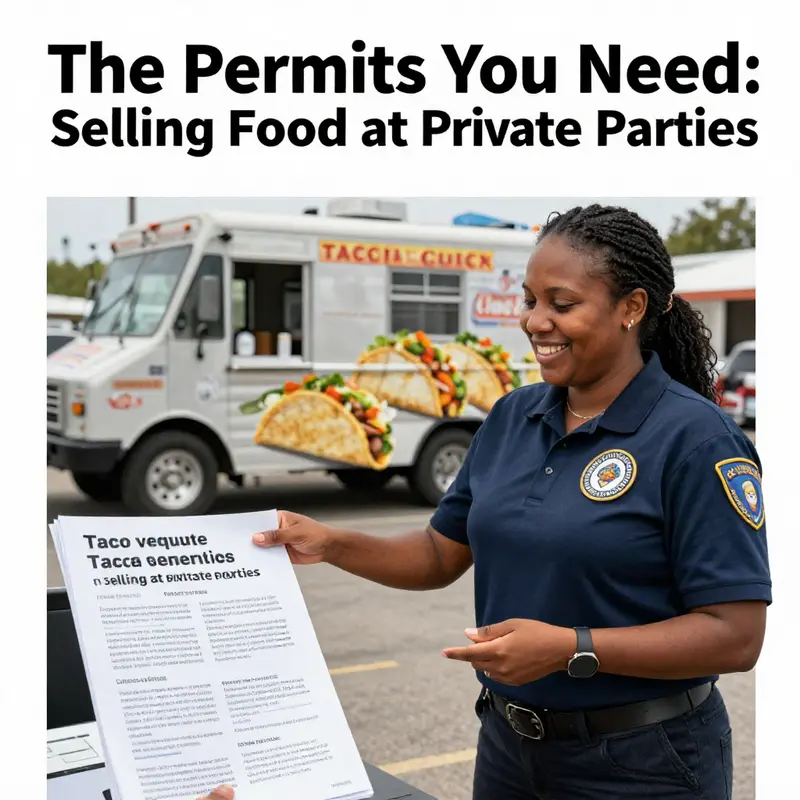
A backyard party brims with laughter, music, and the irresistible scent of spices carried on a warm breeze. A host eyes a pop-up spread, envisioning a few dozen guests enjoying hand-assembled tacos or street-food favorites. The impulse is understandable: at private gatherings, the desire to share something delicious can feel like a gesture of hospitality, a way to elevate the celebration without the formality of a storefront. But the dream of a casual sideline can collide with a web of rules designed to protect public health, collect taxes, and keep commerce orderly. The central truth is plain and unromantic: selling food at private parties without the appropriate permits is not a legal loophole to exploit, and it carries real consequences for everyone involved. Understanding why those rules exist—what they require, when they apply, and how they shape possible paths to lawful operation—transforms a tempting idea into a safer, smarter plan for hosts and sellers alike.
Legally, the core requirement is straightforward but sometimes misunderstood: most jurisdictions treat the sale of food as regulated business activity. Even when the sale happens at a private event rather than a public market, a seller typically must secure a Mobile Food Vendor Permit, obtain approval from the local Health Department, and hold a valid business license. The logic is consistent across communities: food sales bring public health responsibilities that extend beyond the moment of service. The kitchen setup, the preparation surfaces, the tools used to handle ingredients, the methods of hot holds and cold storage—all of these are subject to oversight to prevent contamination, cross-contact, and unsafe handling. The same body of rules that governs a taco truck on a city street also governs a makeshift kitchen in a private home or back yard if money changes hands.
From the host’s point of view, the presence of a permit requirement does not diminish the joy of generosity; it reframes the party as a legitimate business activity that must meet safety standards. For sellers, the permit process is not a barrier to be endured for its own sake, but a structured path that ensures the food served at any event—private or public—meets established hygiene practices. A typical permit package often includes or is accompanied by a health inspection, a review of the facility where food is prepared, and a demonstration that equipment, utensils, cold and hot storage, and cleaning procedures are all up to standard. It also usually means compliance with rules about food sourcing, labeling, allergen handling, handwashing facilities, temperature control, and waste disposal. In short, what looks like a spontaneous kitchen on a weekend party is governed by a framework designed to prevent foodborne illness and to standardize operations, even when the client list is limited to friends and family.
The health-and-safety logic behind these requirements becomes clearer when one imagines the consequences of non-compliance. Fines are common penalties, but so are business closures and potential civil action if an illness outbreak occurs or if unsafe practices are discovered. A single incident can jeopardize not just a vendor’s livelihood but a host’s event history and local reputation. The stress of penalties is not merely financial; it also erodes trust with guests who assume the party was managed with care. Beyond personal risk, non-compliance can complicate insurance coverage, since many policies require that vendors operate under proper licenses and health-permitted conditions. Hosts may find themselves facing liability questions if they knowingly or negligently allow unpermitted food service on property, even if the intent was to contribute to a celebration rather than run a business. This is not a moral judgment about generosity; it is a reminder that the framework designed to safeguard communities also serves to protect hosts, guests, and the people who work in food service.
Local jurisdictional differences add another layer of complexity. While the general principles are consistent, the specifics—permitting thresholds, inspection criteria, allowable scales of operation, and exemptions—vary widely from city to city and state to state. Some places maintain strict, uniformly enforced rules across all food sales, regardless of setting. Others permit narrow exceptions for very small, incidental sales at private events under tightly controlled conditions. A widely cited example highlights the reality that in large, regulated markets, health-permit enforcement is relentless; in other areas, the door may appear ajar for brief, private gatherings with explicit limits on the number of servings or the duration of service. The takeaway is not to seek a loophole, but to invest time in understanding the exact requirements that apply where an event takes place. A private party in one neighborhood may demand a different set of permits than a similar event in another, which underscores the importance of early, direct engagement with local health and licensing authorities.
Given the jurisdictional variance and the public-health rationale behind permitting, practical next steps begin with a quiet, honest assessment. If a host is contemplating selling food at a private event, the prudent course is to contact the local health department or licensing authority before planning any sales. The initial conversations can reveal whether an event qualifies as incidental sales, whether a temporary, limited-scale operation might be allowed under a specific permit category, or whether a formal mobile-food-venue permit is required. The distinction between “selling at a private party” and “operating a mobile food business” often hinges on intention, scale, duration, and the commercial nature of the activity. In some jurisdictions, a one-off, modest sale at a private event might be permissible with specific disclosures and safety measures, while in others, any sale outside a licensed kitchen triggers regulatory oversight. The only reliable way to determine the correct path is to consult the authorities who actually enforce the rules in that place.
To navigate this terrain without missteps, many prospective sellers begin by framing their plan around compliance rather than convenience. This means establishing a kitchen that aligns with health standards, whether it is a dedicated prep area at home, a rented commissary space, or a licensed portable kitchen that can be deployed for events. It means designing a workflow that prioritizes food safety: separate designated surfaces for raw and ready-to-eat foods, reliable hot and cold holding, calibrated thermometers, and clearly documented cleaning and sanitizing procedures. It also means understanding allergen management, ensuring that guests with dietary restrictions receive clear information about ingredients, and providing accurate labeling where required. Insurance considerations often emerge as a practical proxy for compliance; many hosts and vendors discover that a permit is only part of the protection package, while comprehensive liability coverage assures guests and hosts that the venture is backed by a responsible operation.
The decision to pursue permits and health approvals is not a sterile bureaucratic ritual; it is a disciplined approach to hospitality. When done correctly, it creates a transparent foundation for tailored menu planning, safe service, and memorable experiences. Vendors can showcase a commitment to safety as a distinguishing feature, one that enhances guest confidence. Hosts, in turn, can host with assurance that the event aligns with community standards and legal requirements. The act of asking questions—What permit is needed? What inspections will occur? What records must be kept?—is not a sign of hesitation but a signal of professional care. And the more conscious a party is about compliance, the more likely that the event will be enjoyable for everyone involved, with fewer surprises and fewer last-minute disruptions.
For those seeking guidance beyond general principles, there are resources that frame compliance within the broader landscape of mobile food operations. A chapter of the discussion on responsible practices for mobile food venues can point readers toward a wider community of operators who manage risk, safety, and quality in dynamic settings. For example, consider exploring the broader conversation about sustainable practices in mobile food terms, which can offer practical perspectives that complement regulatory requirements. Sustainable Practices Mobile Food Trucks provides a perspective on how operators balance flavor, safety, and efficiency in a way that can harmonize with local rules. While it does not replace official guidance from health departments, it can illuminate how to structure operations so that compliance becomes a natural part of the business model rather than a burdensome add-on.
In sum, selling food at private parties without a taco truck permit is not merely a gray area; it is a scenario that invites clear, lawful action. The correct move is to verify jurisdictional requirements, pursue any necessary permits, and ensure that every step of the operation—from sourcing ingredients to serving guests—meets established safety standards. This commitment protects guests from illness, preserves the host’s and seller’s reputations, and upholds the integrity of the event. If the goal is to celebrate with food at private gatherings, the best gift to give—and to receive—is compliance. It may require time, paperwork, and a shift in how one envisions a party, but it turns a moment of culinary possibility into a responsible, sustainable practice that serves communities as robustly as it serves appetites.
External resource: https://www.cdc.gov/foodsafety/index.html
Final thoughts
Selling food at private parties can be a rewarding venture—if done legally. Understanding the nuances of permits, health regulations, and local requirements can save you from costly fines and health risks. Always ensure you have the correct permits before you set up your taco truck at any private event, as it protects not only your business but also the health of your customers. Compliance isn’t just a legal requirement; it’s part of creating safe and enjoyable experiences for everyone.