
Taco trucks have emerged as a vibrant symbol of urban culinary culture, serving up affordable and delicious meals to city dwellers on the go. Their increasing popularity raises an important question for aspiring entrepreneurs: do taco trucks make good money? In this article, we’ll delve into the profit potential of taco trucks, uncover strategic location choices that maximize earnings, and discuss startup costs along with essential financial planning. Each chapter will build upon the last, helping you gain a comprehensive understanding of the taco truck business landscape and whether it could be a lucrative venture for you.
Profit on the Pepper Trail: A Deep Dive into How Taco Trucks Make Good Money
Profit on the pepper trail starts with a simple equation: what you put into a taco truck, and how you operate it, often determines how much you pull out at the end of the month. The research literature paints a pragmatic, sometimes strikingly optimistic picture. In dense urban cores, where people crave affordable, flavorful meals in a hurry, a well-run taco truck can carve out a steady path to solid margins. The numbers vary, but the core story is consistent: location drives demand, efficiency drives margin, and branding helps turn everyday customers into repeat patrons. What makes this business model unique is not just the food, but the flexibility to move where the customers are, to adjust menus quickly, and to scale with less capital risk than a full-service restaurant. Those traits can translate into meaningful profitability, provided operators negotiate the realities of overhead, supply, and the unpredictable rhythms of street-level commerce with discipline and foresight.
Start with the fundamentals. Startups in this space often cite startup costs that are far lower than traditional sit-down eateries. A truck, outfitted with essential equipment for cooking and service, plus permits and initial inventory, commonly falls in a range that makes the barrier to entry manageable for hands-on operators. But the real question is not merely “how cheap can you start?”; it is “how well can you manage ongoing costs while capturing enough high-velocity sales to cover those costs and still post a profit?” In practice, many operators report monthly revenues that sit in the tens of thousands, with net margins that reflect the efficiency of kitchen operations, labor scheduling, and the ability to control waste and variability in demand. Those margins can be healthy — often in the mid-teens to the low thirties as a percent of revenue — but they are not automatic. They hinge on carefully choreographed routines, a menu that balances speed with appeal, and a route strategy that minimizes downtime and fuel spend while maximizing exposure in high-foot-traffic windows.
The five-year financial trajectory commonly discussed in industry analyses offers a case study in scale. A plausible projection begins with a cohort of tacos moving briskly through the lunch hour and ends years later with a fleet of trucks, broad geographic reach, and a much larger revenue footprint. One set of detailed projections, while aspirational in its scale, illustrates the potential. In Year 1, a single or a handful of trucks might be positioned to capture peak lunch busts and office crowding near construction sites, corporate campuses, and festival corridors, yielding roughly $495,000 in revenue. The same model, refined by better demand forecasting, optimized menus, and more efficient routes, can compound dramatically to an annual revenue figure around $3.61 million by Year 5. The upside is real, but so are the trade-offs. A cash requirement staggering enough to fund a multi-truck rollout — about $2.452 million over five years — signals that rapid scaling isn’t free. It requires disciplined capital deployment, careful asset management, and a plan to convert that revenue into sustainable, recurring profits rather than a temporary windfall.
This stark math underscores a broader strategic truth: taco trucks succeed most often not because they sell the cheapest bite, but because they deliver high-frequency, high-demand food with speed, consistency, and personality. A multi-truck model becomes attractive when the objective shifts from a single site to a portfolio of opportunities. In practice, many operators pursue diversification across locations and times of day, creating overlapping demand waves. A well-executed plan might target a portfolio that captures underserved lunch markets across different districts, with a careful eye toward traffic flow, event calendars, and seasonal shifts. The idea of scaling to hundreds of millions in annual revenue is not fiction in certain strategic playbooks; it reflects a particular framework that blends fleet economics, franchising potential, and the leverage that comes from a scalable food concept rather than a single storefront. But the leap from a handful of trucks to a large, franchisable platform requires more than appetite; it demands a robust operating backbone, a scalable supply chain, and governance capable of preserving quality and consistency across multiple units.
A disciplined approach to profitability foregrounds two intertwined pillars: cost management and supply chain reliability. In cost management, every dollar saved on fuel, maintenance, and waste translates into higher net margins. This often means rigorous scheduling that minimizes downtime, strategic purchasing to exploit supplier terms, and a lean labor model that balances speed with service quality. In supply chain reliability, the factors that could disrupt service are many and varied: fluctuating price and availability of proteins, produce, tortillas, and garnish; the risk of equipment downtime in the middle of a service window; and the regulatory friction that can delay or complicate permit considerations. The more a truck operator treats these as design constraints rather than afterthoughts, the more robust the business will be. A dependable supply chain reduces the risk of menu outages or quality dips that chase customers away and erode reputation. It also protects the brand from the unpredictable spikes in demand that happen in urban markets, such as lunch crunches near major project sites or after-hours events where crowds crave quick, satisfying meals.
Another core strategic thread in the profitability tapestry is the careful sourcing of trucks themselves, especially when considering used equipment. A 2026 analysis highlights a multidimensional approach to supplier evaluation that goes well beyond price. Technical capability matters — can the truck’s kitchen equipment handle peak volumes and cleanouts quickly? Transactional reliability matters — can vendors deliver parts, service, and warranty support when schedules demand it? After-sales support matters — will the supplier stand behind repairs and provide ongoing maintenance guidance? A careless choice here is not merely a hiccup; it can spiral into service delays, inconsistent food temperatures, and safety compliance issues that jeopardize health standards and customer trust. In this context, durability becomes non-negotiable. The use of corrosion-resistant materials in kitchen components, proven safety compliance, and accessible documentation of equipment ratings and inspection histories aren’t just box-checking; they are the scaffolding of a reliable mobile kitchen that can withstand the daily wear and tear of street operations.
The practical implication of this supplier diligence is clear: operators must build a chain of verifiable sources, each able to deliver not just price but reliability and continuity. When the operation scales, this becomes a governance challenge, and the complexity grows with the fleet. If a single truck is giving trouble, that ripple can affect multiple service windows and compromise revenue in a way a brick-and-mortar restaurant would not experience to the same degree. The most resilient operators respond with a three-pronged approach: a network of vetted, diverse suppliers; a formal maintenance cadence that prevents small problems from becoming major disruptions; and strong inventory controls that prevent line stops due to missing ingredients or parts. In that context, the story of profitability becomes a narrative about control and predictability as much as it is about flavor and speed.
Branding and menu design are not decorative elements here. They shape the price realization and the frequency of returns. A truck with a distinctive identity and a well-curated menu can command a higher price point in a crowded street food market, provided it maintains throughput and quality. The menu should reflect what the team can execute flawlessly at speed and what the local palate will support in a lunch hour rush. This is not about chasing every trend at once; it’s about crafting a core offer that can be executed consistently, then layering limited-time items that test new flavors and attract new segments without creating operational bottlenecks. When customers feel they know what to expect and are delighted by the consistency, the likelihood of repeat visits rises, and that repetition drives cash flow predictability. In this sense, branding becomes a financial asset, contributing to loyalty that lowers customer acquisition costs over time and stabilizes revenue, even when competition intensifies.
Location remains the single most consequential variable in a taco truck’s profitability. In dense urban settings, a truck’s path must weave through high-traffic corridors where office workers, construction crews, and event-goers frequent the streets. The most successful operators design routes with a clear pattern: a morning warm-up near employment centers, a lunch sprint through office clusters and commercial districts, and a secondary push toward events, markets, or bar-heavy corridors in the evening or weekend hours. Each leg of this pattern is chosen based on observed footfall, weather, pay cycles, and competing options. The economics of a location are not only how many meals you can sell, but how reliably you can serve them on time while maintaining quality. The intensity of demand can make a substantial difference in unit economics; a high-volume lunch window can tilt the balance toward profit even when unit margins per meal are modest. Conversely, a location with sporadic traffic can force a higher price point or an expanded menu, both of which can erode margins if not carefully managed. The art is to harvest the peak demand without overextending the operation—keeping the crew lean, the line manageable, and the truck moving.
Sustainability and efficiency are not mere ethical considerations; they are directly linked to margins and permit ecosystems. Operators who integrate energy-efficient cooking practices, waste reduction, and recyclable packaging often reduce operating costs and improve their public profile. Such considerations can influence permit decisions and neighborhood reception, which in turn affects how often a truck is invited back to events or granted street access. A practical way to approach this is to view sustainability as a performance metric. For example, optimizing fuel use with precise route planning lowers overhead; adopting compact, efficient equipment reduces maintenance time; and implementing waste-reduction tactics reduces the cost of goods sold. In this light, partnerships with like-minded businesses, event organizers, and neighborhood associations can amplify reach while maintaining responsible operations. For readers who want to explore this dimension further, a resource dedicated to sustainable practices for mobile food trucks provides a practical framework and real-world case studies that illustrate how environmental stewardship and profitability can coexist. See Sustainable practices for mobile food trucks for a deeper dive into how these principles translate into everyday operations and long-term profitability.
Beyond the mechanics of cost and supply, there is a narrative about growth that can be compelling, even seductive. The business model’s appeal lies in its scalability and the potential to convert a proven mobile concept into broader ownership structures. A trek from a single unit to a small fleet creates a platform for diversification: different neighborhoods, different menus tailored to local tastes, or even a hybrid model that blends mobile sales with a fixed-location presence for those who want a brick-and-mortar anchor. A strategic expansion plan might envision a multi-unit operation serving diverse markets, then explore franchise opportunities or corporate partnerships that enable rapid replication of a proven model. Yet scale is not a given; it is earned through disciplined capital planning, rigorous unit economics, and a governance framework that preserves quality and brand integrity across all locations. The reality is that the dream of hundreds of millions in annual revenue lives on a tightrope: it requires the right combination of demand, cost discipline, and organizational capability to keep growth sustainable over time.
As with any venture that rides the wave of urban life, the road to profitability for taco trucks is as much about timing and execution as it is about appetite. The data suggest a viable path to meaningful profits for operators who start with a solid plan, cultivate reliable supply chains, and design routes that align with the rhythms of their city. The early years are about building repeat business and tightening the equation: keep costs lean, ensure inventory and equipment are dependable, and continuously refine the route network to squeeze more revenue from every hour that the truck is on the move. The later years reward those who expand with intent, prioritizing quality control and consistent customer experience as they scale. It is not a guarantee, and it is not a shortcut; it is a disciplined, iterative journey toward profitability in a market where flavors, speed, and reliability govern the pace.
For readers who want to connect this analysis to broader, practical guidance, the literature emphasizes that successful taco truck operators treat themselves as small, nimble businesses that must learn to forecast, adapt, and invest thoughtfully. The path from good to great in this space is paved with careful supplier selection, rigorous financial planning, and the steady execution of a scalable operating model. The potential rewards are real, but they belong to those who marry culinary appeal with the managerial discipline that turns a busy lunch rush into a sustainable, growing enterprise.
External resources and further reading can provide a structured blueprint for translating these principles into a concrete plan. For a deeper dive into a formal business planning framework and more detailed financial modeling, see the external resource here: https://www.scribd.com/document/528794129/Taco-Food-Truck-Business-Plan
Internal link to related guidance on sustainable operations can also offer practical takeaways that complement this discussion. Learn more about how operators integrate sustainable practices into the daily workflow at Sustainable practices for mobile food trucks. This resource highlights how environmental considerations can dovetail with efficiency improvements to strengthen margins and community relationships, a combination that often makes the difference between a good year and a great one in a competitive urban market.
Choosing the Pulse of the Market: How Location Shapes Profit for Taco Trucks in the Urban Food Landscape
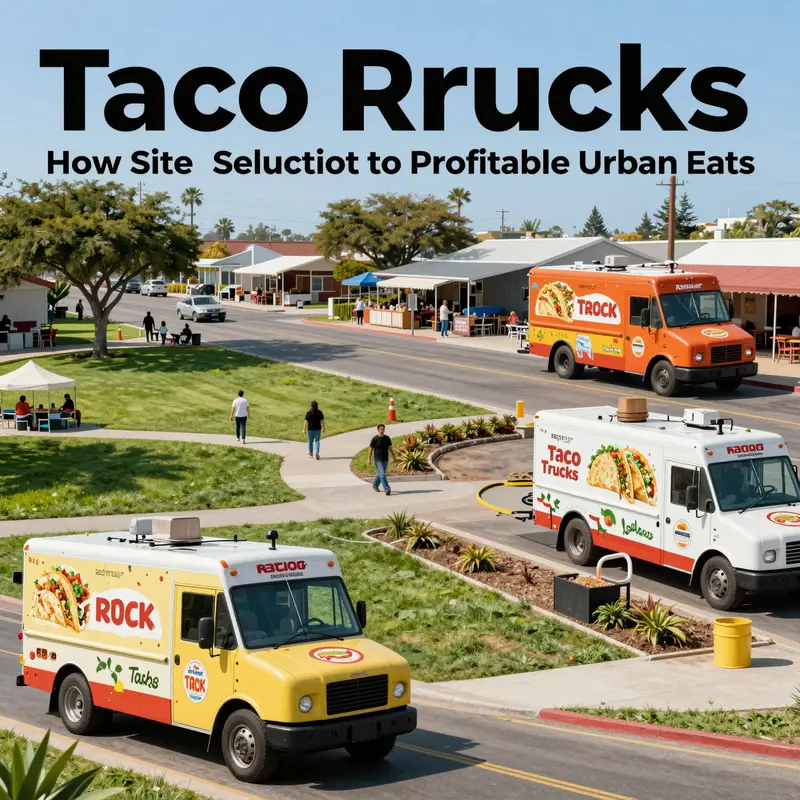
The location of a taco truck is not just a dot on a map. It is the rhythm the business keeps with the city, the beat that determines how many mouths come for a quick lunch, a late snack, or a celebratory bite after a long day. In practice, a truck’s earnings grow in direct conversation with where it parks and how well it plays to the city’s daily currents. The science behind this is surprisingly simple: visibility plus foot traffic, tuned to the right time and the right audience, creates a reliable engine for volume. The rest—menu design, efficiency, branding, and tiny operational details—refines that engine into real profitability. When this equation works, a truck can scoop up substantial monthly revenues and, with careful cost control, meaningful net margins. When it doesn’t, even excellent food can struggle to move with enough velocity to cover fixed costs and loco-regional competition.
In big, bustling urban centers, the payoff from good site selection can be dramatic. Consider a city where thousands of mobile food vendors compete for attention and space. In such ecosystems, a truck that manages to secure a few consistently high-visibility spots can outperform peers who stay tethered to routine routes. The data backing this up is concrete. A 2026 analysis of food truck performance across major U.S. cities found that trucks operating in strategic urban locations saw an average daily revenue uplift of around 40 percent compared with those in suboptimal spots. That kind of uplift does not appear from luck; it arises from choosing sites where demand is dense and supply gaps exist. A location that aligns with the rhythms of workday crowds, student life, and event calendars creates a watershed moment for sales that month after month compounds into meaningful earnings. The implication for any operator is clear: investing time to understand where the demand concentrates is nearly as valuable as refining the recipe itself.
Even with strong demand, location is a living variable. The dynamics of a city are not static. Traffic patterns shift with the workday, weather, public events, and even construction schedules. A truck that remains fixed in a single spot risks being outpaced by neighborhoods that suddenly become more walkable or by zones where a temporary, near-term demand exists. The most successful operators treat site selection as a continuous process rather than a one-time decision. They track pedestrian counts, turnover rates for nearby offices, and the calendars of major events. They test nearby blocks during lunch hours and rotate to new spots when a nearby initiative or seasonal activity displaces normal foot traffic. This flexible stance is not about chasing every possible crowd; it’s about identifying sweet spots—areas where demand outpaces supply—and maintaining visibility in those places as conditions rotate.
From a practical standpoint, the operator’s task is to map the city’s demand curves and overlay them with the regulatory and logistical reality of parking, permits, and hours. The regulatory frame matters as much as the appetite for food. Parking rules, health department permits, and local zoning can create or close paths to profitability. An ideal site must provide a window for operation that matches the lunch or dinner peaks, while also offering permit feasibility and predictable access to a spot where a truck can operate without a constant rush to relocate. In many markets, the value of a high-foot-traffic corridor during peak hours can be enormous, but that value only materializes if the truck can legally operate there and do so without time-consuming interdictions.
What makes a site truly valuable goes beyond sheer crowding. It hinges on alignment with the target demographic. A district saturated with office workers can be excellent for a quick, affordable lunch. On a university campus, students may crave budget-friendly, crave-driven options during late afternoons or after classes. At a festival or a weekend market, the demand can spike in bursts but with high spend per head because crowds are motivated to explore. The best operators think in terms of cadence: what is the likely rhythm of a given location across weekdays, weekends, and seasonal events? How does that cadence intersect with their own production schedule, supply chain, and crew capacity? They design a routine that captures the biggest slices of demand while maintaining quality and speed to keep lines moving and costs under control.
A telling insight from the field is that the strongest locations do not simply offer more customers. They offer access to the right customers at the right time. A location with a high density of young professionals is valuable when those workers seek affordable, quick meals during a tight lunch window. A site near a cultural hub or transit node attracts both locals and visitors who crave a familiar yet fresh option, especially when the truck communicates a distinctive identity through branding and a well-curated menu. This is where the brand’s story matters as much as its location. The most profitable trucks tend to pair attractive branding with a menu that can be prepared quickly, but with just enough differentiating flair to convert a passerby into a repeat customer. The result is a cycle: impactful location drives daily sales, which supports stronger brand recognition, repeat visits, and more stable profit margins over time.
A practical framework emerges when operators combine data with experience. They begin with broad market signals—where are the city’s largest office cores, universities, and event centers? Then they narrow to specifics: which blocks offer the most reliable parking, what permit windows exist, and how long a truck can linger in a given space. In this process, data analytics becomes a partner rather than a gadget. Foot-traffic estimates, pull-through rates, and dwell times form the backbone of decisions. Operators also pay attention to the competition, but not merely by counting other trucks. They study how those trucks position themselves—what hours they operate, what menus they offer, and how they brand themselves. A crowded street may still offer a profitable lane if a truck differentiates itself in service speed, price, or flavor profile.
Every market has its quirks, and location strategies must respect them. In some urban ecosystems, the most lucrative spots are ephemeral: spaces created by street fairs, pop-up markets, or seasonal office construction. In others, there is a steady, predictable cadence that rewards a routine approach. The best operators calibrate their routes to exploit these rhythms while maintaining the flexibility to respond when demand moves. A dynamic approach—moving to new spots as patterns shift—often yields higher daily revenues than a rigid schedule that ignores evolving city life. It is this dynamic flexibility, grounded in data and reinforced by disciplined execution, that unlocks the most durable profitability.
This is not purely a numbers game. The social dimension of location matters. A truck that sits in a friendly, accessible place is easier to find, more inviting, and more likely to develop loyal customers who seek it out. The emotional connection—the sense that a truck is a staple of the neighborhood—translates into repeat visits, steady cash flow, and a calmer path to profitability. Brand consistency, reliable service, and predictable hours are essential complements to physical placement. When a truck builds a reputation for reliability and personality, location becomes a multiplier: customers seek it out, bring colleagues, and share the experience with friends. In effect, a great site is not only where people go for food; it becomes part of the story the truck tells about itself, which in turn reinforces demand at that site.
A note on scale helps frame the discussion for operators eyeing growth. Startup costs for a taco truck remain relatively modest compared with a brick-and-mortar restaurant, and the upside of well-chosen sites can be substantial. With a strong, efficient operation and a location strategy anchored in data, a truck can move from breaking even within the first year to generating meaningful net profits as demand solidifies. Yet scale adds complexity. Franchising or expanding to multiple routes can amplify revenue, but it also multiplies the importance of choosing complementary locations that do not cannibalize each other. The operator’s challenge is to replicate success across a portfolio of sites without eroding margins or overextending operations. In practice, this means balancing a tested core route with a steady cadence of new spots, all while maintaining the standards that customers associate with the brand. The objective is not to chase every opportunity but to build a network of reliable, well-placed sites that collectively raise average daily revenue and stabilize cash flow across the week.
For those who want to deepen their approach, a practical path exists. Start with a reconnaissance phase that treats every potential site as a test case. Record basic metrics: foot traffic, nearby office density, proximity to public transit, and the duration that customers typically linger. Then overlay permit requirements, loading-zone access, and enforcement risk. Next, map a set of candidate spots with a scoring system that weights factors like proximity to core customer groups, ease of access for loading and unloading, and visibility from walking routes. A pilot schedule that rotates through several top spots over a few weeks can reveal which sites convert impressions into sales. Have a fallback plan for weather, special events, and seasonal demand shifts. The best operators use this process not as a one-time survey but as a living dashboard that informs daily decisions and longer-term planning.
The journey from good site to great earnings is driven by how well a truck merges with the city’s pulse. When a site aligns with the crowd, it does more than generate sales; it generates momentum. The truck becomes a familiar presence in the neighborhood, a reliable option for a quick lunch, and a symbol of accessible, tasty food in a crowded urban matrix. That momentum compounds: higher daily revenue, stronger repeat business, improved word-of-mouth, and better leverage for branding. And all of this is achieved with a relatively lean startup profile—one mobile unit, modest initial investment, and a route that can be adapted as the city evolves. In short, the profitability of a taco truck is less about trying to conquer a single iconic location and more about orchestrating a smart portfolio of high-potential spots, each chosen with care and managed with discipline.
For operators seeking a practical, durable edge, the value proposition of a location-first strategy is simple to articulate. It rests on three pillars: data-informed choice, regulatory savvy, and operational discipline. The first pillar asks you to quantify where demand lives and when it peaks. The second requires you to navigate permits, parking constraints, and hours of operation with minimal friction. The third demands that your team execute rapidly, serve consistently, and preserve margins as volumes expand. Put together, these elements convert geography into a competitive advantage, turning the city’s many corners into reliable revenue streams rather than uncertain playthings of weather and luck. In a world where thousands of taco trucks vie for attention, the ones that win are the ones that listen to the urban heartbeat and place themselves where that heartbeat is loudest.
To close this perspective without repeating the same refrain, consider how this approach fits into the broader topic of profitability for taco trucks. Location is not a solitary determinant of earnings; it is the frontline through which a truck accesses customers, heals supply gaps, and builds a brand you can scale. The numbers reinforce this truth: strategic urban locations translate into higher daily revenue, and over time, stronger profitability given tight cost control. The city’s pulse, when mapped and followed with intelligence, becomes the most dependable profit engine in a mobile food business. For operators who want a practical guide, the path is not opaque. It is paved with data, permits, and a disciplined routine that makes the city’s busiest streets the lifeblood of a thriving, sustainable venture.
Internal link for further reading on sustainable practices in mobile food operations: sustainable practices for mobile food trucks.
External resource: Food Truck Profitability Report: Site Selection and Revenue Impact (2026) — https://www.foodtrucks.org/research/2026-site-selection-profitability-report
Startup Costs, Strategy, and the Bottom Line: Do Taco Trucks Make Good Money?
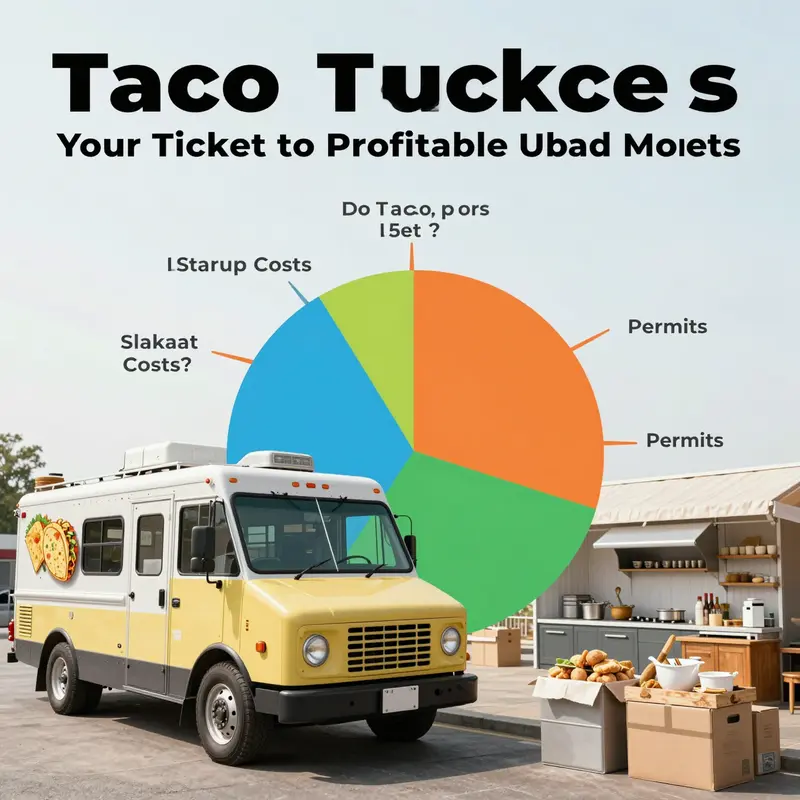
The journey from curiosity to cash in the world of taco trucks begins with a simple, almost counterintuitive truth: the food may be flavorful, but the money comes from disciplined planning, not delicious recipes alone. This chapter follows that thread through the arithmetic of startup costs, the stubborn realities of operating expenses, and the strategic moves that push profit from possibility into practice. In dense urban landscapes, where demand for affordable, tasty meals is high and customers are willing to trade long lines for a quick, satisfying bite, taco trucks have earned a reputation for financial viability. The story, however, is not a fairy tale. It is a ledger turned into a business model, and the ledger is unforgiving when ignored. The numbers matter, and they tell a nuanced tale about when taco trucks can truly make good money and when they struggle to break even amid stiff competition and variable demand. In major cities, the appetite for mobile, affordable food is large enough to support a thriving ecosystem of vendors. In Los Angeles, for example, there are thousands of mobile taco operators, so market saturation is a real factor and helps illustrate why the best operators are those who blend taste, speed, and efficiency with a disciplined financial plan. The underlying financial framework for success rests on choosing a viable location strategy, controlling costs, and crafting a menu that travels well with customers who value consistency as much as novelty.
The initial impulse to start a taco truck often rests on the allure of lower startup barriers compared with a full-service brick-and-mortar restaurant. Yet the reality is that a mobile kitchen still represents a substantial investment. Industry estimates place total startup costs for a food truck business in a broad band, roughly from the mid six figures to well above six figures, depending on the truck size, the quality of equipment, and the location where the truck will operate. Those numbers encompass a cluster of essential expenditures: purchasing or leasing the chassis, equipping the kitchen with dependable grills and refrigeration, installing proper sinks and ventilation, and ensuring compliance with health, safety, and vehicle standards. Permits, licenses, and insurance contribute to the baseline, as does the initial inventory needed to transform the first days of operation into a reliable service. A cushion of working capital is not a luxury but a necessity to weather the uncertain first months when revenue can be inconsistent and customer traffic fluctuates with weather, events, and competing vendors.
Within this financial frame, the Small Business Administration offers a practical backbone for aspiring owners. The SBA underscores that careful planning—backed by a realistic budget and a credible funding plan—improves the odds of sustaining operations through the first lean months and beyond. The SBA’s guidance is not a guarantee of success, but it is a map that helps founders avoid common mistakes: underestimating working capital, overextending on equipment, or misjudging the true cost of permits and ongoing compliance. In other words, the financial script for a taco truck is not simply a revenue forecast; it is a comprehensive plan that lines up capital needs, operating costs, pricing strategy, and cash flow management.
To translate theory into practice, consider the typical revenue and cost contours a well-managed truck might face. Earlier observations in the industry suggest monthly top-line figures in the range of twenty thousand to forty thousand dollars, depending on location, peak times, and the efficiency of service. When operating costs are kept lean and pricing reflects the market, net profits can fall in a broad band—often from the mid-to-high single digits up to the low-to-mid-teens as a percentage of revenue. Some operators report margins extending toward the upper end of that range, particularly when they optimize labor, streamline food preparation, and limit waste. The most successful businesses farther optimize through disciplined menu design and a brand that resonates with customers, turning repeat visits into predictable daily revenue rather than sporadic peak days.
What that translates to in real numbers is instructive. A well-run truck that pulls in revenue around two hundred thousand dollars per year can realize net profits that vary—roughly ten to twenty percent of revenue—when labor, food costs, and overhead are kept in check. In practical terms, that could be twenty thousand to forty thousand dollars in annual net income, all else equal. The difference between modest profitability and significant earnings often hinges on a few levers: location discipline, the ability to price for value without eroding demand, and the operational efficiency to serve more customers in less time without compromising quality. A truck that stacks multiple lunch shifts in high-traffic districts, or one that regularly services events where demand is concentrated, can push revenue higher while maintaining manageable costs. Yet this is not a guaranteed outcome. The very same market that offers a route to robust profits is also characterized by intense competition, legal constraints, and the seasonal or event-driven nature of demand.
One of the strongest levers for profitability is location strategy. The best sites are those with high foot traffic, limited competition, and a demographic that appreciates quick, affordable meals with consistently good flavor. Office districts, construction sites, and busy event venues can become reliable workstreams. Each location, however, brings its own price tag—permitting requirements, lease terms for space near the curb, and contingencies for weather and safety. The best operators build a flexible plan that treats location as a rotating portfolio rather than a fixed asset. They schedule in ways that maximize throughput during peak hours, and they partner with event organizers to ensure a steady cadence of opportunities. The result is a smoother revenue curve that dampens the volatility that otherwise marks a mobile food business.
A second critical pillar is menu design and pricing. The simplest path to higher profitability is often to craft a menu that travels well, sustains consistent quality, and supports pricing that reflects value to the customer while protecting margins. A lean menu helps minimize inventory, reduce waste, and simplify training for staff. Yet even a lean menu must offer enough variety to appeal to different tastes and dietary needs. The sweet spot lies in distinctive flavors or preparation methods that can justify a slightly higher price point without alienating price-sensitive customers. The most resilient operators view the menu as a living document—tweaked in response to what sells, what doesn’t, and what new flavor combinations draw in curious crowds. The craft here is not merely cooking; it is value engineering for the street, where chefs and operators become editors of demand, balancing authenticity with efficiency.
Operational efficiency is the third spine of profitability. The mobile kitchen demands a careful choreography: efficient prep, rapid service, and minimal downtime between customers. Labor costs loom large in the P&L, and smart scheduling—paired with cross-trained staff who can handle multiple tasks—reduces payroll waste. Efficient stock management undercuts food costs while preserving portion control and taste. In practice, this means close attention to the procurement cycle, waste tracking, and a disciplined approach to pricing that accounts for peak vs. off-peak demand. It also means maintaining equipment that performs reliably in a rolling kitchen: a truck that starts every morning, a grill that cooks evenly, and refrigeration that preserves safety and freshness. The more predictable the daily rhythm, the better the odds of sustaining steady revenue and consistent margins.
Beyond the mechanics, branding matters. A clear concept—a cohesive story about flavor, sourcing, and service—builds customer loyalty. In a crowded market, brands with a recognizable voice, a consistent look, and a track record of dependable quality tend to convert first-time visitors into repeat customers. This is not just about catchy slogans or a memorable logo; it is about delivering a consistently good experience that reinforces trust. A loyal customer base reduces the cost of customer acquisition and improves the predictability of daily revenue. In the end, branding becomes a form of intangible asset that multiplies the effect of good location, efficient operations, and smart pricing.
The financial arc of a taco truck also benefits from thinking about growth beyond the single truck. Many operators diversify by expanding into a second truck, engaging in catering for corporate events, or pursuing opportunities to establish a brick-and-mortar presence once a brand has proven its staying power. These paths can significantly amplify revenue, but they demand more sophisticated financial management, larger initial investment, and a broader compliance footprint. The narrative from the field is that growth is attainable when the core business remains healthy and cash flow remains robust enough to support expansion. In cities with aging infrastructures and evolving dining cultures, the ability to scale while maintaining quality is what separates the occasional winner from the durable business.
With this framework in place, the breed of owner who thrives is not the one who can cook the best taco alone, but the one who can align recipe, route, and revenue. A well-planned model understands that startup costs are not a one-time hurdle but a financial scaffold that supports the enterprise through its first years. The upfront investment—covering vehicles, equipment, permits, insurance, and working capital—needs to be justified by a credible projection of revenue and a clear path to profitability. This is where the SBA’s guidance, tailored budgeting, and a disciplined approach to financing become indispensable. It is not merely about finding a clever place to park a cart; it is about aligning capital, people, and processes in a way that makes money more likely and headaches less likely.
The hardest truth for many newcomers is that while the money can be good, it is never guaranteed. The same market that offers high potential can quickly bite back if costs run out of control or if the operator underestimates the complexity of daily operations. The persistent message across experiences is that a thoughtful founder will manage risk by building a robust budget, maintaining a working capital reserve, and validating assumptions with real-world testing. The balance between ambition and prudence becomes the real driver of profit. And when a truck finds that balance—delivering flavorful meals on time, at a price customers are happy to pay, in locations that deliver solid foot traffic—the financial payoff can be meaningful, even substantial.
In wrapping this chapter, the question remains nuanced: do taco trucks make good money? The honest answer is yes, under the right conditions. A carefully financed startup, a strategic site plan, an efficient operation, and a brand that resonates with customers can yield revenues that exceed two hundred thousand dollars per year and net profits in a range that most small businesses would envy. Yet the counterweights are real: fierce competition in dense urban markets, the capriciousness of demand, and the ever-present need for ongoing investment in equipment, insurance, and permits. The contrast between revenue potential and profitability will be determined not by a single lucky month but by the ongoing discipline that sustains cash flow through the ebbs and flows of the market. The path to good money is thus a path of steady budgets, careful pricing, and relentless focus on service quality. It is a path that rewards those who treat startup costs as a finite ladder, not a wall, and who build a business that can survive the inevitable tests of time, weather, and taste. For anyone considering this venture, the roadmap remains clear: understand the total startup cost, secure reliable financing, craft a plan that emphasizes efficient operations and smart location selection, design a menu with mass appeal and controlled costs, and cultivate a brand that customers trust. If those pieces come together, the taco truck becomes not just a symbol of entrepreneurial flavor but a practical, money-making enterprise.
For readers seeking a practical starting point on the financial side, the SBA’s guide to starting a food truck offers detailed steps on funding, budgeting, and forecasting as you plan to bring your own mobile kitchen to life. As you evaluate opportunities, remember that the numbers are more than math; they are a reflection of choices about location, people, and operations—the elements that ultimately determine whether your taco truck can turn flavorful ambition into durable profit. And if you want to explore how broader market trends and efficiency improvements are shaping the profitability landscape in the trucking and mobile food sectors, this broader context can offer useful parallels and cautionary tales that sharpen your planning and execution. For a practical resource on getting started and financing your venture, you can visit the SBA guide on starting a food truck: https://www.sba.gov/business-guide/plan-your-business/start-a-food-truck
Final thoughts
In conclusion, taco trucks represent a promising venture for those seeking to create a profitable food business in urban settings. The analysis of their profit potential, coupled with strategic location choices and careful financial planning, suggests that with dedication and creativity, taco trucks can indeed make good money. Whether you’re considering this for a side hustle or a full-time commitment, understanding these elements will be essential for your success in this deliciously appealing industry.