
Taco trucks have become iconic fixtures in bustling cityscapes, attracting hungry urban commuters, outdoor enthusiasts, and busy freelancers alike. But beyond their savory appeal lies an important question: do taco trucks actually make money? While the allure of quick, tasty street food is undeniable, the financial reality for taco truck owners is shaped by a variety of factors—from location and seasonal demand to operational efficiency and pricing strategy. This article dives into the profit potential of taco trucks with a friendly yet authoritative approach, breaking down key elements in three focused chapters. Chapter 1 lays the foundation by explaining profitability dynamics and financial milestones. Chapter 2 examines operational factors that directly influence earnings, including how to optimize daily performance and manage costs. Chapter 3 explores market demand and customer preferences, revealing how successful trucks tap into local tastes and pricing strategies. Whether you’re a city dweller curious about the business behind your favorite taco spot or a small business owner considering a mobile food venture, understanding these facets will illuminate just how—and when—taco trucks can turn a profit.
Profit on Wheels: Decoding the Profitability Roadmap for Taco Trucks
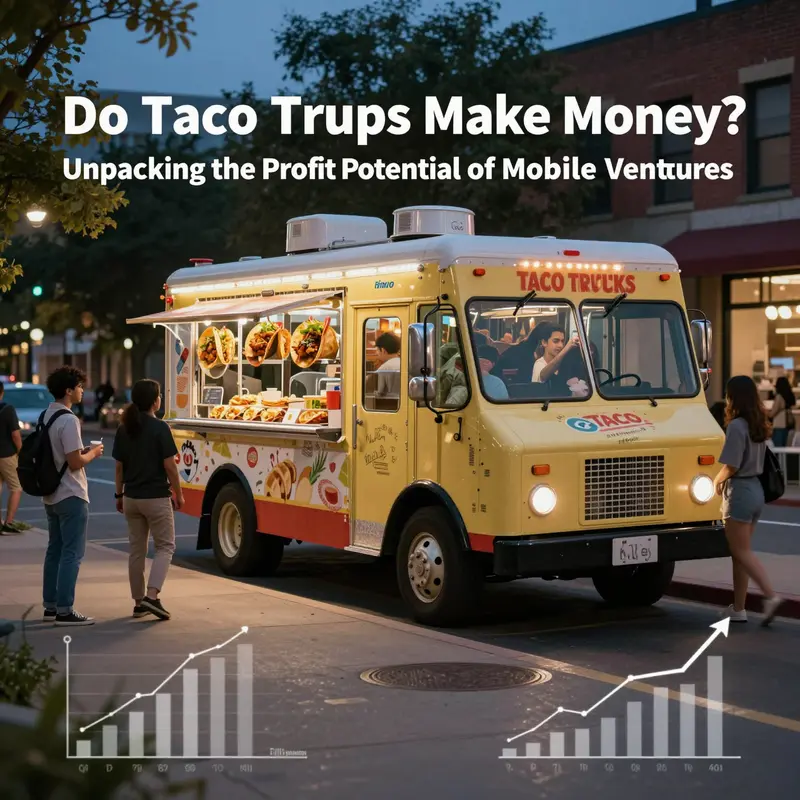
Profitability in a taco truck venture goes beyond counting daily receipts. It is a map drawn from the interplay of costs, pricing, demand, and the very rhythm of a city’s foot traffic. A successful mobile taco operation treats profit not as a lucky moment but as a disciplined outcome of careful planning, constant refinement, and disciplined execution. At its core, profitability is about ensuring that revenue consistently exceeds expenses over time, even as the business faces seasonal ebbs and the realities of startup costs. For taco trucks, this requires a clear view of four moving parts: the cost structure, the pricing architecture, the demand patterns driven by location, and the efficiency of operations that translate billable meals into real, sustainable margins.
The cost side of the equation for a taco truck is as concrete as the steel of the chassis and as variable as the weather in a bustling city market. Ingredient costs fluctuate with seasonality and supplier terms. Labor costs rise and fall with hours worked, staff turnover, and the precise scheduling needed to stay ahead of peak demand. Then there are the transportation and fuel costs that come with moving from one hot corner to another, plus equipment maintenance, permit fees, insurance, and the inevitable depreciation of assets. Each of these line items matters because profitability hinges on the margin between what customers pay and what it costs to deliver each meal. The challenge is not simply to maximize price but to optimize the mix of menu items so that high accuracy in cost control and portioning translates into reliable margins across the week, even as demand shifts.
In the long view, the path to sustained profitability for taco trucks is often a story of scale and discipline. The growth narrative from many planning models shows revenue rising from a modest baseline in year one to a much larger figure by year five. A scenario like this typically reflects gains from steadier location access, more efficient routes, better brand recognition, and a menu that resonates with repeat customers who value quick, affordable meals. Yet the same trajectory commonly features a period of negative EBITDA in the early years. This is not a sign of failure but a signal that the business is investing in the foundations that will pay off later: better equipment, more staff with smoother operations, and a broader reach through additional licensing or territory access. The projection that breakeven arrives around year five underscores the necessity of patient capital and rigorous cash flow planning. It also reinforces a critical point: profitability is a cumulative outcome. One bad month in year one does not doom a venture if you can maintain a path that steadily improves margins and cash flow as the operation scales.
Location remains the most powerful lever in the taco truck profitability toolkit. High foot-traffic zones—urban cores, near transit hubs, and campuses—are not merely favorable; they are foundational. The density of potential customers compresses the time between visits and reduces the distance each dollar must travel to convert into revenue. But location also brings competition, regulatory complexity, and shifting demand tied to weather and events. The 2026 market analysis of food truck sales across the United States underscores a simple truth: proximity to demand matters as much as price. When a truck can position itself in a way that minimizes downtime between service windows and maximizes servings per hour, profitability improves quickly. The balance is to invest in attracting the right crowd without inflating fixed costs through leases or long-term commitments that erode flexibility when demand softens.
Pricing strategy plays a central role in translating these location advantages into real margins. A pricing approach that includes budget-friendly menu items under ten dollars can broaden the customer base and increase throughput during off-peak periods when every dollar of demand matters. Yet price alone does not sustain profitability; it must be paired with an optimal mix of items that deliver higher gross margins. An effective taco truck pricing framework continually asks: which items bring the most profit per hour, and which items bring the highest volume at acceptable margins? A well-structured menu uses a combination of core, consistently prepared staples and a rotating or limited-time selection that can command slightly higher prices when demand is strong or competition is fierce. This dynamic, paired with disciplined portion control and waste reduction, can keep the average order value rising without sacrificing speed or quality.
Beyond the basics of price, the profitability dialogue embraces the profitability index, or PI, a straightforward yardstick that helps determine whether a new investment is likely to pay off. If upgrading a cooking unit to be more energy-efficient, or investing in a mobile ordering app, the PI offers a lens to compare the expected return to the upfront cost. A PI greater than 1 suggests a favorable return, guiding owners toward decisions that strengthen overall financial health rather than merely chasing short-term sales. In practice, this means the truck operator weighs the cost of improvements against the forecasted incremental profits they unlock, rather than counting only incremental sales in a vacuum. The concept //not as a spreadsheet novelty but as a decision framework// nudges operators toward investments that reduce waste, shorten service times, or heighten the customer experience in ways that convert into repeat business and steadier cash flow.
Sustainable profitability, then, grows from a model that harmonizes inventory management, route efficiency, and customer loyalty. Inventory is a surprisingly powerful profit lever when it is aligned with demand signals and menu planning. Overorder too often and waste climbs; underorder and stockouts disrupt service and erode customer trust. A disciplined approach uses demand history to forecast needs, aligns procurement timing with peak hours, and implements controls that curtail spoilage. Route optimization reduces idle miles and fuel expenses, which is especially meaningful in a business where a large portion of costs is tied to mobility. The city, with all its variables, becomes a logistical puzzle where every mile saved is money earned. Then there is customer loyalty, a factor that often determines the durability of profitability in a highly seasonal business. Consistency of quality, a dependable schedule, and a clear value proposition contribute to repeat visits, higher lifetime value per customer, and a steadier cash inflow during months that might otherwise threaten margins.
The analytic backbone of profitability for taco trucks lies in profitability analysis that goes beyond simple revenue reporting. A robust analysis identifies high-margin items and reveals which offerings are driving disproportionate costs relative to revenue. It also uncovers customer profitability, the insight into which customer segments yield the most sustainable returns through repeated purchases and lower service costs. In practice, this means a truck owner can shift the menu mix, adjust portion sizes, or tailor promotions to focus on what delivers the best return on effort. It is not merely about chasing volume; it is about seeking the right volume that sustains profitability when combined with efficient operations and a lean cost structure.
Knowing your customers matters as much as knowing your costs. Customer profitability insights help you understand which patrons and which visit patterns are most lucrative. A refined approach might reveal that lunchtime traffic around a particular office district yields a reliable base of repeat customers, while weekend foot traffic in a different location drives high-volume but narrower-margin sales. The implications are practical: invest in staff training that accelerates service in the most busy windows, negotiate supplier terms that reflect consistent demand in the most prolific zones, and deploy marketing that reinforces the value proposition most likely to convert casual buyers into habitual patrons. In this way, profitability becomes a living, evolving map rather than a static target.
The narrative of profitability also requires keeping pace with broader market and industry trends. A forward-looking operator tracks changes in consumer tastes, competition, and regulatory requirements. The goal is not to chase every trend but to anticipate shifts that could meaningfully alter margins. It is wise to consider how a mobile ordering option or a streamlined kitchen layout might reduce order errors and speed up service, thereby increasing customers per hour without a proportional rise in labor. The idea is to translate insights into operational improvements with measurable impact on profitability. The case for continuous learning is not abstract; it is a practical imperative for anyone who wants a taco truck to endure, adapt, and grow.
For operators seeking a deeper, more actionable lens on profitability trends, there are resources that summarize the practical shifts in the market and offer guidance on how to apply them in a mobile context. One such resource highlights trends that matter most to owner-operators and points to strategies you can apply today to unlock profitability in the near term. Unlocking Profitability: Essential Trends Every Owner-Operator Needs to Know in 2025. This kind of insight reinforces a core message: profitability is not a single metric or a one-page plan. It is a framework that integrates pricing, costs, location strategy, and continuous optimization into a cohesive engine that powers sustained growth. It also underscores a practical caution: earnings can be negative in early years, but with disciplined capital planning and a clear route to breakeven and beyond, the long-term potential remains robust. The trajectory from early losses to durable profitability is not just possible; it is a predictable outcome for operators who invest in efficiency, leverage data, and stay close to their customers.
To formalize the path and anchor decisions in a trusted framework, many operators turn to established guidance on profitability. The U.S. Small Business Administration offers comprehensive guidance on calculating and improving profitability for small businesses, including food trucks and other mobile vendors. This external reference provides structured methods for analyzing income, expenses, and the drivers of margin, and it reinforces the essential discipline of financial planning as a core competency of a successful taco truck enterprise. External reference: https://www.sba.gov/business-guide/plan-your-business/understand-your-profitability
In the end, profitability for a taco truck is not a single moment of pricing cleverness or a lucky surge in demand. It is a disciplined, iterative process—one that respects cost controls, leverages location with purpose, and uses data to fine-tune both the menu and the customer experience. It is a path that begins with careful budgeting and cash flow planning, moves through investments that reduce waste and improve service speed, and culminates in a sustainable operation that can adapt to seasonal changes, evolving tastes, and a shifting competitive landscape. The long view matters because the most successful taco trucks treat profitability as a life cycle of improvement. They plan for the milestones—early growth, scaling to broader markets, and reaching a steady state where margins strengthen, volatility softens, and the business earns its durable place on the street map of urban life.
The Engine Behind Streetfront Profits: Operational Factors That Make Taco Trucks Profitable
Taco trucks attract curiosity because they sit at the intersection of culinary craft and street-level commerce. Yet the question of profitability is rarely settled by taste alone. It hinges on a careful orchestration of operations that translate bustling lines into solid bottom-line strength. When readers ask, do taco trucks make money, the simplest answer is yes—but only when the day-to-day realities are managed with precision, discipline, and a willingness to adapt to the rhythms of a mobile business. The chapter that follows threads together the operational levers that convert a busy cart into a sustainable enterprise, moving beyond headlines about peak sales and into the steady cadence of revenue recognition, cash flow timing, and margin management. At the heart of this discussion lies a practical truth: revenue is only part of the story. Cash, costs, and the timing of both determine whether the venture grows or merely sustains itself over time.
A foundational lever in this calculus is annual contract volume. In a taco truck operation, contracts are not just about the number of meals served; they are about reliability, predictability, and the cadence of income. Contracts with corporate offices, construction sites, or event venues offer a steady stream that can smooth the seasonality that plagues mobile food vendors. A high-volume contract lineup acts like a financial spine, supporting forecasts, enabling better inventory planning, and allowing operators to staff and source with greater confidence. The value of consistent contract volume extends beyond immediate cash receipts. It shapes the supplier relationships, permit renewals, and even the tempo of menu engineering. When you know a portion of your sales will show up on a schedule, you can negotiate better terms with both food distributors and equipment maintenance partners, while reducing the friction of cash gaps that otherwise erode margins. This is why the most successful taco trucks often invest time in courting and securing stable contracts even as they chase downtown foot traffic and weekend events.
Alongside contract volume, the strategic addition of beverage and dessert add-ons can meaningfully lift profitability without dragging costs skyward. Core taco sales tend to carry a leaner margin, but beverages—especially fresh fruit juices, specialty sodas, or craft mixers—along with simple, homemade desserts, frequently deliver higher contribution margins. The key is to balance novelty with reliability: items that transport well, have a quick serve time, and require ingredients already on hand for the main menu. A well-structured add-on program does more than lift average order value; it diversifies the revenue stream in a way that buffers the operation from fluctuations in taco demand caused by weather, campus schedules, or competing food options nearby. A strategic menu that guides customers toward these high-margin items also improves cash flow, because it reduces the outsize dependence on the core taco sale during peak or off-peak periods. For operators exploring margin-boosting add-ons, aligning procurement with anticipated demand is essential. The economics become even more favorable when vendors are sourced with an eye toward consistency and waste reduction, which in turn lowers cost of goods sold across the board.
Pricing strategy also plays a pivotal role in translating operational leverage into real earnings. Many mobile vendors find value in offering menu items under a $10 price point to attract a broad cross-section of customers, including budget-conscious students and office workers. Underpricing can erode margins if not compensated by volume or higher-margin add-ons; overpricing can shrink foot traffic and drive customers to nearby competitors. The optimal approach blends a reliable core price with targeted premium or value-driven options. A price ladder that communicates quality while remaining accessible helps maintain throughput during busy windows and preserves the ability to upsell beverages and desserts. Importantly, pricing should be revisited regularly in light of ingredient costs, labor rates, and capex investments in the truck itself. The most resilient operators treat price as a dynamic tool rather than a fixed line on a menu, adjusting in concert with market demand, contract commitments, and the seasonality that punctuates the street-food landscape.
Location and the flow of foot traffic are long-standing determinants of a taco truck’s earning potential. Urban cores, transportation hubs, college campuses, and business districts often carry the highest volumes, but they also demand robust operational discipline. The 2026 market analysis on food truck sales across the United States points to two realities: high-traffic locations offer the most reliable top line, and those same spots can intensify competition and strain prep capacity. The operator’s task is to convert footfall into transaction value while keeping lines orderly, service times tight, and quality consistent. Every stop, every permit, and every route is a piece of the broader logistical puzzle. In practice, this means smart route planning, predictable opening hours, and a readiness to pivot to nearby crowds when a preferred site goes quiet. Seasonal demand is an ever-present variable. College semesters, sports schedules, and city events can shift the day’s rhythm from a smooth flow to a tidal surge or a lull. Adaptive staffing, portable cooking setups, and flexible inventory plans help a truck respond to these ebbs and flows without compromising food safety or guest experience. The result is a business that treats foot traffic not as a random guest but as a predictable contributor to revenue.
All of these dynamics sit on a broader financial framework that requires careful planning and capital discipline. The initial hurdles for a taco truck business are well documented: the early months can yield negative EBITDA as the venture invests in permits, equipment, vehicle maintenance, repairs, and a robust food-safety program. In many cases, breakeven does not come until year five, even as revenue climbs from a starting point of roughly $495,000 in year one to an impressive $3.61 million by year five. This trajectory underscores a simple but crucial point: profitability is possible, but it is not automatic. It depends on a disciplined blend of contracting, menu design, pricing, cost management, and the ability to scale operations without sacrificing the core customer experience. For operators, this means preparing a cash runway that accommodates a few lean years and a long horizon for returns. It also means building systems that can scale with revenue—inventory controls that prevent waste, labor scheduling that matches demand, and vendor relationships that keep costs predictable even as ingredient prices swing.
From a practical vantage point, operational efficiency emerges as a central driver of long-term profitability. A truck that moves quickly between sites, serves orders with accuracy, and maintains high standards of cleanliness and food safety reduces waste and minimizes the cost of rework. Efficient workflows—from how the prep area is organized to the sequence of service at the window—translate into shorter line times, higher throughput, and the ability to serve more customers during peak windows without degrading quality. This efficiency compounds when combined with a steady stream of contracts; a predictable schedule improves supplier terms, reduces idle labor, and aligns maintenance cycles with actual usage rather than with guesses about demand. In other words, operational discipline compounds across the business, reinforcing cash flow stability and margin resilience even when external conditions tighten.
A cohesive view of these factors—contract volume, add-ons, pricing, location strategy, seasonality, and efficiency—helps explain why some taco trucks thrive while others struggle to turn revenue into lasting profit. The steady growth narrative from year one to year five is not about a single breakthrough moment; it is about a sustained progression where each lever reinforces the others. When contract volume is robust, and margins are bolstered through well-chosen add-ons, the business can absorb the inevitable volatility of street-level commerce. When pricing is calibrated to market realities and demand patterns, guests feel they’re getting good value without eroding margins. When locations are chosen with data-driven intent and routes are optimized for throughput, the enterprise frees up cash to invest in people, equipment upkeep, and future expansion. And when operational systems are designed with scale in mind, the business becomes less vulnerable to the typical shocks that large and small operators alike face—labor shortages, supply disruptions, and regulatory changes.
For operators seeking a structured frame to think about these dynamics, a respected industry analysis on mobile food vendors emphasizes the same core ideas: revenue growth can be meaningful, but margins and cash flow are the ultimate measures of health. The emphasis on annual contract volume as a driver of top-line revenue, coupled with margin-boosting add-ons, points to a practical playbook for sustainable profitability. This perspective resonates with the experiences of many who have built taco truck businesses around repeated business with responsible partners and a menu designed to maximize value per guest. It also aligns with a forward-looking expectation that careful planning and disciplined execution can transform a potentially volatile pursuit into a resilient, income-generating enterprise. For readers who want to explore these concepts in a consolidated framework, the Taco Truck Owner Income Outlook provides a comprehensive five-year revenue and cash plan that highlights how contracts and add-ons interact to shape cash flow and profitability.
As a practical touchpoint for ongoing learning, practitioners can explore sustainable practices that support long-term viability. A relevant resource on the topic outlines how operators can adopt environmentally conscious practices while preserving efficiency and profitability on the street. For readers curious about concrete, action-oriented guidance on sustainable operations, see the discussion here: Sustainable practices for mobile food trucks.
In sum, the question of profitability for taco trucks is answered not by a single move but by a coherent, multi-faceted approach to operations. Contracts provide stability and predictability, add-ons lift margins, pricing finds a balance between value and volume, location and seasonality demand flexibility, and efficiency creates the capacity to scale. Taken together, these factors create a path from the initial, challenging years to a future where revenue growth is paired with disciplined cost control and sustainable cash flow. The narrative is not about chasing a one-time spike in sales; it is about building a business where the street becomes a reliable, recurring source of income rather than a source of financial risk. The practical implication for would-be taco truck owners is clear: invest in operational rigor, anchor yourself with dependable contracts, design a menu and pricing structure that support sustainable margins, and build systems that endure as the business expands. When these elements align, the dream of a profitable, mobile food enterprise moves from possibility to reality.
External resource: https://www.foodserviceweekly.com/taco-truck-owner-income-outlook-5-year-revenue-and-cash-plan
Rolling Revenue: How Market Demand and Customer Preferences Shape Taco Truck Profitability
Taco trucks operate at a fascinating intersection of culture, mobility, and economics. They are not simply food stands; they are portable brands that respond in real time to the shifts in who wants what, where they want it, and how quickly they want it. In exploring whether taco trucks make money, this chapter weaves together market demand, customer preferences, and the practical constraints that shape profitability. It is a landscape where a clever menu, a strategic route, and a vivid brand story can turn street corners into reliable cash flow, but where misreading demand or underestimating costs can turn that same street into a volatile revenue stream. The reality is nuanced: strong demand and precise execution can deliver substantial profits, yet the early years often demand capital, discipline, and patience as a business learns to balance volume, price, and experience.
In urban centers, the taco truck has matured from a weekend curiosity to a core component of the city’s culinary identity. Consider a city like Austin, where the street-level food culture is deeply intertwined with local history and neighborhood pride. Here, taco trucks are more than a quick meal; they are community touchpoints. Their mobility is not a mere logistical feature; it is a strategic asset that lets operators tune offerings to micro-markets. One day a truck parks near a university dorm, serving quick bites to students who crave affordable, flavorful options between classes. The next week it tests a late-night route in a bustling district where office workers spill out of late-shift jobs. The benefit of mobility is that a single concept can morph to fit a crowd, a flexibility that brick-and-mortar restaurants rarely enjoy. The market data reinforces this advantage: in 2025, vans led the U.S. food truck market with a commanding share, signaling that the ecosystem around mobile dining is robust and growing. This growth provides a broad canvas for entrepreneurial operators to capture demand as patterns shift with the calendar, weather, and cultural events.
Consumer preferences in this space are layered and dynamic. A key takeaway from the 2021 case study is that customers prize variety, fair pricing, and perceived quality in roughly equal measure. They want the familiar flavors that comfort them and the novel twists that keep meals exciting. A successful taco truck therefore cannot rely on a single bestseller; it must curate a rotating lineup that highlights regional influences, seasonal ingredients, or cultural twists while preserving anchor items that deliver reliable satisfaction. Price matters, but it is not the sole driver of choice; value is a blend of portion, aroma, ingredient quality, and the speed and friendliness of service. The dining experience is more than the sum of ingredients. It includes the moment of order, the window interaction, the aroma that drifts across the curb, and the sense that the vendor is attentive and trustworthy. The truck’s physical appearance—choices about color, signage, and a window layout that invites observation—also communicates quality and care. A retro aesthetic can evoke nostalgia and authenticity, while a clean, modern presentation signals efficiency and food-safety discipline. In a crowded market, these cues shape perception, influence willingness to line up, and then convert into repeat visits.
If demand is the orchestra, then pricing and pace are the conductors. The market reality—a trajectory from roughly $495,000 in revenue in year one to about $3.61 million by year five—tells a story of scale more than speed. It suggests that profitability tends to arrive as volume compounds and as the operator refines the economics of the menu and the customer flow. The forecast also underscores a sober truth: EBITDA may run negative through the early-to-mid years, with break-even only in year five. This is not a fatal verdict but a warning about the capital and discipline required to bridge the gap between initial customer draws and sustainable cash flow. It emphasizes the need for a solid financial plan that accounts for the time it takes to build traffic, to optimize costs, and to invest in the equipment and people necessary to deliver consistent quality at speed. In short, the numbers are a reminder that profit is earned by managing demand while controlling costs in a way that scales.
Location strategy is where demand becomes dollars. The art is not only about high-traffic spots but about syncing routes with the rhythms of the community. Downtown cores, campus belts, and weekend markets each offer distinct demand profiles. The true payoffs come from a thoughtfully designed cadence: a reliable daily presence near offices for lunch, a campus circuit that captures the midday rotation of students, and periodic participation in events or farmers’ markets that create brand discovery and social media resonance. The advantage of mobility lives here—the operator can rotate through zones to test what attracts the most customers and what keeps them returning. When a truck earns loyalty by showing up consistently at the right times and places, it produces a predictable revenue stream that helps stabilize cash flow, even as overall market conditions wobble with seasons and competition.
Seasonality is a real factor, and it requires strategic resilience. Weather, school calendars, sports seasons, and holiday celebrations all influence foot traffic. The most resilient operators diversify revenue channels to smooth these variations. Catering for corporate events, private parties, and school gatherings can convert a lean month into a revenue opportunity. The ability to scale services up or down—adding staff or trimming operating hours without sacrificing quality—becomes a competitive strength. In markets where college students shape demand, long-term relationships with campus organizations or student unions can yield recurring windows of business aligned with football games, club events, or exam cram sessions when the demand for late, hearty meals spikes. The capacity to plan ahead for these events, while continuing to chase routine daily sales, is central to profitability.
A corollary of demand management is menu design and inventory discipline. A diverse menu attracts a broader audience, but complexity can erode margins if not managed with precision. Operators often pursue a balance: core offerings with what the market expects, complemented by periodic innovations that keep the brand fresh. Ingredient costs, spoilage, and preparation time all feed into the bottom line. Many successful operators optimize for high-margin add-ons—drinks, toppings, or sides—that can significantly lift average order value without proportionally increasing labor or prep time. In practice, this requires close relationships with suppliers, accurate forecasting, and scalable recipes that preserve consistency across days and routes. The ability to maintain portion control and reduce waste multiplies the effect of price and speed, delivering a more favorable gross margin even when appetites for value perceptions are high.
The economics are inextricably linked to the customer experience. Service speed, order accuracy, and the perceived cleanliness of the operation shape repeat patronage. A streamlined window, clear signage, and a friendly, efficient team create a sense of reliability consumers can trust. The dining experience is enhanced when customers feel they are part of a shared moment—whether they are grabbing a quick lunch before a meeting or enjoying a celebratory meal after an event. The branding embedded in the truck’s design becomes part of this experience. A thoughtful layout that exposes part of the cooking process can reassure customers about freshness and hygiene, while a bold, cohesive visual language reinforces recognition and recall. The psychology of dining matters here: consistent quality and predictable service reduce hesitation, making it easier for customers to choose the truck again in the future. This is where the market’s emphasis on authenticity intersects with practical execution. People want to feel that what they are paying for is real, made with care, and delivered with speed.
Technology and payments play a growing role in shaping demand and profitability. Digital ordering, mobile payments, and loyalty programs reduce friction and increase conversion rates. The easier it is for a customer to order and pay, the more likely they are to buy again, especially in busy corridors or crowded events. Loyalty programs convert casual buyers into habitual customers, and data from these interactions can guide menu adjustments, promotional timing, and location planning. When operators collect data on peak times, popular items, and customer feedback, they gain insights that can be used to optimize pricing and inventory in real time. The mobile platform, combined with a well-executed brand story, creates a compelling value proposition. The synergy among menu, price, speed, and experience becomes the engine that sustains growth across years, rather than a one-off surge when a new truck hits the street.
The path to profitability, then, is not a single lever pulled once. It is an orchestrated set of decisions: where to park, when to park, what to serve, and how to price it, all while preserving a level of quality that earns trust. The growth trajectory from modest first-year revenue to several years of scale is feasible when the organization treats profitability as a function of repeat business, efficiency, and capital discipline. The initial forecasted negative EBITDA reflects the reality of investments in inventory, equipment upgrades, staffing, and compliance that are necessary to establish a durable business. In practice, this means ensuring access to sufficient startup capital and maintaining a cash runway to weather the early losses as demand accelerates and processes mature. The lesson is not to expect immediate profitability but to build a business model that translates growing customer demand into a reliable, sustainable flow of income.
The broader research narrative emphasizes that the taco truck phenomenon is a study in how culture, mobility, and commerce converge. It is not enough to offer delicious tacos; operators must craft an entire micro-economy around the product that resonates with customers. The selection attributes that guide consumer choices—variety, price, and perceived quality—must be harmonized with the dining experience, the truck’s design, and the speed of service. When this alignment occurs, demand becomes a stable driver of revenue. The convergence of culinary craft, brand storytelling, and logistical agility creates a compelling value proposition that can convert street-level traffic into long-term profitability. It is a reminder that the street is a marketplace with multiple levers—location, timing, menu, price, and presentation—that collectively determine outcomes.
For readers seeking broader context, the literature on mobile dining corroborates these insights. The understanding of food truck customers’ selection attributes and dining intention provides a theoretical framework for how to think about menu development, pricing, and service design. This research supports the practical implication that a well-tuned taco concept can be financially rewarding when demand signals are interpreted accurately and acted upon with disciplined execution. The intersection of cultural resonance with urban logistics creates a powerful prototype for scalable, repeatable success on the street. The social aspect—how people share experiences, post photos, and influence friends—further compounds the potential for growth, as positive word-of-mouth multiplies the reach of a strong concept across neighborhoods and events.
External reading: Understanding Food Truck Customers: Selection Attributes and Dining Intention. https://www.sciencedirect.com/science/article/pii/S0963748621001234
Internal link: Unlocking profitability: essential trends every owner-operator needs to know in 2025. https://pockettacotruck.com/unlocking-profitability-essential-trends-every-owner-operator-needs-to-know-in-2025/
Final thoughts
Taco trucks offer exciting potential for profit, especially within vibrant urban landscapes packed with hungry commuters, outdoor lovers, and freelancers seeking quick and delicious meals. Yet, profitability is not instant. Early years often show losses that require well-planned financial foresight and operational agility. Location, efficient service, smart pricing, and attentive market responsiveness play pivotal roles in transforming taco trucks from passion projects into thriving profit centers. By understanding how revenue grows, managing daily operations meticulously, and tuning into customer needs, taco truck operators can confidently navigate the challenges to reach long-term financial success. For city dwellers and entrepreneurs alike, the humble taco truck is more than street food—it’s a business opportunity that, with the right strategy, absolutely can make money.