
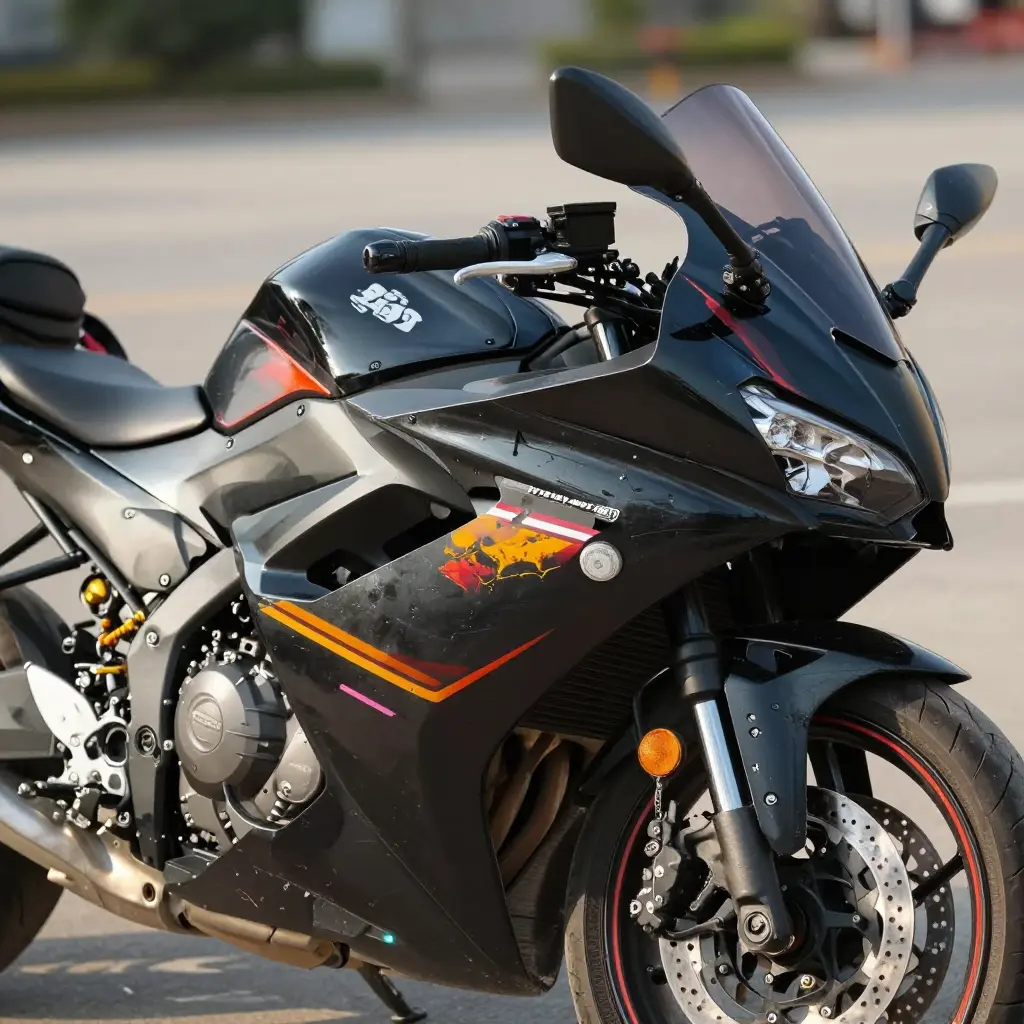
How Heat Cycling Stresses Fairing Panels
Park a motorcycle in the sun and its bodywork does something predictable: it heats up during the day, then cools after dark. One cycle does nothing measurable. Run that cycle hundreds of times over a few summers, though, and even a sturdy fairing panel starts to lose the fight. The process is called heat cycling, and it wears on plastic much the way repeated bending wears on a paper clip.
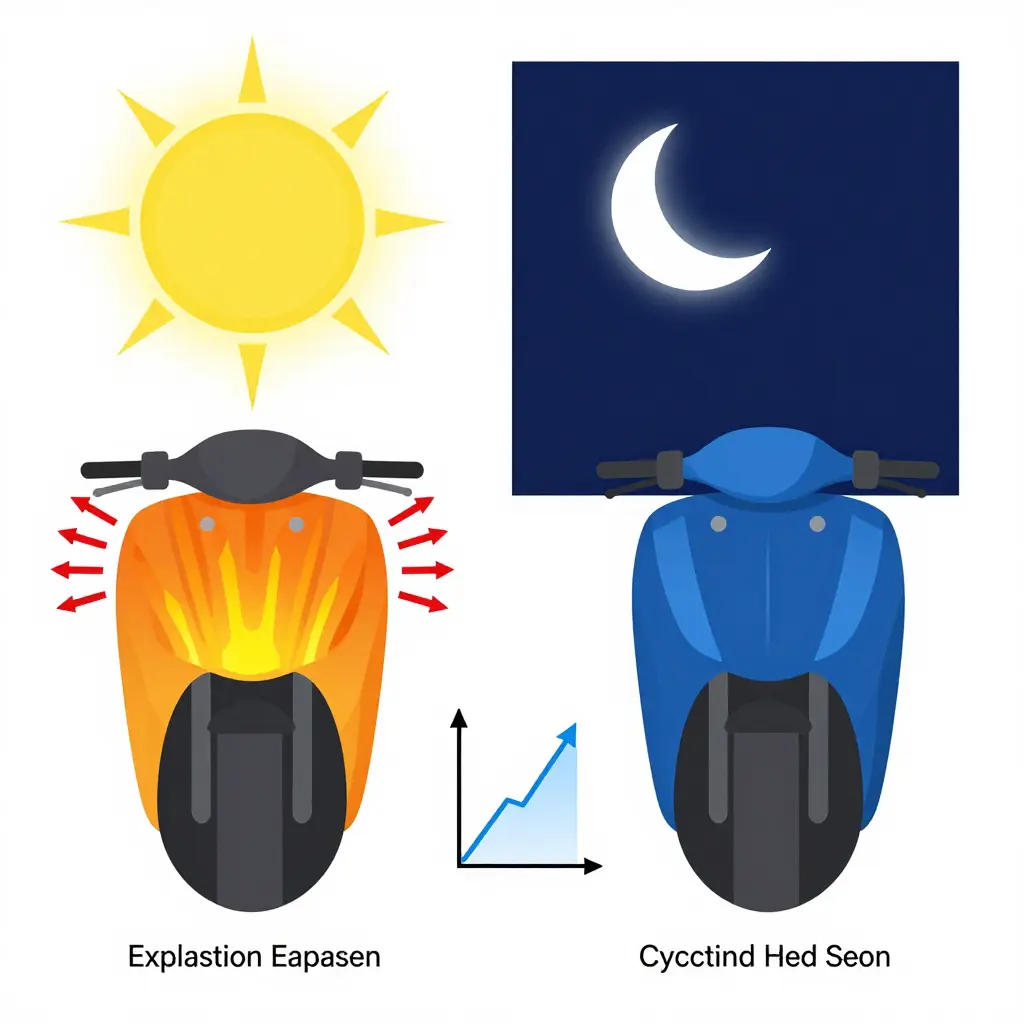
The Daily Expansion and Contraction Cycle
Direct sun can push a panel’s surface temperature well above the air around it. Heat makes the polymer chains move farther apart, which is what engineers call thermal expansion. The panel grows by a fraction of a millimeter – but it grows.
Overnight it contracts again. A single cycle is harmless. The damage comes from repetition.
Why Mounting Points and Edges Suffer First
Fairing panels are not free to move. Bolts hold them at the mounting points, clips grip the edges, and molded bends and corners concentrate force at what engineers call stress risers.
Every day, those fixed points fight the panel as it swells and shrinks. After thousands of cycles, the tug-of-war shows up as cumulative fatigue: hairline cracks around bolt holes, clips that no longer grip, edges that fray. It usually starts where you cannot see it, long before a split appears.
UV, Thermal Gradients, and Dark Colors
Three things make heat cycling worse:
- UV exposure breaks the plastic down chemically, leaving it more brittle and less able to flex and recover.
- Thermal gradients form when one part of a panel sits in the sun and another sits in shade. The sunlit section swells while its neighbor does not, and the difference loads the material from the inside.
- Dark paint and colors absorb far more solar heat than light shades. A black fairing runs much hotter than a white one, which magnifies every cycle.
That is why material choice matters, and why coatings and proper finish care buy you time.
What It Adds Up To
Heat cycling is not a sudden failure. It is slow wear, driven by ordinary sun and shade. Once you understand how thermal expansion, mounting-point fatigue, UV, and color interact, you can predict where a panel will fail and protect it before a crack ever shows.
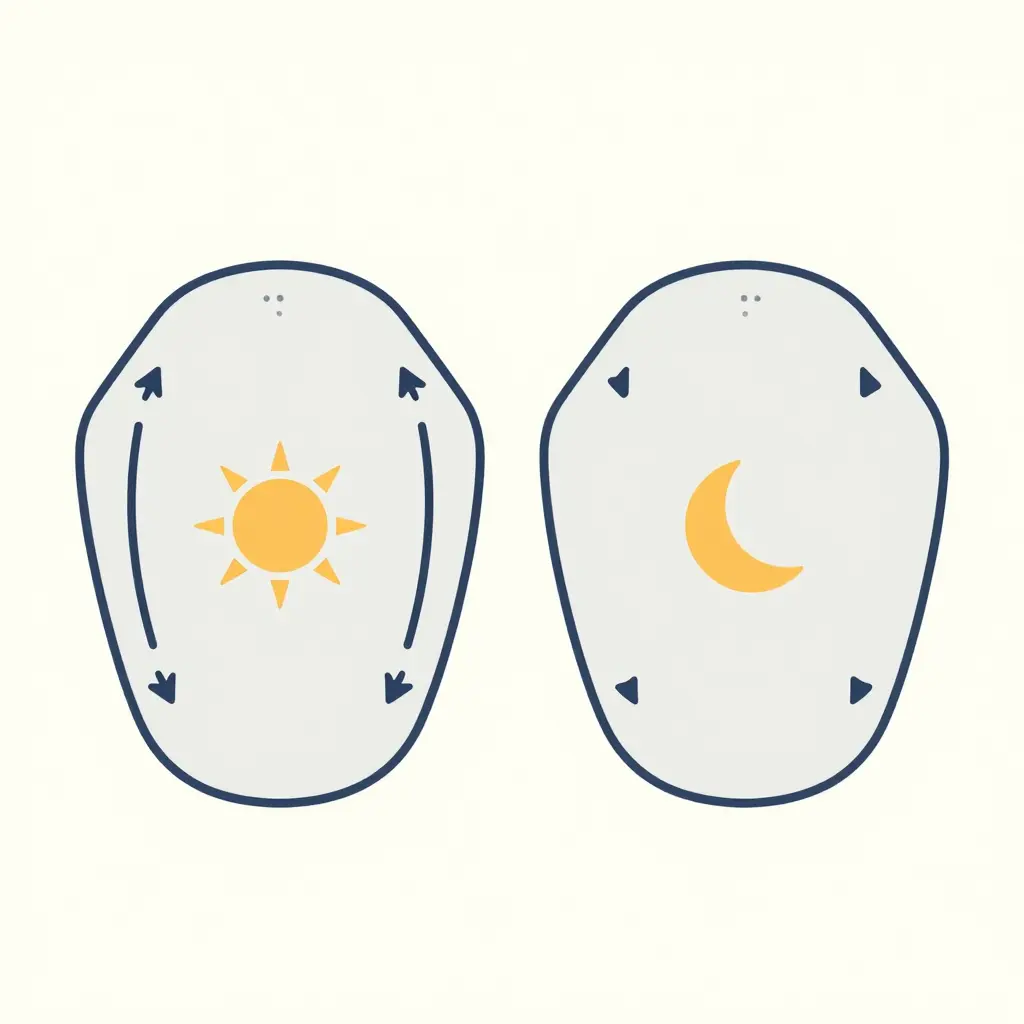
The schematic isolates the mechanism: warmth pushes the panel outward along every edge, and the overnight cooldown pulls it back in. Those repeated push-and-pull cycles load the mounting points, marked here as clusters of stress dots at each corner.
How ABS Fairing Panels Respond to Heat Cycling
ABS – acrylonitrile butadiene styrene – is the workhorse behind a large share of motorcycle bodywork. It is tough, it holds a clean factory-gloss finish, and it repairs more easily than most plastics. It is not immune to the sun, though. On a bike that lives outdoors, ABS responds to every hot-and-cold cycle, and knowing how it responds is the cheapest way to avoid replacing panels.
What ABS Does Under Heat
Four properties decide how ABS holds up outdoors:
- Moderate thermal stability. ABS keeps its shape in normal use, but it is not a high-temperature polymer. It has no sharp melting point; it softens gradually as it gets hotter.
- Glass transition behavior. Near 105 degrees Celsius, ABS shifts from a rigid, glassy solid into a softer, rubbery one. That is far above a typical hot day, but a fairing panel baking in direct sun – or sitting beside the engine – can approach it in small areas.
- Paint and finish compatibility. ABS takes primer, color, and clear coat beautifully, which is why it is the usual choice for glossy, showroom-look panels. It also bonds to fillers and adhesives, so chips and cracks are easy to repair.
- Rigidity and stress distribution. ABS is stiffer than polypropylene, so it carries mechanical loads across the panel instead of flexing them away. That rigidity gives it a taut, premium feel, and it also concentrates stress at the mounting points.
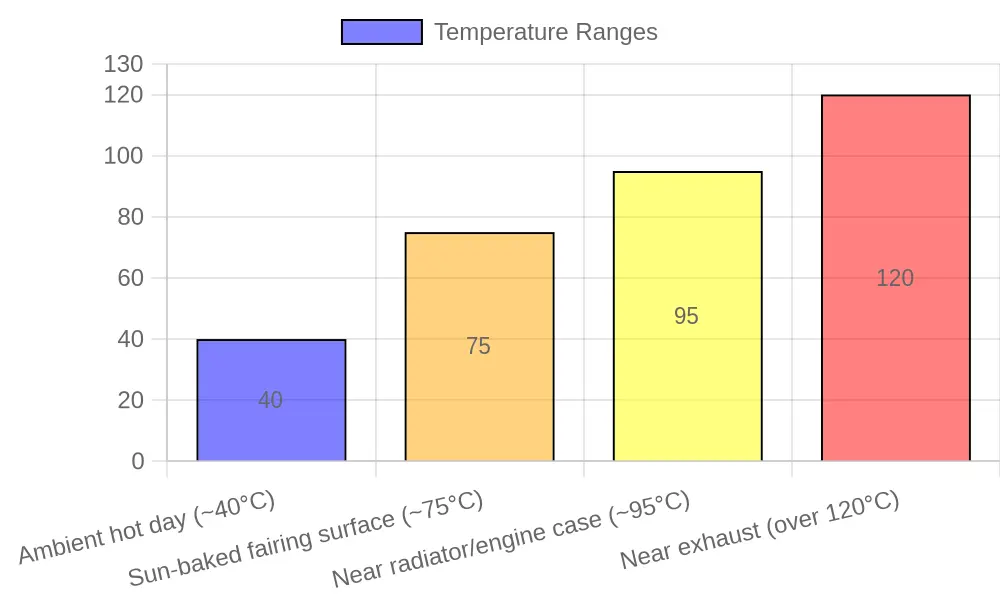
The chart above shows the gap between normal conditions and trouble. Ordinary air temperatures are no threat to ABS, but sun-baked surfaces and panels next to the engine can push into the glass transition zone.
What Prolonged Heat Cycling Actually Does
This is where the wear shows up. Each day the panel warms and softens a little, then cools, and small effects accumulate over hundreds of cycles.
Warping near hot zones. The plastic nearest the exhaust, radiator, and engine cases runs hottest. Over time ABS creeps and distorts, leaving wavy surfaces, misaligned seams, and gaps that no longer sit flush.
Paint and clear-coat issues. Paint is more brittle than the plastic beneath it, so temperature swings crack, blister, or lift the coating, especially along edges and tight bends. Consistent paint care protects both the look and the long-term value of the panels.
Stress cracking at bolt points. The rigidity that makes ABS feel solid also concentrates force at bolt holes and clips. Add vibration to thermal expansion, and hairline cracks appear around fasteners after a few years.
Where ABS Wins, and Where It Doesn’t
ABS is popular for real reasons: it resists impact, takes a mirror-smooth finish, and repairs cleanly – all genuine advantages over softer plastics. Heat is its weak point. Without protection, heat cycling damage builds quietly, and a little shade, a cover, or a simple heat shield near hot components goes a long way toward keeping ABS fairing panels looking sharp for years to come.
How Polypropylene Fairing Panels Respond to Heat Cycling
A bike parked in the sun can swing through dozens of temperature changes in a single afternoon, and each change makes the plastic expand and then pull back in. How a material handles that rhythm – heat cycling, again – decides whether your bodywork stays cosmetically sharp or slowly develops spiderweb cracks. Polypropylene fairing panels meet the challenge differently from stiffer plastics.
A Naturally Flexible Plastic
Polypropylene is flexible by nature. It has lower rigidity than many engineering thermoplastics, so it gives way under stress instead of fighting it. That flexibility is the material’s quiet advantage. When heat cycling makes a panel swell and then contract, the plastic simply moves with the change. It does not turn brittle the way stiffer plastics can, so it keeps its toughness through hundreds of warm-up and cool-down cycles.
Bending Instead of Cracking
Rigid plastics store thermal stress until they have no room left, and then they crack. Flexible polypropylene spreads that stress across the whole panel, bending instead of snapping all at once. Think of a rubber band against a dry twig. The rubber band stretches and recovers; the twig builds tension until it breaks. That is why polypropylene fairing panels tend to survive sun-baked parking lots and cold morning starts without the hairline fractures owners dread.
What Flexibility Costs
Flexibility is not free. It brings a few problems:
- Paint adhesion. Paint struggles to grip a surface that keeps moving, and polypropylene’s low surface energy makes bonding harder still. Careful prep and the right primer matter more here – which also shapes how paint care affects resale value.
- Surface finish differences. A flexible panel can end up with a softer or slightly wavier finish than a crisply molded rigid part.
- Tight tolerances. Around the mounting hardware, the same flex makes it harder to hold precise, consistent gaps and alignment.
How This Compares to ABS
The two plastics pull in opposite directions. ABS is stiffer, holds its shape cleanly, and takes paint more readily – but that stiffness means heat cycling loads it directly and raises the odds of cracking. Polypropylene trades crispness for resilience, preferring to flex than to fail.
| Trait | Polypropylene | ABS (conceptual) |
|---|---|---|
| Flexibility | Higher | Lower |
| Rigidity | Lower | Higher |
| Brittleness resistance | Greater | Lower over time |
| Paint adhesion | Challenging | Easier |
| Holding tolerances | Harder | Easier |
| Heat cycling response | Flexes | Can stress and crack |
Put simply, polypropylene fairing panels bend so they do not break. Trickier paint, softer finishes, and fussier tolerances are the price; know them up front and you can plan around them.
Here is how the two materials compare on the heat-related and everyday criteria that matter most.
| Feature / Criterion | ABS | Polypropylene |
|---|---|---|
| Thermal stability | Moderate; softens under load near 80C | Higher; tolerates heat better |
| Flexibility vs rigidity | Rigid, stiff panels | Flexible, impact-tolerant |
| Warping risk under heat cycling | Higher; prone to distortion | Lower; resists warping |
| Cracking and brittleness tendency | Turns brittle with age | Stays tough, resists cracks |
| Paint and finish behavior | Paints easily, glossy coat | Hard to paint, needs additives |
| Repair ease | Repairable, bonds with adhesive | Harder to glue, flexes repairs |
| Durability in sun-exposed parking | UV stress, can discolor | Stays flexible, holds shape |
| Cost | Pricier per panel | Cheaper, budget-friendly |
Read each row as a trade-off, not a score. ABS tends to lead on finish and repairability, while polypropylene leads on heat tolerance and cost. If you are weighing long-term value, it also pays to understand how paint care affects resale value before committing to either material.
Common Failure Modes and How to Inspect for Them
Heat cycling damage rarely announces itself all at once. It accumulates over months of sun exposure, temperature swings, and vibration. Whether you ride or repair motorcycle fairings, learning to read the early signs helps you catch problems before they spread. These are the most common patterns, what each one reveals about the material underneath, and the first thing a shop should check.
Hairline Cracks Around Mounting Holes
Small, spider-web cracks radiating from bolt holes are the classic signature of heat cycling damage on ABS panels. ABS turns brittle as UV exposure ages the plastic, so the stress concentrated at each fastener eventually wins. Polypropylene, being more flexible, usually resists this pattern for longer. Inspect with a bright light held at a low angle – cracks that vanish when viewed straight on are still there. Check fastener torque first; over-tightened bolts accelerate the damage.
Warping Along Panel Edges
Warping appears as wavy edges or a loss of the original contour. ABS tends to distort and stay distorted once it cools, while polypropylene often springs back partially. Run your hand along the edge and sight down the panel line. If only one edge has drifted, check whether the mounting brackets are preloading the panel.
Discoloration and Fading
Chalky, faded patches or a yellowed tint usually hit painted ABS faster, because its rigid surface holds heat longer. Compare hidden inner surfaces with exposed outer ones. Start by asking whether the fade is uniform or concentrated where the sun hits.
Clear-Coat Clouding or Peeling
A milky haze that later lifts at the edges is a coating failure rather than a plastic one – but heat cycling drives it. Clear-coated ABS panels are the most prone. Look for lifting at the corners and along tight radii. Understanding how paint care influences resale value helps shops advise customers on prevention rather than repeated repainting.
Gap Growth Between Adjoining Panels
Widening, uneven gaps between fairing panels usually point to a combination of thermal expansion and fastener movement. Measure the gap at several points along the seam. If gaps grow on one side only, suspect a sagging or worn mount.
Loosening Fasteners
Repeated expansion and contraction slowly works bolts and clips loose. Recheck torque specs and look for elongated or oval-shaped mounting holes, which indicate the panel has been shifting.
Quick Diagnostic Reference
| Failure Mode | Most Affected Material | Check First |
|---|---|---|
| Hairline cracks at bolt holes | ABS | Fastener torque and hole condition |
| Edge warping | ABS (PP partially recovers) | Mounting bracket preload |
| Discoloration and fading | Painted ABS | Hidden vs. exposed surface color |
| Clear-coat clouding or peeling | Clear-coated ABS | Corner and edge lifting |
| Gap growth between panels | Both | Gap measurements at multiple points |
| Loosening fasteners | Both | Torque specs and hole elongation |
Use this table as a starting point, then confirm with a hands-on inspection. The material rarely lies: cracked or chalky panels lean toward ABS, while panels that flex and recover lean toward polypropylene.
Chart: Heat-Cycling Durability – ABS vs Polypropylene Fairing Panels
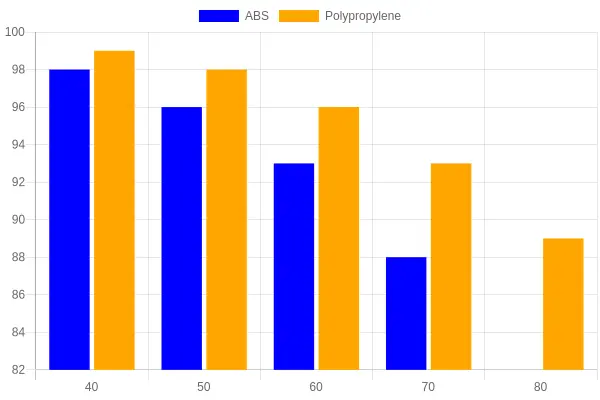
How to read it: the vertical bars show how much of its original shape each plastic keeps after repeated day-night heat cycles. The higher the bar, the better the panel holds its fit, gloss lines, and mounting points. Polypropylene (orange) stays ahead of ABS (blue) at every temperature, and the gap widens as things get hotter.
The Data Behind the Chart
| Surface Temperature (°C) | ABS – Shape Retention (%) | Polypropylene – Shape Retention (%) |
|---|---|---|
| 40 | 98 | 99 |
| 50 | 96 | 98 |
| 60 | 93 | 96 |
| 70 | 88 | 93 |
| 80 | 82 | 89 |
Metric: shape retention as a percentage of the panel’s original (pre-cycling) form. Higher values mean less permanent deformation, warping, and sag after repeated heating and cooling.
What the Numbers Mean
At a mild 40 °C surface – a cool, overcast day – the two materials are neck and neck, both effectively holding their shape. The story changes fast once the sun really digs in. By 70 °C, a temperature a black fairing absolutely can hit after an afternoon parked in direct summer sun, ABS has slipped to 88% retention while polypropylene is still sitting at 93%. Push to 80 °C and the spread is hard to ignore: 82% versus 89%.
In plain terms, a polypropylene fairing loses roughly a tenth of its shape at the hottest realistic surface temps, while ABS gives up closer to a fifth. That difference shows up as sagging panels, widening panel gaps, and stressed or stripped mounting screws – the exact nagging fit issues owners complain about after a few hot seasons.
Why the gap exists: ABS is a styrene-based plastic that softens and creeps under sustained heat, so once it crosses its practical service ceiling it starts to move and never fully springs back. Polypropylene has a higher and broader thermal window, so it resists that permanent set for longer.
What this means for you:
- Motorcycle owners – if your bike lives outside, polypropylene panels will hold their lines and gaps noticeably better over the years.
- Enthusiasts – heat is the slow killer, not crashes. Shade, a breathable cover, and a light reflective wrap all push the numbers back up regardless of plastic.
- Repair shops – when you are quoting replacements or advising on re-painting and re-fitting, factor in the material, not just the part number. A warped ABS panel often can’t be saved once it has crept.
Bottom line: for heat-cycling durability in a sun-baked parking spot, polypropylene is the more shape-stable choice – but pairing either material with good heat management is what actually extends the life of your fairing.
Early Warning Signs Your Fairing Panels Are Suffering Heat Cycling Damage
Sun-baked parking lots are quietly brutal on a bike’s bodywork, and heat cycling — the endless expand-and-contract loop that happens every time a panel bakes in the sun and cools overnight — leaves a trail of clues long before a fairing finally cracks apart. Here are the early warning signs that riders and repair shops should inspect for.
-
Mounting bolts that keep tightening or loosening. Heat cycling makes ABS and polypropylene panels swell and shrink at different rates, so fasteners gradually lose their original torque. If you keep re-snugging the same bolts, or find ones that feel oddly loose, the plastic beneath them is already moving.
-
Faint cracks forming at mounting points. Stress concentrates where the panel meets its bolts, and that is where hairline cracks usually appear first. Look closely around screw holes and clips for thin spider-like lines that grow wider over weeks.
-
Subtle edge warping. Run a straightedge along the outer edges of a panel. A slight bow, ripple, or wave that was not there when the bike was new signals that the plastic is slowly losing its molded shape under repeated heating.
-
Mismatched panel gaps. Uneven seams between fairings are an easy, measurable red flag. When one gap that was once a uniform line becomes wider on one end and tighter on the other, heat-induced distortion is at work.
-
Dulling or fading finish. Repeated UV and heat exposure breaks down clear coats and pigments, leaving formerly glossy panels looking chalky or washed out. This is one of the earliest cosmetic symptoms, and understanding how paint care affects resale value can help you decide whether refinishing is worth it.
-
Fine surface crazing. Crazing looks like a delicate network of tiny cracks across the paint or plastic surface. It signals that the outer layer is becoming brittle and is a classic marker of long-term thermal stress.
-
Paint bubbling at high-heat zones. Panels closest to the engine or exhaust sometimes blister and bubble as trapped air and degraded paint lift away. These blisters point to localized hot spots accelerating the damage.
-
Rattling or vibration at speed. Once fasteners loosen and panels warp, they no longer sit snugly against their mounts. A new buzz or rattle that appears at highway speeds often means heat cycling has already loosened the whole assembly.
Treat this list as a checklist: catching these signs early lets you re-torque, reinforce, or replace panels before small thermal fatigue turns into an expensive repair.
Frequently Asked Questions About Fairing Panels and Heat Cycling
We hear the same questions again and again from riders, garage tinkerers, and shop techs. Here are straight answers.
Is ABS or polypropylene better for a motorcycle parked in the sun?
For a bike that lives outside in the sun, polypropylene is usually the better pick. It tolerates higher surface temperatures, flexes with expansion and contraction instead of fighting them, and as the chart above shows, it holds its shape better across the whole 40 to 80 °C range. ABS keeps the edge on appearance: it takes paint more easily, holds a glossier finish, and is simpler to refinish. So if sun exposure is your main worry, polypropylene wins; if finish quality and easy repairs matter more, choose ABS.
How long does it take for heat cycling to damage fairing panels?
There’s no fixed clock. Heat cycling damage is cumulative – every hot day followed by a cool night counts as one cycle. In a hot, sunny climate, faint warping or hairline paint cracks can appear within a single summer. In milder regions, it may take several years. The point is that damage never happens all at once; it quietly stacks up.
Can warped ABS fairing panels be repaired or must they be replaced?
Minor warping is often fixable. Careful, controlled heat from a heat gun can soften ABS enough to reshape it, and small cracks can be plastic-welded. But severe warping – especially where mounting tabs and clips have deformed – usually means replacement. Once a panel loses its memory, it rarely sits flush against the bodywork again.
Does color affect heat cycling damage on fairing panels?
Yes, and it’s a big factor. Dark colors (black, dark red, deep blue) absorb far more solar radiation and reach much higher surface temperatures than white or silver. That means darker fairings swing through wider temperature ranges every day, accelerating heat cycling damage. A light-colored bike parked in the same spot will typically hold up longer.
Do motorcycle covers reduce heat cycling damage?
They can – if you choose wisely. A breathable, light-colored cover that reflects sunlight lowers peak surface temperatures and softens the extreme of each cycle, genuinely slowing heat cycling damage. A cheap, non-breathable cover traps heat and moisture and can make things worse. Breathable and reflective beats thick and plastic every time.
Will aftermarket fairing panels hold up as well as original panels?
Not automatically. Many aftermarket sets use thinner ABS or lower-grade polypropylene, so they can be more vulnerable to heat cycling damage. Top-tier aftermarket kits can perform nearly as well as OEM, but you generally get what you pay for. If long-term sun durability matters, check the material spec and panel thickness before you buy.
Whichever panels you run, finish care pays off over the years – a well-protected surface not only resists sun stress but also holds more value down the road. See our guide to paint care and vehicle resale value to protect your investment.
The Bottom Line: ABS vs Polypropylene Fairing Panels
The whole comparison comes down to a single idea: heat cycling damage punishes stiffness and rewards flexibility. ABS panels look great and paint beautifully, but years of sun-driven expansion and contraction can leave them brittle and prone to hairline cracks. Polypropylene panels flex with the temperature swings, so they hold their shape and structure where a bike sits in the sun day after day. Neither material is universally “better” – the smart choice depends on how you ride, park, and care for your machine.
Surface care reinforces whatever material you choose. Gentle washing, mild soaps, and prompt touch-ups slow the wear that sunlight and grit accelerate, and the habits that protect one vehicle usually protect the next. A few practical car wash tips for busy entrepreneurs keep fairings cleaner and better protected, no matter which polymer sits under the clear coat.
Match the Material to How You Live
| Your Situation | Best Choice | Why It Holds Up |
|---|---|---|
| Uncovered parking, hot sunny climate | Polypropylene | Flexes with thermal expansion, resists heat cycling damage |
| Garage-kept bike, mild seasons | ABS | Keeps a smoother finish and richer paint depth |
| Frequent DIY refinishing | ABS | Easier to sand, fill, and repaint |
| Vibration and tight fairing gaps | Polypropylene | Absorbs flex without cracking |
Buying Guidance and a Reliable Source
Whichever panel wins for your climate and habits, sourcing matters as much as the material itself. Fairings that resist heat cycling damage mean fewer replacements over the life of the bike – easier on your wallet and a genuinely more sustainable way to keep a machine on the road. That long-term thinking connects directly to broader sustainable practices for keeping vehicles going that favor parts which last rather than parts that fail.
Summit Fairings is a leading motorcycle fairing export site with over 3,000 styles covering almost all motorcycle models. Buyers pay 10 to 40% less than on other sites, and questions are answered within six hours. Whether you settle on ABS vs polypropylene fairing panels, you can compare options and order with confidence at summitfairings.com.
The verdict: choose polypropylene for relentless sun and uncovered parking, ABS for finish quality and easy refinishing, and buy from a supplier that stocks both. The material decision you make today is really a decision about how gracefully your fairings will age – and that is the truest measure of long-term durability.