
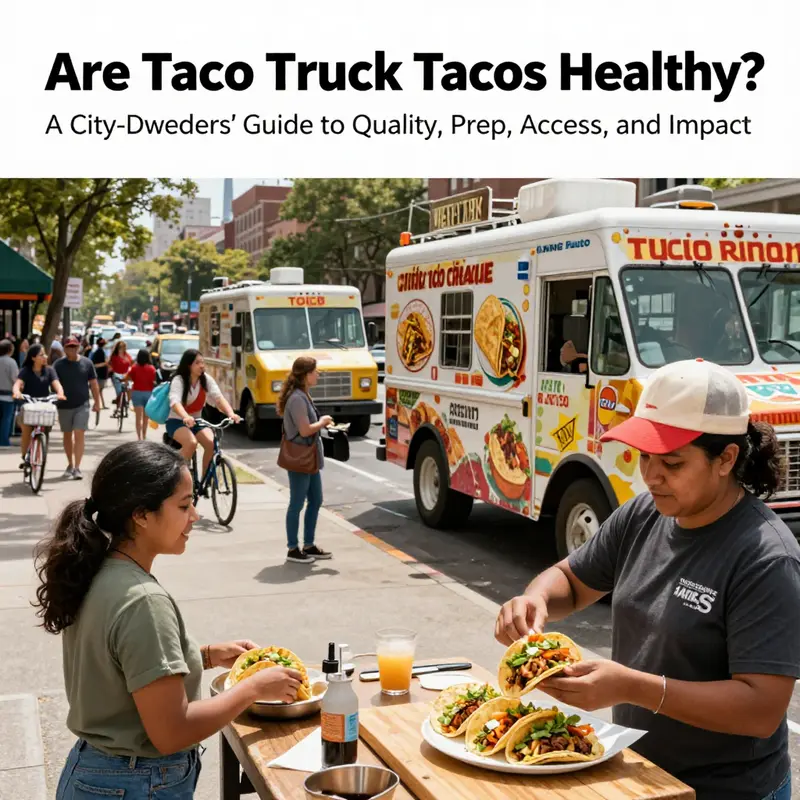
City life demands meals that are quick, flavorful, and reliable. Taco trucks have become a trusted part of the urban food landscape, offering variety and convenience for people on the move—from early-morning commutes to weekend outdoor explorations. But healthfulness isn’t a fixed verdict; it’s a result of what’s on the plate, how it’s prepared, and who’s serving it. This guide examines the topic through four interconnected lenses that matter to busy city dwellers: ingredient quality and nutritional profiles, preparation methods and caloric impact, economic access and availability, and the societal, public health, and environmental implications of mobile eating. For urban commuters, outdoor enthusiasts, small business owners and freelancers, and first-time pickup buyers, these angles provide a practical framework to evaluate whether a taco truck meal can fit into a balanced lifestyle. The chapters that follow build on real-world tradeoffs, vendor practices, and personal priorities—helping you make healthier, smarter choices without sacrificing flavor, speed, or value.
Taco Truck Tacos Decoded: Ingredient Quality, Sodium, and the Real Health Story
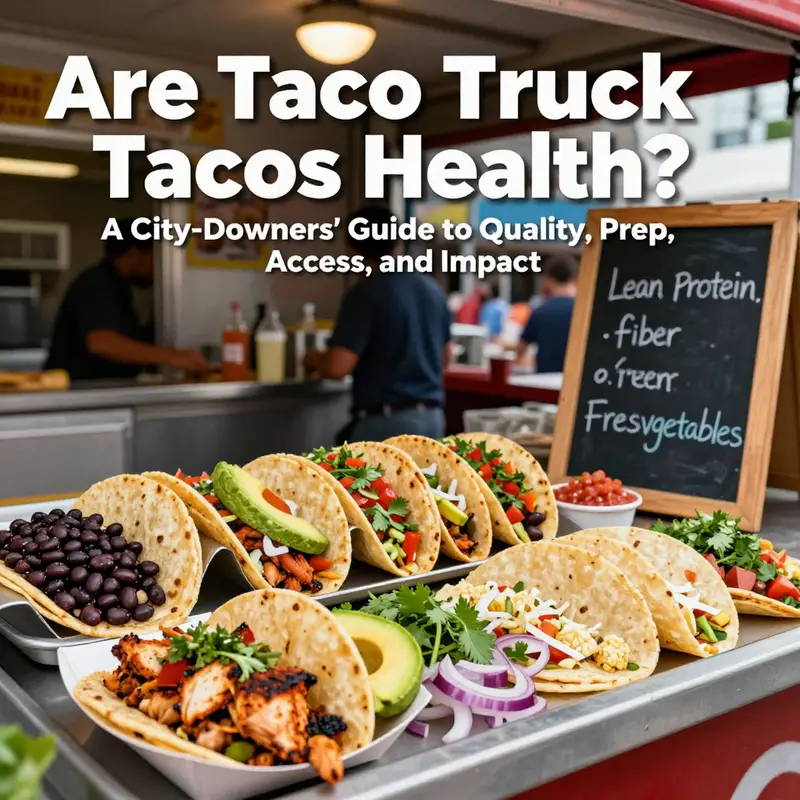
The question of whether taco truck tacos are healthy isn’t a simple yes or no. It rests on ingredient quality, preparation methods, portion sizes, and how you define healthy.
A truck can serve meals that are light and balanced or meals that are indulgent and high in calories, fat, and sodium. The difference is often about the choices you make on a given menu and the choices the chef has built into the dish.
When we assess healthfulness, we are reading a story about how ingredients are sourced, how they are prepared, and how the final assembly supports or undermines daily nutritional goals. The best approach is to read the plate as a whole rather than rely on a blanket label like healthy.
The heart of the matter is ingredient quality. A taco is a small package, but its health profile can swing dramatically depending on what fills it. Lean proteins such as grilled chicken or fish, plus vegetables and whole or minimally processed tortillas, push a meal toward balance. Vegetables bring fiber, micronutrients, and volume without excessive calories. Fresh, locally sourced produce often correlates with better nutrient density and less reliance on heavy sauces.
On the other hand, fried shells, fatty fillings, or cream based sauces can push the same tortilla toward a calorie dense, high sodium profile. The health story is about the whole filling and its seasoning, not the tortilla alone.
A key point is the tortilla itself. Corn tortillas sit at a critical junction of taste, tradition, and nutrition. They define the carbohydrate load and also influence sodium intake. A standard six inch corn tortilla when unseasoned typically carries about 30 milligrams of sodium. This is a baseline, not a universal truth. Brand variations, processing, and added salt can raise sodium before any filling is added. When a consumer asks for a healthier option, this nuance matters.
The interaction matters because many taco truck menus treat tortillas as vessels for bold fillings. If the tortilla adds even modest sodium and the fillings include canned beans, salted meats, or salty sauces, the total sodium can add up. The same tortilla can support a lighter meal or contribute to a higher sodium dish when topped heavily.
Colorful vegetables and lean proteins serve as a counterbalance. Grilled chicken or fish with peppers, onions, and leafy greens lean toward a nutrient dense profile. Beans provide plant based protein and fiber but can bring notable sodium if canned or heavily seasoned. The goal is to choose ingredients that align with daily targets and to use sauces on the side to modulate the final sodium and fat.
Sauces and accoutrements often carry outsized influence on calories, fat, and sodium. A sauce that adds flavor without extra salt or creaminess can keep a taco within healthy boundaries. A sauce heavy in salt or saturated fat can push a dish beyond common guidelines, especially if several tacos are eaten. The practical rule is to request sauces on the side and portion them carefully, enjoying texture and brightness without high sodium or fat loads.
Preparation matters too. Grilled proteins and vegetables typically yield lower calories and fat per serving than fried options. The way a truck uses oil and hydration also matters. A menu that highlights fresh ingredients with minimal added fats tends to align with health goals. Crowded coatings, battered textures, and loaded cheese push toward higher caloric density.
Portion size is another lever. A couple of modest tacos with vegetables and lean protein can be satisfying without overshooting energy targets, while many richly sauced tacos can exceed daily needs in a single meal.
The bottom line is that healthiness is a dynamic relationship among ingredients, technique, and portions. A well chosen taco truck meal can be nutritious and still flavorful. Some trucks emphasize fresh produce, plant based proteins, and transparent sourcing, which helps consumers balance nourishment with enjoyment. The best approach for a health minded eater is to favor vegetables, lean protein, and sauces on the side, and to be mindful of salt and portion sizes.
For further reference on tortilla sodium content and composition, USDA data exists for corn tortillas and related products. See the USDA nutrition entry for corn tortillas, dry, and related data at the official USDA site for standard numbers. You can also refer to the commonly cited USDA FoodData Central entry for tortilla sodium levels: https://fdc.nal.usda.gov/fdc-app.html#/food-details/170845/nutrients
Healthy on the Fly: Preparation Methods and Caloric Realities of Taco Truck Tacos
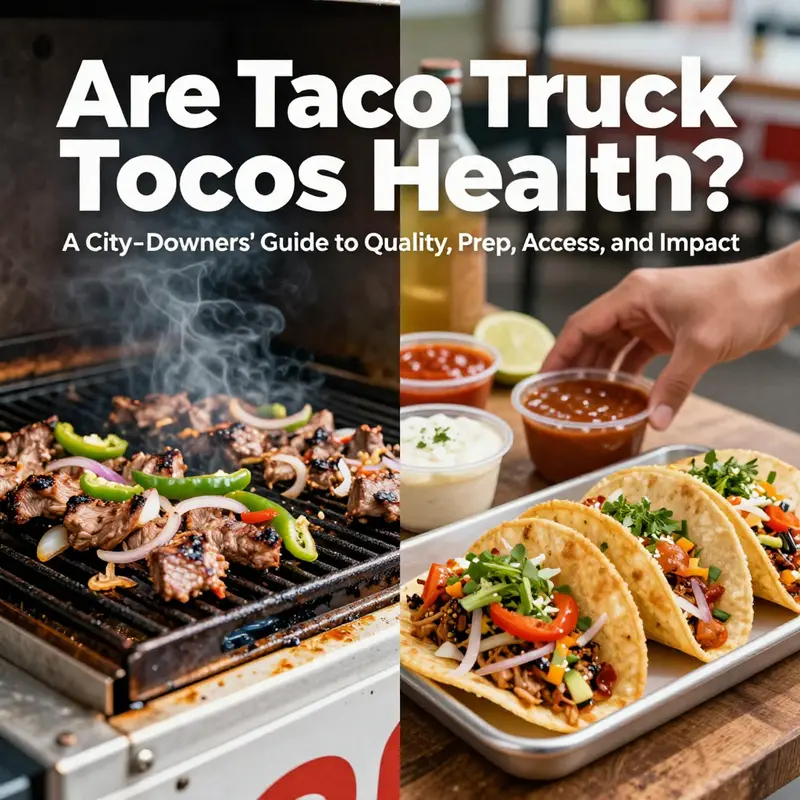
Street tacos can be part of a healthy diet when you pay attention to ingredients and preparation. The healthiness of taco truck options rests on two intertwined decisions: the protein and the cooking method. A baseline chicken taco with a corn tortilla sits around 125 calories on average, a useful reference point for simple recipes without extravagant add-ons. The energy cost depends on context and portion size.
The cooking method matters: grilled or baked proteins generally have less fat and fewer calories than fried or heavily processed options. Corn tortillas tend to be lower in calories and higher in fiber than flour tortillas, supporting fullness and micronutrient intake. Fresh vegetables and pico de gallo add volume and nutrients with modest calories, while high-fat toppings like guacamole, cheese, and sour cream should be used in moderation. Sauces can add calories and sodium, so consider sauces on the side to control portions.
Hidden sodium and processed components can accumulate. When possible, choose fresh preparation, ask for sauces on the side, and favor simple, clean ingredients to keep sodium in check. The practical takeaway is straightforward: lean protein, modest tortilla count, colorful vegetables, and mindful toppings.
Practical approach: start with one protein and one tortilla type, then add vegetables and light toppings, with a side of salsa or pico de gallo. Portion awareness matters more than the absolute number of tacos. If you want guidance, refer to nutrition databases like USDA FoodData Central for estimates of calories, fats, sodium, and fiber to calibrate expectations, knowing you don’t need to memorize every value.
The broader story is that healthfulness in taco truck meals is a spectrum. A simple chicken taco on a corn tortilla can fit into a balanced day, while a meal loaded with fried shells, rich sauces, and high-fat toppings can be more indulgent. The Austin scene illustrates this range, with some trucks emphasizing grilled proteins and fresh produce and others offering more decadent options. The choice is yours: design a meal that supports your goals, be it steady energy, portion control, or nutrient targets, and use mindful toppings and portioning to stay on track.
In short, you can enjoy taco truck tacos healthfully by prioritizing lean proteins, corn tortillas, vegetables, and modest toppings, and by keeping sauces and high-fat components in check. For precise numbers, consult nutrition databases to get a sense of how your preferred combinations add up, then apply that awareness in the moment to guide your ordering.
Healthy on the Move: Economic Realities, Access, and Availability of Taco Truck Tacos
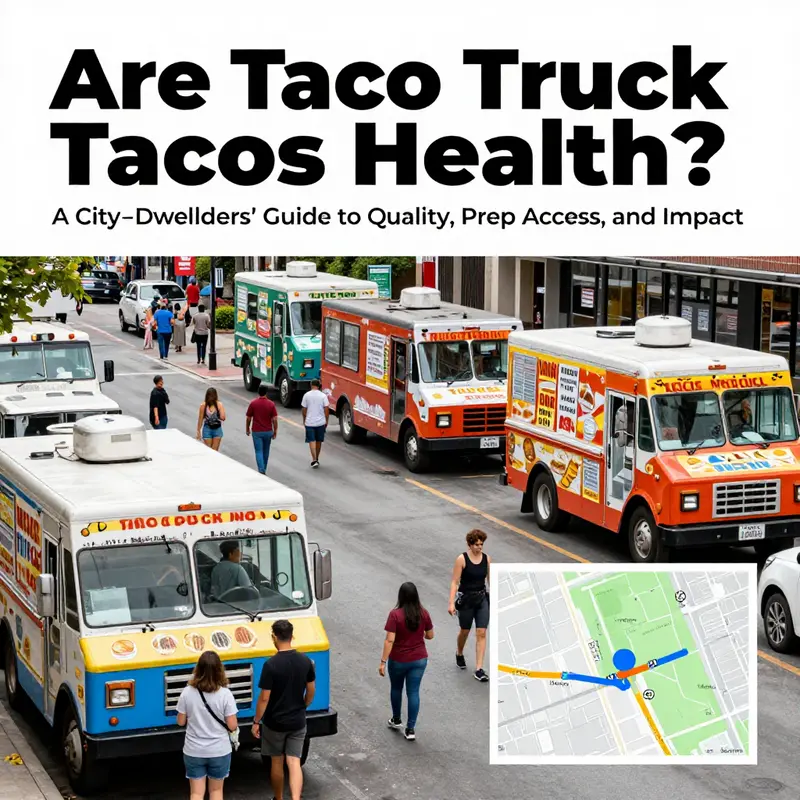
Are taco truck tacos healthy? The short answer is that healthfulness isn’t a fixed label but a spectrum shaped by what travels with the taco—the ingredients, the cooking method, and the context in which the meal is consumed. The chapter that follows reads this spectrum with care, acknowledging both the real potential for nutritious options and the concrete constraints that shape what ends up on a plate from a street cart. Nutrition, economics, and access all intersect on sidewalks, at curbside windows, and in the minds of workers grabbing lunch between shifts. When we look at taco trucks through this prism, three core ideas emerge: the health potential of ingredient choices, the way price and mobility broaden or limit access, and the essential role of safety, regulation, and transparency in turning a quick bite into a reliable nutritional option rather than a risky gamble.
First, the health potential rests largely on the food choices vendors offer and how customers assemble their meals. Across many taco trucks, especially in dynamic urban markets, there is room to build meals around lean proteins, vegetables, and whole-grain or minimally processed tortillas. Lean options such as grilled chicken, fish, or plant-based proteins can pair with a rainbow of vegetables—tomatoes, onions, peppers, cilantro, and leafy greens—that add fiber, micronutrients, and volume without overwhelming a plate with empty calories. When tortillas are corn-based and, ideally, whole-grain or minimally refined, the base contributes complex carbohydrates and fiber rather than rapid glucose spikes. Sauces and cheeses, if used, can be moderated or served on the side to help control sodium, fat, and overall calorie load. In this sense, a taco truck can deliver a reasonably balanced mini-meal: protein for satiety, vegetables for micronutrients and fiber, and a carbohydrate source that sustains energy, all in a convenient handheld format.
Yet the flip side is equally real. Fried shells, processed meats, heavy crema, and high-sodium sauces can push a meal into the higher end of calories and fat, blurring the line between tasty street food and a frequent reliance on energy-dense options. In some menus, indulgence items persist alongside fresher offerings, which means healthfulness becomes a function of choice rather than default. The concept of health here is pragmatic: the same cart can produce a meal under 600 calories with a modest dose of fat and sodium, or a meal well over that threshold if the patron chooses fried components, large portions, and rich toppings. The framework used in nutrition-focused street food research emphasizes not only caloric content but also the balance among calories, fats, sugars, and fiber. When vendors and customers actively pursue a mix that includes vegetables and lean proteins, the health profile improves markedly.
This health-oriented potential is enhanced by a practical ingredient ecosystem. Many carts source fresh vegetables, lean proteins, and corn tortillas close to where they operate, expanding the possibility of a varied and timely menu. Local sourcing can mean fresher ingredients with shorter time from farm to cart, reducing the need for heavy processing and preserving flavor without excessive additives. The culinary flexibility of taco trucks often makes it easier to tailor dishes to dietary preferences—gluten-free, dairy-free, or low-sodium options can be accommodated with relative ease when customers ask for customization. The critical point is clarity and choice: the more transparent a vendor is about what goes into a taco, and the more a customer understands the nutritional cues, the better the alignment between taste and health goals.
Economic realities shape not only what is possible on a plate but also who can routinely access it. Street food and mobile vendors have historically served as affordable, readily available options for urban workers. In many markets, tacos are priced to meet the needs of people who need quick, economical meals during a workday. An urban pricing landscape often positions street tacos in a bargain zone that can range from notably inexpensive to moderately priced, depending on location, ingredients, and competition. When price is kept low through low overhead and flexible menus, taco trucks can become a dependable meal source for individuals with limited budgets. This affordability is not only a matter of sticker price but of value: a meal that delivers protein, vegetables, and energy within a reasonable cost frame can contribute positively to daily intake, particularly when options are varied and consistently available.
The economic calculus, however, also introduces volatility. Ingredient prices, fuel, and regulatory fees can tilt costs and, in turn, affect what gets plated and what can be offered as a daily staple. In some markets, inflation and supply chain disruptions have nudged prices upward, even for street tacos. The ongoing challenge is to maintain affordability while preserving quality and safety. This is not a small feat, given the mobile nature of the business and the lack of a fixed physical storefront that could, in theory, offer more stable pricing through bulk buying. Yet the very mobility that supports accessibility—arriving at workplace clusters, school districts, and event hubs—also means that taco trucks can meet people where they are, when they need a meal, without the constraints of a sit-down restaurant. This mobility expands access in time and space, potentially reaching workers who might otherwise skip meals or rely on highly processed convenience foods.
Access and availability—two sides of the same coin—are shaped by where a cart operates and when it serves. The literature on urban street food highlights the strategic value of presenting meals in high-traffic corridors, near workplaces, transit hubs, and campuses. When trucks follow the rhythms of the workday, they can provide a reliable energy source that complements what people eat at home, offering a practical alternative to vending machines or fast-food chains that may limit choices or nutritional quality. In effect, taco trucks can extend the reach of healthier options beyond the walls of traditional restaurants, turning street corners into micro-nutrition hubs. That said, access is not universal. Some neighborhoods experience sparser coverage, while others enjoy dense clusters of carts; in either case, the aim should be to ensure a wide, predictable distribution of nutritious options along with consistent safety practices.
The regulatory and safety landscape plays a central role in shaping both health outcomes and consumer trust. Street foods occupy a gray space between informality and formal food systems, which means that robust food safety programs must adapt to mobile operations. Across jurisdictions, authorities emphasize critical components: temperature control, clean preparation surfaces, proper hand hygiene, and validated equipment for cooking and refrigeration. The push toward formalizing safety narratives includes training vendors, digital recordkeeping, and risk-based inspections that account for the realities of mobile food vending. The World Health Organization and the Centers for Disease Control and Prevention point to integrated approaches that combine vendor education, supportive policy environments, and ongoing monitoring to improve safety and nutritional quality in informal food sectors. In practical terms, this means a combination of training, access to safe equipment, and processes for traceability and accountability that reassure customers about what they are eating.
From a consumer perspective, there is a legitimate demand for transparency and control. People want to know not just that a meal is tasty, but that it aligns with health goals: fewer processed components, more vegetables, less salt, and clearer ingredient labeling. A small but meaningful gesture—serving sauces on the side, offering salsa with varying heat levels, or labeling a taco’s core ingredients—can empower a diner to tailor their nutrition profile. The same logic applies to portions: standardizing sizes helps people gauge caloric intake and manage it over a day or week. In this sense, healthier street food emerges not from a single recipe but from a system of practices that makes healthy decisions easier, more repeatable, and more affordable.
For readers curious about how these dynamics translate into practice, consider the broader ecosystem of mobile food operations. Some operators have begun to emphasize sustainability as a core principle, integrating environmentally friendly packaging, waste reduction, and energy-efficient kitchen equipment. The link between sustainable practice and health is not merely philosophical; it affects airflow in the kitchen, the cleanliness of utensils, and the reliability of refrigeration—each a determinant of food safety and, ultimately, health outcomes. When health and sustainability align, a taco truck can become a reliable source of nutritious meals rather than a casual indulgence. The emphasis on sustainable practices is not a luxury; it is a practical framework that supports consistent quality, customer trust, and long-term accessibility.
What does this mean for someone choosing a taco truck meal? It means looking for choices that minimize processing while maximizing vegetables, lean proteins, and appropriate portion sizes. It means asking for sauces on the side, choosing corn tortillas when possible, and selecting dishes that foreground vegetables rather than heavy sauces. It also means recognizing that the health story differs by cart, city, and season. The variability can be a strength if customers have the language and information to guide their choices, and if vendors see value in offering and promoting healthier options without sacrificing taste or affordability. In this sense, the street becomes a laboratory where healthful, flavorful, and affordable meals can coexist, provided the right incentives and supports exist.
To illustrate how the conversation around health, economics, and access can intersect in practical terms, a single sentence can bridge the technical and the tangible: sustainable practices for mobile food trucks are not a separate add-on; they are a core part of how health, cost, and access are achieved together. sustainable practices for mobile food trucks that emphasize clean equipment, efficient energy use, and responsible sourcing can help ensure that healthier ingredient choices remain affordable and reliably available to a broad public. This is not a niche concern; it is a pathway to making healthier street meals a standard rather than an exception.
The policy dimension ties the thread together. Governments can support healthier outcomes by streamlining health inspections for mobile units, providing training programs that are accessible to small operators, and encouraging transparency through simple labeling or ingredient disclosures. When policy aligns with practice, street food can reach a broader audience without compromising safety or flavor. In urban planning, spaces that accommodate safe water access, waste management, and orderly vendor traffic can improve hygiene and reduce cross-contamination risks, thereby lifting the health floor for the entire system. In short, the healthiness of taco truck tacos is not a fixed property of a recipe; it is a dynamic result of ingredient selection, cooking methods, consumer choices, and the regulatory and economic scaffolding that enables safe, affordable access to nutritious meals on the move.
If there is a takeaway to carry forward, it is this: a healthy taco truck meal is possible when the menu is designed with nutrition in mind, when customers exercise agency in choosing lean proteins and vegetables, and when safety and transparency are woven into daily operations. The mobility and flexibility that make taco trucks an attractive part of urban food systems also create a platform for education and improvement. As markets evolve and city planners consider how to feed growing populations with limited resources, the street taco can become a model for how to combine health, affordability, and accessibility in an increasingly complex urban food environment. In this sense, the health question shifts from yes or no to how—and how well—we enable healthful choices in the real world of busy schedules, competing priorities, and limited budgets.
External reading: Street vendors as actors of a sustainable food system—The case of Mexico City. https://www.sciencedirect.com/science/article/pii/S096784972500035X
Healthy on the Move: Weighing Nutrition, Community, and the Environment in Taco Truck Tacos
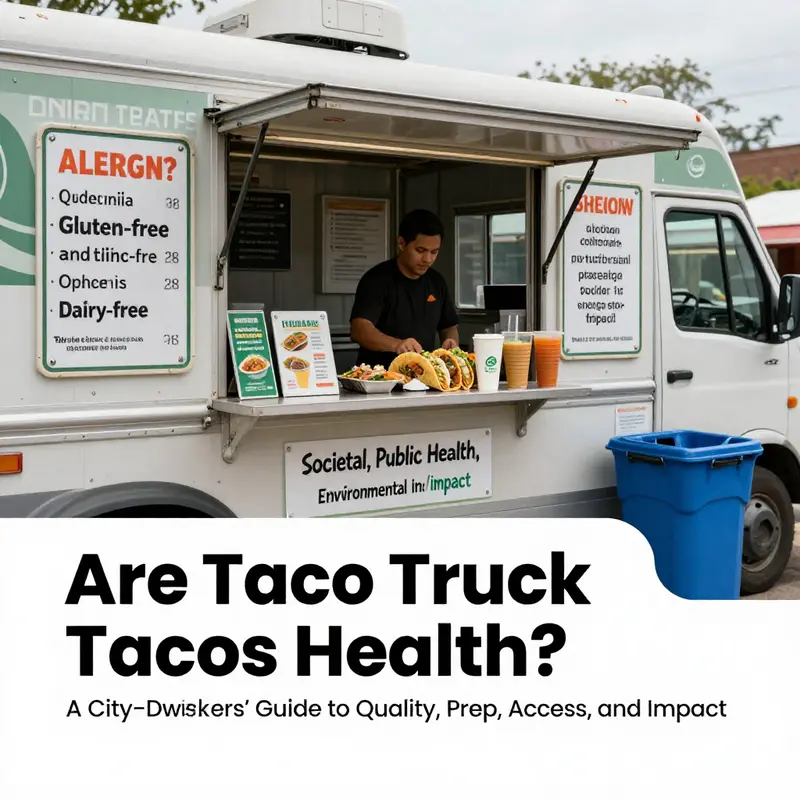
This chapter explores how taco truck meals balance flavor, convenience, and health by examining ingredients, preparation methods, portions, and menu design. It highlights how community context, local regulation, and environmental considerations shape what is available and how it is produced and disposed of. Practical tips for choosing lean proteins, fiber-rich tortillas, and sauces on the side help readers navigate a diverse street-food landscape without sacrificing culture or taste.
Final thoughts
Healthy taco truck choices come from understanding what’s in the fill, how it’s cooked, how easily you can access it, and how it fits into broader community health and environmental goals. By prioritizing fresh ingredients, lean proteins, and sides that keep sodium and calories in check; by leaning toward grilled options and sauces on the side; and by choosing vendors that provide clear allergen information and sustainable packaging, urban dwellers can enjoy the convenience of mobile tacos without sacrificing their health or values. The most effective approach is a balanced toolkit: know your priorities, ask questions, and pick vendors who align with your goals. When you ride the rhythm of the city, tacos can be a reliable, enjoyable, and responsible part of your diet.