
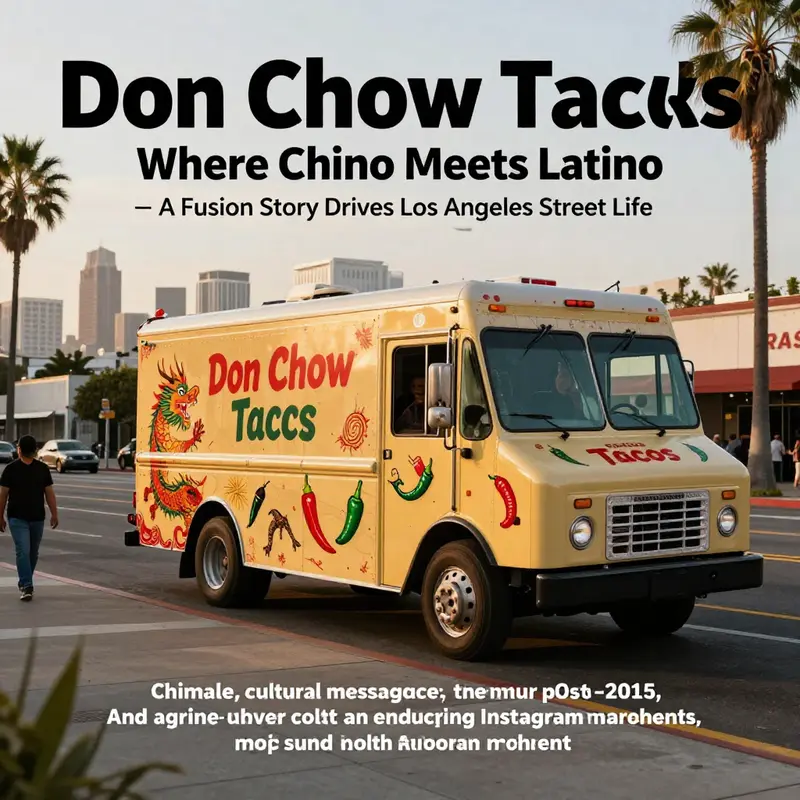
Los Angeles is a city where street corners become laboratories for cultural cross-pollination. Among the most striking experiments are mobile kitchens that fuse flavors and storytelling into a single, orders-first experience. Don Chow Tacos is one such truck, a bold departure from the familiar taco truck formula that paired Chinese cues with Mexican formats. The brand’s motto, Where Chino Meets Latino!, announced from the outset a conversation rather than a mere menu: a collision—and collaboration—between two large culinary heritages, their temperaments, and their cuisines. The concept emerged at a moment when LA’s food scene was embracing hybridity as both identity and strategy. The idea of Chinese-Mexican fusion was not entirely new in California, but Don Chow Tacos packaged it with a sense of narrative and theater: a cart rolled into neighborhoods with a Chinese lantern-adorned façade, a colorful badge, and a mission to broaden horizons beyond familiar street-food boundaries. The variations included signature dishes and an invitation to try ‘Chimale’, a portmanteau of chimichanga-like shapes and Chinese flavors—an emblem of the culinary experiments that drew curious diners as well as media attention.
Where Chino Meets Latino: The Brand Genesis and Fusion Philosophy Behind a Los Angeles Mobile Kitchen
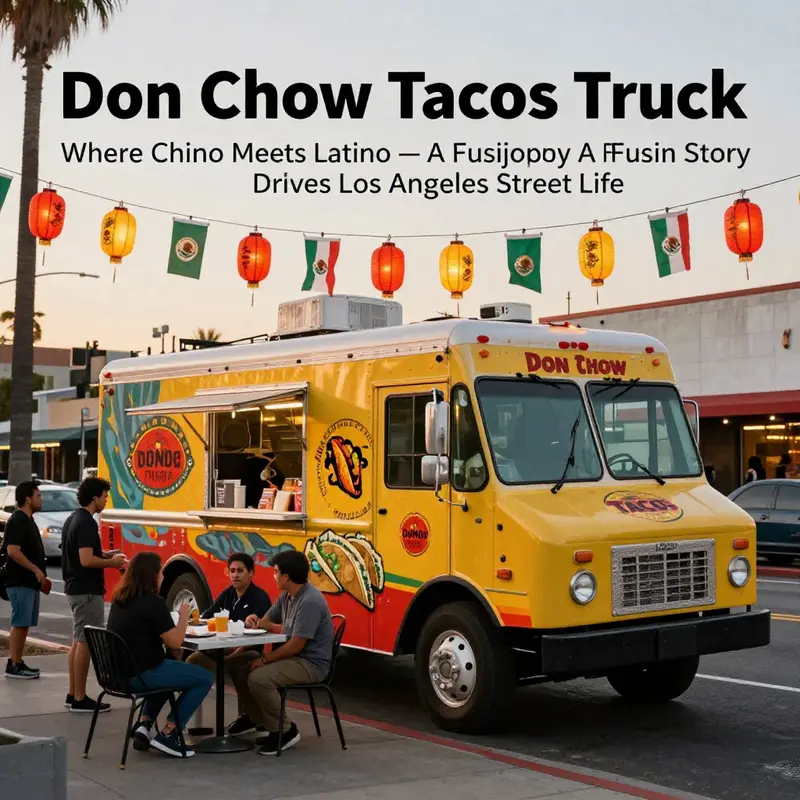
Los Angeles is a city built on movement and mixture, and the rise of a Chinese-Mexican fusion mobile kitchen embodying that truth offers a lens into how culture travels and settles. The founder’s vision was simple in form but ambitious in scope: translate the tactile warmth of Chinese home cooking into the kinetic, social format of the street taco. The brand aimed to tell a story across borders through a handheld meal, turning a cart into a portable stage where heritage and appetite could converge. The result was not just a menu but a philosophy—one that treated fusion as a language rather than a gimmick and as a way to map memory onto the urban palate. In the crowded landscape of LA’s food scene, the truck’s genesis offered a case study in how a brand can choreograph technique, identity, and mobility into a single, readable arc.
The concept began with an act of translation. Chinese flavors—savory, sweet, sour, and deeply layered—could be reimagined within the tortilla’s familiar silhouette. The dish ideas were practical and expressive at once: sauces and reductions borrowed from Chinese pantry staples, proteins prepared in ways that honored both culinary lineages, and pickled vegetables that introduced brightness and crunch. The aim was accessibility without erasing complexity. This was not fusion for shock value; it was fusion that invited conversation. Each bite carried a memory, a hint of a grandmother’s pantry, a neighborhood cookout, or a late-night kitchen lab where experimentation was the engine of innovation. The format—the taco—provided a universal gateway, a shared rite of passage through which unfamiliar flavors could become approachable and memorable.
Craft mattered as much as concept. The truck’s operators treated every order as a small craft project. Fresh ingredients were prepared to order, and attention to balance—sweet versus savory, soft textures against crisp ones—guided every decision. The result was a clean, confident taste experience that retained the essence of both traditions without leaning toward cliché. Micro-adjustments in heat, acidity, and sweetness allowed the team to tune each taco in real time, ensuring that the dish would feel both precise and adaptable to the day’s audience. In this manner, the fusion philosophy was not an abstract banner but a practical discipline: a commitment to quality, to authenticity, and to storytelling through texture and aroma.
Beyond technique, the brand’s narrative became its strongest asset. The visual and verbal branding framed fusion as a conversation rather than a departure. The street cart became a moving ambassador of cultural exchange, a symbol of how urban life thrives at the intersection of disparate backgrounds. In this reading, the mobility of the truck mirrored the city’s own rhythms, sliding through downtown corridors and coastal neighborhoods where diverse communities converge after work and school. The act of eating—shared, quick, and communal—became the medium through which personal histories could be heard and, briefly, reconciled. The narrative work extended to the customer’s experience: the openness to explore, the willingness to ask questions, and the generous pace that allowed people to savor a story as they stood in line or while the cart hummed in a busy street corner.
The brand’s philosophy also reflected a broader urban truth. Southern California is a laboratory for culinary hybridity, where speed meets deliberation and where tradition can be tested against novelty without losing its core humanity. The truck’s footprint, sweeping from Downtown LA to the Orange County shoreline, offered more than sustenance; it offered a mobile classroom on how culture travels. It demonstrated that a well-crafted fusion dish can be a bridge, inviting curious eaters to encounter unfamiliar flavors in a familiar ritual. The kitchen on wheels made the city feel smaller and more navigable, a reminder that food can compress time, dissolve distance, and foster connection in the margins of a busy afternoon.
In reflecting on the venture’s lifespan, it’s important to acknowledge that the story did not unfold indefinitely. By 2015, the operation ceased active runs, and the truck’s tires paused their rhythm. Yet the imprint endured. It lingered in conversations among food lovers who remember the boldness of pairing Chinese flavor logic with Mexican form. It persisted in the idea that a cart can be a cultural instrument as much as a business, a portable stage where technique, memory, and identity co-author a shared dining experience. The end of this specific chapter did not erase the blueprint it offered: that fusion thrives when character and craft are bound together, when a brand treats each bite as a moment of cultural exchange rather than a mere transaction. The city’s memory of the cart thus becomes a marker for how immigrant entrepreneurship can reshape urban appetite and leave a lasting impression on the broader street-food narrative.
The Don Chow Tacos narrative also clarifies a broader pattern within American food culture. Los Angeles did not simply adopt a new flavor profile; it absorbed a method for telling identity through food. Fusion became a framework for understanding how communities adapt, negotiate, and express themselves in a city where multiple languages and traditions share the same sidewalks. The reliance on technique, pacing, and storytelling elevated street cooking from quick service to a form of cultural literacy. This perspective helps explain why mobile carts, despite their modest beginnings, can catalyze conversations about heritage, labor, and the ethics of culinary innovation. In that sense, the brand’s genesis offers enduring guidance: fusion is a craft that respects origins while inviting experimentation, a balance that can sustain both artistry and relevance in a rapidly evolving urban ecology.
For readers who are drawn to the operational and ethical dimensions of such ventures, the case also invites attention to how mobile food enterprises navigate sustainability, fair labor practices, and community impact. The street-kitchen model has matured beyond flavor alone; it now tests how a cart can contribute to neighborhood vitality, provide meaningful work, and model responsible entrepreneurship. In cities where cultural fusion is a daily habit, food carts that foreground craft, hospitality, and inclusive engagement demonstrate a practical form of urban generosity. They reveal how a seemingly small enterprise can function as a catalyst for greater social cohesion, turning a quick meal into a pause for learning, listening, and shared delight.
As the conversation around mobile food continues to evolve, the Don Chow Tacos chapter remains a foundational reference. It shows how a brand can encode cultural values, how menu design can invite exploration rather than closure, and how the street can serve as a classroom for cross-cultural literacy. The lesson is not merely about mixing ingredients; it is about mixing stories, histories, and futures on a portable stage where strangers may depart as neighbors, all while tasting something boldly new. In this light, fusion becomes less a trend and more a practice—one that reframes the relationship between origin and place, between memory and moment, and between appetite and community. To researchers and practitioners alike, the model speaks to the potential of mobile kitchens to act as conduits for empathy, education, and economic vitality in neighborhoods that value both tradition and transformation.
For those exploring the practical and ethical dimensions of this evolving field, further reading on sustainable practices for mobile food trucks can offer actionable context and guidance. Sustainable practices for mobile food trucks
External resource: https://www.donchowtacos.com
East Meets West on a Roll: How a Los Angeles Fusion Street Truck Rewrote the Taco Experience
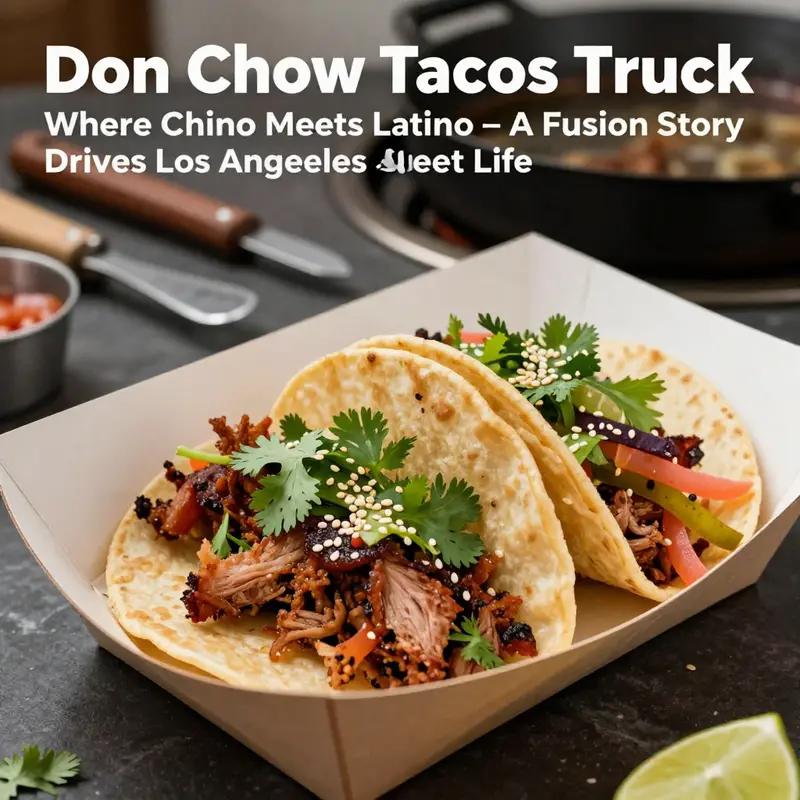
In the bustling corridors of Los Angeles street life, a compact mobile kitchen once carried more than food; it carried a conversation. It moved through markets, alleyways, and festival horizons with a promise to fuse two distinct culinary lineages into a single, portable experience. The truck’s essence lay not just in the flavors it offered, but in the premise behind them: Chinese and Mexican cuisines, each deeply rooted in community, technique, and memory, could meet on a tortilla, negotiate through heat and cooling textures, and emerge with something recognizably familiar yet startlingly new. The result was a rotating canvas of dishes that challenged expectations and encouraged diners to rethink what a taco could be when it learned from another palate without losing its own essence. This approach—tasting the old while embracing the new—helped shape a broader understanding of street food as a laboratory for cross-cultural exchange rather than a mere quick meal.
The menu philosophy rested on a simple, bold premise: take the everyday taco and push its boundaries by inviting bold companion flavors from another culinary world. A signature creation from this era exemplified the concept without naming it as a gimmick. Picture a crisp tortilla, hot from the grill, sheltering pork that has been marinated with a balance of savor and aromatics, a cabbage-based slaw for crunch, bright pickled onions to cut through richness, and a house-made, smoky sauce that stitches the elements together. A light dusting of crumbled cheese finishes the bite, adding a gentle creaminess that lingers after the heat fades. It is not a single ingredient but the choreography of textures and contrasts—crisp versus tender, tangy versus smoky, fresh versus seasoned—that turns a humble street snack into a small, contemplative dish. In this, the taco stops being a mere assembly of components and becomes a compact narrative about culinary collaboration across borders.
What set this truck apart was not only its audacious pairings but its dedication to quality and authenticity. The team approached the plate as a careful craft, insisting on ingredients that spoke to place and season. Local produce found its way into the kitchen, not as an afterthought but as the backbone of each dish. Sauces were made in-house, their depths born from slow simmering, careful balancing of sweetness, heat, acidity, and smoke. In a city as diverse as Los Angeles, where markets bustle with the season’s best, the truck tapped into that pulse and echoed it in every bite. This connection to place mattered; it grounded the fusion in respect for both traditions rather than letting it float as novelty. Each bite became a reminder that culture is not a cart of stereotypes but a living, evolving conversation that thrives when people eat with curiosity and patience.
The truck’s footprint extended beyond the plate. Its presence at neighborhood markets and food festivals helped spotlight a broader culinary movement—one that uses mobility to blur boundaries and invite conversation. The street becomes a stage where ideas can be tested, refined, and scaled in real time. Diners are not passive receivers of a recipe but co-authors of a tasting experience as they compare textures, aromas, and heat levels and decide how much of each tradition they want to carry forward. In this sense, the fusion tacos served as tiny ambassadors for cultural dialogue, inviting people to consider how food can honor origin while inviting evolution. The act of sharing such a dish often sparked conversations about technique, memory, and origin—about how a family’s mealtime routine could resemble a regional street-food ritual across oceans if you let curiosity steer the fork.
Yet the arc of this particular street operation also tells a quiet, instructive story about the life cycle of culinary experimentation on wheels. The Los Angeles food-truck ecosystem is fast-moving and intensely competitive, with operators racing to translate novelty into repeat visits. The archival footprints left by the truck—short-form posts and glimpses of daily menus on an inactive social channel—reveal a project that burned bright for a period and then receded from the public scene around 2015. The last update, now part of history, marks the moment when a project that challenged norms paused, leaving behind a compact but resonant imprint on how people think about fusion street food. The reasons for the pause are not always captured in public records, and the gaps invite reflection: sometimes the most important stories in culinary innovation are those that end with a quiet departure before they can be fully documented publicly. Still, the footprint endures in conversations about cross-cultural cuisine and in the way such experiments inspire future generations to imagine new pairings rather than rehash old ones.
What makes this example compelling within a broader culinary narrative is the dual weight of craftsmanship and curiosity. Craftsmanship kept the food honest; curiosity kept it alive. If technique provides the safety rails, fusion provides the horizon. The method used here—taking familiar forms and overlaying them with unfamiliar yet complementary cues—has resonated beyond the truck’s brief moment in the spotlight. It influenced how other cooks and street-food operators approached menu design: not by chasing trends, but by designing experiences that encourage diners to notice texture, temperature, and acidity as a suite of tools for storytelling. The result is a more nuanced palate in a city famous for its appetite for novelty, where the value of a dish often lies in the questions it raises as much as in the sensations it provides at the moment of tasting.
In this context, the importance of origin and place remains central. The concept of fusion, when executed with restraint and respect, becomes more than a clever pairing of ideas. It becomes a reminder that culinary identity is not fixed but braided—woven from the threads of family, community, tradition, and personal exploration. Street food, with its capacity to move and alter context, thrives on this braided identity. The truck’s approach showed that a tortilla need not be a canvas for a single heritage, but a surface where two histories might meet in a single, fleeting, satisfying moment. The result is that travelers and locals alike are reminded that good food can be both a memory of home and an invitation to explore something new.
For readers who want to understand how mobile food platforms can balance speed, sustainability, and innovation, the idea of treating the truck as a laboratory offers a useful lens. These mobile kitchens operate where people eat, work, and gather, and their best work often occurs at the edge of comfort. They teach aspiring cooks and established chefs alike that the heart of experimentation is listening—listening to the season, to neighbors, and to the traditions that shape our sense of flavor. They also demonstrate that the social value of food extends beyond nourishment; it can foster conversation, foster community, and help reframe what it means to share a meal in a city where cultures meet on every corner. As this chapter looks back at a single, influential fusion truck, it also points forward to how such plates—crafted with care and shared with openness—continue to ripple through urban food scenes, encouraging more diners to approach their plates with both reverence and curiosity.
The conversation about cross-cultural cuisine on wheels remains relevant not simply as a moment in time, but as a template for how culinary innovation travels. The memory of this Los Angeles truck serves as a case study in how a modest, well-executed idea can illuminate broader possibilities for what street food can become when it treats every bite as a chance to tell a larger story. For readers who want to explore the governance of sustainability in mobile food operations while embracing creative risk, there are resources that discuss how such ventures can balance efficiency with ethical sourcing and community engagement. sustainable practices for mobile food trucks offers a framework for thinking about the logistics behind flavor, not as an afterthought but as a core component of the dining experience.
For those who wish to dive deeper into the historical arc and the emotions attached to these plates, a broader reminder resides in the archived public record of the truck’s activities. The path this truck took—its brief run, its bold menu, and its eventual quiet pause—helps illuminate why fusion on the street captured imaginations and why diners still crave stories about how borders can be softened by someone who cooks with both audacity and care. The narrative is not merely about a dish; it is about the possibility that a single bite can carry a conversation across cultures, time, and taste buds, inviting each one of us to imagine what our own plates might disclose about who we are and who we want to become.
For more information and to glimpse the outward-facing side of this fusion project, readers can explore the official site that preserves its memory and offerings. https://www.donchowtacos.com
Where Chino Meets Latino: Crafting a Fusion Narrative and Brand Messaging for the Don Chow Tacos Truck
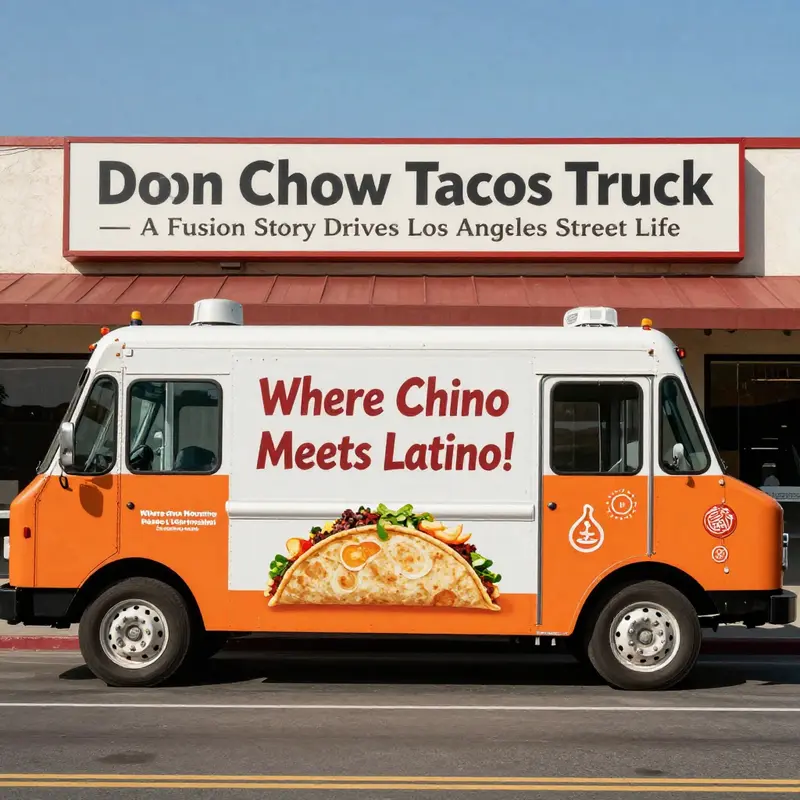
The Don Chow Tacos truck emerges in the record as a vivid case of urban fusion, a mobile kitchen that stitched together two distinct culinary lineages to tell a larger story about identity, experimentation, and shared appetite. Set against the sprawling, asphalted expanse of Los Angeles, the truck’s narrative did more than offer a menu; it offered a conversation. The Chinese roots and Mexican flavors did not collide so much as dance, each informing the other in ways that invited curious eaters to rethink what belongs on a plate and what belongs in a city. The brand’s core idea—Where Chino Meets Latino!—became a succinct, almost mantra-like signal that culture itself can be a dish prepared in collaboration. This is not merely fusion for novelty’s sake; it is an attempt to recount a lived urban experience where borders are porous and flavors can be bridges. The chapter traces how that narrative was built and broadcast, how it positioned the truck within a larger movement, and what its branding carried beyond clever combinations of ingredients.
At the heart of the Don Chow Tacos story lies a fusion identity that treats Chinese and Mexican flavors as complementary rather than competing. Rather than presenting one tradition as a fallback or a version of the other, the truck framed the cuisine as a dynamic dialogue. The culinary imagination depended on pairing familiar textures with unexpected twists, inviting patrons to perceive cross-cultural exchange as creative labor rather than cultural compromise. In branding terms, this is a deliberate reframing of hybridity as a productive, even celebratory act. The tagline functions as more than a slogan; it embodies a stance about urban life—one where different heritages coexist, mingle, and enrich the dining table as part of a larger social theater. The messaging carries a democratic invitation: come as you are, bring your questions, and taste the conversation shared by people who navigate multiple influences in their daily lives.
The urban context is essential to understanding the resonance of the Don Chow Tacos narrative. Los Angeles is a city whose streets tell stories in countless languages and whose corners host a spectrum of culinary experiments. In this environment, the truck’s fusion concept did not rely on niche appeal; it leveraged the city’s multicultural fabric to reach a broad audience hungry for novelty that still felt approachable. Real-time engagement, a hallmark of the fusion truck era, amplified this appeal. The brand understood that the audience did not merely pass by a mobile kitchen; they could participate in the story through updates, location shares, and social chatter. The vehicle became a moving stage where cultures could meet, discuss, and metabolize new ideas as a shared dining experience. The continuity between the day’s adventure and the next location’s revelation turned food into a form of social practice—an evolving narrative that followers could chase and contribute to through posts, photos, and conversations.
This approach sits within a broader industry pattern that linked culinary experimentation with a digital transparency that audiences found compelling. The fusion-truck phenomenon, popularized by early exemplars in the field, relied on a philosophy of openness: where the truck would be, what flavors might appear, and how the chef could improvise in response to demand. The role of social media here cannot be overstated. Platforms that enabled quick, public updates allowed a brand to cultivate a sense of immediacy and intimacy. A prospective dining route became a story to track, a performance to join, a collective experience to share in real time. The brand’s messaging reinforces a sense of community that historically has been difficult to sustain in quick-service formats. It reframes the line between producer and consumer, creating a participatory culture around food rather than a one-way transaction.
The Don Chow Tacos narrative also reflects a particular moment in the food-truck movement, one where cross-cultural cuisine was becoming a recognizable business model as well as a cultural statement. The lineage includes notable precursors who used location transparency and social updates to cultivate loyalty and curiosity in equal measure. A 2009 discussion in a major newspaper highlighted how fusion cuisine, coupled with live-location updates and open dialogue with followers, helped propel the food-truck concept into a recognizable urban industry. This context matters because it clarifies what the Don Chow Tacos truck was tapping into: a set of tools and expectations that could propel a small mobile operation into a broader cultural conversation. The brand’s real-time engagement strategy did not just attract customers; it invited them into a shared project of discovery—a community of eaters who tracked routes, debated flavors, and shaped the narrative around what it means to eat across cultures.
Of course, the arc of the Don Chow Tacos story is also a reminder of how fragile and contingent such narratives can be. Historical records show that the truck ceased active operation after a period in Los Angeles, and the social accounts that once carried its daily updates eventually quieted. Yet even as the truck stopped serving, the cultural conversation it helped seed remained legible in the way later fusion concepts framed their branding. The imagery of a Chinese-Mexican fusion in an urban setting became part of a lexicon for thinking about how food can both reflect and shape identities. In practice, the branding pushed the idea that hybrid identities are not simply a marketing angle; they are a social capability—the capacity to coordinate across cultures, to entertain ambiguity, and to welcome new interpretations of what a meal can represent.
For readers seeking a deeper sense of how this blending of cultures translates into branding, the Don Chow Tacos narrative offers several instructive takeaways. Fusion branding works best when it foregrounds hybridity as a value, not a gimmick. It should invite participation rather than prescribe a singular taste profile. Real-time, transparent communication through digital channels can transform a mobile kitchen into a shared stage, where a community of eaters co-authors the experience by showing up, sharing memories, and proposing future routes. The tale also cautions about the temporal nature of such projects. A clever concept can spark attention, yet sustaining momentum requires ongoing responsiveness to a diverse audience and a willingness to adapt while staying true to core ideas about collaboration and cultural dialogue. In that sense, the Where Chino Meets Latino! narrative remains a useful reference for anyone exploring how to position a cosmopolitan food venture in a city that already lives at the crossroads of many flavors.
For readers who want to situate this case within a broader research frame, one can consult industry-era analyses that trace how digital tools shaped the trajectory of fusion cuisine in urban markets. The historical thread connects the Don Chow Tacos truck to a lineage of mobile culinary innovators whose openness about location and process helped build trust and anticipation across a globalized audience. A useful external resource that captures the essence of this movement—its openness, its incentive for consumer participation, and its cultural ambitions—can be found in discussions of how fusion trucks leveraged social media to foster a participatory dining culture. https://www.nytimes.com/2009/06/12/nyregion/12food.html. This piece helps contextualize Don Chow Tacos within the broader social-technological ecosystem that made the fusion-truck narrative both legible and legible to a wide audience.
As you reflect on the Don Chow Tacos story, consider how its fusion narrative and brand messaging might inform contemporary branding strategies for mobile culinary ventures. The lesson is not simply that blending traditions can attract attention, but that doing so with a clear sense of audience participation, urban storytelling, and cultural dialogue can transform a truck into a rolling forum for community-building. The journey from an idea to a shared experience is paved with moments of improvisation, conversation, and a willingness to meet people where they live—on the street, in a line, under a sunlit sky, with a plate in hand and a story to tell. This is the enduring value of a fusion narrative built around a city’s everyday journeys.
Internal link: Trucks for Change: Community Engagement Initiatives
External reference: The New York Times piece cited above offers historical context for the fusion-truck movement and the role of real-time, location-based engagement in building audiences for mobile food ventures.
Fusion on Wheels: The Rise and Quiet Closure of Don Chow Tacos in Los Angeles
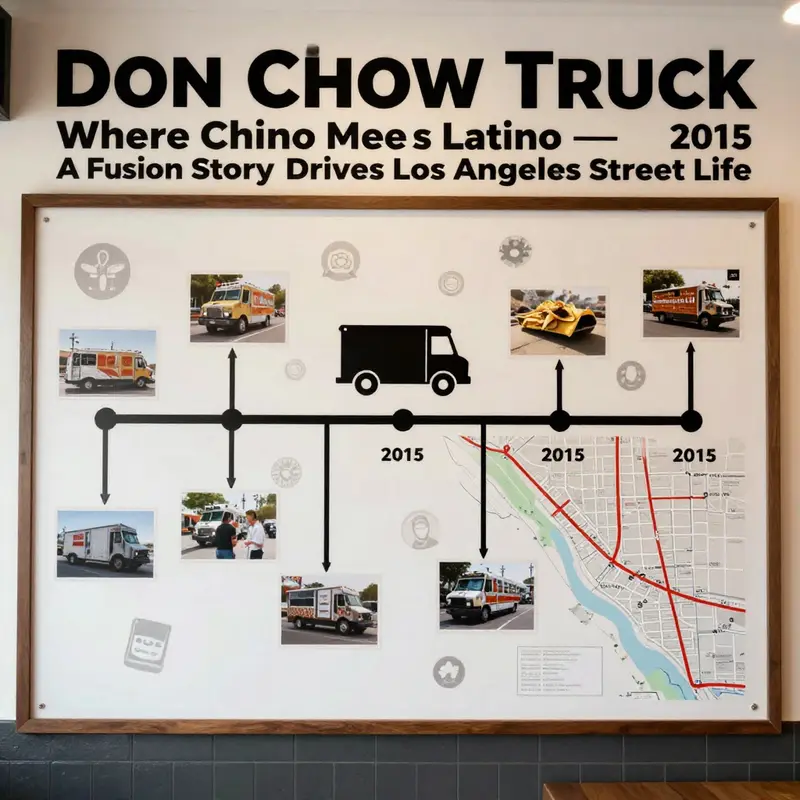
Don Chow Tacos stood out in the story of Los Angeles street food not merely for its menu but for its audacious premise: a Chinese-Mexican fusion truck that treated the street as a classroom where two culinary lineages could argue and harmonize in the same breath. The brand carried a compact philosophy that hinted at something more than a gimmick: a belief that flavor, technique, and memory could travel across cultures as easily as a map changes at a street corner.
In its heyday, the truck drew attention for a creative fusion taco that promised novelty while inviting a deeper conversation about technique and identity. Los Angeles, with its mosaic neighborhoods and year‑round street activity, offered a stage where mobility could translate cultural curiosity into flavor. The vehicle appeared in different neighborhoods, testing combinations against a diverse palate, proving that a portable kitchen could be both performance and classroom.
By early 2015 the operation had ceased. The closure was reported in quiet terms, but it spoke to the precarious economics of mobile dining: permits, location fees, shifting policies, and the costs of keeping a small team on the road. Don Chow Tacos did not simply vanish; its absence underscored how fragile even bold ideas can be in a city where the street is both opportunity and regulation.
As a memory, the truck lingers in public traces and conversations—posts that archived its presence, conversations among patrons, and the sense that fusion on wheels can spark curiosity even after the vehicle is gone. The episode remains a reference point for researchers and enthusiasts who study how street food, migration, and innovation intersect in urban space.
Ultimately the Don Chow Tacos story is less a single product than a case study in cultural experimentation on the move. It asks what endures when a mobile kitchen stops rolling: sustained dialogue, lessons for future vendors, and a reminder that the city’s appetite for crossing boundaries persists even as specific ventures fade. For readers seeking to understand how mobile operations can balance flavor, cost, and risk, the case invites exploration of sustainable practices for mobile food enterprises and the way digital traces preserve ephemeral histories.
Don Chow Tacos and the Digital Archive: Memory and Mobility in Los Angeles Street Food
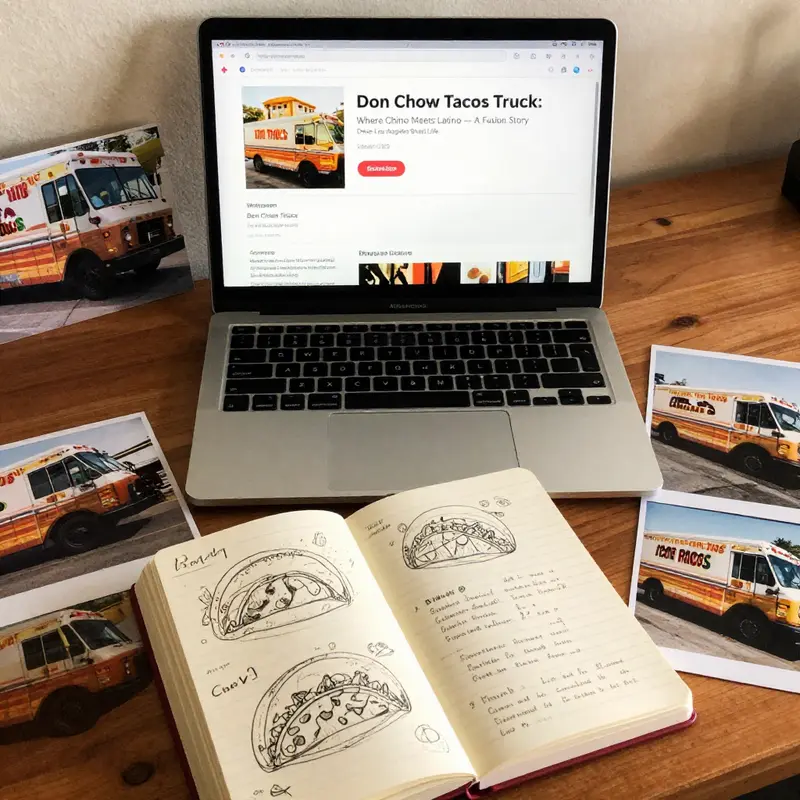
This concise analysis examines how a mobile street food venture braided Chinese flavors with Mexican taco forms and how its branding and online footprint shape culinary memory in Los Angeles. The archival record, including Wayback snapshots and Instagram posts, offers researchers a window into how urban mobility, immigrant entrepreneurship, and digital platforms intersect to create a durable, if fragmentary, public memory. The absence of a brick-and-mortar footprint does not erase impact; instead it concentrates attention on what remains in digital space: images, menus, brand language, and the choreography of service that helped audiences imagine a fusion kitchen as a shared cultural moment. The piece concludes by inviting readers to consider digital archives as active memory sites, where future scholars layer photographs with neighborhood histories and economic data to craft a richer portrait of early 21st century street culture.
Final thoughts
The Don Chow Tacos truck story is more than a short-lived fusion experiment; it’s a compact case study in how a bold cross-cultural concept can be packaged, marketed, and remembered in a city that thrives on mobility and memory. From its genesis in a Los Angeles street-food ecosystem to its memorable Chimale, the fusion narrative found a voice in branding that positioned culture as a conversation, not a collision. The cessation around 2015 leaves a vacancy that digital archives have since partly filled, preserving a memory of taste, technique, and storytelling. For urban commuters, the tale offers a reminder that a single cart can become a beacon of cultural possibility in a sprawling city. For outdoor enthusiasts, it demonstrates the power of a portable kitchen to energize a journey. For small-business owners and freelancers, it serves as a primer on branding with limited resources and the importance of a memorable narrative. For first-time pickup buyers, it highlights how a bold concept can travel, linger, and inspire future iterations—whether through new menus, new branding, or new collaborations. The memory of Don Chow Tacos endures in the fusion philosophy it championed and in the archived footprint it left behind, inviting future tastemakers to remix its ideas with fresh energy.