
Taco trucks have evolved from a curiosity to a dependable urban staple. In bustling city environments, a well-run mobile kitchen can turn busy sidewalks into steady income with the right mix of location, menu, and discipline. Real-world ranges from recent market data suggest monthly revenue in high-traffic markets typically lands between $15,000 and $30,000, with net profits after costs often sitting in the $3,000–$8,000 band. These numbers aren’t guarantees—seasonality, events, and regulatory costs all shape results—but they provide a practical framework for planning. Whether you’re a city dweller chasing extra income, an outdoor-enthusiast looking for a mobile culinary outlet, a small business owner or freelancer exploring a side hustle, or a first-time pickup buyer evaluating an entry point, the path to profitability begins with clear expectations and disciplined execution.
This article structures the reality around three pillars: Revenue potential in dense urban markets, the cost structure and margins that determine profitability, and the startup economics that influence capital needs, procurement choices, and long-term viability. Chapter 1 breaks down where earnings come from and how location, events, and traffic shape revenue. Chapter 2 translates revenue into margins, detailing cost of goods, labor, permits, fuel, and maintenance. Chapter 3 maps the initial investment, sourcing strategies (including used and compliant options), and how to sustain profitability over time. By the end, you’ll have a practical lens to estimate earnings, plan expenses, and decide if a taco truck fits your goals.
Riding the Hustle: Revenue Potential and Realities for Taco Trucks in High-Traffic Urban Markets
In dense urban landscapes where sidewalks act as stages and lunchtime lines become social rituals, a taco truck is a mobile kitchen tuned to demand. The core question of revenue is how much a taco truck can make, and the answer is a spectrum shaped by location, timing, pricing, and discipline. In high-traffic cores, a well-managed operation commonly reports monthly revenue in the range of roughly $15,000 to $30,000, with net monthly profits typically between $3,000 and $8,000. Those figures rise for standout routes and peak-event calendars, while slower corridors bring lower but steadier income. Costs are a major determinant: food costs around 30-35% of sales, labor about 20-25%, with fuel, permits, maintenance, insurance, and compliance consuming the remainder. When these elements align, the business can sustain cash flow suitable for reinvestment, debt service, and owner earnings.
Operational efficiency matters as much as price. A lean kitchen layout, clear menu design, and a fast, reliable service tempo increase throughput and average order value. Strategic equipment placement and minimized motion waste shorten wait times, turning cycles into consistent daily volume, especially during the 11:30 a.m. lunch rush, mid-afternoon lulls, and early-evening crowding. Beyond daily sales, events and recurring lunch routes can tilt annual totals toward the higher end of the spectrum.
Growth can come from scaling the concept with a second truck, which expands reach but adds coordination and compliance complexity. A scalable model requires repeatable kitchen processes, reliable staffing, and a strong brand that travels well across neighborhoods. In practice, revenue is a function of throughput, value, and costs, not merely the number of hours logged behind the wheel. With disciplined pricing, menu design, and cost control, a taco truck can build a sustainable path to profitability in a busy urban market.
For operators seeking broader context, ongoing education about market trends and best practices can support smarter growth and steadier cash flow.
null
null
Chapter 3 — From Seed Money to Street Profits: The Real Economics of a Taco Truck
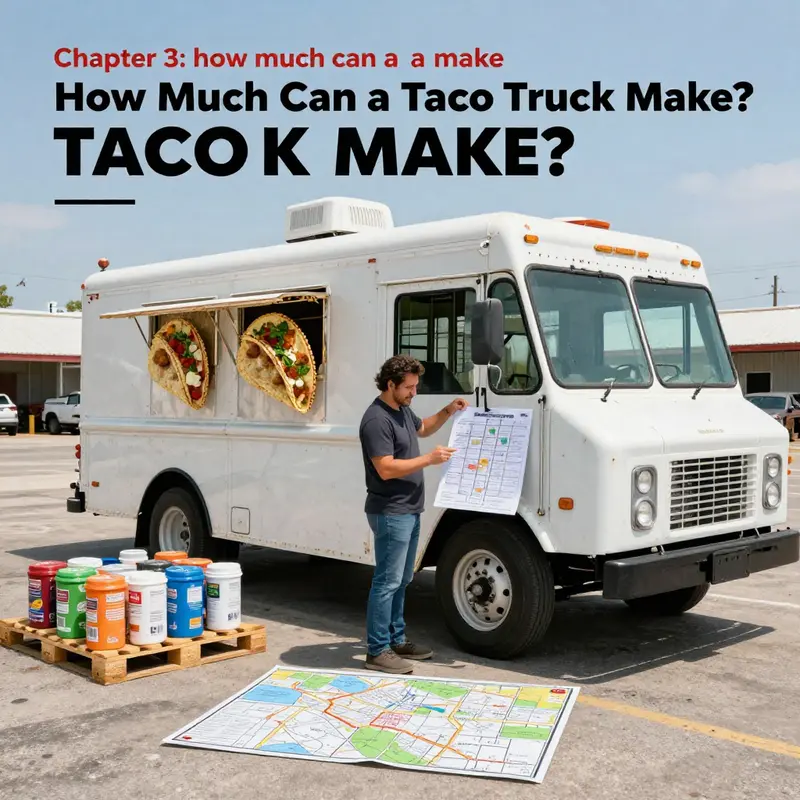
A taco truck does not start as a single dream of great flavor; it begins as a calculation. The operator steps onto a parking lot of uncertainties and opportunities, weighing how much capital, how to source ingredients, and how to turn daily street traffic into a reliable stream of dollars. The economics of a mobile kitchen are not a simple recipe but a balancing act that hinges on location, procurement discipline, and the discipline to grow beyond a single stand on wheels. When we chart the path from startup to ongoing viability, we encounter a spectrum of costs and outcomes that can look very different depending on where the truck runs, how it is built, and how well the business is managed. Yet within that spectrum there are consistent levers that separate a hobby fleet from a scalable operation that can sustain comfortable profits over time.
Startup capital is the first hinge. For most aspiring operators, the initial outlay sits in a broad band, typically ranging from fifty thousand to one hundred fifty thousand dollars. The vehicle itself matters, as does the equipment packed into the kitchen—refrigeration, grills, fryers, storage, and the means to keep food safe and service fast. The average cost for a fully equipped mobile unit sits around ninety thousand dollars, according to industry data in recent years. That figure captures not only the chassis but the heart of the kitchen, plus the necessary safety features and configuration that allow a truck to operate in multiple jurisdictions. Permits, licenses, insurance, and the first round of inventory add to the total and push the first burn rate higher during the ramp up into stable daily sales.
Procurement is the second key. A successful taco truck operator does not simply buy ingredients; they build a resilient, cost effective supply chain. Core items such as tortillas, meats, cheeses, and fresh produce must be secured through reliable distributors or direct relationships with local producers. Bulk purchasing, negotiated terms, and consistent quality control are essential to maintaining margins. Yet the quote unquote margins are sensitive to market dynamics. A notable 12 percent rise in meat prices reported in a recent agricultural analysis illustrates how quickly input costs can shift when supply chains tighten. In the long run, a disciplined procurement strategy—bulk buying when prices are favorable, a diversified supplier base to avoid shortages, and a clear understanding of yield and waste—helps stabilize gross margins even as commodity prices wobble.
Revenue in this business is closely tied to where the truck operates and how effectively it can tap into high foot traffic. In busy urban cores—downtown business districts, stadium perimeters, or transit hubs—daily sales can range up to four hundred to six hundred dollars on slower days and well beyond a thousand or more on peak days, depending on the crowd, the menu, and the cadence of events. Industry studies and operator reports suggest that monthly revenue in well-managed trucks in dense urban areas commonly falls in the roughly fifteen thousand to thirty thousand dollar band, with some operators pushing higher during festival seasons and near major events. In other words, the same vehicle and menu can deliver very different outcomes depending on the calendar and the neighborhood. The more intense the foot traffic, the greater the potential for repeat customers, and the more opportunities there are to cross-sell beverages, sides, and combinations that raise the average order value.
The pricing strategy is another crucial determinant of profitability. Most tacos move in a price corridor from about three fifty to six dollars, with specialty items commanding premium prices. When a truck can maintain food costs below thirty percent of sales, gross margins stay robust. Yet the broader cost picture—labor, fuel, maintenance, permits, insurance, and ongoing compliance—can erode margins if not carefully managed. In truth, overhead in this sector can absorb a sizable share of revenue, and for newer operators, that overhead can rise to as much as forty percent of revenue if they do not optimize routing, shift scheduling, and waste control. The math is simple but demanding: to reach a net monthly profit in a healthy range, revenue must comfortably exceed the sum of variable costs and fixed overhead, with a margin cushion for fluctuations in demand and the seasonal calendar.
That is where long-term viability hinges on more than just cooking. The most durable taco truck ventures tend to evolve beyond the immediate sale. They build brands that extend beyond a single truck through social media engagement, loyalty programs, and participation in food festivals that draw new customers into a familiar menu. Some operators evolve toward multiple trucks, event catering, or even a brick-and-mortar offshoot once a brand has established sufficient recognition. A 2025 case study highlighted by entrepreneurial literature notes that about three out of five taco truck businesses that survive beyond their first two years have diversified offerings or built a strong digital presence that keeps customers returning regardless of weather or location. The narrative then becomes about more than profits per month; it centers on the ability to adapt, to diversify revenue streams, and to maintain a brand that stands out in a crowded street-food landscape.
In practical terms, five elements tend to shape outcomes in this business: vehicle readiness and compliance, the reliability of the supply chain, the discipline of pricing and waste management, the ability to secure high-traffic locations or events, and the capacity to translate quick interactions into loyal customers. On the first front, a truck must be built not just for speed but for safety and regulatory compliance across jurisdictions. A kitchen that can be easily cleaned, maintained, and reconfigured saves downtime and prevents costly emergencies. On the supply chain front, establishing stable relationships with suppliers and maintaining a buffer of inventory helps prevent price shocks and stockouts that can derail service during the busiest hours. Pricing strategies that balance value with margin—offering some combo meals or bundled drinks—can lift average order value and dilute the impact of slow periods. Location strategies, meanwhile, require a mix of permits, schedule optimization, and an understanding of event calendars to maximize revenue opportunities without courting conflict with local ordinances or competing vendors. And finally, building a brand through consistency, storytelling, and community engagement ensures that repeat customers become a predictable element of the revenue model rather than a lucky byproduct.
The numbers from the market give a sense of how this translates into real outcomes. With careful management of food costs, labor, and overhead, a taco truck can realize net monthly profits in a band that sits roughly between three thousand and eight thousand dollars in many urban settings. The broader narrative from industry data suggests a plausible path to profitability that begins with solid volume and tight cost control, proceeds through disciplined procurement and smart pricing, and finds growth through branding and expansion. In a favorable mix of location, schedule, and customer demand, monthly revenues can push toward the higher end of the spectrum. In more average conditions, operators still find a viable earnings rate, provided they keep a tight grip on the cost drivers and maintain a reliable schedule for customers who look for them at predictable intervals.
Within this framework, the decision to invest in a specific platform or procurement approach matters a great deal. For many new entrants, the barrier is not merely the upfront investment but the ongoing discipline required to sustain margins. That means maintaining a steady pace of product quality and consistency, regularly evaluating supplier performance, and refining the menu to focus on items that balance popularity with margin. It also means recognizing when to adapt the business model—whether by venturing into catering, festivals, or pop-up collaborations—that can diversify revenue streams and lower risk during slower months. The path to viability is not a fixed line but a curve that bends with the market, the operator’s capabilities, and the willingness to innovate in the face of changing tastes and regulations.
An operator who understands these dynamics can translate a favorable turnover into durable profitability. They learn to set prices not merely to cover costs but to reflect the value of the experience—the aroma of fresh tortillas, the speed of service, and the consistent quality that brings customers back. They optimize their menu to reduce waste and improve throughput, while preserving the flavor profile that distinguishes their truck from others on the street. They build a routine around the busiest blocks and the most lucrative events, then leverage social channels to preannounce menus, specials, and locations so customers can plan their visits. And they stay mindful of the financial backbone of the operation: the balance between upfront capital, ongoing procurement, and the unavoidable costs of compliance and maintenance. In short, the economics of a taco truck demand a blend of culinary craft and financial discipline, where the best operators treat the business as carefully as they treat the flame and the pan.
For readers who want a practical lens on efficiency and sustainability, consider the value of adopting documented best practices in mobile kitchen operations. A forward-looking set of guidelines emphasizes not only cost control but environmental and community impact, aligning the business with responsible practices that can deepen customer loyalty and public credibility. This perspective dovetails with the wider conversation about the future of mobile food service in crowded urban spaces, where regulators, landlords, and customers increasingly expect operators to demonstrate reliability, safety, and efficiency. The result is a more resilient business model that can weather price fluctuations and labor market shifts while still delivering the culinary experience that draws people to the truck in the first place. In this sense, the chapter on startup economics becomes a forward-looking narrative about building a lasting, scalable enterprise that begins with careful money management and ends with a recognizable street brand that customers seek out again and again.
To anchor these considerations in concrete steps, operators should map out a basic financial model before they purchase a unit. A lean model begins with a realistic capex, followed by a detailed view of operating costs by month, including fuel, maintenance, insurance, licenses, and food cost targets. It should incorporate expected daily sales across typical week patterns, assess the impact of seasonal events, and test several pricing scenarios. The model should also outline a procurement plan with supplier options, cost targets, and contingency strategies for price volatility. If the model shows a healthy path to net profits within a reasonable run-rate, the operator can proceed with the investment with greater confidence. If the model reveals margins that remain tight under plausible conditions, the operator may decide to adjust the scope—perhaps starting with a smaller, used vehicle, a simplified menu, or a phased expansion strategy that reduces risk and builds cash flow gradually.
Finally, external benchmarks help ground this analysis. Industry observers point to the range of daily sales across major metropolitan areas, with higher end figures achievable through aggressive event participation and efficient routing. Even with a strong operator mindset, the business remains sensitive to external conditions such as weather, city regulations, and the cadence of local events. This is why the most successful operators treat the taco truck as a living system, one that requires ongoing optimization of cost controls, procurement, and market positioning. The long arc from startup capital to sustainable profitability is not merely a one-time hurdle but a continuous process of learning, adapting, and reinvesting in the brand and the kitchen that makes it possible. In that sense, the chapter aligns with broader industry insights that emphasize disciplined procurement, location strategy, and brand growth as the core engines of long-term viability.
For readers who want to explore further practical perspectives on sustainable practices in mobile food operations, a useful resource offers guidance on maintaining efficiency and reducing waste across the lifecycle of a mobile kitchen. sustainable practices for mobile food trucks. This reference helps connect the financial framework with the operational discipline that can translate cost savings into real profit over time. And for a broader industry benchmark that frames these numbers within national trends and regulatory considerations, see the National Restaurant Association report on mobile food service trends from 2024. It provides context for how operators across markets adapt to evolving consumer demand and policy environments in the mobile food space. External readers may wish to consult that broader picture to situate their own plans within current market dynamics and regulatory expectations.
External resource for further reading: https://www.nationalrestaurantassociation.com/insights/2024-mobile-food-service-trends
Final thoughts
Across urban markets, the potential for a taco truck to deliver meaningful monthly profits hinges on disciplined planning, precise location choices, and tight cost control. Revenue can scale with high-traffic spots, event calendars, and efficient service, while margins depend on ingredient costs, labor efficiency, and regulatory expenses. The path from concept to consistent earnings begins with a clear budget, a smart procurement plan (including considering used and compliant equipment), and a strategy to outperform peak-hour competition. If you align your menu, pricing, and operations with the realities of city life—short ticket times, resilient supply chains, and smart location scouting—you’ll turn a mobile kitchen into a durable, repeatable income stream rather than a one-off venture. The overarching message: start with solid numbers, optimize relentlessly, and remain adaptable to city rhythms and rules.