
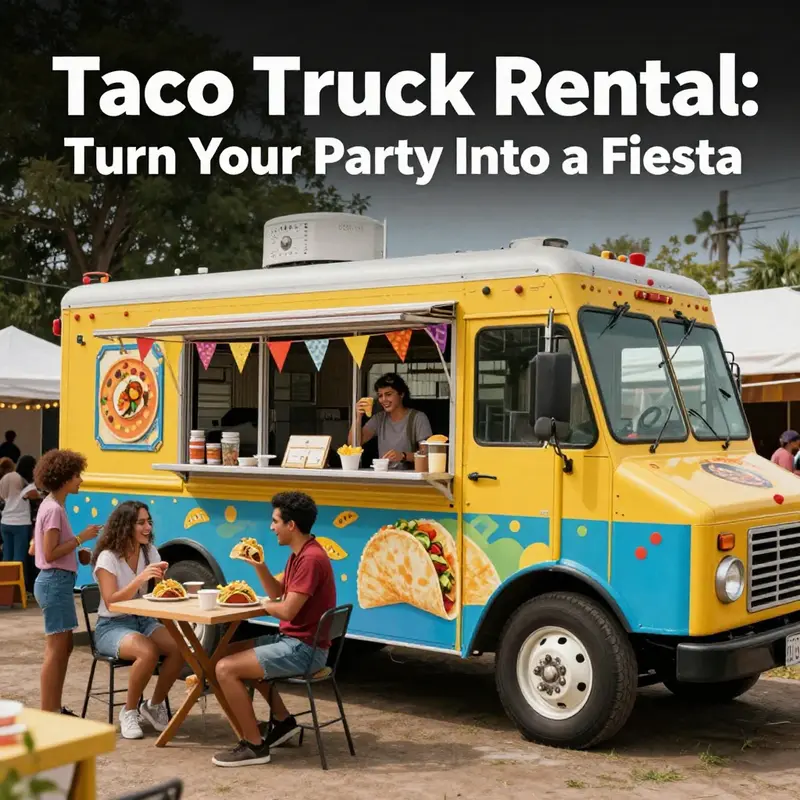
Renting a taco truck for a party is a great way to add excitement and flavor to your gathering. Whether you’re celebrating a wedding, hosting a corporate event, or throwing a neighborhood block party, taco trucks offer a delicious and convenient catering solution. But how much can you expect to pay for this culinary experience? This article dives deep into the costs associated with renting a taco truck, from the essential breakdown and influencing factors to rental options and regional pricing variations. We’ll also discuss how to select the right vendor for your needs, ensuring your taco truck rental aligns with both your budget and event size. By the end, you’ll be equipped with all the information you need to make an informed decision.
Taco Truck on Call: Decoding the Price Tag for Party-Service Catering
When you picture a taco truck rolling into a party, the image goes beyond sizzling grills and bright salsas. It’s a package of timing, service, and atmosphere that moves with the timeline of your event. Cost, in this picture, isn’t just a number slapped on a quote. It’s a reflection of what you require from the truck—how long it stays, what it serves, and how smoothly the operation runs from setup to teardown. The most common scenario for a standard party is a four- to six-hour window. In that frame, rental prices generally range from five hundred to fifteen hundred dollars. This spread is wide because the market recognizes that not all taco trucks are created equal. A basic setup with a standard taco menu often satisfies most gatherings, and the price typically includes the truck, its staff, a set menu, and the essential setup and cleanup. The logic is simple: you pay for a mobile kitchen that arrives ready to serve, with chefs and servers who know how to keep lines moving without disrupting the flow of your event. It’s a model built on convenience, but convenience comes at a price, especially when you’re trying to balance budget with guest experience.
Travel time is a factor that often sneaks into the final number. If your venue is a significant distance from the truck’s home base, a travel fee can add a meaningful line item to the quote. Some planners underestimate this cost until the truck is already loaded and the staff are on the road. The practical effect is that a party in a suburban backyard might come in at the lower end of the spectrum, while a venue on the outskirts of town could push the total higher, even if the menu remains similar. Understanding this nuance helps you compare quotes fairly and avoid sticker shock when the first estimate arrives.
For those seeking a more elevated experience, the price tag climbs quickly. Upscale or custom options—think gourmet tacos, theming, premium beverages, or extended service hours—can push the total well beyond the basic range. In such cases you’re not just paying for food on a truck; you are paying for a more sophisticated kitchen setup, faster service, enhanced presentation, and potentially a longer footprint at your event. The decision to upgrade often hinges on guest expectations and the event’s objective. If you’re hosting a milestone celebration or a corporate gathering where guest impression matters, the incremental investment can translate into a measurable benefit in terms of flow, crowd satisfaction, and the ability to serve a larger number of guests efficiently.
Beyond the surface numbers, it helps to understand the two additional price brackets you’ll encounter in the market when you widen the lens. Some industry discussions frame basic, ready-to-run mobile units at a level far above the typical party rental. In these discussions, a basic setup can range from roughly five thousand two hundred to eight thousand dollars. These figures usually reflect equipment that is ready to deploy with built-in lighting, robust electrical connections, and customizable aesthetics, and they’re often tied to units that resemble a compact restaurant on wheels. Such costs are more common when the aim is frequent use, higher durability, or a base that supports ongoing service, branding, and growth rather than a single event.
A more expansive tier exists for full-sized, heavily equipped mobile kitchens designed to support repeated catering or larger-scale operations. The price range here is typically from about fifteen thousand to forty thousand dollars. These trucks may feature advanced kitchen systems, heavy-duty refrigeration, and branding opportunities that can help a business scale. For a planner, these figures are less about one event and more about the asset’s lifetime value: how often you’ll use the truck, how long you expect it to serve, and how it might support future celebrations or recurring corporate events. The distinction between buying and renting is essential, because the same vendor who rents a truck for a one-off party might also operate or lease these larger units under different terms. The takeaway is to be precise about what you’re purchasing versus what you’re renting, and to ensure the contract clearly delineates use, maintenance responsibilities, and wear-and-tear expectations.
In practical terms, most party hosts will approach this decision by first clarifying the event’s duration and guest count, then shaping the menu and service style around what makes sense for the space and the budget. If the party involves a casual, outdoor setting with light passes of finger foods, a basic four- to six-hour rental with a standard taco offering is usually sufficient. If the aim is a high-energy experience with multiple taco stations, premium toppings, and a dedicated bartender or beverage service, you’ll want to discuss higher-tier pricing and a longer service window. When you request quotes, you’ll want to verify what’s included at each price point. Some vendors quote only the truck and the food, while others bundle in staff, setup, breakdown, basic side items, or even drinks. Ask explicitly about what is included so you can assemble an apples-to-apples comparison.
Another practical step is to gather quotes from several local providers and compare the same criteria. Ask for a breakdown of hours, staffing levels, and whether overtime is charged if the party runs late. In many markets, the most affordable option is not necessarily the best value. The speed of service, the consistency of output, and the staff’s professionalism can profoundly affect the guest experience. If lines are slow or the setup is messy, guests may not feel the event lives up to its promise, no matter how good the food tastes. Conversely, a slightly higher upfront cost can deliver a smoother service with a polished presentation and a more controlled guest flow. Such benefits can reduce stress for the host and create more time for mingling and celebration.
For readers weighing where to begin, consider this practical approach: start with a basic rental for four to six hours and request a menu that matches your crowd’s preferences. If you anticipate a lot of guests with dietary restrictions, confirm that the vendor can accommodate those needs without sacrificing speed. In addition, ask about power requirements and water supply for the truck, and whether the setup includes waste disposal stations or compostable serving dishes. These details matter in outdoor environments, where permits, weather, and space constraints can influence both the day-of experience and the cost. If you’re curious about how sustainability and efficiency play into the operation, you can explore sustainable practices for mobile food trucks, a resource that delves into how trucks manage energy use, waste, and materials on the move. Sustainable Practices for Mobile Food Trucks
Ultimately, the decision comes down to aligning the price with the value you expect from the experience. For many hosts, the most important value is whether the service keeps guests fed and entertained without creating bottlenecks or long wait times. A well-priced rental that arrives with a friendly, organized crew can be the difference between a party that feels rushed and a celebration that unfolds smoothly. It’s not simply about the cost of the tacos but about the entire service ecosystem—that is, the truck’s staff, its timing, and how it integrates with the day’s schedule. Small extras can sway a decision, too, such as whether the vendor provides decorative lighting, branded tent covers, or a choice of toppings that reflects the event’s theme.
As you plan, remember that the price you see is the starting point of a negotiation rooted in specifics: your guest count, the expected tempo of service, the complexity of the menu, and the geographic logistics of the event. The best approach is to be explicit about your priorities and to request a written breakdown that lists every component—hours, staffing, travel, overtime, and any additional services—so you can see where value is being created and where costs might be trimmed if needed. The process becomes less opaque when you treat quotes as a conversation about expectations rather than a single price tag. And when in doubt, ask for references or evidence of successful events that match the scale you’re planning. A vendor who can point to past events of a similar size and provide candid feedback about what worked—and what didn’t—will likely offer a clearer path to a satisfying outcome.
In addition to these considerations, the broader market dynamics of mobile food operations offer context for pricing. The cost of a taco truck—whether rented for a party or owned for ongoing catering—depends on the investment in equipment, reliability, and the ability to generate repeat work. A compact, ready-to-deploy unit has different economics than a full-scale kitchen-on-wheels designed for continuous events. For readers who want to widen their understanding beyond a single event, a broader price guide for mobile kitchens can be informative. For a broader context on market price dynamics, see https://www.foodtrucks.com/mobile-kitchen-car-price-guide/.
In sum, the price tag for a taco truck at a party is not a single line on a page. It’s a mosaic shaped by duration, menu, staffing, distance, and the level of service you expect. A four- to six-hour baseline is common and practical, while upscale or custom options exist for celebrations that demand a more immersive and polished experience. The smaller but meaningful differences—the quality of the staff, the efficiency of the service, and the ability to adapt to dietary needs—often determine whether a quote feels like a good value. By engaging with multiple vendors, clarifying what is included, and understanding the implications of travel and overtime, you can arrive at a price that reflects both the appetite of your guests and the rhythm of your event. This thoughtful approach transforms the question of cost from a simple number into a strategic decision about how your party will feel the moment the truck pulls in and stays through the last bite of dessert.
null
null
null
null
Costs Unfolded: Navigating Regional Variations When Booking a Taco Truck for Your Party
Planning a party that leans on a taco truck as the centerpiece can feel like chasing a moving target. The promise of sizzling tortillas, vibrant toppings, and a built-in sense of festivity can make a taco truck rental feel almost essential for a memorable gathering. Yet the price tag behind that sizzle can vary as much as the menu itself. When you start asking, “how much for a taco truck for a party?” you’re really probing a spectrum shaped by region, duration, menu scope, and the vendor’s standing in the local scene. The answer isn’t a single figure but an informed range that grows more precise as you define the event’s details and align them with the realities of your location. To understand what you might pay, it helps to frame cost not as a hurdle but as a system of choices, each with its own value and caveats. In practice, the journey from a rough budget to a firm quote begins with recognizing two truths. First, the basic rental usually covers the truck and its crew, a set menu of tacos and perhaps drinks or sides, and the essential setup and cleanup. Second, anything that departs from that baseline—gourmet options, themed experiences, longer service hours, or additional travel—tends to push costs upward, sometimes dramatically. Regional variation is the lever that explains most of the delta you’ll encounter between cities and countryside, between big metros and smaller towns, between a run-of-the-mill evening and a celebration that feels tailor-made. The price you see in a major metropolitan market often reflects more than a higher sticker price: it marks the shadow of stricter regulations, higher insurance premiums, and a crowded marketplace that drives demand. In places like large coastal or inland cities, operators must navigate a dense web of permits, health inspections, and insurance requirements that protect both the business and the guest. Those compliance costs don’t vanish when a party ends; they’re rolled into the moment you sign the contract. In practical terms, that means a fully equipped mobile taco operation can start at a comfortable tier in rural areas and rise quickly in urban centers, where the same 4- to 6-hour offering may land in the range of $1,500 to $3,000 or more for a single event. It’s not simply the taxes or the tip that inflates prices; it’s the cost of doing business in environments with higher wages, higher risk, and stronger demand. The contrast with smaller cities or rural regions is instructive. There, the same service can fall between roughly $800 and $1,500 for a comparable window of service. The economics are straightforward: lower overheads and less competition among vendors can translate into leaner price tags and better bargaining power for hosts who approach a few providers with clear expectations. It’s tempting to view the spread as a single variable—location—but in truth, region acts through multiple channels that accumulate into the final quote. Labor rates, for example, differ from one place to another, and they influence not just the cook who crafts the tacos but the servers who keep the line moving and the staff who handle setup. Equipment costs, too, are region-sensitive. In certain locales, the trucks themselves may be newer, with advanced equipment, premium-grade refrigeration, and enhanced power supply needs for outdoor events. Those features can underpin more complex menus or speed up service, but they also add to the driver’s overhead and, inevitably, to the cost. Then there are the travel fees. If your venue lies beyond the operator’s usual service radius, a transportation charge is frequently added to compensate for fuel, time, and wear-and-tear. The farther the distance, the more the fee tends to climb, and in regions where travel distances between towns are long, this can become a meaningful portion of the total bill. For events in or near parks, plazas, or other public spaces, the local environment might require extra coordination with authorities or additional permits. The possibility of permits or zoning requirements is not mere red tape but a real cost to factor in. Some cities enforce health, fire, and occupancy rules that mandate documentation, inspections, or on-site compliance staffing. In certain scenarios, organizers have reported permit costs rising into the vicinity of two to five hundred dollars, depending on the park’s rules and the city’s health department policies. These fees are rarely hidden in the provider’s quote; more often they show up as an add-on or an itemized section on the final bill. The practical impact is that even a carefully planned menu and schedule can drift when the regulatory environment shifts. To manage that drift, the most effective approach is to engage early with local providers and ask for a breakdown that aligns with your city’s specifics. A sensible, often overlooked step is to discuss all-inclusive packages. Vendors occasionally offer packages that combine staff, ingredients, and setup into a single price. In practice, this can be a savvy way to lock in cost predictability, sometimes delivering better value than a la carte arrangements, especially for hosts who want a straightforward planning process. It’s essential to read the fine print, though. All-inclusive offerings may cap certain menu items or limit customization. They can also define a service window that might not perfectly align with your event’s timing. Still, for many hosts, the security of one consolidated price—without surprise surcharges after the party ends—can be worthwhile, particularly when coordinating a weekend celebration with multiple moving parts. The price layers don’t exist in a vacuum. They intersect with your menu ambitions, your guest count, and the quality of experience you’re aiming to deliver. A basic taco set—crispy shells hot off the griddle, a handful of classic fillings, a standard beverage option, and a straightforward setup—will typically sit at the lower end of the spectrum. Upgrading the offering with premium proteins, house-made salsas, or more diverse sides elevates the culinary experience and nudges the price higher. Themed trucks, which bring ambiance in addition to food, can also tilt costs upward. Some hosts discover that what feels like a simple concept—a taco truck with a distinctive design, a curated playlist, or a chef who engages guests with stories about the menu—translates into a higher perceived value that guests remember. In other words, the sense of occasion can be a valuable currency, especially when the host’s goal is to create a distinctive event rather than a kitchen-on-wheels routine. For those who want a more precise handle on figures, the prudent move is direct quote-seeking. Contact local providers, share your event’s date, location, guest count, and desired menu, and ask for a transparent price breakdown. Compare apples to apples: keep an eye out for what’s included in each quote, such as staff hours, cooking equipment, service style, and whether travel and permit fees are baked in or itemized separately. Platforms that facilitate vendor comparisons can be useful for sanity checks, but nothing beats a direct conversation with an operator who understands the local environment and can tailor offerings to your space and your timeline. When you walk through the numbers, a few practical strategies emerge. First, anchor your budget with a realistic guest count and a conservative estimate for add-ons. If you’re planning a party that lasts into the late evening, discuss whether extending service time would increase the cost by a predictable increment or if there is a higher tier that scales with hours. Second, consider location versatility. If you’re flexible about the venue, you might negotiate a shorter travel radius or a more compact operation with a vendor who can still deliver top-quality ingredients without inflating the overhead. Third, explore combined services. Some operators partner with beverage or dessert vendors to offer complementary packages that can improve perceived value and streamline logistics, particularly for backyard celebrations or corporate events. In all of this, the human element matters. The person behind the quote—the vendor who translates your needs into a feasible plan—often shapes the experience as much as the equipment does. A responsive, transparent contractor who explains how each component contributes to the final price can help you feel confident about the decision, which in turn influences how you present the plan to guests and co-hosts. As you prepare to book, remember that the goal is not merely to minimize cost but to maximize reliability and enjoyment for your guests. Food trucks bring a certain tempo to a party—the clatter of prep, the aroma of fresh tortillas, the quick service at a high-volume window, and the improvisational charm of a live-oven flex. The value is not just in what’s on the plate but in how smoothly the event unfolds. In this sense, regional variations in price reflect not only different business costs but different expectations and different capacities to deliver a party that feels effortless. If you’re trying to map a budget to a vision, a practical approach is to draft a scale—from essential to preferred—and then align quotes with that scale, pushing the vendor to help you understand where there is flexibility and where there is non-negotiable cost. The process is iterative, and the best outcomes arise when you treat it as a collaborative design problem rather than a one-off price negotiation. To illustrate how these ideas play out in real life, imagine you’re planning a city-wide party with a guest list of two hundred people. In a metropolitan hub, a four- to six-hour service with a standard menu might start near the upper end of $2,000, given the intensity of city regulations, insurance, and staffing needs. A vendor who is particularly responsive and has a strong setup could still deliver a memorable experience within that ballpark, especially if you opt for a slightly leaner menu or a shorter service window. In a smaller city or rural setting, you could see a broader range of quotes that cluster around $1,000 to $1,500 for the same duration, with room for upgrade if you want a chef’s tasting menu or a broader beverage selection. In either scenario, the upfront step that pays dividends is gathering quotes with a shared brief and asking pointed questions about what is included, what is optional, and what would incur additional charges. When you do that, you’re arming yourself with a decision toolkit that helps you balance budget, experience, and reliability. You’re also building a relationship with a vendor who can scale or adjust as your needs evolve, perhaps for a future event or a different guest count. The broader takeaway is that while regional cost differences can feel daunting, they are not a sign that you must compromise. They are a map of opportunity: a chance to choose a configuration that aligns with your location, your date, and your desired vibe. For hosts who want to explore further, a practical path is to use a trusted directory to connect with providers, then compare notes across several options before committing. In this chapter’s exploration of regional variations, the central idea is clarity and context. The more you know about the specific pricing drivers—labor, insurance, permits, travel, and the value of a well-run service—the more confident you’ll feel in deciphering the final bill. And with the right approach, you’ll end up with a taco truck experience that not only fits your budget but also elevates your party into something guests remember long after the last salsa jar is emptied. For a broader view of where to find taco trucks and how to compare options, you can explore external resources such as Eventbrite’s taco-truck listings to gauge availability and nearby options. External resource: https://www.eventbrite.com/d/food-and-drink–events/taco-trucks. Additionally, you can read about the broader community impact of mobile food services at the linked internal resource trucks-for-change-community-engagement-impact.
Vendor Selection Reimagined: Matching the Right Taco Truck to Your Party Budget
Planning a party around a taco truck brings color, aroma, and a playful energy that few catering options can match. The right truck does more than feed guests; it creates a micro event, a focal point where guests linger to decide which taco to chase first and where lines become conversations. But beneath the sizzle lies a practical equation. A budget guides every decision—from the number of crew and the depth of the menu to the extent of set-up, service style, and how long the truck will stay on site. For most hosts, the baseline reality is clear: a standard taco truck rental for four to six hours typically costs between five hundred and one thousand five hundred dollars. That range reflects a continuum—from a lean, efficient operation that covers core tacos and basic sides to a more polished presentation with beverages, specialty toppings, and a team delivering quick, attentive service. Understanding this baseline helps you anchor conversations with potential vendors and prevents sticker shock later in the process.
Among the factors that swing the price, the type of truck and its operational requirements top the list. A basic vehicle with a straightforward menu and a compact crew will be cheaper than a more elaborate setup that features rotating griddles, extra cooking stations, or an extended service window. Travel beyond the vendor’s home base adds another layer of cost, as crews must commute, fuel, and sometimes overnight lodging are needed. The all-in package often includes the truck, the chefs and servers, a set taco menu, and the essential clean-up after service. Yet many hosts discover that upwards of two thousand dollars can vanish quickly if they opt for gourmet or themed concepts, longer hours, or premium beverages. The practical approach is to start with the core menu and fold in enhancements only if your budget permits. By acknowledging these levers early, you can negotiate with confidence and avoid surprises when the contract lands on your desk.
Beyond menu breadth, the design of the truck itself matters. For hosts working with a tight time frame or a site with limited access, a hydraulic food truck—a design that eases permits and pop-up logistics—offers an adaptable choice. These units typically emphasize efficient layouts that streamline setup and service, which can reduce labor time and make scheduling more predictable. If your event unfolds in a space where a full kitchen on wheels would be impractical, a hydraulic model can be the difference between a smooth service and a late-night scramble to finish cooking in a corner of a parking lot. The bottom line is not novelty but reliability: the right design balances speed, safety, and standards with the issue of cost. As you compare options, ask vendors how their equipment handles traffic flow, queuing, and downtime, because even the best menu can stall if the truck’s layout creates bottlenecks.
Venue context matters as much as the food. An office campus, a festival ground, or a college quad each brings its own logistics and constraints. Power availability is often the deciding constraint. Some trucks rely on electricity for lights, warmers, and, in some cases, cooking systems, while others run on propane or other fuels. A few innovative setups use hybrid or battery-assisted equipment, but these choices come with their own charging needs and runtime limitations. When a site lacks ready access to electricity or a safe fuel supply, a vendor may impose an additional charge or suggest a different configuration that keeps service running smoothly without compromising safety. In close-quarters environments, such as office courtyards or shared campus spaces, a compact truck with a modest footprint and dependable maneuverability can outperform a larger, more glamorous rig. If a rotating cooking system or specialized gear is part of the plan, ensure the venue has the necessary outlets or safe propane connections, and verify that the surrounding area can accommodate waste disposal and grease management without disrupting neighbors or building management. For hosts with a long list of constraints, mapping power, water, and waste flow ahead of time is not overkill; it’s prudent, and it helps prevent days of back-and-forth changes after a deposit is placed. For a deeper look into equipment power considerations, see the external reference below and balance what the site can practically support with what you want to deliver in flavor and atmosphere.
Menu strategy intersects with budget in a direct way. Most vendors offer a core lineup that includes a handful of taco fillings, some standard sides, and perhaps a basic drink option. Once you confirm the core, you can layer in more expensive items or premium toppings—but each addition compounds the price. A practical approach is to design a streamlined menu with 3–4 taco fillings, a couple of sides, and one beverage option, then reserve a premium items for guests who want them, at a separate line or a paid upgrade. This strategy helps you control costs while preserving the party’s flavor profile. It also reduces the risk of overordering or producing under the heat of a busy service window. Remember: guests care about flavor and speed as much as variety. A tight, well-paced service with consistent quality often feels more valuable than a longer menu that runs cold as the line grows. In this context, the budget isn’t a ceiling so much as a framework for a predictable, enjoyable experience.
Pricing conversations are most productive when you walk in with clarity on what the vendor will deliver. Ask to see a written scope of work that includes the crew count, service style (self-serve vs. attended stations), setup and breakdown times, and how waste will be managed. Confirm whether beverages are included or if drinks will be offered separately, and specify whether toppings, garnishes, and sauces are pre-portioned or made-to-order. A reputable vendor will spell out what is and isn’t included, and will attach copies of permits, insurance, and safety certifications as part of the proposal. When you receive estimates, compare apples to apples: are you paying for a staffed service that handles everything, or are you being asked to supply some components yourself? Clarify payment terms and deposit schedules early, and ask about any refundable contingencies for weather or site access. A responsible vendor is willing to walk through a contingency plan that keeps the party on track even if a delay occurs. This level of detail protects both sides and ensures that the final price aligns with the experience you expect.
Logistics extend beyond the quote. Availability matters; a popular weekend slot can command a premium or require a longer lead time for booking. If you’re considering multiple vendors, create a simple table of what each offers and the corresponding costs, but keep the comparison high-level to avoid confusion. Once you select a vendor, lock in the date with a clear contract, a deposit, and a mutually agreed timeline for menus, tasting if offered, and final headcount. On the event day, designate one person as point of contact for the kitchen team, manage guest flow around the truck, and build in a buffer for peak service. The end goal is a smooth, coordinated moment when warm, flavorful tacos are ready to go the moment guests are ready to eat. With careful planning, your budget can accommodate a memorable culinary centerpiece rather than a logistical headache.
To keep deliberations grounded in budget, remember that a little flexibility can unlock better value. If a vendor’s base package feels tight, ask what it would take to add a couple of menu items or a modest beverage option within the same cap. You might discover that a modest premium yields a more satisfying guest experience, because it reduces queues and repetition while keeping the kitchen on pace. Conversely, if you must preserve funds, consider focusing on a smaller window of service and using a single, reliable truck rather than an ambitious, multi-truck display. The goal is to balance performance, reliability, and taste against monetary constraints, not to chase a flashy image that won’t translate into real enjoyment for guests. In the end, good vendor selection combines practical constraints with people skills—the ability of the team to adapt to the venue and to communicate clearly with you and your guests.
Part of that practical mindset is using the right resources to inform your decisions. When you’re weighing equipment and layout choices, consider this guiding tip: Choose food truck equipment wisely. It’s a reminder that the payoff of a well-matched truck design is often a shorter service window, easier access for guests, and fewer last‑minute surprises. For a deeper dive into the technical side of truck design and power needs, you can consult industry guides that discuss hydraulic configurations, fuel considerations, and safe operation in different venues. External resource: https://www.example.com/hydraulic-food-truck-guide
Final thoughts
Renting a taco truck can be a fantastic way to enhance your event with delicious food and a fun atmosphere. Understanding the costs and factors involved will help you navigate the options available and select the vendor that best fits your budget. Whether you’re looking for a standard taco truck experience or something more unique, taking the time to research will lead to a memorable gathering for you and your guests. So, let’s taco ’bout making your next party a hit!