
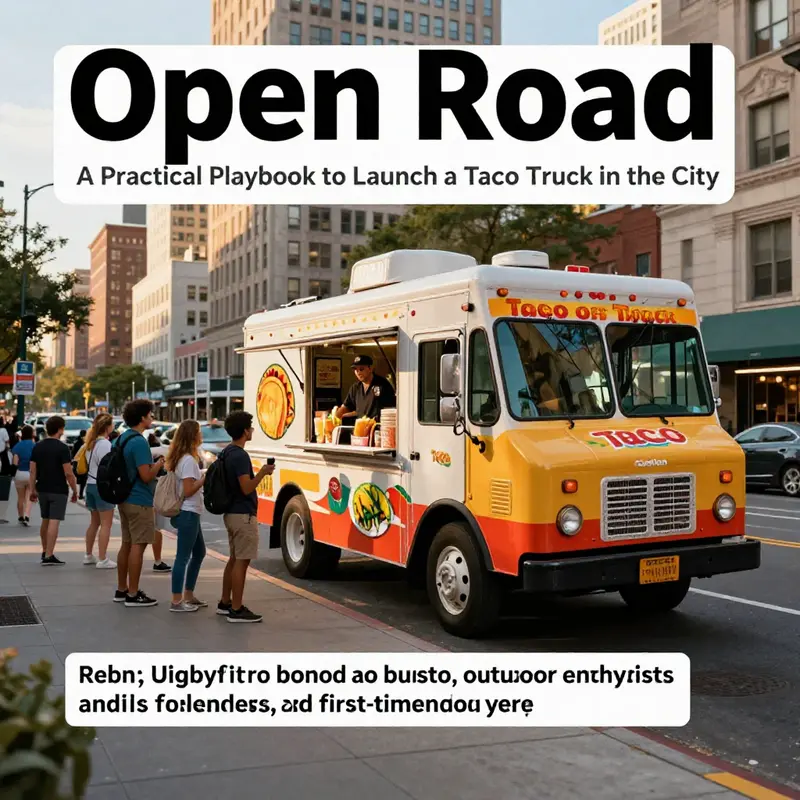
City life loves speed, flavor, and convenience—and a taco truck can be the perfect answer for urban commuters, outdoor lovers, and aspiring small-business owners. This guide breaks down how to open a taco truck in a way that fits a bustling schedule, a smart budget, and the realities of city regulations. You’ll start with planning and licensing—the foundation that keeps your truck on the right side of the law and aligned with customers’ expectations. Then you’ll move to vehicle choice, equipment, and operations—because a great menu is only as good as the kitchen that makes it. Finally, you’ll craft a brand and growth plan that turns first-time buyers into loyal fans, partners, and future opportunities. Each step is connected to real-world considerations—from where you’ll park for lunch crowds to how you’ll stand out at a weekend festival. Whether you’re an urban commuter looking for a dependable lunch option, an outdoor enthusiast who wants a post-hike bite, a freelancer seeking a side hustle, or a first-time pickup buyer testing the waters, this roadmap is built to be practical and actionable.
Chapter 1 focuses on planning and licensing essentials—the foundation that helps you translate a tasty concept into a compliant business. Chapter 2 shifts to the vehicle, equipment, and day-to-day operations—how to select a kitchen-on-wheels that delivers consistent quality in tight spaces and variable weather. Chapter 3 closes with brand, marketing, and growth—how to create a memorable identity, engage your audience, and expand your routes and revenue without losing your core values.
Along the way, you’ll see concrete steps, checklists, and real-world considerations. We reference official resources like the U.S. Small Business Administration’s guidance on starting a food truck, along with typical permits you’ll likely encounter—licenses, health inspections, and mobile-vendor permissions. The goal is a holistic, end-to-end view: concept, compliance, kitchen design, customer engagement, and sustainable growth. By aligning planning, operations, and marketing from day one, you’ll reduce risk and position your taco truck to thrive in the city’s rhythm.
From Planning to Permits: The Essentials of Launching a Taco Truck
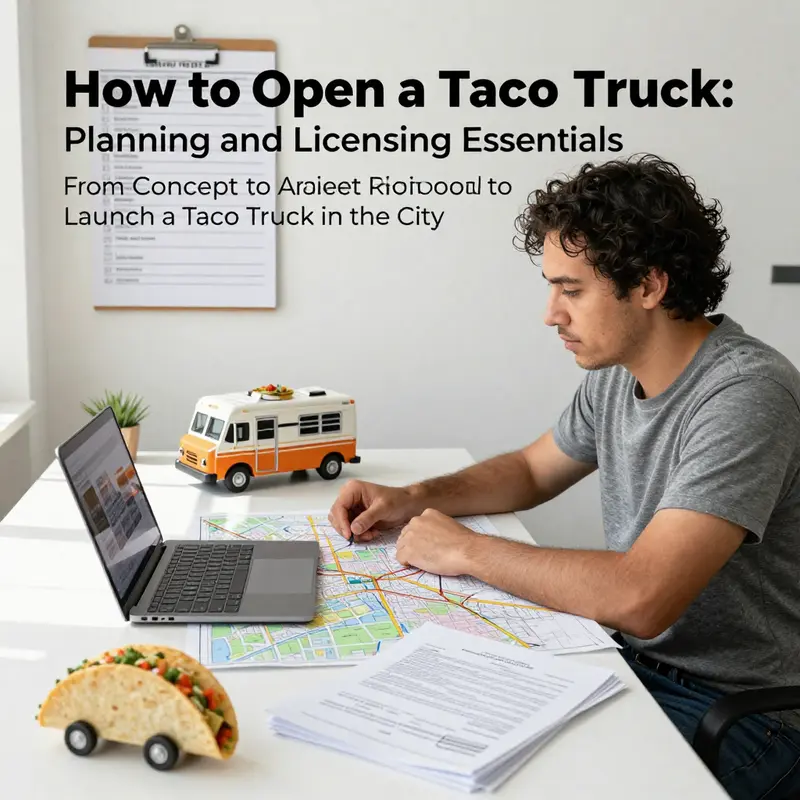
Launching a taco truck begins long before the first sizzle of a grill. It starts with a vision of what you want to serve, where you want to serve it, and how you will run a kitchen that can move as freely as the customers who crave it. The road from concept to curb is paved with decisions that ripple through every part of the business: the menu, the neighborhoods you aim to reach, the licenses you must secure, and the gear that will keep the operation clean, safe, and fast. In practice, the path is a careful blend of creative planning and meticulous compliance. You need a compelling concept that resonates with a real audience, a plan to turn that concept into a consistent, high-quality product, and a readiness to adapt as you learn from the street. The taco truck, in its essence, is a portable restaurant, but it is also a rolling business that must meet the same standards of service, safety, and accountability as a fixed-location operation. When you align your menu with a clear audience, you set the stage for steady demand at predictable times and places, which makes scheduling, staffing, and purchasing more straightforward. The beauty of a taco truck is that you can chase foot traffic and event crowds rather than waiting for customers to find you. Yet the corollary is clear: if you try to reach too many different markets at once, the quality of your product and the consistency of your service can suffer. A sharp focus on a few core offerings—authentic, fusion, or vegetarian—paired with a strong sense of where you want to operate helps you tune the rest of the business to fit.
Licensing and permits constitute the backbone of any legal operation. They are not a friction-filled wall to push past; they are the entry gates that ensure public safety, fair competition, and predictable operating hours. Requirements vary widely by city and state, and there is no one-size-fits-all list. The typical framework, however, includes a general business license, a food service permit, a health department clearance after inspection, and a mobile vendor permit or a specific street-food cart permit. In some places, you will also need event permits if you plan to park near parks, campuses, or during festivals. The critical step is to research your local regulations early and revisit them as you refine your route. Zoning laws may restrict where you park, while some jurisdictions impose limits on operating hours or the types of neighborhoods where a mobile unit can operate. The more you know before you begin, the fewer surprises you will face when the truck is ready to roll.
The process of securing licenses is not merely bureaucratic theater; it is a practical map of how your business will function safely in public spaces. You should plan for a health inspection that validates the sanitary design of your kitchen, the reliability of your cold storage, and the proper separation of raw ingredients from ready-to-eat foods. A business license legitimizes your venture and links you to the tax and regulatory framework that governs every successful enterprise. A dedicated food-handler or safe-food-practice certification is often required for employees who handle raw ingredients, and it is a signal to customers that you take cleanliness seriously. In many jurisdictions, you will also need to demonstrate adequate waste management procedures, including how you handle grease, used oil, and food scraps. These elements may seem mundane, but they are the operational lifeblood of a mobile kitchen.
The vehicle you choose matters almost as much as the plan you write. Your kitchen will be installed in a commercial vehicle, and the choice you make affects reliability, safety, and how well you can scale up your operation. Refurbished delivery trucks offer a familiar layout and robust space, while converted cargo vans can provide a compact, efficient footprint. Some operators opt for custom-built mobile kitchens, which allow you to tailor the work flow precisely to your menu and service style. Regardless of the route you take, the vehicle must meet a set of stringent safety and sanitation standards. A reliable refrigeration system, a cooking surface that is both powerful and controllable, and a waste disposal plan that keeps the space clean during busy hours are not luxuries; they are prerequisites. You will also need proper ventilation, which protects staff from heat and smoke while ensuring a comfortable working environment. The layout should facilitate a smooth line from prep to service, with clearly defined zones for washing, chopping, cooking, and plating. When you map the kitchen, you should picture the most efficient path a customer travels—from looking at the board to picking up a finished plate. A well-designed truck minimizes motion, reduces the chance of cross-contamination, and speeds up service, which is essential when a line forms at lunchtime or during a crowd at an event.
The gear that fills the kitchen—grills, fryers, refrigeration, prep tables, and a dependable point-of-sale system—forms the operational spine of your taco truck. Investing in durable, safe equipment is not optional; it is the foundation that supports every menu item you serve. Reputable suppliers who meet safety standards and quality norms are essential. In North America, equipment that bears UL certification helps reassure you and your customers that electrical components meet essential safety criteria. For operators considering international suppliers, quality certifications such as ISO 9001 and safeguards around material specifications, like the use of corrosion-resistant metals, can significantly reduce risk. A basic but robust setup includes a capable grill for searing proteins, a fryer or pan for crispy toppings, a reliable reach-in or under-counter refrigeration unit, sturdy prep surfaces, and a sanitary hand-washing station. A compact, efficient layout for prep and service reduces fatigue for staff and speeds throughput during peak hours. The equipment list also includes practical tools—quality knives, cutting boards, sanitation brushes, thermometers, and a practical POS system that can function offline when coverage is spotty. While the equipment is physical, its impact on your business is almost behavioral: it shapes how you prep, how clean you stay, how quickly you react to rushes, and how consistently you can reproduce a menu item across a busy shift.
Alongside the hardware, people are the living engine of a taco truck. A small team can carry a large portion of your success if you recruit with care and train with clarity. Even in a compact operation, you should have defined roles for food preparation, cooking, order taking, and cleaning. Training should be continuous, but the core program must cover food safety, personal hygiene, cross-contamination prevention, and customer service. The way you train communicates your brand’s standard of excellence to your customers and to the people who work with you. It is equally important to design an onboarding process that makes new hires feel capable and valued, even when the pace of a lunch rush makes the kitchen feel like a fast-moving stage. Clear expectations about portions, plating, and the timing of each order help suppress confusion and mistakes. A simple daily checklist—clean station, stocked ingredients, functioning equipment, sanitized utensils—forces a culture of accountability. When your staff understand not only what to do but why it matters, you create a more resilient operation that can handle sudden surges without sacrificing quality.
Branding and marketing are not about logos alone; they are about telling a consistent story of what your taco truck stands for. A memorable name, a coherent logo, and a recognizable color palette create cues customers can associate with your flavors. The real power of branding comes from the way you present yourself across locations, social media, and on the street. By sharing your daily locations, highlighting menu changes, and inviting customers to special events, you fashion a sense of anticipation. A well-executed social media presence does more than drive traffic; it invites community engagement, which is particularly important for mobile businesses that depend on repeat customers and word-of-mouth. Loyalty programs, limited-time offerings, and playful, honest communication can help your brand feel approachable while still standing for quality and consistency. A consistent service experience—friendly staff, prompt orders, and flavorful food—will turn first-time tasters into regulars who seek you out near their offices, campuses, or favorite event venues. The marketing plan does not end with a launch party; it is a living, evolving conversation with your customers, and it should be designed to scale as you explore new spots and neighborhoods.
The operational pulse of the business emerges once you start testing in the real world. A phased approach—beginning with a test route or a pop-up—allows you to observe traffic patterns, gather feedback, and adjust the menu, pricing, or schedule without committing to a long-term lease or permanent storefront. Real-world testing also reveals the rhythm of your service: how long it takes to refill ingredients, how quickly orders move through the line, and how much waste you generate on a hot day. Feedback loops become your most valuable asset. You can solicit input in person, through a simple tablet survey, or by pairing with a local event organizer who can help you understand the reasons customers choose you over other options. The data you collect informs whether you should adjust the dishes, tweak the price points, or reposition your truck at different times or locations. A disciplined approach to financial tracking—monitoring sales, costs, and profits on a daily basis—helps you spot trends before they become problems. If a location consistently yields lower margins, you might reallocate your hours to a more lucrative route or experiment with new menu items that carry higher perceived value.
Beyond the mechanics of licenses and compliance, there is a broader strategic question: how to protect your brand and ensure you can grow beyond a single truck. The business world often treats a strong brand as intangible, yet it is as real as the grill you light every morning. A case worth considering, though it lives in a different jurisdiction, is illustrative of the kind of protection you may eventually seek. The trademark for the name TACO TRUCK was registered in China for dining and lodging services, which shows how brands can travel and how localization matters when you expand. If you plan to grow beyond your first city, you will need to register your trademark in other countries to secure your identity and prevent infringement. This is not merely a legal formality; it is a practical safeguard for your investment in a unique menu, a recognizable truck, and a distinctive serving style. The process of trademark protection should be part of your long-term strategy, not an afterthought. When your brand becomes a signal that customers trust and seek out, you will want to preserve that signal as you operate in new markets and in different regulatory environments. The expansion plan may begin with another truck on a rotating route, a pop-up in a new neighborhood, or partnerships with events that bring in a different crowd.
The practical path to sound supplier relationships is equally important. If you are sourcing equipment or components from international manufacturers, it is essential to verify safety and quality standards and to ensure that suppliers can meet your needs for reliability, communication, and after-sales support. You should look for suppliers who can provide documentation of ISO 9001 quality management and who guarantee that equipment conforms to recognized safety standards such as UL in North America or CE in Europe. The due diligence you perform at this stage is an investment in uptime and service continuity. It is not unusual for a small misstep—like missing a critical spare part during a peak service period—to derail a planned weekend event. When you pick suppliers who can speak clearly about installation, maintenance, and parts availability, you improve the odds that your truck runs smoothly even on the busiest days. As you evaluate potential partners, consider not only the price but the entire package: technical capability, the clarity of communication, the speed of response, and the quality of post-sale support. These factors influence how quickly you can recover from a hiccup or scale up as demand grows.
Throughout this journey, it is useful to anchor your actions in a clear, location-specific plan. Government resources, local business development centers, and official licensing tools provide the map you need to navigate permissions and compliance. They can help you identify the precise documents to prepare, the fees you will encounter, and the timelines you should expect. While the process may feel knotty at first, it is also an opportunity to build trust with the communities you serve. By showing up prepared with a clean kitchen, fully licensed status, and a predictable schedule, you demonstrate professionalism that can translate into repeat business and steady partnerships with event organizers, office buildings, and campus life managers. The next step is not only about meeting requirements but also about designing your business to endure beyond a single season. By treating licensing, branding, equipment, and staff as an integrated system rather than separate hurdles, you create a durable foundation for your taco truck—one that can pivot with demand, travel to new neighborhoods, and keep multiple revenue streams moving at once.
As you contemplate the legal and practical landscape, remember that real-world guidance exists to help you through the maze. The U.S. Small Business Administration’s licensing and regulatory guidance is a trusted starting point for entrepreneurs pursuing a food truck venture in the United States. This resource provides location-specific instructions that can prevent missteps and help you align with local standards. In addition, a well-considered approach to branding, equipment, and people will turn a mobile kitchen into a reliable business with a future. For those who want a practical, nuts-and-bolts checklist that spans permits, vehicle preparation, and operational readiness, starting with a structured plan can help you stay focused amid the daily bustle of a street-side enterprise. The story you tell with your truck—the flavors you amplify, the neighborhoods you serve, and the way you care for your team and customers—will define the trajectory of your venture far more than a single recipe or a one-time launch event. If you invest in planning and compliance now, you increase the odds that your taco truck becomes a popular, enduring presence on the street where people live, work, and gather.
For further, practical guidance on licensing and regulatory steps tailored to your location, consult your local city or county government website or official resources, such as the U.S. Small Business Administration’s licensing tools. This site offers up-to-date, location-specific information on required permits and helps entrepreneurs navigate the complex process of launching a mobile food business legally and efficiently. If you want to deepen your understanding of equipment selection as you build toward launch, you can explore practical insights on choosing food truck equipment wisely to inform your procurement process and help you avoid common pitfalls. Choosing Food Truck Equipment Wisely In the end, the goal is not merely to open a truck but to open a resilient business that delights customers, protects staff, and stands up to the rigors of a busy street.
External resource for further guidance: https://www.sba.gov/business-guide/starting-a-business/start-food-truck
Rolling Toward Flavor on Wheels: A Taco Truck Playbook
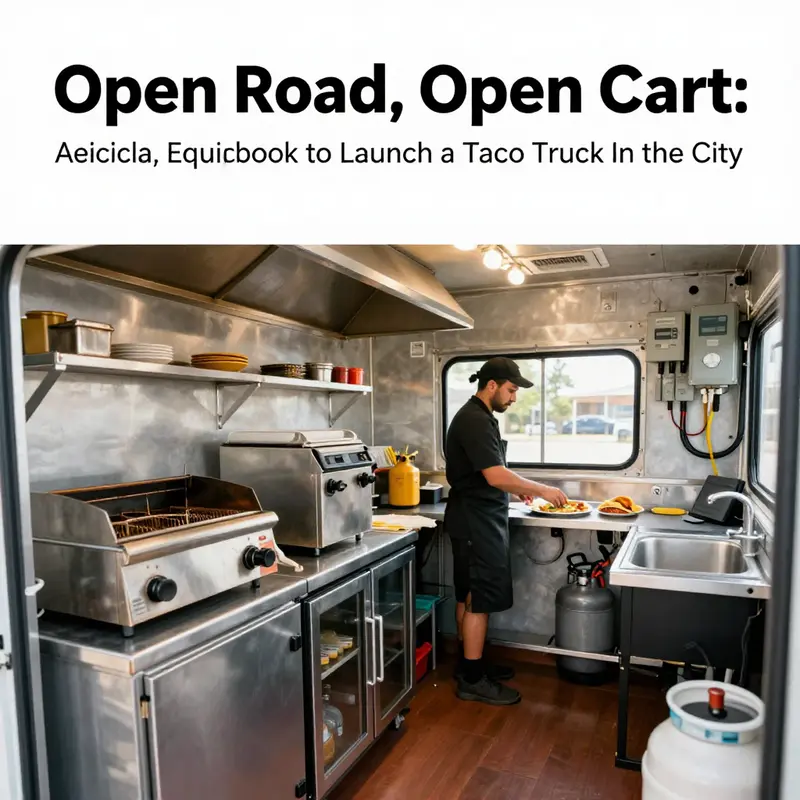
A practical guide to turning a dream of a taco truck into a reliable mobile kitchen. Focus on three pillars: the vehicle, the equipment, and the daily rhythm. Start with a clear concept, choose a layout that fits your menu, select compact, durable gear, and establish standard operating procedures to ensure safety, speed, and quality on every service.
Brand, Buzz, and the Road Ahead: Building a Taco Truck That Scales
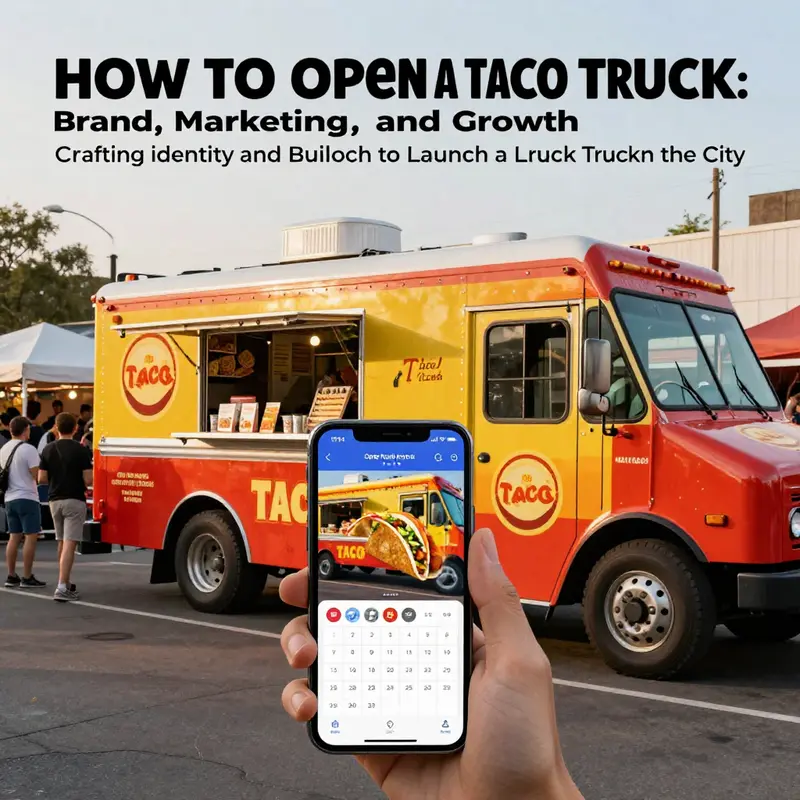
Brand is not an afterthought for a taco truck. It is the compass that guides every decision, from the name on the truck wrap to the cadence of your pop-ups, from the stories you tell on social media to the way you train your crew to greet a line of hungry people. In a market that looks crowded at a glance, a clear, protectable brand is your first form of differentiation. It creates recognition without requiring a new menu every time you roll into a different neighborhood. It also guards you against confusion and dilution as you grow. Imagine you spot a truck with a bright name, a consistent color palette, and a short, compelling origin story. You will remember it. You will seek it out again. That is the kind of memory a strong brand builds, and memory is the currency of repeat business on wheels. Branding, in this sense, becomes a practical engine for growth because it reduces the friction of customer acquisition. People do not just buy a taco; they buy a brand’s promise of flavor, reliability, and a sense of belonging to a community that consistently delivers on that promise. The challenge is not to chase the newest gimmick but to craft a narrative and a visual identity that stay true as you scale.
A practical starting point is to think through the brand as a living system. It starts with a name that is distinctive and legally yours. It continues with a logo and color scheme that can be reproduced across vinyl wraps, napkins, packaging, and digital assets. The most enduring brands in street food do not rely on slogans that wax poetic for a moment and fade. They rely on a short, repeatable story about who you are, where your ingredients come from, and what you believe in. The branding process becomes a protection plan as soon as you have a name. Early brand-name clearance can prevent costly rebranding later when you begin to expand. The lessons from the broader food-truck world emphasize a simple truth: the sooner you lock in a unique, protectable brand, the faster you can scale without sacrificing clarity or inviting legal trouble.
This is also where intellectual property enters the street-food conversation. A generic-sounding name may be easy to say, but it is not easy to own. A name that sounds generic in one market can be risky if it clashes with an existing trademark elsewhere. The world is a patchwork of local rules, and a brand that travels fast must consider that travel in the legal sense as well. The smart operator conducts early brand-name clearance and seeks trademark protection in the markets where plans to operate will take shape. Beyond trademarks, a consistent domain name and social handles across platforms help preserve the brand’s identity online, which is increasingly how people discover and decide where to eat on a given afternoon or evening. In today’s connected landscape, your online presence becomes almost as important as the physical presence of your taco truck.
Marketing, then, becomes less about chasing trends and more about building a reliable channel for storytelling and engagement. The science here is not mysterious. Social media is the stage on which your brand performs daily. Platforms like Instagram and TikTok reward vigor and transparency. A steady cadence of visually vibrant posts—shots of fresh tortillas fanned on a prep table, sizzling meat on the grill, and the joyful faces of customers—creates a living catalog of what you offer. But more than pretty pictures, the channel rewards authentic narratives. People connect with stories, not just menus. So, tell the story of your sourcing. If you work with local farmers or partners who share your values about sustainability, let your audience know. If your family has a history of cooking, or if a particular spice mix has a story handed down through generations, share that too. Those details humanize the brand and invite customers to become part of a larger micro-community around your truck.
The most resilient growth plans treat marketing as an integrated system rather than a one-off effort. A practical plan blends visual content with location intelligence. Regular posts that announce your daily route and hours convert casual drop-ins into habit. Real-time location updates during peak hours or at event pop-ups turn passersby into a crowd, and a well-timed post about a limited menu item or a special offer can drive impulse visits. The value of a content calendar cannot be overstated. It allows you to coordinate posts with events, market days, or collaborations, boosting visibility in the moments when potential customers are most attentive. A consistent visual language helps, too. When a truck has a uniform color palette, a consistent font, and a recognizable logo across every surface, the brand becomes easier to remember. In a world of mobile kitchens where the next stop could be a few blocks away from yesterday’s, consistency is a competitive advantage.
A powerful aspect of branding is how you relate to the community around you. Local engagement creates trust and turns customers into ambassadors. Your truck’s presence at farmers markets, neighborhood fairs, university campuses, and office park lunch corridors is both a market test and a brand-building exercise. Each event is a canvas that tells a different facet of your story: the flavors you honor, the pace you keep, the way you treat staff, and the degree to which you participate in the vitality of the local scene. When a truck becomes a familiar and welcome fixture in a neighborhood, the word spreads, not just through formal advertising but through word-of-mouth and shared experience. The most successful operators cultivate relationships with event organizers, other local vendors, and even potential partners who can amplify your reach. And because food is inherently social, your marketing should invite participation. Give away a few samples at a charity event, host a spontaneous live-cooking session, or partner with nearby venues for cross-promotions. These gestures create social proof and deepen the emotional resonance of your brand.
Another pillar in branding and growth is safeguarding the brand’s integrity as you scale. The temptation to drift toward a cheaper, faster build-out or a less stringent supply chain grows with the number of trucks. Yet the risk of brand dilution increases with every new surface and menu permutation. A rule of thumb borrowed from broader brand practice is to codify what you stand for in an operating playbook. This includes a standardized voice in all communications, a precise recipe framework, and a clear standard for what the brand will and will not do as you expand. A uniformly high standard of equipment, packaging, and service is part of this. If the brand promises a certain level of hospitality, you must ensure every unit delivers it. That’s why the growth discussion naturally leads to governance mechanisms like partner agreements, co-branding guidelines, and a centralized training program that travels with any new truck. The objective is not to catch up with growth by sacrificing quality, but to grow in a way that preserves it.
The growth conversation is incomplete without considering the pathways to scale that many operators pursue. Partnerships with established brands can be a fast route to scale, especially when those brands bring a recognizable identity to new markets or times of day when demand is high. Franchising or multi-truck co-branding can deliver rapid expansion if you can translate your brand’s story and your operating playbooks into replicable systems. Commissary-style arrangements, where a centralized kitchen supplies multiple trucks, can improve efficiency, reduce waste, and stabilize supply while maintaining brand consistency across locations. Each of these models imposes new requirements on your brand governance. You will need detailed standardized operating procedures, precise recipes, and a robust data backbone that records sales, inventory, and customer feedback across units. The goal is to preserve the brand promise while expanding the footprint.
Operational scale, for its part, rests on a few practical anchors. First, a dependable supply chain. The best growth stories are built on relationships with reliable suppliers who can deliver high-quality ingredients on schedule. Second, a standardized equipment and build-out strategy. The trucks you acquire on day one should be compatible with a broader fleet intent. Third, a clear, tech-enabled ordering and POS system that can track inventory, sales, and customer data across multiple units. A scalable system gives you the clarity to plan capacity, price tastefully, and maintain margins as you grow. Fourth, training that travels. SOPs for food prep, service, sanitation, and safety are not optional; they are the backbone of consistency. Your staff should be able to replicate the same level of service and flavor at every stop, whether a single truck operates in a busy urban center or a five-truck network rolls through a regional festival. The aim is not to complicate the operation but to make complexity manageable by turning it into repeatable steps.
Legal, safety, and compliance considerations thread through branding and growth more than most operators anticipate. Local health and business permits remain the gates that separate an idea from a functioning business. Vehicle safety standards, electrical and gas compliance for kitchen equipment, and general insurance all shape the feasibility of expansion. IP protection is not a one-time task; it is an ongoing discipline as you enter new markets. The risk of brand confusion increases the moment you begin to operate beyond your original city, where there may be similarly named concepts or conflicting marks. A proactive approach—clearing names, securing marks, and aligning with local regulations—ensures growth does not stall on legal grounds. In practical terms, this means building a regulatory and compliance checklist into your expansion plan. Before you add a second truck, you confirm health permits in the new jurisdiction, ensure your commissary agreement is compliant with state or regional rules, and verify that your packaging and labeling meet local standards. These steps, while administrative, are essential to sustainable growth and brand protection.
The financial side of branding and growth is not an afterthought either. A robust business plan should quantify the costs of branding assets, the expected lift from marketing activities, and the incremental margins associated with expansion. Start-up branding costs—logo development, truck wraps, signage, packaging—must be weighed against forecasted revenue from higher traffic and repeat customers. Marketing investments should be calibrated to the channels that deliver the best returns, often social media and local partnerships in the early stages. The deeper the growth plan, the more important it is to model scenarios: a base case, an optimistic case, and a pessimistic case. These scenarios illuminate the capital needs, the timing of break-even points, and the feasibility of adding new units or entering new markets.
To translate these ideas into action, a practical, phased roadmap can be invaluable. Phase one centers on brand and legality: settle on a brand concept with a protected name, clear trademark paths, register the business, and secure the necessary health and vendor permits. Phase two focuses on build-out and capability: acquire a compliant food truck, outfit it with essential equipment, and craft SOPs for all critical activities. Phase three marks the marketing launch: develop a visual identity, launch social channels with a targeted content calendar, and begin local event participation to drive early traffic. Phase four targets operational stability: refine the menu for consistency and margins, build inventory systems, and establish a cycle of feedback from customers and staff. Phase five looks to growth: evaluate scalable models, create a replication playbook with standardized recipes and training, and secure financing or partnerships that enable expansion. The emphasis in each phase is not merely on moving forward but on moving forward with a clear, repeatable standard that preserves brand integrity as you scale.
This approach yields practical, translatable benefits for someone starting a taco truck. Begin with a strong, protectable brand so you avoid legal conflicts and build recognition quickly. Leverage social media and local partnerships to maximize visibility and embed your truck in the community. Prioritize operations that scale: reliable suppliers, compliant equipment, efficient workflows, and standardized processes that reduce variability. Consider growth avenues early, but ensure consistency of quality and experience across all units. Prepare for regulatory and safety requirements in each market you plan to enter, because compliance is the backbone of sustainable growth and long-term profitability. The brand you craft today becomes the platform from which you launch your first marketing sale, your first multi-location rollout, and, eventually, your first meaningful partnership.
In the spirit of practical navigation, consider how these ideas translate into everyday choices. When you select a brand name, check not only for availability but also for potential conflicts in markets where you intend to operate or expand. When you design a logo, think about how it will look on banners, uniforms, napkins, and digital profiles. When you prepare your marketing calendar, align it with events that draw your target audience and with holidays or campus rhythms that create predictable footfall. And when you plan growth, outline where you need to partner, what you will replicate, and how you will train your team to preserve the brand’s essence no matter how many trucks you bring into the fold. The end is not a single destination but a scalable pattern of brand care, customer connection, and disciplined execution.
If you want, a more detailed blueprint can be developed that tailors this framework to a specific city or region, including a sample budget, and a staged timeline. There is value in watching real-world outcomes unfold and then adjusting your plan accordingly. For those who are curious about broader industry dynamics and IP considerations as you scale, a broader literature base emphasizes early brand protection and consistent storytelling as core levers of growth. And as you prepare to test a route or pop-up, remember that the first impression is not only about the taste of a taco but also about the memory your brand creates in the moment you first encounter a hungry crowd on a street corner. The road ahead is long, and branding is the fuel that keeps you moving with clarity and purpose.
For readers who want to connect branding with community impact and ongoing engagement, consider how community relationships can amplify your brand in meaningful ways. A well-tended local footprint, anchored by reliable service and authentic storytelling, can turn a truck into a neighborhood hub rather than a fleeting spectacle. See how community engagement initiatives can augment brand value and long-term loyalty here: community engagement impact for mobile food trucks. And for those seeking official guidance on how to translate these ideas into a legally compliant business model, the U.S. Small Business Administration’s Starting a Food Truck guide offers structured, federal-level guidance that complements local requirements. It can be a crucial companion as you translate this branding and growth framework into a practical, compliant plan: https://www.sba.gov/business-guide/starting-a-business/start-food-truck.
Final thoughts
Opening a taco truck is a journey that begins with a solid plan and strict adherence to local requirements, followed by a kitchen that performs reliably in any city corner. When planning and licensing are paired with a practical vehicle setup and a compelling brand, you create not just a meal on wheels but a repeatable experience that urban communities will seek out. The path—planning, operating, and growing—forms a virtuous cycle: strong foundations enable consistent service, which builds trust and steady demand, which in turn funds smarter expansion. Remember, the city rewards preparation with speed, efficiency, and opportunities to reimagine where and when people eat on the go.