
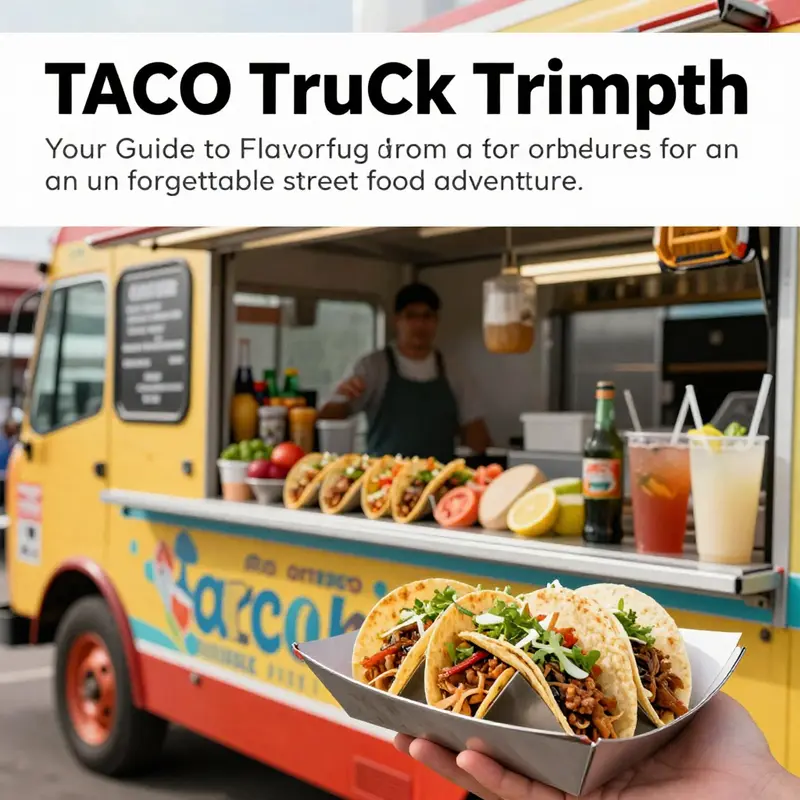
Taco trucks are culinary staples in urban settings, beloved for their vibrant flavors and community spirit. While their informal atmosphere might seem intimidating for first-timers, ordering from a taco truck is all about enjoying the experience and discovering delicious flavors. In this guide, we’ll explore the nuances of taco truck life, including how to approach these colorful trucks, navigate their menus, and customize your order just the way you like it. We’ll also cover payment options and tips for making the most out of your taco feast. With this knowledge, you’ll confidently embrace the taco truck culture, ensuring each visit is as satisfying as the last!
Beyond the Window: Mastering the Craft of Ordering from a Taco Truck

The moment you approach a taco truck, you step into a microcosm of street food imagination. Sizzling fat, citrus zest brightening the air, and the hum of conversation swirl together as cooks move with practiced rhythm. It is a setting where simplicity and speed meet craft and culture. The art of ordering here is not a parade of long choices but a coordinated, respectful interaction that respects the pace of the line, the heat of the grill, and the freshness of the ingredients. To truly savor this experience, you start before you reach the window by becoming a prepared, considerate chooser who can articulate a clear want and a flexible sense of possibility. This is about more than food; it is a brief ritual that connects you to a community of eaters, cooks, and neighbors who rely on a vibrant street food ecosystem that travels with the sun and stays for a busy lunch rush or a casual evening bite.
A taco truck operates with a simple economy. The window is the hub, the flame the engine, and the menu a living map of the day. The most effective approach is to be prepared. If you know you want tacos, burritos, or quesadillas, decide your core preference before you step forward. You may also consider how many people you are feeding and whether you want to sample a few different fillings. Preparation translates into speed for everyone and keeps the queue moving so that the line does not become a barrier to the next hungry person. In practice, being prepared means knowing what you want and any preferences like no onions, extra cheese, or a desire for extra heat, all of which help the cook tailor your order quickly and accurately.
When you reach the window, greet the cook with a simple and courteous hello. A brief hello signals respect and sets a positive tone for the exchange. Then state your order in a clear, unhurried way. A straightforward format helps the vendor assemble your meal without needing to pause to confirm details. For example, you might say one soft taco with carne asada, salsa verde, and pickled onions, or two tacos with al pastor, pineapple, and extra cilantro. If you want to try a couple of variations, you can offer a second small order or request a mix of fillings. The key is clarity over complexity. If the line is long, keep it concise yet complete so the cook does not have to repeat or guess.
Shells and fillings form the heart of the taco truck experience, and the choice of base dramatically shapes the sensation in every bite. The soft corn tortilla, warm and pliable, provides a gentle base that lets juicy fillings ride on a cushion of corn sweetness and a touch of starch. It is the default for most traditional fillings because it holds together well while allowing the flavors to mingle. The hard shell, crispy and bold, offers a contrasting texture and a sturdier bite that stands up to heartier fillings, though it can overpower delicate toppings if used indiscriminately. The puffy taco presents a lighter, airy pocket that can cradle meat and cheese with a fun, almost souvenir-like texture. Where you begin your order matters, but what matters even more is how you pair the shell with your chosen filling. A lean, bright filling such as carne asada often sings on a soft corn base, while a richer mix like carnitas can benefit from a sturdier shell or a puff for balance.
The fillings themselves are the true personality of the taco truck. Carne asada, al pastor, carnitas, chicken, lengua, and a selection of vegetarian options offer a spectrum of textures and flavors. Carne asada brings charcoal-grilled depth and a clean beefiness that pairs well with verde or roja salsas. Al pastor offers a citrusy, spicy sweetness with a touch of pineapple that brightens the palate. Carnitas delivers slow-tender pork with a caramelized edge that can be intensified by a squeeze of lime. Pollo, or chicken, brings versatility through grill marks and subtle seasoning, while lengua adds a bold, traditional note for the curious palate. For vegetarians, beans, grilled vegetables, or tofu provide satisfying options that still celebrate Mexican street-food spirit. The beauty of a taco truck is that the fillings are often seasonal or day-specific, inviting you to experiment and learn what the cooks are excited about that day. If you find yourself unsure, ask what’s popular or what’s fresh today; the cooks will be proud to guide you toward the best choice, often a reflection of what just came off the grill.
Toppings are the final brushstrokes on your plate. The toppings at a taco truck typically range from salsas and sauces to bright, crunchy garnishes. A mild, medium, or hot salsa can shift the entire taco from gentle snack to bold centerpiece. Salsa verde adds tang and herbal brightness, while salsa roja introduces warmth and depth. Guacamole yields creaminess and lime-lit richness, and pickled onions provide tang and crunch that lift every bite. Shredded lettuce or cabbage adds freshness and a crisp counterpoint to rich fillings, and diced tomatoes bring juiciness and a pop of color. Queso fresco offers a crumbly bite with a salty note, and lime wedges give you a last bright lift as you squeeze over the topping. The magic is in the combination—an equilibrium of acid, heat, salt, and texture that makes a simple tortilla feel like a small, personal feast. Don’t be shy about mixing and matching; the truck is a laboratory for taste and texture as much as it is a counter for ordering.
Speaking of the order itself, the language you use can shape how efficiently the transaction unfolds. Clear and polite language matters more than you might expect. Simple phrases work best: hello, I would like one beef taco, please; or I will take two tacos, one with carne asada and one with al pastor, with salsa verde on both. If your memory favors more conversational phrases, you can say what you would like and then add a quick check in: is this okay today, or what is the special today? The vendor often appreciates a concise request that still communicates all essential elements. If you are unsure, you can request a sample bite or the vendor’s recommendation for a balanced pairing. The emphasis is on a smooth exchange that respects the pace of others and the artistry of the cook.
Payment is often swift, and in many places cash remains useful while card options expand with mobile-friendly points of sale. Have your payment ready as soon as you finish speaking, especially in busy hours. This speeds the line for everyone and signals that you value the cook’s time as much as your own. A small moment of financial readiness can shave minutes off the line and ensure more people get their picks without delay. In crowded settings, a gentle, patient stance helps more than any aggressive urgency. If you are with a group, consider placing a single order for the collective mix and then sharing the results; this often creates an opportunity to sample several flavors without standing at the window for too long.
Beyond the personal protocol, there is a broader cultural thread to acknowledge. Taco trucks operate within a lively ecosystem of street food that travels between neighborhoods, markets, and late-night spots. The best experiences come when customers honor the space around the truck and treat it as a shared community venue. In this mindset, you recognize that the truck is more than a quick stop; it is a local business that sustains jobs, supports families, and contributes to a city’s edible tapestry. When you choose to learn the rhythm, you contribute to a smoother service for others and show respect for the cooks who rotate their schedules, manage limited ingredients, and still deliver a consistent flame-kissed product with bright, honest flavor.
For readers who want to understand more about the responsible practices behind mobile food operations, consider exploring sustainable practices for mobile food trucks. This resource sheds light on how trucks manage waste, energy, and sourcing in a way that keeps the street-food culture alive without sacrificing environmental considerations. Sustainable practices for mobile food trucks.
As you become more comfortable with the cadence of ordering, you may discover that the ritual itself becomes part of the joy. You learn to listen for the sizzle, to watch the smoke curl toward the sky, and to anticipate how a combination of shell, filling, and topping will transform with each bite. The simple act of ordering becomes a small performance—one that invites you to pause, savor, and share. And when you do step away from the window, every bite carries the memory of that moment: heat and aroma meeting crisp lettuce, lime brightness cutting through fat, and a chorus of flavors that remind you why the taco truck scene has such enduring appeal. If you are traveling, you can seek out new windows with the same curiosity you would bring to a new book or a new neighborhood, knowing that each truck has a slightly different personality shaped by its cooks, its region, and the day’s ingredients.
As you move from one truck to the next, you learn not only a set of steps but a philosophy: approach with courtesy, decide with clarity, and allow space for the cooks to do what they do best. The window becomes a doorway into a shared moment, a quick exchange that feeds you and feeds the sense that you know how to order with confidence wherever you go. And for those who want a broader lens on the street-food world, a quick glance at traveler reviews can offer a window into how different communities experience these vibrant, often intimate, food experiences. For instance, a well-regarded taco truck in a distant city has earned praise for its balance of heat and brightness, its careful attention to freshness, and its warm, welcoming service. The traveler voice can be a helpful guide as you plan a taco truck pilgrimage, reminding you that the joy lies not only in the bite but in the journey to get there.
When you finally take your seat or stand at a nearby curb, the first bite often confirms the wisdom of your approach. The tortilla gives way to a chorus of fillings and toppings, the heat lingers pleasantly on the palate, and the citrus of the lime brightens the finish. You realize that the experience was as much about the moment as about the meal: a few minutes of mindful ordering, a flavor-packed result, and a memory that will prompt you to try another station next time. The next visit will be easier still, because you will know how to talk to the cooks, how to navigate the options, and how to balance authenticity with personal preference. If you are curious about the broader culture of taco trucks and how travelers perceive these flavors globally, you can consult traveler insights and reviews from across the world to see how the same street food ritual translates in different locales. For a concrete example of how a traveler experiences a taco truck in another city, you can explore a trusted review resource that documents these impressions in depth: Tripadvisor Taco Truck Review.
From Menu to Mouth: Mastering the Taco Truck Ordering Experience

Approach to taco truck ordering begins with observation and a pause to sense the scene. Start with the basics: pick a protein, decide on a shell, and consider a couple of toppings and salsas to balance heat, brightness, and texture.
The shell matters: soft corn tortillas are the classic foundation, hard shells provide crunch, and a rare fluffy taco can open a lighter bite. Align your shell choice with your fillings to shape the eating experience. On the fillings side, a typical trio—al pastor, carne asada, and carnitas—covers most cravings, with pollo, beans, or vegetables for lighter options. Build a simple order first, then refine with a precise combination and a quick request for lime, onions, and cilantro.
Taco-truck service values clarity and pace: the window is a brief dialogue, the cook uses a steady rhythm, and your job is to be concise. You can say, “Two soft tacos with al pastor and carnitas, salsa verde, onions, cilantro, and lime,” or ask what’s best today to discover seasonal twists. The result is a meal that feels crafted, not rushed, and invites you to notice how texture, heat, and acidity interact in each bite.
From Window to Flavor: Mastering the Taco Truck Ordering Experience

The aroma of sizzling meat, a hiss of onions on a hot flat griddle, and the bright glow of a colorful truck lining a curb can turn a quick bite into a moment of street-food alchemy. Ordering from a taco truck is more than a transaction; it’s a ritual of choice that blends speed with personalization. When you approach the window, you’re stepping into a tiny stage where tradition meets improvisation, and your order becomes a conversation with the cook who knows the grill like a jazz musician knows a solo. The magic starts before you even speak. You arrive with a clear sense of what you crave, but you also bring an openness to discovery—the chance to be guided by the sizzle, to hear about daily specials, and to experiment with combinations you might not have considered in a kitchen of fixed menus. The truck, after all, thrives on spontaneity as much as on technique. And while the process is simple in structure, the art of ordering lies in how you communicate your preferences and how you savor the results.
Patience is the first virtue. Wait times vary with the hour, the location, and the crowd. At busy moments, a five-minute pause can stretch toward twenty, but that pause is part of the experience. It gives you space to imagine your plate before you commit to it. If you’re new, you might watch the cook for a moment and listen to the tempo of the line—how ingredients are layered, how salsas are prepared, how a puff of steam announces the arrival of a hot tortilla. This observant moment is not idle; it primes your palate for precision. When you’re ready, you step into a rhythm, not a rush. You find your footing by starting with the base, the shell that will cradle everything that follows.
The shell choices are more than texture. They set a boundary for flavor and a frame for your fillings. Soft corn tortillas carry tradition and warmth; they invite fillings to mingle with the faint sweetness of corn and a gentle pliability that lets you fold without tearing. Flour tortillas provide a broader, more forgiving canvas, a sturdier home for mixed fillings or chunkier cuts of meat. Some trucks even offer specialty wraps, including plant-based or gluten-free options that honor dietary needs without sacrificing the street-food spirit. If you’re curious about broader sustainability considerations as you dine, you can explore the topic of mobile-food-truck practices through practitioners who emphasize responsible sourcing and waste reduction sustainable practices for mobile food trucks. The choice of base is a small decision with a surprisingly large impact on the best-fit pairing of fillings and toppings.
Next comes the heart of the order: the protein. The lineup on most trucks reads like a lean, efficient tour through Mexican-American culinary memory. Carne asada brings a charred, beefy sweetness; al pastor offers marinated pork with a kiss of pineapple, a nod to street-vue traditions that celebrate balance between savory and bright fruitiness; carnitas delivers slow-cooked tenderness with a caramelized edge; chicken offers versatile, familiar familiarity; and fish can offer a lighter, brighter note. Vegetarians aren’t an afterthought here; beans or grilled vegetables provide a satisfying, protein-forward option, proving that a simple taco can be a complete meal without meat. One trick for the curious is to ask about daily specials or limited-time offerings. These twists often showcase chef creativity and seasonal ingredients, helping you discover a favorite that wasn’t on your radar.
The moment you add toppings is where customization becomes an art form. Fresh cilantro and diced onions are traditional, but many trucks invite you to go further: pico de gallo for brightness, avocado or guacamole for richness, crunchy pickled onions for a tangy bite, shredded lettuce or cabbage for texture, and a dash of diced tomatoes for juiciness. Salsa choices tend to range from mild to hot, with green and red variants offering distinct pepper profiles. If you’re unsure, let the staff guide you. The people behind the window are typically passionate about their craft and eager to tailor a plate to your taste. A well-timed recommendation can transform a straightforward order into a memorable dish. The aim is balance: a little cilantro for lift, a touch of onion for crunch, a smear of guacamole for creaminess, and a salsa that aligns with your preferred heat level.
Spice is a personal dial. If you crave heat, you can request extra kick or a spicier salsa. If you prefer milder flavors, you can ask for no spice or a gentler option. The truck’s salsa offerings, often organized as green and red varieties, provide different heat dynamics and depth. This is not about showing off heat for heat’s sake; it’s about finding a harmony between the protein, the shell, and the toppings so every bite feels complete. If you’re ordering multiple tacos, a touch of variety can be a fun experiment—slightly different proteins with a shared base to highlight how similar ingredients interact across textures and temperatures. Alongside the shell, protein, and toppings, most trucks also offer beverages that refresh and cleanse the palate. A traditional, cooling drink can be a perfect counterpoint to a smoky, pepper-laced bite, while a lighter beverage can keep the flavors from feeling foggy as you move through each taco.
As you place the order, the cadence of the exchange matters as much as the words themselves. A simple, clear statement does wonders: one soft taco with carne asada, green salsa, a touch of guacamole, and pickled onions. If you’re unsure, you can ask what’s popular that day or whether it’s possible to sample a couple of different kinds. The dialogue is short, but it should feel like a partnership—the cook offering tastings, you indicating preferences, and the two of you shaping a plate that fits your appetite precisely. When the money changes hands, you’ll typically pay at the counter and then step aside to let the cook finish the assembly. The magic happens quickly, and you’ll be handed a tray with warmth that still lingers in the tortilla and a steam that carries the scent of garlic, lime, and char.
The seating or mobility of a taco-truck gathering matters, too. Some trucks provide a small, designated area with stools or a bench; others are strictly to-go sites. Either way, the first bite confirms that the wait was worth it. The shell holds together, the filling remains juicy, and the toppings don’t overwhelm. If you’re enjoying the meal on the spot, take a moment to notice how the textures play against your teeth—the softness of the tortilla, the tenderness of the meat, the snap of the onions, the brightness of the cilantro. If you’re on the move, savor the balance you’ve built in your hands and in your mind, knowing that the next bite is a continuation of the same careful choices.
The act of ordering from a taco truck is also a study in observation and flexibility. A well-tuned order captures not only taste but the truck’s own rhythm—the way the cook sequences fillings, folds, and toppings, and how the crowd’s energy shapes timing. If you want to deepen the experience, you can acknowledge the staff’s recommendations and even express curiosity about the truck’s approach to seasonings or textures. This creates a respectful, collaborative dining moment that elevates a late-afternoon snack into a story you’ll tell friends. In this sense, the taco truck becomes less a place to eat and more a microcosm of culinary improvisation—a place where tradition invites innovation and your choices become part of a larger conversation about what food can be when flexibility is valued as much as technique.
In thinking about the broader experience, it helps to view the ordering journey as a sequence that invites both patience and participation. The wait, the shell choice, the protein, the toppings, the spice level, and the beverage are all decisions that shape a single, personal narrative of flavor. The resulting plate is not just a collection of ingredients but a testimony to how quick meals can still offer depth when you approach them with curiosity and respect for the cook’s craft. If you want to explore broader insights about how to approach this ritual with an eye toward sustainable urban dining, you can read further guidance on mobile-truck practices and community impact. For a broader perspective on the ritual of choosing, see the external resource linked at the end of this chapter.
By embracing the process and leaning into customization, you turn a simple ride to a taco truck into a memorable culinary moment. Each decision—base, protein, toppings, spice, drink—becomes a note in a short performance that ends with a bite you’ve helped shape. The experience lingers in the memory not just for the taste, but for the way you navigated the line, listened to the cook, and trusted your instincts about what would sing on your palate. It’s a reminder that good street food thrives on human contact, clear communication, and the willingness to explore small, delicious risks. If you’re curious to learn more about the broader philosophy behind this kind of dining and its place in urban food culture, an outside reference offers a wider frame for your next truck-run adventure. See the linked external resource for a broader perspective on how to order from a taco truck, and let that guide your next encounter with the grill and the window at street-food corners across the city.
null

null
null

null
Final thoughts
With these insights, you’re now equipped to head out and savor the experience of ordering from a taco truck. Whether you’re on a lunch break, craving a late-night snack, or looking to try something new, taco trucks offer a delightful, flavorful adventure. So, gather your friends, explore local food truck locations, and delight in every bite of those mouthwatering tacos. Happy munching!