
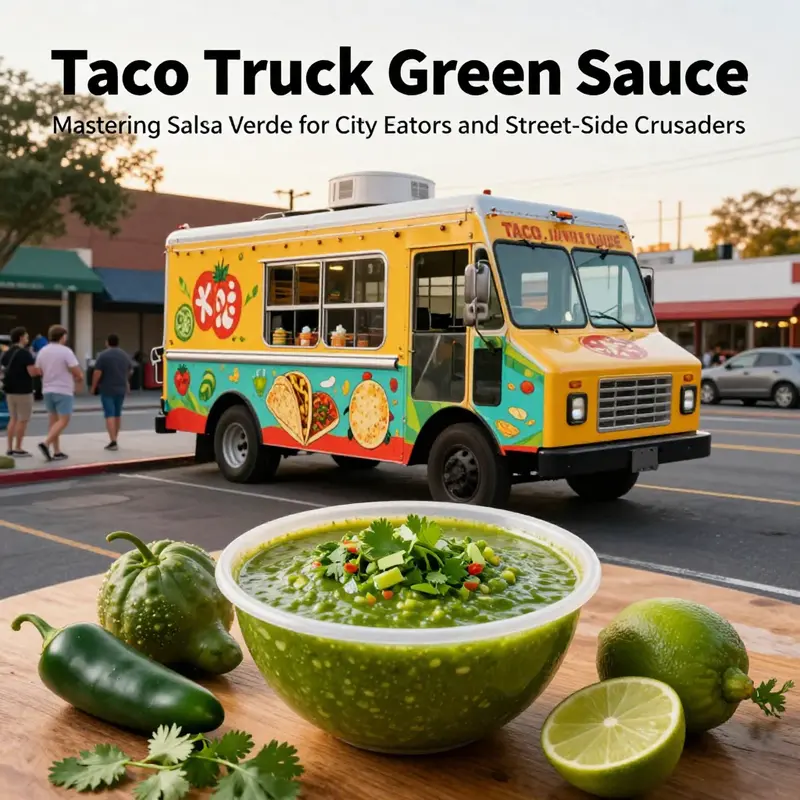
City life thrives on quick, flavorful meals that travel well from street carts to office desks. A bright, tangy green sauce—often called salsa verde or taco truck green sauce—does more than season a taco; it elevates a bite into an experience. At its core, this sauce uses tomatillos as the purple-crimson heart of brightness, with green chiles, cilantro, and lime adding lift, balance, and a hint of heat. When you learn to source the right ingredients, balance proportions, and apply simple preparation methods, you gain a versatile condiment that shines on a crowded block party, a park picnic, or a compact kitchen in a live-work space. This guide is crafted for urban commuters who grab meals between meetings, outdoor enthusiasts who crave dependable fuel after a trail jog, small business owners juggling inventory and workflow, and first-time pickup buyers who want a reliable, restaurant-grade salsa verde without a big kitchen. We’ll break the journey into three chapters that build on one another: Foundations of flavor, practical sourcing and technique for authenticity, and preparation methods with serving contexts and cultural significance. Expect practical tips, hands-on steps, and a clear sense of how this vibrant sauce fits into modern city life.
Bright Footprints on a Plate: Crafting Taco Truck Green Sauce that Defines the Menu
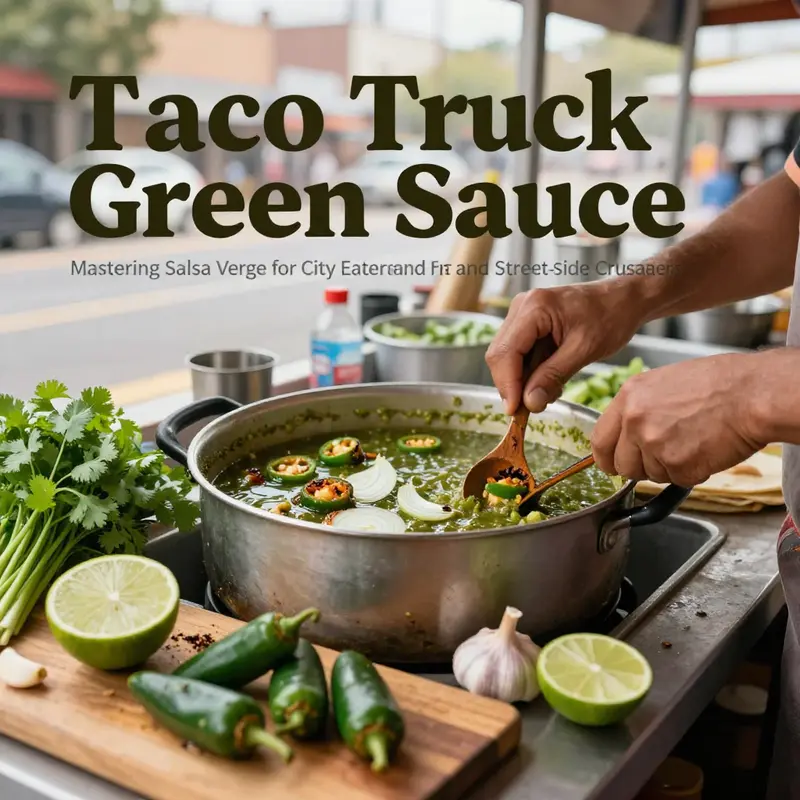
In a street-food kitchen, salsa verde is more than a sauce; it is the voice of the grill, the bright flicker of lime, and the herbaceous breath that carries meat through a tortilla like a banner. In a taco truck, the green sauce is both a flavor anchor and a grease-buster, a counterpoint to char and heat that makes every bite feel immediate and fresh. The best versions start with tomatillos, those pale-green husked fruits that look unassuming but carry a tart-green spark that sets the tone for the entire plate. Fresh tomatillos are the canvas, but the rest of the lineup—green chiles, cilantro, onion, garlic, lime, salt—forms the melody that follows. When you balance these notes well, you get a bright, tangy, slightly spicy green sauce that holds up under heat, sips through a line of tacos, and still tastes alive after minutes under a hot service lamp.
The foundation
Tomatillos are more than sour fruit; they contribute a vegetal depth that you can’t get from green peppers alone. The pepper choice controls heat, but the tomatillo defines brightness. Cilantro provides a verdant lift, a herbal counterpoint to the tart fruit and the heat. The white onion adds sweetness and bite, while garlic gives a savory backbone that helps the sauce ride with pork, beef, chicken, or roasted vegetables. A squeeze of lime at the end brightens without dulling the greens. Salt acts as a flavor tightener, pulling the bright notes into focus. Optional spices like cumin or oregano can nudge the profile toward a more traditional Mexican kitchen depth, but the core remains the crisp balance among acid, heat, herb, and aroma.
Ingredient craft
Selecting the right ingredients is the first discipline of a reliable taco truck sauce. Tomatillos should be bright green, with the papery husk intact until you’re ready to prep. They should feel firm, not mushy, and they should have a slight tart scent rather than an overpowering raw-green aroma. The chiles—jalapeños for a medium kick or serranos for more bite—should be fresh, not shriveled. Some cooks blend in a mild pepper like poblano to build body without adding heat, a trick that smooths the texture and helps the sauce cling to meat. Cilantro should be fresh with leaves that smell vibrant, not dull. Onion and garlic should be firm and clean; they’re the quiet engine that keeps the sauce feeling balanced rather than sharp. A half lime’s juice can be enough to spark brightness, but some cooks prefer a full lime for more acidity, especially when the sauce will meet fatty fillings on a hot stand. The salt should be brought in gradually, tasting as you go, so you don’t overshoot.
Roasting versus boiling
Many taco truck cooks argue for roasting or charring as the route to depth. Roasting the chiles and aromatics over a hot flame or in a scorching oven brings out smoky sweetness that you can’t achieve with a straight raw blend. The tomatillos, when roasted, soften and gain a slight caramel note, which helps the sauce maintain its shape after a long service. If you’re pressed for speed, a quick boil of the tomatillos and chiles can produce a bright, clean verde that’s still highly satisfying; you’ll lose some smoky complexity, but the result remains reliable and quick. The best approach for a truck is often a hybrid: simmer the tomatillos briefly in water to soften, then finish with roasted chiles and onion before blending. This method marries brightness with a touch of char, and it tends to stand up to heat during service where steam, crowd noise, and a fast pace can dull less robust sauces.
The core method as a single flowing process
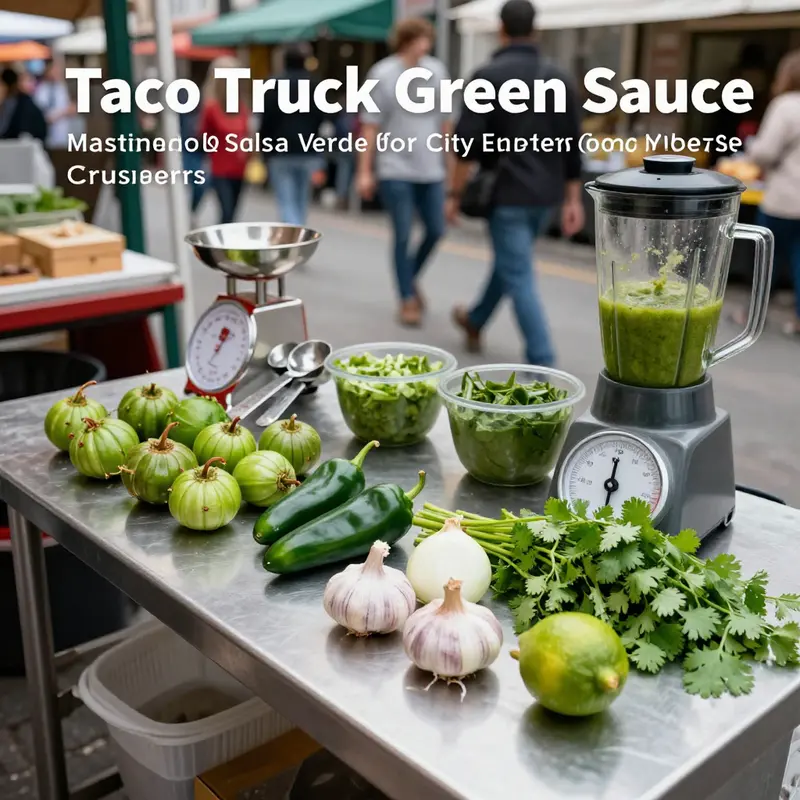
Begin with the tomatillos: husk, rinse, then simmer them in salted water until they’re tender and their outer skins loosen. Drain and let them cool a touch. If you’re roasting, you’ll char the jalapeños and onion on a hot surface until skins blister and edges brown. The garlic gets soft and fragrant as it softens. When everything is cool enough to handle, you’ll blend the tomatillos, the roasted chiles, the onion, the garlic, and a roughly chopped handful of cilantro. Start with a modest amount of liquid—water or light broth—so you’re not fighting a too-thin mix from the start. Pulse to a smooth or a slightly chunky texture depending on your preference. Taste and adjust: more lime for brightness, more salt for balance, and a touch of cumin for depth if you’re aiming for a more traditional profile. Let the sauce rest for a short period, allowing the flavors to mingle. Rest is more than a pause; it’s the moment when the aroma becomes more integrated, the sharpness retreats, and the plate-ready verde reveals itself.
Texture, thickness, and adaptability
The texture you aim for will depend on the function of the sauce on the line. A taco truck verde must cling to tortilla and meat but not paste the tortilla into a thick, heavy coat. If the sauce is too thick, a splash of water or a light broth should bring it to the right pour without thinning the character. If it’s too thin, a gentle simmer can reduce excess liquid and sharpen the flavors without losing brightness. For a restaurant-style silkiness, some cooks add a spoonful of avocado or a swirl of sour cream; the result is a creamy verde that feels indulgent without masking the core green notes. You’ll hear discussions about the role of fat in verde—while too much oil can weigh the sauce down, a small amount of neutral oil or a drizzle of olive oil during blending can help gloss and mouthfeel. A touch of cumin or Mexican oregano can deepen the aroma, though it should be used sparingly so it doesn’t overpower the lime and cilantro.
Salt, acidity, and timing
Salt tightens flavors, and lime brightens without over-tartness when added toward the end. This sequencing matters: add lime after the blend, then re-blend briefly to incorporate. The acidity from the tomatillos and lime can wane if the sauce sits in a hot environment, so controlling temperature is a practical concern for a taco truck that runs under sun or heat lamps. The rest period aids in flavor migration, but you’ll want to use the verde when it’s still vibrant. If the sauce tastes flat, the fix is often a quick bump of cilantro and a touch more salt. If it tastes too tart, a whisper of sugar or onion sweetness can level the sharpness. If it feels watery, you may have pushed too much liquid during blending; in that case, simmer the sauce to reduce and re-blend. These micro-adjustments are what separate a home kitchen verde from a truck-grade sauce that can perfume a stall and tempt customers from across the lot.
Batch, service, and sustainability mindset
In a taco truck, you’ll likely run multiple service lines, and you’ll need a verde that can hold up across hours. Prepare in batches, pairing the sauce with the proteins you plan to serve that day and with the chip lineup that will appear at the side window. The key is predictability: measure your yield, portion into airtight containers, and label with time and batch number. A consistent verde helps the kitchen run smoother when orders stack and line length grows. Beyond technique, the approach to sourcing and efficiency matters as well. The sauce becomes a living part of a sustainable service model when you minimize waste, use local produce when possible, and keep the ingredients at their freshest. That’s why this chapter nods to a broader philosophy of mobile kitchen operations, including the sustainability practices that are becoming standard in street-food culture. For a concise look at how a mobile kitchen can align flavor with responsibility, you can explore sustainable practices for mobile food trucks, which offers practical insights for sourcing, prep, and service flow that echo the verde process. While the verde itself travels well, keeping the system lean ensures you’re not simply chasing brightness but maintaining it through long hours and high demand. See the sustainable practices resource for more context: Sustainable practices for mobile food trucks.
Variations and creative edges
Creativity within a classic system often costs nothing but imagination. For a creamier verde, a minimal addition of avocado can lend silk and mouthfeel, especially when you’re presenting the sauce with grilled or roasted meats that carry their own richness. If you’re aiming for extra complexity, a hint of roasted cumin or a pinch of Mexican oregano can evoke a memory of a traditional kitchen without overpowering the core brightness. Some cooks brush the cilantro in the blend with a little oil to intensify the herbal notes. Others keep cilantro bright by adding a touch of chopped fresh leaves at the very end to maintain a vibrant finish. There’s room for a smoky twist too: you can introduce a dash of chipotle in adobo or a lightly smoked salt to lift the verde’s character without glazing over the brightness that tomatillos provide. The more you practice, the more you’ll discover the balance that suits your menu—whether you’re serving simple street tacos or more elaborate plates where verde acts as an aromatic backbone.
Storage, safety, and long-term use
When you’re serving from a small kitchen with a limited cooler, refrigeration becomes a discipline. Cool verde promptly after preparation, store in airtight containers, and keep it out of temperature danger zones. Freeze in ready-to-use portions if you won’t use a batch within a few days; ice cube trays or small freezer-safe jars work well for freezing. Thaw in the refrigerator before reusing, then re-blend briefly to restore smoothness if needed. The texture can change a bit after freezing, so it’s good to run a quick test before a busy shift. The sauce you’re serving should show a vibrant green color, a fresh aroma, and a balanced bite—never metallic or dull. The rest of your recipes benefit from using verde as a bright counterpoint to sauces that sit heavier on the plate. The technique you’ve learned here is a tool, not a doctrine, and it travels with the line as you evolve your menu and your service.
Pulling it together for a menu narrative
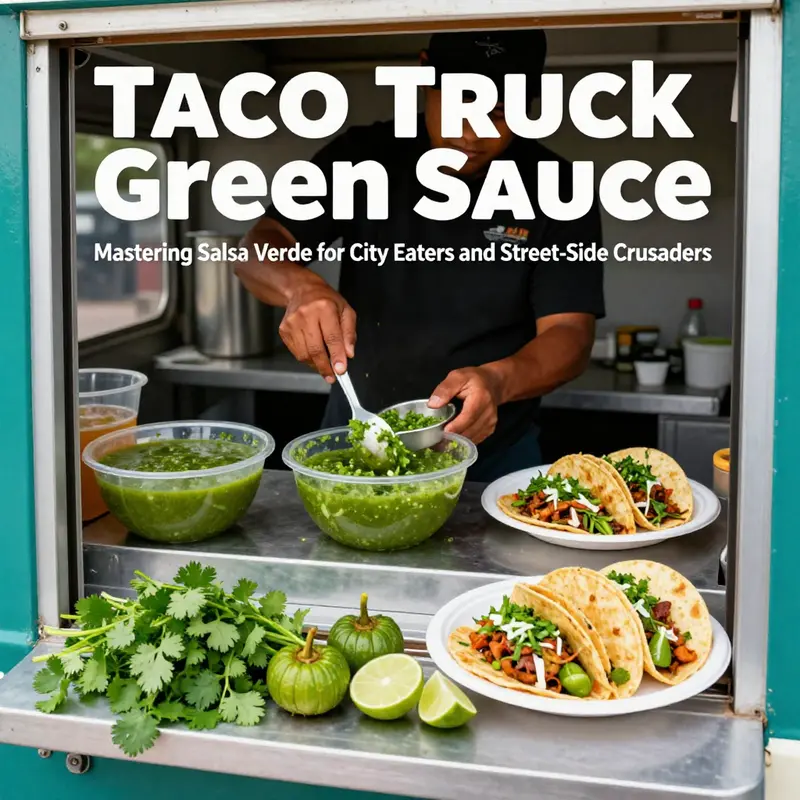
A well-made taco truck green sauce tells a story. It promises brightness that clarifies all the other elements on the plate: the char of a grilled steak, the crisp bite of a fresh tortilla, the aroma of herbs that evoke a summer day. It stands up to heat without breaking down, and its texture cooperates with the way people eat, dipping chips, spooning over a taco, or drizzling onto a grilled vegetable. In the hands of a thoughtful cook, verde becomes not a mere condiment but a narrative thread that ties the entire menu together. The methods described here—selecting high-quality tomatillos, balancing acidity and salt, embracing either roasting for depth or boiling for speed—give you a foundation that can be adapted to line work, prep cycles, and customer preferences. It’s the little ritual of tasting and adjusting that turns a recipe into a standard, and a standard into a memory that customers seek out again and again. If you’re mapping your workflow for a service day, you can consider batching verde early, portioning into stable containers, and ensuring that the line cooks understand the sauce’s texture and brightness tolerance. This approach makes the verde a constant, reliable friend on a busy night.
A note toward future chapters
As you move beyond this chapter, you’ll have opportunities to compare methods in more depth, explore how to tailor verde to different proteins, and even examine how regional preferences shape the sauce’s acidity and spice. The verde you make in the first twenty minutes of prep can saturate the flavors of the entire shift if you maintain discipline about temperature, salt balance, and aroma. The next sections will dive into how to pair verde with different taco fillings, how to manage heat on the line, and how to present it in a way that invites customers to choose it first. The foundation you’ve built—tomatillos, chiles, cilantro, onion, garlic, lime, salt, and optional spices—remains the core, but you’ve earned the confidence to experiment with texture and brightness while keeping the integrity of the dish intact. The verde is not a one-off; it’s a living part of your kitchen’s personality, a green thread that runs through everything you serve and how you serve it.
External resource reference
To see a detailed visual guide that complements this method, you can consult a reputable culinary source that walks through salsa verde techniques with photographs and timing. Here is a widely used tutorial: Food Network Salsa Verde Tutorial.
null
null
null
null
Final thoughts
With the foundations, sourcing insights, and service context in place, you’re equipped to make taco truck green sauce that travels well, tastes honest to its roots, and speaks to city life. Authentic salsa verde hinges on a bright balance between tart tomatillos, heat from jalapeños, herbal lift from cilantro, and lift from lime. Roasting or charring the aromatics adds a smoky layer that many taco trucks prize for depth. Proportions matter: enough tomatillo brightness to cut the heat, enough lime to wake the palate, and enough cilantro to deliver that unmistakable green aroma. When preparing for real-world use—whether you’re feeding a crowd at a weekend market, a mobile pop-up, or a family dinner after a long day—the best salsa verde is the one you can scale, store, and shade in flavor without complicated steps. Remember to rest the sauce briefly so flavors meld, and don’t hesitate to add a touch of avocado or sour cream if a creamier version suits your audience. Embrace the cultural thread that ties salsa verde to Mexican street food: simplicity, freshness, and a bold, shareable profile that invites people to grab another bite and another story.