
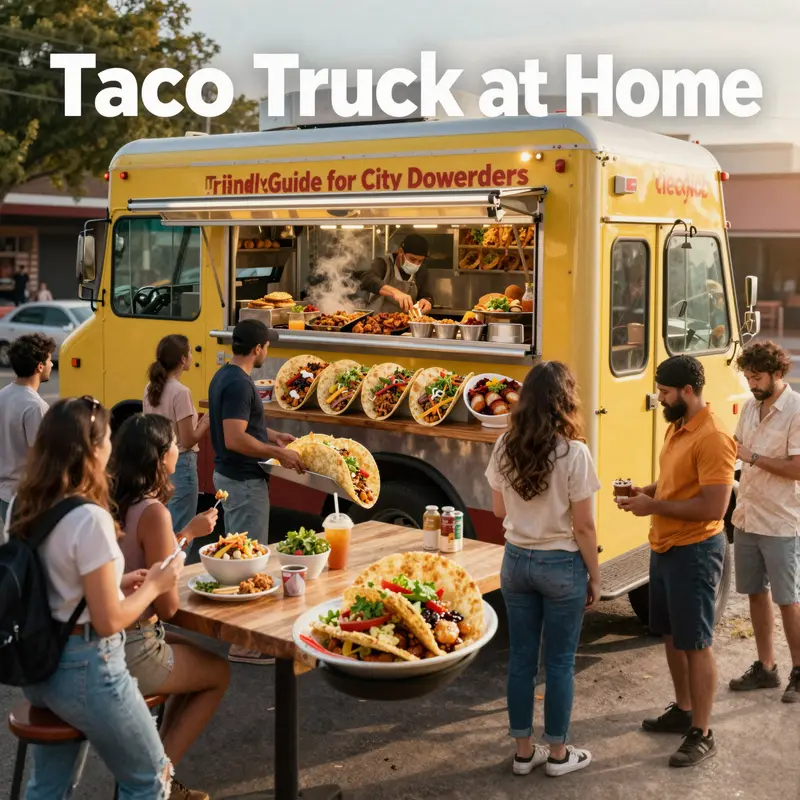
Urban life rewards meals that are quick, satisfying, and packed with bright, deliberate flavors. Taco truck tacos capture that spirit: bold fillings, soft tortillas, crisp toppings, and a simple assembly line that keeps meals moving as fast as a city street. This guide brings that same street-smart approach into your kitchen, balcony, or pop-up setup, with practical steps you can use whether you’re navigating a tiny apartment kitchen, a rooftop patio, or a mobile weekend pop-up. Each chapter builds on the last, from laying a solid tortilla base, to crafting a deeply seasoned meat filling, to brightening bites with fresh toppings and crisp pickles, to efficient cooking methods for a compact mobile workspace, and finally to presentation and quality control that earns repeat customers. Along the way, you’ll discover how to adapt classic taco truck techniques for urban environments—without sacrificing authenticity or flavor. The chapters below are designed to reference a real, high-energy taco truck workflow, while giving you the flexibility to adjust for space, equipment, and time. By the end, you’ll have a clear path from base to plate, plus tips for speed, freshness, and service that keep diners coming back for more.
From Warm Griddles to Creamy Foundations: Tortillas and a Plant-Forward Base That Powers Taco Truck Tacos

The tortilla is more than a vessel; it is the backbone of the taco truck experience. In a mobile kitchen, where speed and reliability meet flavor, the tortilla must be pliable, resilient, and capable of catching all the season and moisture you build into the filling. Traditionalists lean toward corn tortillas that carry a subtle masa sweetness and a pliancy that forgives a busy service pace. Others favor high-quality flour or hybrid tortillas for their robustness, especially when fillings run hearty or when the operation demands speed without sacrificing texture. In any case, the tortilla should be warmed just before serving to unlock its aroma and to improve its flexibility. A well-warmed tortilla coils easily around the filling, reducing the risk of cracking or spillage as customers bite through. A practical guideline from seasoned operators is to use two tortillas per taco. This technique minimizes drips and crumbles, especially when the fillings are juicy or generously sauced, while also reinforcing that comforting, handheld eating experience people seek at a truck window or under a parasol at a weekend market.
Yet the heart of the chapter goes beyond the tortilla itself. It centers on a base foundation that can redefine what a taco can be in a plant-forward, fast-service setting. A mashed potato base, presented as a worthy and surprising option, has emerged in certain kitchens as both comforting and versatile. In many regions with deep potato traditions, a smooth, emulsified mash offers a sturdy, cohesive bed that binds without weighing down the tortilla. The base is prepared from boiled potatoes, which are then mashed while still hot, allowing the starches to mingle with butter, cream or plant-based alternatives, and a careful blend of seasonings. The texture matters as much as the taste. Aim for a creamy, spoonable consistency that holds its shape when scooped onto a tortilla yet remains soft enough to mingle with the fillings without becoming dense or stiff. The goal is to create moisture and binding that prevent the taco from disintegrating in the mouth or on the paper boat you hand to the customer.
Flavor progression matters. A plant-forward base benefits from aromatics and warmth. You might fold in minced garlic, chopped herbs such as chives and parsley, and a whisper of paprika or chili flakes for a gentle heat. Cheese can be added for a subtle lift, but it should be optional—consistent with a menu that can pivot toward dairy-free offerings without compromising the base’s integrity. Roasted peppers and onions fold into the mash for texture and depth, echoing the flavors guests associate with traditional carne and roasted adobos, while keeping the preparation approachable for a kitchen that prioritizes speed and consistency. The technique is straightforward but precise: boil until the potatoes are perfectly tender, drain well, and return them to the heat briefly to remove any excess moisture. Mash vigorously and emulsify with fat and liquid until you achieve a glossy, smooth body. Seasoning comes next—salt is non-negotiable, pepper to taste, and a hint of garlic or herb infusion can wake the mash without masking its creamy character.
The plant-forward approach is not merely an aesthetic choice. It reflects a broader trend in street food where diners seek accessible, comforting textures that pair well with vibrant toppings and bright acids. The mashed potato base becomes a hospitable canvas for a spectrum of fillings—from charred vegetables to slow-roasted peppers, from beans to sautéed mushrooms, or a more traditional protein that has been prepared with care. The base’s moisture and binding help maintain the taco’s structure across the bite, ensuring that, even as toppings pile high, the tortilla remains intact and the flavors stay balanced. In a truck, where every second of service is a currency, the mash can be portioned into uniform rounds and warmed briefly to merge with the tortilla before you crown it with toppings and sauces. This consistency translates into repeatable quality, a cornerstone of customer satisfaction on busy nights and at crowded markets.
Execution on the line resembles a choreography. First, warm the tortillas on a flat griddle or comal until they glisten with a pleasant sheen and emit a gentle steam. Transfer them to a warming surface or a clean, dry cloth-lined area where they can stay supple without drying out. The mash is portioned into measured scoops and deposited onto the warm tortillas, forming a compact mound that anchors the fillings. The mound should be centered, not crowded to the edges, allowing the tortilla to fold and cradle the topping without splitting. If you’re offering toppings, keep them clean and vibrant—salsas, pickled vegetables, and fresh herbs that provide contrasting brightness. The mash remains the foundation, the other elements function as accents that amplify the overall experience rather than compete with the base’s creaminess. When you fold, do so with intention: a gentle roll or a snug fold that traps steam and flavors inside while delivering a neat, handheld bite. In practice, the sequence matters less than the outcome—every taco should feel cohesive, sturdy, and deliciously satisfying from the first touch to the final bite.
A mobile kitchen’s equipment must align with this approach. Portable electric tortilla warmers, insulated trays, heat-safe utensils, and a dependable power source become the workhorse behind the counter. The mash can be held in shallow, insulated pans to preserve warmth and moisture without allowing it to settle into a heavy, gluey texture. If electricity is scarce at a market or event, propane-backed warmers or pre-warmed tortillas paired with a quick assembly window can keep lines moving. Clean lines of operation, strict hygiene, and a station designed for quick replenishment will prevent a backlog that disrupts flow and undermines the dining experience. The operational details matter as much as technique: consistent portioning of the mash, even heating of tortillas, and disciplined timing between assembly steps. A well-run station makes the difference between a line that snakes and a line that hums with efficiency.
Menu design benefits from this foundation as well. The mashed potato base invites a family of variations that can scale with seasonality and customer preference. You might present a “Herbed Potato” version with chives and parsley, a “Cheesy Potato” option enriched with a modest amount of cheese, or a “Roasted Vegetable Medley” blend that highlights peppers and onions for texture and color. Clear labeling helps guests understand that these options are plant-forward or dairy-inclusive, guiding choices in a busy queue. The mash also serves as a platform for cross-merchandising with bright greens and zippy salsas—green tomatillo, roasted tomato, or citrusy pico—to create a balanced bite where the creamy base and crisp toppings sing in harmony. Throughout, the goal remains consistent: produce a taco that delivers a balanced, vibrant, and satisfying experience that echoes the energy of the street but with the comfort and consistency of a well-executed home kitchen.
For operators curious about maintaining a practical, mobile workflow, a quick touchpoint is the equipment selection that keeps everything moving smoothly. A thoughtful setup emphasizes mobility, reliability, and ease of cleaning as much as it does flavor. If you’re exploring ways to optimize your truck’s footprint or to design an efficient pop-up, consider reading a guide that walks through power needs and configuration—particularly useful when you’re serving at events where power access can be unpredictable. And for a broader sense of how authentic, high-flavor tacos are shaped by truck culture, observe how seasoned trucks source fresh ingredients and apply traditional techniques, then translate those lessons into your own at-home or mobile kitchen routine. A reliable starting point for refining your mobile setup can be found in the practical guidance offered by food-truck specialists who emphasize the importance of equipment choices, workflow, and consistency in service. Choose Food Truck Equipment Wisely.
Ultimately, the tortillas and base foundation you settle on should support a menu that’s flexible, scalable, and dependable. The mashed potato base is not a gimmick; it’s a versatile, comforting canvas that honors plant-forward dining while staying firmly rooted in the pragmatics of a busy taco truck. When warmed tortillas meet a smooth, flavorful mash, and when that pairing is augmented with bright toppings and precise assembly, you approximate the essence of a truck experience—where each bite is a quick, memorable journey toward a satisfying, balanced meal. The craft lies in keeping the core reliable while allowing room for variation, so that every shift yields consistent quality and every customer leaves with a story to tell about the texture, aroma, and balance of their tacos. And if you want to continue exploring the street-food philosophy that underpins these dishes, you can look to the vibrant scenes and smart practices described in real-world truck culture, such as those highlighted by local food scenes that celebrate both tradition and innovation in the taco realm. External perspectives can illuminate how to translate a truck’s energy into a home kitchen or a seasonal pop-up, retaining the authenticity that makes taco truck tacos so compelling.
From the Sizzle to the Fold: Crafting Meat-Forward, Street-Style Taco Truck Tacos at Home

Behind every memorable taco truck taco lies a simple equation: honest ingredients, confident technique, and a willingness to let the flavors lead. When you chase that equation in a home kitchen, you don’t chase illusion—you chase a focused, layered flavor that feels both bold and familiar. The core is the meat, but the magic comes from how it meets heat, how spice sizzles, and how freshness brightens the plate. The goal is balance: richness and brightness in one bite, with texture that gives and resists in the right places. Achieving this begins with the meat you choose and the fat that carries its flavor. Fat is not a distraction; it is flavor stored in the pan, ready to bloom as the meat browns and caramelizes. The rest follows from there, with every decision sharpening the sense that you’re tasting a street-kitchen moment recreated in your own home.
Groundwork for true taco truck flavor starts with a thoughtful meat plan. Ground beef remains a street staple, but the best results come from a cutting approach that respects moisture and crust. Choose ground chuck or a mix with around twenty percent fat. This fat renders during browning, leaving a savory, slightly oily coating that clings to the tortilla and carries the spices deeper into every bite. For lighter notes, shredded chicken or lean cuts work well, yet you trade some of that deep, beefy character. Carnitas—slow-roasted pork shoulder shredded and kissed with rendered fat—offer tenderness and a crisp edge when stirred again in the pan. If curiosity nudges you toward steak, sliced, marinated bistec or skirt steak adds a smoky, juicy complexity that stays loyal to the form of a taco. The technique remains consistent: heat, time, and a measured, patient hand. The goal is a filling that looks as confident as it tastes, with color, aroma, and texture aligned in every morsel.
To unlock that alignment, begin with a ritual in the skillet. Brown the meat to develop a crust that traps juices and concentrates flavor. Then let it rest briefly, so moisture redistributes and the spices can mingle with the meat’s interior. The spice setup is equally critical: toast dry spices in a hot pan for thirty to sixty seconds. Cumin, chili powder (prefer ancho or chipotle for a deeper edge), garlic powder, and onion powder form the rugged foundation. Toasting releases essential oils and sharpens aroma, giving every bite a preliminary spark. After the spices wake, add the meat and let them fuse as you introduce a splash of water or a touch of tomato sauce. A gentle simmer follows, dissolving browned bits and creating a cohesive, glossy coating that clings to the meat without turning saucy. The finishing touch—the crack of brightness—comes from a squeeze of fresh lime just before serving. The lime not only sharpens acidity but lifts any lingering heaviness, ensuring the final bite feels lively rather than cloying. If a touch of extra depth is desired, a small amount of tomato introduces umami that helps the filling behave like a single, unified character on the tortilla.
Flavor in these tacos is a carefully layered affair. The base is a backbone of earthy cumin and the smoky warmth of chili powder, with ancho or chipotle lending depth rather than heat alone. Garlic powder and onion powder add savory rounding without needing fresh aromatics in every moment; their convenience suits a home kitchen while still delivering big impact. Heat should arrive in measured steps: a pinch of cayenne or crushed red pepper for subtle blaze, plus the option of fresh jalapeños or serranos for a brighter, more direct bite. A surprising but beloved note is a whisper of cinnamon—just a pinch—to round sharp edges and lend warmth without tipping into sweetness. Finishing with lime juice brings a crisp brightness that slices through richness and binds the mixture into a vibrant mass. A spoon of tomato sauce or diced tomato near the end deepens savor and contributes a touch of body that helps the filling cling to the tortilla. The result is a profile that feels bold, savory, and layered, with a hint of warmth that makes the memory linger after the last bite.
Pro tips from the street kitchen keep the process practical and reliable. Don’t overcook the meat; once browned, a brief rest helps the juices recirculate and flavors meld. Sear the spices first to awaken their oils and fragrances, then add meat to lock in those aromas. Fresh ingredients matter: garlic and onion should be minced finely enough to distribute evenly, and the lime wedges should be ready for a bright finish. Let the seasoned meat rest for five to ten minutes after cooking so the seasoning settles and the texture becomes cohesive rather than granular. If you want to push depth further, a touch of tomato sauce during cooking provides umami and helps bind the whole mass without producing mush. Those small, patient steps are what elevate a home version toward the restaurant- or truck-grade experience.
Toppings are where bright contrast becomes tangible. Quick-pickled onions or red onions deliver a crisp, tangy bite that counterpoints the meat’s richness. Radish slices and shredded cabbage add crunch and a cool, refreshing lift that makes the ensemble feel balanced rather than heavy. The pickling solution is straightforward: equal parts vinegar and water with sugar and salt, heated just enough to dissolve the sugar. Let the onions sit in that solution while the meat finishes, then drain and fold into the dish at serving time for maximum snap. A generous smear of sour cream or a thick guacamole on the tortilla pad provides creaminess that holds fillings in place as you bite, while a shower of chopped cilantro, diced tomatoes, and red onion adds color and freshness. A final squeeze of lime brightens the entire assembly. The tortilla choice matters, too. Flour tortillas are sturdy and forgiving for heartier fillings, while corn tortillas offer a more traditional, lighter base with a nutty undertone that complements fresh toppings. For most home cooks, two tortillas per taco are a practical safeguard against spills and a nice textural counterpoint as you bite through the layers.
Beyond technique, the spirit of taco truck eating lives in the cadence of preparation and the joy of sharing a simple, well-made plate. A taco night becomes a small festival when you plate the food promptly, keep it warm, and invite others to tailor toppings to their liking. In places that celebrate taco culture, from fast-paced urban zones to neighborhood stalls, the magic is the same: loud flavors, good texture, and a sense of place that comes across in every layer. The home kitchen can echo that atmosphere with a few deliberate choices—familiar, robust fillings, bright toppings, and careful assembly that respects the integrity of each element. If you’re building a home setup that nods to the professional rhythm of a taco truck, consider how you arrange your space to support speed and consistency. A thoughtful approach to gear—captured in the idea of choosing food-truck equipment wisely—can guide how you organize your workflow, keeping the process enjoyable while ensuring every bite feels deliberate and satisfying. You don’t need a full mobile kitchen to reap the benefits of that mindset; you need a plan that honors the same priorities: quality ingredients, disciplined technique, and a sense of craft that turns a simple supper into a shared experience.
For readers who want to deepen their understanding of the precise spice blends that drive authentic, street-style tacos, a trusted guide offers tested methods from professional chefs and food scientists. The resource highlights how to balance base spices, heat, acidity, and umami so that your taco truck-inspired filling reads as cohesive and bold on every bite. If you crave that deeper dive, a detailed recipe and spice blend guide is available from a well-regarded source in the culinary world, linking you to a thorough exploration of technique and flavor. That external reference helps connect home experimentation with professional practice and reinforces that the home kitchen can echo the depth of a mobile kitchen when done with care.
In sum, the journey to taco truck authenticity at home hinges on a few simple decisions done well: juicy, well-seasoned meat; bright, crisp toppings; and careful assembly that preserves texture and flavor. The aim is to recreate the lively, communal eating experience that makes taco trucks feel like neighborhood gatherings on wheels. The technique invites you to chase a profile that is bold, layered, and balanced—spicy but not harsh, smoky but not burnt, warm but punctuated with brightness. The more you practice, the more the results begin to resemble the lively, satisfying meals that draw crowds to trucks in Austin and beyond. To align your kitchen with that spirit, consider the practical guidance on selecting equipment that supports a steady, enjoyable workflow.
For a practical reference on the broader practice of taco truck technique and spice balance, and to see how professionals approach this flavor spectrum, consult the external resource: https://www.seriouseats.com/recipes/2022/08/how-to-make-taco-truck-tacos.html
Additionally, to support the setup and flow of a home kitchen that aims to mirror a mobile kitchen, explore one relevant internal resource on equipment selection: food-truck equipment wisely. This link reflects a mindset of efficiency and quality in a compact space, helping you stage a meal that feels both deliberate and lively.
Fresh Toppings, Quick-Pickle Magic: Recreating Taco Truck Brightness in a Home Kitchen

The heart of a great taco truck taco isn’t just the meat it loves to char or the smoke that curls from the grill. It’s the way every bite comes alive with brightness, crunch, and a touch of acidity that cuts through the fat. When you’re crafting taco truck–style tacos at home, you’re building a symphony of components that arrives at the table almost in a single, satisfying moment. The toppings are not afterthoughts; they’re the chorus that carries the melody of the entire dish. Get these right, and your carne asada, al pastor, or bean-forward option moves from good to road-ready, capable of standing shoulder to shoulder with street vendors who feed neighborhoods from dawn until late night. The trick is to keep things fresh, vibrant, and deliberately prepared—toppings that can be prepped ahead, yet assembled with the speed of a well-practiced kitchen crew.
Fresh toppings provide the contrast that makes a taco sing. A crisp cabbage slaw, lightly dressed with lime and a touch of olive oil, brings a clean, pale crunch to every bite. The lime’s brightness lifts the meat, while the cabbage’s natural sweetness balances the heat from chilies or pickled onions. Pico de gallo follows closely behind: diced tomatoes, white onions ground to a fine nap, jalapeño for a poke of heat, cilantro for herbal lift, and a squeeze of lime to heighten the tomato’s natural sweetness. This mix becomes the bite counterpoint to the smoky, savory filling, offering texture and tang that keep the taco from feeling heavy. An avocado or smooth guacamole adds creaminess and a cooling note, its richness tempered by lime and a pinch of salt that makes the other flavors pop rather than compete. These toppings aren’t merely toppings; they’re the structure that supports the meat and tortilla, ensuring every mouthful remains balanced as you move from one bite to the next.
A simple, often overlooked technique elevates all of this: quick-pickled red onions. Thin slices soak in a hot brine of vinegar and water with sugar and salt, then chill briefly to bloom with flavor. The onions become crisp-tender and tart, a lively counterpoint to the meat’s fat and the tortilla’s subtle sweetness. Straining the pickled onions before use keeps your tacos from becoming soggy, a crucial detail when you’re aiming for service-speed in a home kitchen or a dinner party that feels pulled from a bustling truck line. The pickle brine itself is a flexible canvas; you can adjust sweetness with a touch more sugar, or push tartness with a splash of citrus if your peppers run mild. The result is a bright, zesty finish that lingers pleasantly after each bite.
The tortilla choice and its warmth are the hinge that holds everything together. Most taco trucks rely on soft corn tortillas warmed just before assembly. The method is straightforward: heat a dry skillet over medium heat, and work a stack of tortillas one by one, about 15 to 20 seconds per side, until pliable and lightly charred. A towel wrapped around the stack keeps them warm and pliable, ready to wrap tightly around the fillings. Cold tortillas crack and crumble; warm tortillas, slightly blistered and flexible, allow the fillings to meld with the tortilla’s slight corn sweetness and the toppings’ brightness. If you’re feeling playful and want a different texture, a very light single-layer tortilla can be used for certain fillings, but most truck-style tacos achieve their signature balance with soft corn tortillas that carry the toppings rather than compete with them.
When you assemble, think of building from the inside out. Start with a warm tortilla, then place a portion of the juicy, well-seasoned meat. You don’t want the interior to be drenched; a little sauciness is perfect because it mingles with the toppings as you bite. Next comes the onions and slaw, followed by pico de gallo. The avocado or guacamole goes on last to preserve its creamy texture and to melt a touch into the warm meat, binding everything together. A light crumble of queso fresco or cotija adds a salty, grainy bite that mirrors the salt in the meat and brightens the palate. A final squeeze of lime completes the cycle, with a optional dollop of sour cream or Mexican crema adding a touch of dairy fat that rounds the flavors without dulling the brightness. A pro trick, borrowed from busy street vendors, is to place a small piece of cheese on top of the meat and give it a quick microwave blast—ten to fifteen seconds—just enough to melt the cheese and fuse the top layer momentarily, mirroring the slight melt you’d see at a cart when steam and heat do their work.
The logic behind this approach is both practical and palate-driven. Fresh ingredients, not canned sauces, preserve the natural brightness of each component. The texture contrast—crunch from the slaw and pickles, softness from the tortilla, and the juiciness of meat—ensures a dynamic mouthfeel that makes even a simple meat-and-tix taco feel special. And because many of these toppings can be prepped ahead of time, you can run an efficient home lineup when friends arrive or you’re feeding a crowd. Assemble close to serving time to maintain crispness in the cabbage and onions, and keep the pickled onions in a sealed container for up to two weeks if you’re making them in advance. This not only speeds service but also reinforces consistency across a batch of tacos.
If you’re aiming to mirror the efficiency of a true taco truck, small, smart prep becomes a form of choreography. The meat can be cooked in batches, resting briefly to reabsorb juices before shredding or slicing, while toppings stay in clean containers ready for quick spooning or topping. A tidy prep station, a dedicated cutting board for vegetables, and a reliable set of serving spoons keep pace with demand and prevent cross-contamination. The real secret is to enjoy the process as much as the product: you’re building an experience that travels from your kitchen to the plate, mirroring the way a night market or a food truck fosters community through familiar flavors presented with pride.
To support this workflow, a reminder about gear is useful. A compact, sturdy skillet for meat, a reputable knife for chopping pico and onions, and a dependable, easy-to-clean container system for toppings create a reliable rhythm. If you’re looking to align more with truck-style setups, consider equipment choices that balance performance with efficiency. Choose Food Truck Equipment Wisely offers a framework for selecting gear that supports speed, durability, and consistent results in a home or pop-up kitchen. The point isn’t simply to imitate what you see on the street but to borrow the logic behind the choices that keep a truck cooking smoothly, even when orders pile up.
Inspiration for the broader philosophy of this chapter can be found by looking at how taco trucks—and the kitchens that emulate them—prioritize fresh ingredients and traditional techniques to deliver restaurant-quality flavor in a mobile setting. For readers who want a broader sense of how these bright, market-driven flavors resonate across contexts, an external reference offers a broader lens on the scene. For context and further reading, see the Austin Chronicle piece on the best tacos in Austin from food trucks, which captures the spirit of fast, fearless, and fresh street fare. https://www.austinchronicle.com/daily/food/2026-01-20/discover-the-best-tacos-in-austin-tx-strictly-from-food-trucks/
From Griddle to Paper Boat: Mastering Cooking Methods and Assembly for the Taco Truck Experience

The rhythm of a taco truck hums like a well-tuned drum. The clatter of pans, the citrus brightness of lime, the scent of sizzling meat, and the steady cadence of orders marching across the window all converge into a single, compelling performance: fresh, flavorful tacos served fast, with a smile. In a mobile kitchen, every motion counts. The path from raw ingredients to a perfect bite is a study in balance—between searing heat and gentle resting, between bold seasoning and the delicate sparing of toppings, between the speed demanded by a queue and the care that makes a taco memorable. To recreate that spirit at home, you need more than a good recipe; you need a working method that fits a high-volume rhythm while preserving the integrity of each component. This chapter threads together cooking methods, prep culture, and assembly choreography into a continuous narrative that stays true to the taco truck ethos: honest ingredients, straightforward techniques, and a vibrant finish that invites another order before the next customer arrives.\n\nHigh-volume cooking in a mobile setting hinges on two related ideas: efficient heat management and disciplined batch processing. For proteins, the most reliable path is direct contact cooking on a flat-top griddle or a hot grill pan. The goal is to caramelize the exterior quickly while locking in juices, so the interior remains tender and flavorful. Ground beef, a common favorite for its speed and versatility, benefits from browning without excess oil, then a quick seasoning with a robust taco blend and a splash of water to create a slightly oily, concentrated base. Let the liquid reduce; as it evaporates, the meat thickens and the pan leaves behind a glossy, savory depth that reads as taco truck in a single bite. For larger cuts like carne asada or al pastor, thin slicing after a brief marination or a traditional roast over open flame allows you to achieve a fast sear on the outside while the inside stays juicy. In a truck, those slices can be kept warm and sliced further as orders come in, ensuring consistent texture and portion control even during rushes.\n\nVegetarian and vegan fillings deserve the same respect for depth and balance. Roasting vegetables—bell peppers, onions, zucchini, mushrooms—creates a concentrated sweetness and a smoky char that provides a backbone to the plate. A mash-based option, such as seasoned potato or bean mash, can act as a comforting, hearty filling that holds well in warm conditions. The key is building layers: a roasting stage to bloom sweetness, a gentle fold of spices, and a light touch of acidity to lift everything. These plant-forward fillings pair beautifully with bright toppings and a tangy pickled component, which we will discuss next.\n\nBatch prepping is the unsung hero of a steady service. The speed of a line depends not on heroic single-ticket miracles but on the predictability of prepped elements. Pre-chop garnishes—onions, cilantro, radishes, cilantro-lime—so that every order can be composed in moments. Pre-season proteins in bulk so that the first two or three plates come together without last-minute scrambling. Beans—whether refried or whole, with a gentle simmer and a touch of spice—can be prepared ahead and kept on a warm hold. Temperature control is non-negotiable: perishable items must stay hot above 135F (57C) or cold below 40F (4C). A simple, reliable method is to keep ready-to-serve proteins in covered heat-safe containers on a griddle’s warming area and to cordon cold items into a small, clearly labeled cooler with ice or a dedicated cold shelf. The discipline of temperature care prevents a slow-down later and protects both flavor and safety.\n\nThe tortilla, often overlooked, is the canvas for every taco’s story. In the mobile context, tortillas should be warmed just before assembly to remain pliable, but not so hot that they tear or steam out too much moisture. A dry comal or griddle works well for this. For heartier fillings like carne asada or al pastor, many cooks choose flour tortillas for their sturdiness; for lighter fillings like grilled vegetables or beans, corn tortillas provide a bright, earthy counterpoint. It’s worth remembering the traditional approach: soft tortillas, never hard shells, and using two tortillas per taco helps keep fillings intact as you eat on the street or at a crowded market stand. The assembly then becomes less about containment and more about a confident, clean presentation.\n\nAssembly is where the workflow sings when it’s choreographed well. A simple, reliable setup includes a dedicated tortilla station, a protein station, a toppings station, and a finish line where assembly occurs with speed and precision. Warm tortillas are plated or held at the edge of a station to stay pliable. A measured scoop or tongs ensures a consistent fill level—enough to satisfy but not so much that the taco collapses. A generous spread of sour cream or guacamole acts not only as flavor but as a moisture barrier that keeps fillings in place during handling. A dab of guacamole or a layer of sour cream on the tortilla before the meat helps glue the components together, so each bite remains coherent whether eaten on the go or savored at a small outdoor table. Finishing touches—cilantro, diced tomatoes, red onion, and a squeeze of lime—introduce brightness, acidity, and freshness, echoing the spirit of street tacos that celebrate raw, invigorating flavors alongside roasted or grilled components.\n\nStreet-level efficiency also depends on an intelligent equipment layout. In a micro-kitchen, you optimize space by keeping cold storage near the prep area, hot holding close to the griddle, and a small, clearly marked garnishes station within easy reach of the line. When possible, use pre-portioned garnishes so that each cook can assemble quickly without measuring or rummaging. The equipment spectrum can range from portable griddles and compact burners to compact refrigeration units, warming drawers, and simple electric or propane-powered appliances designed for mobile use. Power access remains the backbone of reliability; without steady electricity or adequate battery backup, the line can stall. An efficient operation often relies on a simple but robust emergency plan—backup heat sources, spare propane, extra ice, and clear sanitation steps to handle any rush with confidence.\n\nInnovation has its home on the moving stage as well. The menu can flex with the times: plant-forward or mash-based fillings can widen appeal and reduce waste, while small fusion riffs—perhaps a citrus-chili glaze on a plant filling or a smoky salsa that echoes a regional leaning—can spark curiosity without straying from core flavors. Each addition should feel intentional, not arbitrary, and should be designed to be scalable across high-volume days. The best mobile kitchens are those that balance a tight, repeatable process with room for seasonal ingredients and local freshness, allowing the operator to pivot during festivals or markets while maintaining service speed and quality.\n\nIn weaving together method and motion, the chapter circles back to what makes a taco truck experience resonant: the sense that every component was chosen and prepared with care, then assembled with confidence in under a minute. This coherence—where heat, texture, acidity, and aroma converge—creates a street-food narrative that travelers remember. A home kitchen can mirror this by strict but flexible prep schedules, clear station layout, and mindful attention to how heat interacts with each filling. It is less about chasing a single perfect plate and more about sustaining a consistent standard, so that each taco carries the same promise, from the first order of the day to the last customer before sunset.\n\nIf you want a practical blueprint for laying out your own kitchen and menu, consider how the equipment and space decisions shape the flow of your day. The idea is to design a workflow that grows with demand, not one that breaks under the pressure of a line. The guiding principle is simple: keep the line moving without sacrificing flavor. When you can balance prepped components, controlled heat, and precise assembly, you deliver a taco that tastes like a truck doing the impossible—packing restaurant-level flavor into a handheld moment. And that is the core attraction of taco truck tacos—pure, bold, fresh flavor that travels well and satisfies deeply.\n\nFor those aiming to refine their setup beyond the basics, the practical choice of equipment deserves careful consideration. A well-chosen setup helps you maintain quality without forcing you into a costly or unwieldy footprint. Learn how to select gear that supports efficiency, reliability, and safety while preserving the character of your fillings. Choose Food Truck Equipment Wisely.\n\nAs you translate these ideas into your own kitchen on wheels, remember that consistency and speed come from a deliberate, repeatable process. The goal is to make every taco feel like a story told with good ingredients, clear technique, and an unapologetic sense of place. The road to that outcome runs through precise prep, thoughtful heat control, and a calm, confident approach to assembly. When those elements align, your home kitchen can echo the vitality of a bustling street corner, delivering tacos that taste like a moment you want to relive long after the last bite.\n\nExternal resource for broader techniques and flavor balance can deepen your practice. For a deeper dive into traditional techniques and how to balance bold flavors with simple ingredients, see an in-depth guide on authentic taco methods at this external resource: https://www.seriouseats.com/how-to-make-tacos-at-home. This companion reading can illuminate the balancing act between heat, fat, acidity, and texture that animates every great taco truck taco.
Sizzle, Service, and Stamp of Quality: The Art of Presenting Taco Truck Tacos in Your Home Kitchen

The choreography of a taco bite begins well before the first bite lands on the tongue. In a taco truck, the experience is a moving theater: the aroma of sizzling meat, the bright pop of pickled toppings, the warmth of a tortilla that gives just enough resistance to cradle its contents. When you translate that street-smart finesse to a home kitchen, the aim remains the same: create a culinary moment that feels authentic, vibrant, and effortless. The three pillars—presentation, service, and quality control—are not afterthoughts but the engine that keeps these tacos compelling from the first plate to the final bite. The core idea is simple: good ingredients carry the flavor, but disciplined presentation, efficient service, and unwavering consistency carry the experience from a meal to a memory. You can borrow the spirit of the mobile kitchen and make it your own, with techniques that travel well from cart to kitchen counter.
Begin with the tortilla, the foundation of every great taco. The tortilla choice shapes texture and handling as surely as the filling shapes flavor. For hearty, meaty fillings like carne asada or al pastor, thicker flour tortillas provide the needed durability; they hold up to a robust filling without tearing, while offering a warm, pliable surface that embraces the juices. For lighter options—grilled vegetables, beans, or a simple mushroom filling—soft corn tortillas let the ingredients shine and feel lighter in hand. The tortilla should be warm when you plate it, either warmed on a dry griddle or wrapped in foil and kept close to heat. Warmth not only improves texture but heightens aroma, inviting the eater to lean in for the next bite. When assembling, adopt the two-tortilla wrap technique: lay a tortilla, add the filling, then a second tortilla on top before serving. This protective layer keeps fillings from spilling and provides a tactile grip that makes the experience cleaner and more satisfying, especially as you recreate the on-the-move convenience of a truck.
A classic flavor profile emerges from a well-seasoned filling and a precise layering approach. Many home cooks start by browning ground beef in a skillet without extra oil, allowing the meat’s fat to render and develop depth. A classic taco truck characteristic is a robust, slightly oily base that carries the seasoning and accents. After the meat reaches a savory crust, add a reliable, pantry-friendly taco seasoning mix and a splash of water. Simmer until the liquid reduces and the pan sings with the concentrate of the spices and rendered fat. The result is meat with a rich, balanced profile, ready to be tucked into the tortilla with confidence. If you want to move beyond beef, think of traditional preparations like carne asada or al pastor, or a pollo asado that has undergone careful marination and high-heat cooking. The key is to respect method: slow roasting or open-flame grilling can elevate a simple protein into a taco that tastes like it traveled miles to reach your plate, even when you’re cooking at home.
Fresh toppings are where brightness and balance meet texture. Pickled vegetables act as bright, tangy counterparts to rich fillings. A quick pickle of red onions, cabbage, or radishes—prepared in a simple brine of equal parts vinegar and water with sugar, salt, and a few spices—delivers crispness and acidity that wake the palate. The pickles should provide a counterpoint to the savory meat, not overwhelm it. A generous spread of sour cream or guacamole on the tortilla before adding fillings helps anchor everything in place, ensuring each bite remains cohesive and flavorful. Then crown the taco with a handful of chopped cilantro, diced tomatoes, a few thin slices of red onion, and a bright squeeze of lime. The color contrast—green, red, white, and the pale glow of avocado—also signals freshness and care. Consider serving condiments in small, reusable containers rather than loose piles on the counter; this reinforces cleanliness, makes for cleaner assembly, and strengthens your brand’s sense of order and professionalism.
From presentation to packaging, the visual and tactile experience matters as much as the taste. The appearance of the taco should tell a story of care. A two-tortilla wrap, neatly aligned edges, and a tidy distribution of toppings communicate precision. The packaging you choose can reinforce that story long after a diner leaves your window. Eco-friendly, stackable packaging that protects the taco while showcasing your branding helps create a memorable, shareable moment. A well-chosen box or wrapper that bears a brief story about your operation—its origins, its commitment to fresh ingredients, perhaps a note about sustainable practices—moves the encounter from a simple meal to a narrative the customer carries with them. The packaging, in effect, becomes a silent ambassador for your standards and your care for the customer.
The service dimension turns a great taco into a reliable, repeatable experience. In a fast-paced, literally portable environment, speed and warmth are not at odds; they reinforce each other when the system is well designed. A modern home kitchen can borrow the same logic: establish a pre-order or pickup workflow, if you’re serving guests outside the home. A digital ordering approach reduces bottlenecks and helps you anticipate demand, letting you time your mise en place so tortillas, toppings, and fillings arrive at the plate in harmony rather than in a rush. Train yourself and any helpers to greet guests with a friendly, specific communication—“Your carne asada taco with pickled red onion is ready”—so the moment of service feels personal and organized. When you streamline the process, you remove friction for the customer and keep the pace comfortable, even if your kitchen space is compact. Mobility matters here too; think about how you can replicate a truck’s versatility by rotating your menu or adjusting toppings based on what’s fresh locally, ensuring that your offerings stay dynamic and seasonal without sacrificing consistency.
A quick feedback loop completes the service loop. Invite comments with a simple, low-friction mechanism—perhaps a QR code on a display or a short form linked to a tiny offline survey. Use that input to fine-tune spice levels, adjust topping ratios, or add a vegetarian option that remains faithful to the overall flavor profile. This is not about chasing trends but about listening to how your tacos perform in real life and adapting without losing your core identity. In the best operators, feedback becomes a compass that maintains the balance between tradition and personal touch. The goal is a consistent, welcoming experience that makes guests feel that each taco was crafted with the same care as the first.
The quality control mindset anchors every step. Sourcing matters: seek fresh ingredients, local produce when possible, and protein with integrity. Standardized recipes and precise portioning ensure that a taco tastes the same whether it’s the first customer or the hundredth. A simple routine—a quick taste check at the start of each session—keeps seasoning on target and confirms temperature, texture, and freshness. Pickling and prep should follow a predictable schedule, with onions and other toppings prepared in advance and rotated with new batches to prevent stale flavors. Equipment maintenance is not glamorous but essential: clean griddles, ovens, and refrigeration units regularly. A clean line is a line that performs well under pressure. When you triage daily checks, you prevent the drift that can turn faithful customers away and keep your operation aligned with your reputational standards. The goal is a taco that tastes identical to the first bite of the day, time after time, location after location, regardless of how many hands have touched it.
To close the loop, consider the broader logistics of presenting and serving with a conscience. Packaging, prep, and process should reflect a commitment to efficiency and sustainability, reinforcing that your operation respects both the craft and the customer’s time. A thoughtful, consistent approach to tortilla integrity, filling balance, crisp pickles, and a clean, deliberate assembly makes your tacos feel crafted rather than improvised. The result is more than a meal; it is a compact, portable dining experience that travels well from kitchen to plate, from home counter to the memory of a street-side night. In the end, the taco truck ethos—where quality, speed, and hospitality converge—can be embodied in a home kitchen through mindful presentation, streamlined service, and disciplined quality control. It’s a shared language of flavor and care, one that invites guests to come back for the next authentic bite.
For readers who want to explore more about sustainable and responsible practices in mobile food contexts, see the discussion on sustainable practices for mobile food trucks. The perspective complements the careful attention to food, service, and packaging, offering a pathway to keep your taco craft aligned with both ethics and taste. And for broader inspiration on how mobility and tradition shape urban taco scenes, you can explore a feature highlighting the best tacos in Austin’s food-truck culture. It’s a scene that rewards clarity, care, and a constant sense of place.
Final thoughts
Bringing taco truck flavor into a home or small business setup is less about fancy equipment and more about purpose-built simplicity: solid tortillas, deeply seasoned fillings, bright toppings, and a clean, efficient assembly flow. By focusing on the base foundation first, then layering in meat and toppings with balance, you create a dining experience that stands up to the best street-side tacos. Practice the prep rhythm, keep toppings fresh, and maintain consistent portioning. With thoughtful planning—whether you’re an urban commuter crafting a weeknight meal, an outdoorsy foodie on a trailhead, a small business owner prototyping a pop-up, or a first-time pickup buyer testing a lean kitchen—the result is the same: tacos that feel authentic, flavorful, and satisfying. The key is to stay organized, respect textures and temperatures, and serve promptly for that just-made, taco-truck moment wherever you are.