
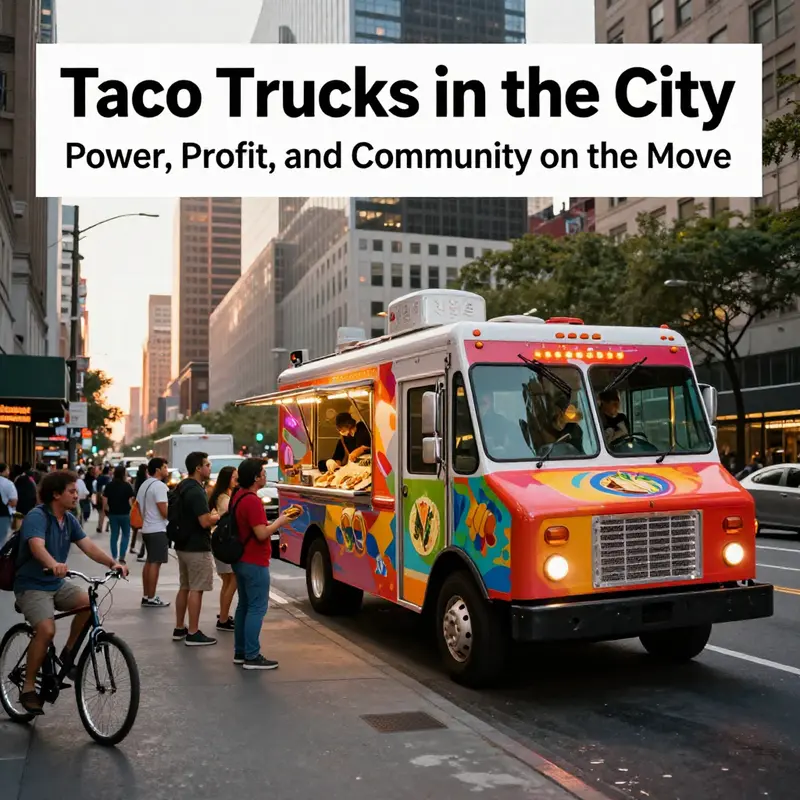
From curbside mornings to after-work horizons, the taco truck is a moving thread in the fabric of city life. For urban commuters rushing to catch a train, the sizzling aroma of tortillas can be the momentary pause that makes a hectic day feel doable. Outdoor enthusiasts bounce between parks, trails, and pop-up events, counting on the truck for a practical, tasty reset. For small business owners and freelancers, the mobile kitchen offers a flexible path to experiment, build an audience, and scale with demand without the heavy overhead of a fixed storefront. And for first-time pickup buyers, the taco truck presents a approachable entry into entrepreneurship: a compact kitchen, clear processes, and real-world lessons in price, logistics, and customer experience. Taken together, these perspectives reveal a complex, interconnected system where power, pricing, policy, and people align to create a vibrant, movable address for food and culture. The four chapters that follow unpack the technological backbone, the economic engine, the regulatory and cultural landscape, and the social ripple effects that make a taco truck more than a meal on wheels—it’s a dynamic microcosm of urban life.
Chapter 1: Powering Flavor on the Move: The Tech Backbone, Tools, and Trajectories of a Taco Truck
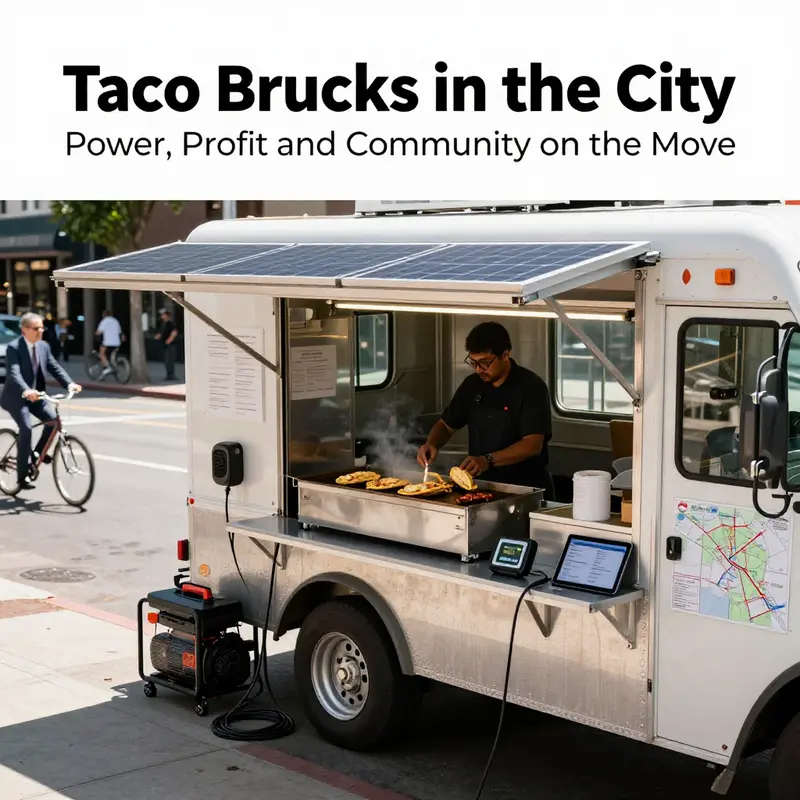
The taco truck, at first glance, is a bright flash of color on a crowded street corner, its sizzling sounds and fragrant steam drawing crowds as reliably as a streetlight draws night creatures. But behind that appetite-driven spectacle lies a carefully engineered system: a mobile kitchen built to travel, endure, and serve consistent, crave-worthy food whatever the hour or the weather. The heart of this machine is the trailer itself, a purpose-built platform that blends durability, modularity, and efficiency into a compact footprint. Stainless steel, precisely chosen for its corrosion resistance and heat tolerance, forms the backbone of every workspace. It resists the grime and sweat of daily use, it holds up under rapid cleaning cycles, and it forgives the inevitable bumps and shifts that come with city driving and crowded events. In making the trailer a reliable home for a business, manufacturers have turned to regional strengths around the world. Regions like Henan and Shandong in China have emerged as industrial hubs where stainless steel fabrication meets modular kitchen systems. The result is a spectrum of trailer configurations—tailored, affordable, and scalable—that empower operators to outfit a cooking space with the exact fixtures their menu requires, from multiple prep surfaces to integrated drainage and ventilation solutions. This globalization of manufacturing is more than a logistics footnote; it shapes what a taco truck can become in different markets, how quickly a vendor can start serving, and how reliably a customer can expect the same tortilla-wrapped experience, city to city, week to week. The sourcing story is quietly revolutionary: a trailer bought from a distant cluster can arrive as a plug-and-play anchor, ready to host a cooking program that once might have required a brick-and-mortar kitchen. The implications go beyond price or speed. They touch on consistency, hygiene, and safety—non-negotiables in a system designed to churn out hot meals with limited space and strict sanitation standards. The trailer’s material choice, its joinery, and its interior geometry determine whether a cook can move with the fluency of a dancer or must improvise around a jammed workflow. It isn’t merely about aesthetics; it is about a kitchen that feels like a place where food is prepared with intention, even when the cart is rolling through a walk-up or parking lot at a festival, a farmers’ market, or a corporate campus. Power, the second pillar of the mobile kitchen, is the lifeblood that keeps that kitchen alive in locations where grid power is unreliable or absent. Almost every modern taco truck depends on a hybrid energy strategy that blends electrical and thermal sources to keep appliances running, ingredients fresh, and customers satisfied. Generators—whether diesel or propane—provide the robust, on-demand electricity required to operate electric griddles that can sear a tortilla and seal in flavors within seconds, fryers that crackle with golden crusts, and ovens or holding cabinets that preserve temperatures as the queue grows longer. But a growing number of operators are building resilience by incorporating solar panels as a supplementary energy stream. The sun may not always shine with the precision of a clock, yet it can soften fuel costs and reduce emissions over a long shift. This hybrid approach, increasingly common across the mobile food sector, aligns with broader sustainability goals in a field that traditionally prizes speed and affordability. The result is a kitchen that can perform in a park under a blazing noon sun or in a light drizzle at an evening festival, without compromising safety or service. The engineering mindset here is to create energy buffers and smart load management, so a single delay in one appliance does not cascade into a service breakdown. Temperature control becomes a choreography rather than a drill. Temperature probes, sometimes linked to digital monitoring systems, keep meat, dairy, and produce within safe ranges. Remote diagnostics can notify the operator when a component veers outside its optimal range, enabling proactive maintenance rather than reactive crisis management. These capabilities are not merely conveniences; they are safeguards that protect food quality and protect the business from costly waste or uncomfortable health department interactions. The kitchen equipment itself is a tightly choreographed ensemble. Core components include commercial-grade griddles for searing and for flat, pliable tortillas; deep fryers for chips and handheld pastries; refrigerated storage that keeps perishable ingredients at safe temperatures; and built-in prep stations with durable, easy-to-clean surfaces. The layout matters as much as the equipment. In a mobile kitchen, every square inch is precious, so workflow is designed to minimize unnecessary movement. The cook moves from a prep zone to a hot station to the finish line of assembly with a rhythm that reduces backtracking and avoids cross-contamination. Modular design principles allow for easy installation, maintenance, and customization. A menu focused on street-style staples—tacos, salsas, toppings, and sides—often benefits from interchangeable module units that can be swapped as seasons change or new ideas emerge. For operators who want more than a single, fixed setup, this modularity becomes a business strategy: the ability to reconfigure a kitchen for a different event, a different crowd, or a different geographic market without rebuilding from scratch. Technology interweaves with hardware in a way that has become more common in recent years. Some high-end trucks incorporate smart monitoring for temperature control, inventory management, and even remote diagnostics. A connected system might log how long meat has rested in a cooler, warn when a stock item is running low, and report maintenance needs to a central dashboard. This digital layer is not a luxury; it is a predictor of safety and consistency. It also opens the door to new kinds of customer experience. When a vendor can see real-time inventory and plan a precise production schedule, they can minimize waste, keep prices steadier, and maintain kitchen discipline even as demand spikes. Logistics, the third pillar, is the quiet engine that keeps the entire operation moving. The modern taco truck does more than drive from point A to point B; it maps routes, secures permits, and orchestrates a multi-layered supply chain that travels with the truck or behind it in the form of scheduled deliveries. GPS and fleet-management software are not just about locating the vehicle. They provide insights into fuel usage, service windows, and traffic patterns in different neighborhoods. Route optimization algorithms can guide a vendor toward high-traffic zones during peak hours, maximizing exposure and sales. In urban landscapes, where a 15-minute window can change a day’s revenue, such smart routing is a decisive advantage. Cloud-based point-of-sale systems extend the same logistics logic to the customer interface. Orders, payments, and tips flow through a single, portable platform that can work offline and then synchronize when a signal returns. Inventory and sales analytics become accessible in real time, empowering operators to tailor menus to what’s actually moving, adjust pricing for demand, and forecast the needs of upcoming shifts or events. The social dimension of logistics is equally important. A taco truck’s social media presence is more than marketing; it becomes a real-time switchboard for location updates, menu changes, and crowd-building. The operator can post a location ahead of time, announce a special topping, or drop a teaser photo that draws a line of eager customers. In a sense, the truck becomes a mobile brand, a tiny, high-energy restaurant that travels with a narrative. The integration of GPS, cloud services, and on-site equipment creates a feedback loop: data from one shift informs the next, and the next is fine-tuned by what the crowd asks for in real time. This is not mere automation; it is a narrative of craft meeting efficiency, where the cook’s skill meets the data stream in a moment where taste and timing align. It helps explain why taco trucks have evolved from simple carts to recognized players in street-food culture. The Guardian’s overview notes that taco trucks have become an integral part of street food culture in many countries, celebrated for offering authentic flavors at affordable prices while adapting to local palates and regulations. Their rise into mainstream media and culinary awards underscores the degree to which this is no longer a marginal enterprise but a dynamic, evolving micro-restaurant system that relies as much on transportation architecture and energy strategy as on a reliable recipe. The technological infrastructure is not a sideline; it is the scaffolding that supports the artistry of the food. The worker who flips a tortilla to a perfect half-moon and then five seconds later dispatches a hot taco into a wrapper is operating within a system that has been designed to move efficiently without sacrificing care. The choice of equipment—how it is arranged, how it is powered, how it interacts with data—shapes what a vendor can offer: a menu that changes with the day, pricing that responds to crowd dynamics, and service that remains fast even under pressure. In this sense, the taco truck is a small enterprise built on a suite of tradeoffs resolved through engineering and logistics. It is a laboratory where traditional techniques meet modern infrastructure, a place where the warmth of a home-style recipe can travel across neighborhoods, campuses, and festival grounds without losing the soulful punch of flavor. For readers who want a practical touchstone, the literature points toward a network of suppliers and builders who curate modular, mobile kitchen systems. A recent supplier guide highlights how the global supply chain supports these ventures, linking eager entrepreneurs with trailer designs that are ready to deploy and scales that can grow with demand. While the specifics of each truck will differ—some lean toward lean, compact layouts optimized for tight urban blocks, others expand into larger footprints for weekend markets—the core philosophy remains consistent: design the kitchen around mobility, resilience, and quality. The menu is an evolving conversation with the street, the city, and the crowd, but the engine behind that conversation is the technology that makes it all possible. As operators refine their workflows, they blend hands-on craft with smart infrastructure. They test new layouts, swap out a burner for a double-hurner griddle, or recalibrate a refrigeration unit to hold a new amount of product. They balance safety checks with speed of service, ensuring that hygienic practices become second nature in a space that can shift from a quiet corner to a teeming festival in a matter of hours. The entrepreneurial arc is clear: a taco truck is not merely a culinary idea carried on wheels; it is a living system whose success depends on the orchestration of power, equipment, and logistics. The choreographer in the mix is the operator, who must read the environmental conditions of a venue, the preferences of a neighborhood, and the tempo of a market, then respond with a configuration that keeps the tortillas warm, the fillings fresh, and the line moving without compromising the integrity of the product. In teaching or writing about this space, it is tempting to treat the elements in isolation—power, or equipment, or routing—but the most compelling stories come from understanding how these parts converse under real-world constraints. A truck that can switch from a propane-driven burner to an electric griddle when grid power becomes available, or a system that uses solar charging to extend a shift into late evening, is telling a story about adaptability and foresight. The trailer’s steel and the generator’s roar become a chorus that accompanies the craft of salsa, cilantro, carne asada, or plant-based fillings. The chapter from which this analysis draws emphasizes not just the technologies but the sensibilities that run through them: a respect for speed and safety, a commitment to cleanliness, a willingness to innovate, and a deep attention to the social value of a good, affordable meal on a street corner. In mapping these threads, we glimpse how the taco truck fits into a larger food-service ecosystem. It sits between the chef’s hands and the customer’s palate, translating a tradition into a mobile experience that travels with the crowd. It also interacts with the logistics networks that keep urban food ecosystems functioning, linking vendors with suppliers, with event organizers, and with a community of enthusiasts who seek both the comfort of familiar flavors and the thrill of discovery. The interdependence of power, equipment, and logistics means any improvement in one domain resonates across the entire operation, often in surprising ways. A more energy-efficient refrigeration unit can reduce fuel burn, which in turn permits a longer service window; a more modular prep station can accommodate seasonal ingredients without a costly remodel; more accurate inventory software can cut waste and improve taste consistency while supporting a broader range of menu options. This is the ongoing narrative of the mobile kitchen era: a craft that refuses to stay still, constantly testing new configurations, seeking better energy stewardship, and embracing data-driven decisions that still honor the rituals of traditional street-food preparation. For readers who want to explore these themes further, consider how a vendor might approach upgrading their setup without losing the essence of what makes a taco truck attractive: honest, fast, flavorful food served with personality. A practical touchpoint is recognizing that equipment choices do not exist in a vacuum. They influence and are influenced by the venue geometry, the local regulations, and the behavior of customers who come for a quick bite that also feels like a personal connection. The same logic applies to endurance and safety: a well-designed electrical system, a robust containment strategy for hot fats, and a clean, navigable layout all contribute to a smoother operation and a safer experience for staff and patrons alike. In the broader arc of this article, the focus on the technological infrastructure of the taco truck grounds later chapters that will examine how these systems scale for events, how they adapt to different climates, and how the cultural practice of Mexican street cuisine travels and transforms in new settings. The microcosm of a mobile kitchen thus becomes a lens on urban life, on logistics networks, and on the way communities negotiate the balance between convenience and authenticity. The field is rich with case studies told in the language of design and deployment, yet the heart of every story remains the same: a small vehicle carrying big flavors, powered by a hybrid promise, and guided by a workflow that makes the line grow longer not from chaos but from the promise of something truly satisfying at the end of the day. As readers move forward, they will encounter the social dimensions that shape where trucks park, how menus are curated to match local preferences, and how legal frameworks shape how and where these culinary itineraries unfold. The next sections will delve into how events, neighborhoods, and workday rhythms determine which routes a truck follows, how permits and safety regimes interface with the desire to serve delicious meals quickly, and how data-informed decisions help operators balance quality, cost, and turnover. The drumbeat of the modern taco truck is not simply gas and grease; it is a careful alignment of people, place, and process, a portable kitchen that makes a neighborhood feel closer to a kitchen table and further from the ordinary constraints of city life. To see a glimpse of the practical path forward, many operators turn to equipment strategies that emphasize flexibility and durability—principles that translate well across mobile food concepts. For those who want a concrete starting point without losing sight of the bigger picture, a focused approach to equipment selection can be a practical first step. Choosing food-truck equipment wisely is a core consideration, and it is worth exploring as an investment in the business’s future. Choosing food-truck equipment wisely. This link can serve as a doorway to a broader conversation about how to tailor a mobile kitchen to local demand, energy constraints, and the evolving expectations of customers who seek speed, consistency, and flavor in equal measure. As the world of mobile food continues to expand, the taco truck stands as a compact but compelling example of how technology, craft, and logistics converge to deliver a dining experience that is both intimate and itinerant. The arc from raw material to a finished, hot taco is underpinned by a chain of decisions about power sources and energy management, the choice and arrangement of equipment, and the route and tempo of daily operations. These decisions, in turn, set the stage for the truck to become not just a place to eat but a mobile workshop where tradition and innovation exchange places with customers in real time. External context suggests that this growth is part of a broader cultural shift toward accessible, authentic cuisine transported by innovative, adaptable systems. The Guardian’s analysis situates taco trucks within a global street-food phenomenon, illustrating how a humble cart can spark conversations about culture, entrepreneurship, and community across diverse urban landscapes. This wide lens invites readers to see the technical details discussed here not as isolated preferences but as foundational elements in a transformative, globally distributed culinary practice. For those curious about the full sweep of sources and broader context, the Guardian piece offers a compelling backdrop to these practical insights and the evolving roles of mobility, energy strategy, and digital tools in street-level cuisine.
From Street Cart to Streetwise Enterprise: The Hidden Economics Behind a Taco Truck
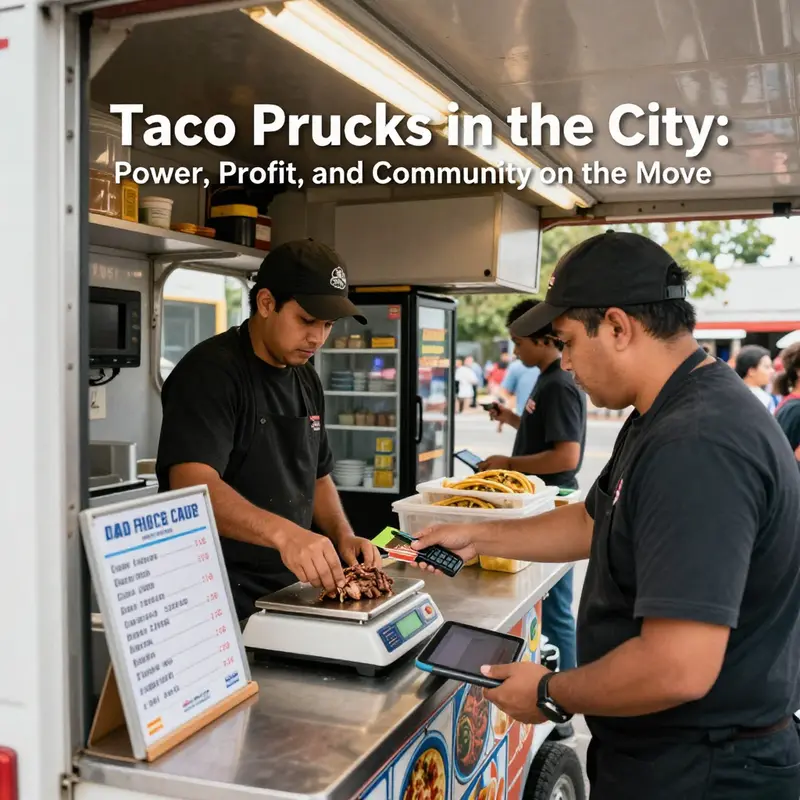
The morning air carries a hint of smoke and citrus as a taco truck wakes in a lot that once piled with daybreak silhouettes and the soft thud of footsteps. A truck is more than a kitchen on wheels; it is a carefully tuned system that converts fixed assets and disciplined inputs into the quick, flavorful bites that people crave between classes, between meetings, between commutes. In this chapter, we trace the arc from heat and aroma to balance sheets and margins, showing how the economics of a taco truck shapes what ends up on the plate, how fast it moves, and whether the business sticks around long enough to see the next wave of customers. The central idea is simple and powerful: profitability hinges on a clean separation of costs that don’t depend on sales from those that do, and on a pricing and operations rhythm that respects both demand and capacity. When you watch a taco truck as a business rather than a noble slice of street culture, the choices become legible—the steady drumbeat of fixed costs, the flexible tempo of variable costs per taco, and the way price can lean into demand without breaking the line between hunger and value.
At the heart of the model lies a set of basic definitions that travel with every operator who dreams of scaling a mobile kitchen. Fixed costs (FC) are the charges that must be paid regardless of how many tacos roll out of the window. They include the loan or depreciation on the truck itself, insurance, licenses and permits, and the essential equipment that keeps the kitchen humming—grill surfaces, refrigeration, wind protection, and the investments in software that ring up orders. These costs behave stubbornly in the short run: they stay put as long as the truck is on the road. Variable costs (VC), by contrast, ride with each taco sold. They cover the ingredients—the tortilla, the filling, salsa, onions, cilantro, and garnishes—plus the labor that assemblies and plates the meal and the packaging that goes along. Some costs sit in between, what economists call semi-variable or semi-fixed costs, subtly rising with activity, such as overtime or temporary help during peak hours. The exact balance between FC and VC is the difference between a business that can weather a quiet day and one that stumbles when demand surges.
To illustrate, consider a hypothetical but plausible setup. A taco truck may carry FC around a few thousand dollars per month when you include loan payments, depreciation, insurance, and basic branding. A pared-down, efficient operation might look like FC of about $3,200 per month and VC per taco around $2.15. The VC figure captures ingredients, labor allocated per taco, and packaging. Price decisions then rotate around P, the price per taco, and Q, the quantity sold. Revenue is TR = P × Q, and total cost TC = FC + VC × Q. Profit, the true bottom line, is π = TR − TC = (P × Q) − FC − (VC × Q). The math is deceptively simple, but it is the compass by which planning, pricing, and location decisions must be aligned.
Pricing and demand are inseparable here. A chef who crafts a taco with care and a night market that draws a crowd are two different demand signals, but both feed into the same equation: the more tacos you sell, the more you dilute the impact of fixed costs. Pricing strategies can be tailored to demand patterns: cost-plus pricing adds a markup over VC, value-based pricing charges for perceived quality, and dynamic pricing nudges P higher at peak times while leaving off-peak periods more accessible. The goal is not to maximize price on every unit but to maximize profit over a horizon that respects capacity and customer willingness to pay. A simple break-even calculation—Q* = FC / (P − VC)—reveals how many tacos must be sold to cover fixed costs at a given price and margin. For the illustrative numbers, break-even occurs when Q* ≈ 3,200 / (P − 2.15). If the price is 4.50, the contribution per taco is 2.35, yielding a break-even around 1,361 tacos per month. The takeaway is clear: even a seemingly modest kitchen on wheels can unlock meaningful profits if the price and volume dance in step with demand and capacity.
Yet the market environment introduces noise that every truck operator learns to manage through location, timing, and menu design. Demand is highly location-specific: a heavy footfall in a business district at lunch, a campus during a class transition, or a festival that concentrates a crowd for a few hours. If a truck sits at the wrong corner during a slow spell, the same fixed costs loom larger in the per-taco math, and margins compress. The competitive landscape is another force to reckon with. Taco trucks inhabit what economists describe as monopolistic competition: many sellers, each with a differentiated offering, vying for a share of a common customer base. Differentiation can hinge on salsa varieties, spice levels, or the speed of service. The regulatory scaffolding—permits, health inspections, and location rights—also shapes the geometry of a truck’s day. A truck that wins a coveted corner gains throughput, while a permit setback or a reroute can ripple through Q for weeks.
Operational decisions, though they may seem mundane, are the real engines of economics on wheels. The menu is a product portfolio that must balance variety against waste. A broader menu increases draw but also raises VC per unit through more complex prep and potential spoilage. An optimal approach often emphasizes a few high-margin items and a lean rotation of occasional specials, which can command premium pricing while limiting waste. Inventory management becomes a dance between freshness and forecast accuracy. Perishables push operators toward just-in-time ordering and reliable supplier relationships so that ingredients arrive as demand materializes rather than piling up in a cooler. Portion control is not merely a cost-saving device; it preserves consistency of taste and the perceived value that drivers demand when returning for a second taco. Waste is a financial symptom of a mismatch between forecasted demand and actual sales. Reducing waste, in turn, tethers VC more closely to Q, lifting margins and stabilizing earnings.
Labor costs, the other large slice of VC, reflect the tempo of service. A taco truck’s throughput depends on how quickly cooks can move from grill to plate and how efficiently servers can handle a stream of customers. Cross-training staff to perform multiple tasks can reduce the total labor input per taco, especially during off-peak hours when a single person can handle several roles. Scheduling, aligned with observed demand patterns, can shave peak-time costs without sacrificing service quality. In practice, the puzzle is to allocate labor to the times when customers are most likely to buy, not simply to fill a calendar with shifts. The procurement side, too, sits at the intersection of cost and reliability. Local sourcing can shave transportation costs, support freshness, and reduce spoilage risk, but it often comes with higher per-unit prices that must be offset by improved quality and customer perception.
All these decisions converge in a more formal set of financial muscles. The basic profit equation—π = (P × Q) − FC − (VC × Q)—remains the compass, but operators gain clarity when they augment it with elasticity awareness. The response of quantity to price, dQ/dP, is key. If demand is elastic, small price increases can shrink total revenue. If demand is inelastic, price increases can lift revenue with only modest declines in Q. A price that reflects peak demand at a stadium or during a festival can enhance utilization without eroding core customer loyalty, but the timing and the content of the menu must justify the higher price in the minds of diners. This is where the art of the taco intersecting with the science of pricing becomes decisive. The math rewards disciplined experimentation—test a higher price for a limited period, monitor the change in Q, and observe the effect on overall π. The lesson is pragmatic: test, measure, and adapt the pricing geometry to the realities of the day and the neighborhood.
Two illustrative scenarios can illuminate how this plays out in practice. Scenario A imagines a moderate-traffic location with steady pricing. FC remains around $3,200 a month; VC per taco is $2.15; price is $4.50 per taco. The truck has a maximum monthly capacity of about 3,750 tacos (25 days at 150 tacos per day). Break-even sits near 1,361 tacos per month, and selling 2,500 tacos yields a comfortable profit—roughly $2,300—assuming consistent demand and reliable operations. This scenario emphasizes sustainable throughput and a reasonable price that the local market will bear without overextending the kitchen’s capacity. Scenario B shifts to a peak-event environment with dynamic pricing. FC rises to about $4,000, VC per taco tightens to $1.95 through bulk purchasing, and prices are variable: $5.50 during peak lunch, $4.25 off-peak. Demand splits 60/40 between peak and off-peak, with 12 peak days and 18 off-peak days in a month, giving a blended Q of about 1,944 tacos. Revenue clocks in near $9,882, VC costs at about $3,792, and total costs around $7,792, producing a profit near $2,090. Here the value of demand-responsive pricing shows up in a more intensive utilization of capacity and better alignment of price with willingness to pay. The math remains the same, but the rhythm of the day shifts the economics in favor of a well-timed premium charge when the crowd is hungry and the lines are long.
From these models emerge a set of practical takeaways that translate theory into day-to-day practice. Start with a clean, documented cost structure. List FC in categories like truck depreciation, insurance, licenses, and essential equipment, and estimate VC per taco by tallying ingredients, labor, and packaging. Build a simple break-even framework and use it as a gatekeeper before expanding to more hours or more days. Let demand inform pricing in a structured way: collect data on how many tacos sell at different times of day, at different locations, and on different days. Use elasticity insights to decide where to push prices up and where to keep prices accessible to sustain volume. Optimize operations for throughput: shorten service times, reduce waste through precise portioning, and align staffing with peak demand to protect margins. Build resilience by diversifying location strategies, maintaining good supplier relationships, and preparing for weather and regulatory changes that can disrupt the day’s flow.
In addition to price and capacity, the menu itself can be a lever for profitability. A lean design minimizes wasted ingredients while maintaining the ability to switch to a popular seasonal item that commands a higher price or margin. A thoughtful menu also assists in inventory planning: fewer SKUs simplify ordering, reduce spoilage, and improve kitchen discipline. Branding, too, matters because repeat customers are the lifeblood of a mobile food operation. Consistency in taste and service builds trust, which in turn supports pricing power—customers are often willing to pay a premium for reliability and speed, especially in a busy urban landscape.
For operators who want to thread the needle between cultural authenticity and business viability, there is value in both the craft and the calculus. The economics of a taco truck do not diminish the cultural significance of the dish; they explain how a simple meal travels from a sizzling skillet to a steady stream of sales and back to the bank balance. The model also invites a broader perspective on sustainability and community impact. Sustainable practices in mobile food service—efficient energy use, responsible waste management, and local sourcing—can yield long-run cost savings and a stronger brand narrative, a topic that becomes more salient as consumer expectations shift toward responsible business conduct. For those curious about integrating such practices into the economics of a mobile kitchen, see Sustainable practices for mobile food trucks, which offers a concise framework for balancing flavor, cost, and environmental stewardship while maintaining profitability.
As with any business facing a shifting urban landscape, the tacit lesson is that numbers tell a story, but only if you listen closely and act. The revenue line is a function of price and volume, yes, but it is also shaped by where you stand and how you move through the day. The cost line is a disciplined ledger of commitments you must honor in every month, regardless of the weather or the crowd. The space between those lines—the margin—depends on your ability to choreograph the flow of orders, ingredients, labor, and time. The taco truck is a bold, portable experiment in microeconomics: a moving kitchen that forces a compact, transparent, and adaptable business model. When the plan remains simple, costs stay predictable, and demand responds to price and availability, the truck can ride the city’s rhythms rather than fight them.
For readers seeking a larger frame, this chapter sits within a broader discussion about how street food culture translates into global phenomena. The Guardian’s exploration of taco trucks as a global hallway for authentic Mexican flavors highlights how mobility and adaptability feed into cultural exchange and culinary prestige. This perspective reminds us that the economics of a taco truck are not only about profits and margins; they are about the transportation of tradition, the engagement of diverse communities, and the way a humble cart can become a recognizable, celebrated microbusiness across cities and continents. If you want to explore that global arc, the Guardian piece offers an accessible lens into how a humble food cart became a worldwide phenomenon: https://www.theguardian.com/world/2024/mar/15/taco-trucks-how-a-humble-food-cart-became-a-global-phenomenon.
In the next chapter, we will widen the lens to compare mobile dining models with fixed-location eateries and other pop-up formats. The aim is to understand where a taco truck’s flexibility yields competitive advantages and where it faces constraints that call for partnerships, co-location, or hybrid approaches. By tracing the economics through revenue, cost, and capacity, we can begin to map not just a path to profitability but also a route to sustained growth that respects the craft, the community, and the street-smart discipline that makes a taco truck more than just a way to feed people. For those who want a concrete blueprint to apply in their own context, the chapter’s framework provides a starting point to tailor numbers, test scenarios, and chart a course that aligns flavor with financial viability.
Moving Boundaries, Serving Cultures: The Taco Truck as a Global Stage for Migration, Regulation, and Flavor
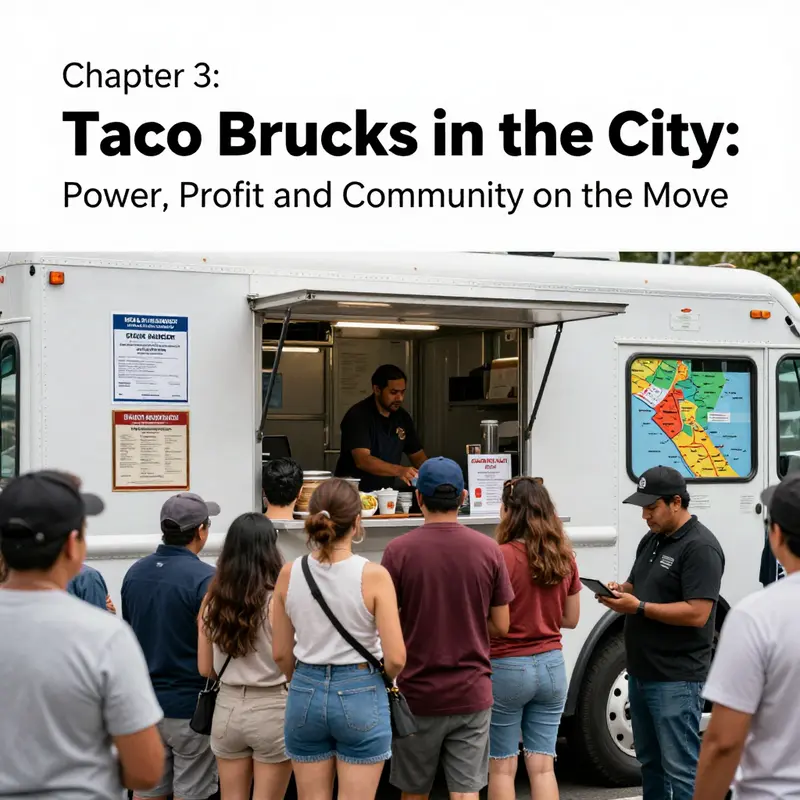
The taco truck is not merely a vendor on a curb; it is a moving room where memory, labor, and taste arrange themselves in a daily routine. The clatter of the wheels, the hiss of the grill, and the flutter of steam above a sizzling griddle announce a choreography that travels with people. On a street corner, a portable kitchen becomes a site where someone’s grandmother’s recipe is translated into a living, evolving dialect of flavor. Each order is a conversation between cook and neighbor, a small negotiation over who belongs in the neighborhood and who gets to name what counts as a worldly bite. In this sense, the taco truck functions as a portable cultural archive, carrying histories across asphalt like a nomadic library of taste, memory, and aspiration. It is at once affordable, convenient, and deeply resonant with a city’s sense of self, offering a compact microcosm of how migration reshapes urban life through the most routine of acts: feeding a body hungry for connection.
The movement embedded in the taco truck traces a map of people and places. It is hard to separate the sound of a steamy kitchen from the stories of migrants who brought their culinary heritage with them as they moved toward new horizons. These stories aren’t only about escape or economic need; they’re about adaptation, ingenuity, and the stubborn insistence that culture can be carried forward even when borders tighten. In many communities, the truck becomes a home on wheels, a space of legitimate entrepreneurship where a family’s names and recipes become a local brand, recognized by regulars who greet the cook by name and remember their preferred sauces. The mobility of the truck mirrors the mobility of labor in modern economies: flexible hours, low entry barriers, and the ability to test new markets without abandoning a lineage of cooking that has sustained families for generations. The practice is collaborative as well, often weaving together family labor, neighborly referrals, and informal networks that slide a cart from one block to another in response to crowd moods, weather, and seasonal events.
Regulation sits at the heart of this mobility, shaping what is possible on every street corner. Municipalities have created a patchwork of licensing requirements, health inspections, and zoning rules aimed at balancing street commerce with public safety and urban aesthetics. In places like large, dense metropolises, policies can be as complex as a maze: permits for each permit, designated vending zones, time restrictions, and health codes that differ from one district to the next. These policies are not neutral; they reveal social anxieties about unauthorized labor, urban cleanliness, and the contested use of public space. In the rhetoric of local politics, the taco truck becomes a symbol and sometimes a battleground. It is a symbol of immigrant labor and entrepreneurial grit, but it can also evoke debates about who belongs in a city, how space is shared, and what a city should look like in the eyes of its residents. The research literature notes that the traditional taco truck is a politically charged symbolic space, capable of provoking heated discussions about Latino culture and the uses of street space in cities. This framing helps us see regulation not merely as red tape but as a social barometer, tracing lines between inclusion and exclusion, visibility and erasure.
Yet the story of the taco truck is not a single narrative of constraint. It is a story of adaptation and resilience, a narrative that travels with the chip of a blade and the bright heat of a grill. Across the United States and beyond, the taco truck has slid from neighborhood to neighborhood, finding homes in neighborhoods that have long awaited authentic flavors or, in some cases, a new, affordable option that offered both speed and soul. The globalization of street food has transformed what counts as “authentic.” It has redefined the center and the margins by allowing a dish born in a Mexican household to be reimagined in a New York ward, a Tokyo alley, or a Sydney street market. This diffusion is not just a culinary exchange; it is a soft-power negotiation. Food becomes a diplomatic instrument of cultural exchange, a way to tell stories about shared humanity without pretension. The taco truck, in this sense, becomes a vehicle for dialogue, a mobile stage where people from varied backgrounds can encounter one another not as strangers but as neighbors bonded by a common appetite for good, affordable, flavorful food.
The global spread of taco trucks is a mirror of broader patterns in cultural globalization. From Mexico City to Tokyo, from London to Sydney, the presence of these mobile kitchens signals a growing appetite for Mexican flavors and a redefinition of what “American” or “global” cuisine can be. Food acts as a bridge, offering a tangible, sensory pathway for cross-cultural interaction. In media and popular culture, street food has shifted from a working-class staple to a gourmet-influenced phenomenon, celebrated for its authenticity even as it is absorbed into global taste cultures. Yet this diffusion is not without tension. Questions of authenticity and appropriation emerge when a dish travels far from its origin and re-emerges with new ingredients, techniques, or branding. As scholars observe, globalization creates a dynamic tension between preserving lineage and embracing reinvention. The same dish may be cherished as a reminder of origin by some, while others celebrate it as a flexible, evolving practice that belongs to many. The debate is not merely about food; it is about power, memory, and the politics of who gets to tell a story through taste.
The chapter’s terrain is thus a microcosm of twenty-first-century globalization. The taco truck embodies migration’s legacy—the enduring ties between home and host communities, and the way a dish can carry a lineage of labor, identity, and pride across borders. It also reveals the struggles around belonging. Vendors navigate not only city streets but also the moral economy of public space, where legitimacy is earned through persistence, compliance, and community trust. In this sense, the taco truck becomes a site where legality and cultural visibility intersect. It is where questions about who we are as a city or a nation become tangible in the steam and smoke at a cart window. As a cultural artifact, it demonstrates that food can be both a personal expression and a political statement, bridging continents while simultaneously challenging borders.
To approach this phenomenon analytically, it helps to bring in cross-disciplinary lenses that illuminate movement, space, and meaning. The broader literature on cultural geography and social politics offers a framework for understanding how a humble food cart can reflect global networks of exchange, labor regimes, and competing visions of urban life. In this light, the taco truck is less a simple commercial enterprise than a site of ongoing cultural negotiation. It is where diasporic communities claim space, where local residents negotiate their daily rhythms with the pace of an itinerant kitchen, and where outsiders gain a tactile sense of place through a shared meal. The cross-border dynamics resemble the larger, centuries-long patterns described in studies of economic and cultural exchange. They remind us that cuisine travels not only with travelers but with the social and political currents that propel migration, entrepreneurship, and urban transformation.
For readers who want to see how such street-level enterprises sit within broader social change, consider the role of community engagement and local impact. Food trucks can anchor neighborhoods by providing affordable meals, catalyzing social interactions, and creating opportunities for aspiring entrepreneurs who might otherwise face barriers to formal employment. They may also support local economies by drawing foot traffic that benefits adjacent businesses and by offering a platform for local artists and musicians who contribute to the street’s vitality. This dimension—community stewardship through mobility—highlights how the taco truck can act as a constructive force within urban ecosystems, enriching rather than simply feeding them. For a concrete exploration of how trucks can function as community anchors and agents of change, see Trucks for Change: Community Engagement and Impact.
At the same time, the story of the taco truck invites reflection on the politics of taste and the economies of belonging. Global diffusion brings new dishes and new audiences into contact, but it also invites debates about who has authority to define authenticity and who rightfully benefits from cultural labor. The dish may be reinterpreted to suit local palates, yet the deep histories embedded in traditional fillings, methods, and rituals remain; those histories are often carried forward by cooks who navigate both the demands of customers and the constraints of urban governance. The tension between tradition and reinvention is not a betrayal of origins; it is the living, breathing practice of culture in motion. It is the way a street cart, by serving a meal, invites strangers to become neighbors and neighbors to articulate a shared sense of place in a world defined by rapid movement and rapid change.
From the standpoint of analysis, the Pakistan-focused framework cited in recent interdisciplinary work offers a compelling metaphor for understanding how cultural artifacts move through and reshape vertices of power, trade, and memory. That framework emphasizes how cultural mobility is embedded in historical networks, and how artifacts accumulate meaning as they traverse routes and borders. While the taco truck’s routes are not the Silk Road or the Belt and Road, the basic logic is parallel: movement creates resonance, and resonance, in turn, reshapes both sender and receiver. The truck’s path demonstrates the ways in which cultural commerce is inseparable from political and economic context. In short, the taco truck stands as a microcosm of globalization’s paradoxes: it democratizes access to diverse flavors while provoking anxieties about regulation, authenticity, and cultural ownership.
The journey of this dish through city streets and international markets also urges us to consider the ethics of commodification. The very visibility that makes the taco truck a compelling symbol of immigrant success can also render it vulnerable to gentrification, corporate co-optation, and surveillance-driven policing of public space. Yet the truck’s resilience—its ability to adapt recipes, branding, and operations across jurisdictions—also signals a powerful form of cultural persistence. It demonstrates that culinary practice is not static but an ongoing negotiation among cooks, customers, policymakers, and communities. The result is a palimpsest of flavors and stories that invites readers to imagine a city where street food is not a marginal oddity but a central thread in the fabric of urban life.
If readers seek a throughline for both scholarly and popular discourse, it is this: food, mobility, and power are interwoven in the everyday acts of eating on the street. The taco truck, in its mobility, becomes a lens for examining how migrants negotiate belonging within public space, how neighborhoods curate their sensory landscapes, and how global taste cultures are reassembled in local contexts. This perspective helps explain why such simple acts as choosing a meal can reveal so much about who we are, whom we welcome, and how we imagine our shared future. As urban spaces continue to diversify and as travel and migration intensify, the taco truck will likely persist as a dynamic symbol of possibility—one that invites people to sit, share a bite, and participate in a global conversation that happens, quite literally, one plate at a time.
External reading note: readers interested in cross-cultural movement and the shaping of cultural landscapes may find the following scholarly resource helpful for broader theoretical framing: From Silk Road to CPEC—a Comprehensive Analysis of Economic Geopolitical, Socio-Cultural, and Environmental Landscapes of Pakistan. This work offers a conceptual scaffold for considering how cultural artifacts move and reassemble across borders, illuminating the ways in which a mobile culinary symbol can carry meaning far beyond its origin. https://www.annalsofss.org/2026/01/21/from-silk-road-to-cpec-a-comprehensive-analysis-of-economic-geopolitical-socio-cultural-and-environmental-landscapes-of-pakistan/
Taco Trucks as Catalysts: Food Culture, Community, and Urban Equity in the Modern City
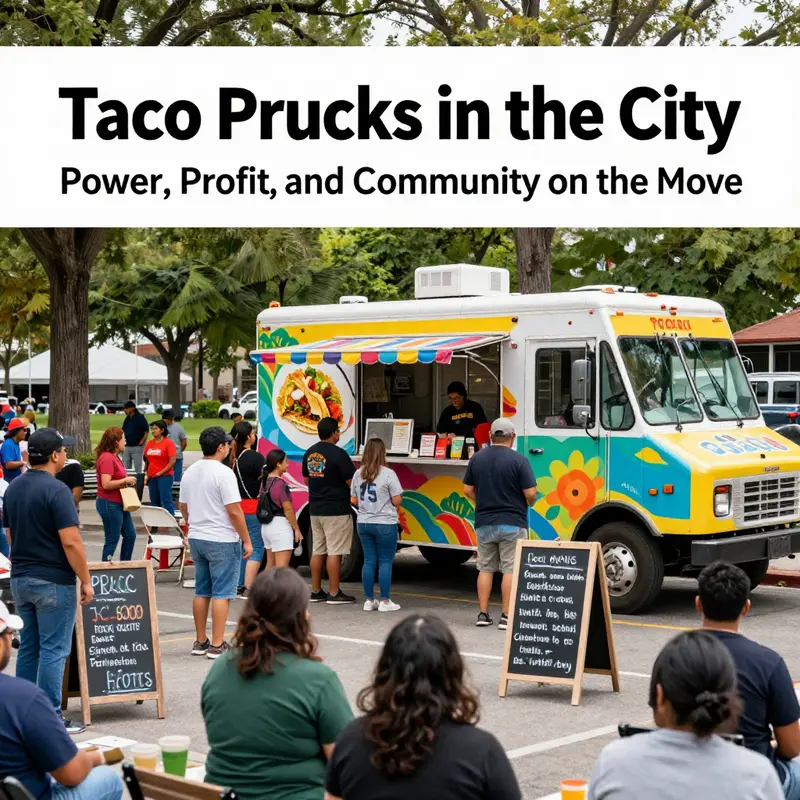
The taco truck is more than a mobile kitchen; it is a conduit for taste, memory, and movement. Across neighborhoods that rarely see a new storefront brought to life by a single proprietor, these rolling eateries convert asphalt and air into spaces of shared experience. They turn corners into cultural gateways, where the scent of roasted peppers, cumin, garlic, and lime can momentarily erase barriers of language and class. In this sense, the taco truck emerges not only as a venue for nourishment but as a social engine that reshapes who belongs in the city, how communities gather, and what counts as accessible, authentic food.
To understand the societal impact of taco trucks, it helps to trace their role as markers of immigrant entrepreneurship and cultural transmission. They arrive with a set of recipes, memories, and practical know-how handed down through generations or learned in the crucible of new urban realities. The truck becomes a portable classroom where a family’s culinary traditions are adapted to the demands of a street economy: lean hours, quick turnover, predictable costs, and the need to keep menus simple enough to guarantee consistency across a busy shift. In the process, these cooks transform a personal story into a shared public ritual—the moment a line forms, a tortilla softens on a grill, and a voice inside the truck offers both nourishment and welcome. This is how food becomes a language of welcome and resilience, spoken across a spectrum of languages, accents, and neighborhoods.
The public value of these kitchens is not merely in the dishes they offer but in the accessibility they create. In many urban centers, taco trucks appear in places historically underserved by full-service restaurants and grocery options. Neighborhoods labeled as food deserts often lack outlets that provide hearty, affordable meals with variety and cultural specificity. A rolling taquería disrupts that pattern by delivering high-quality, made-to-order options at a price point that suits working families, students, and shift workers. In this sense, the truck is not a luxury but a practical answer to structural gaps in the urban food landscape. Its mobility allows it to respond to daily rhythms—appearing near schools during dismissal, near workplaces during lunch, and at community events in the evening—thus knitting disparate parts of a city into a more coherent daily ecosystem of food access.
This accessibility has deeper implications for social equity. When a neighborhood gains not just a business but a social space, it alters how residents perceive their own agency. The taco truck becomes a small but meaningful engine of economic stability for immigrant families and first- or second-generation entrepreneurs who may have faced barriers to entry in more formal retail settings. The act of selling food—an activity with tangible, immediate demand—offers a clear pathway to financial legitimacy, client relationships, and local visibility. It also builds social capital: vendors meet neighbors, form informal networks with other local businesses, and become familiar interlocutors in the political and cultural life of the district. In this sense, the taco truck helps recast the city as a place where small-scale, direct-to-consumer enterprise can coexist with larger commercial ecosystems rather than be subsumed by them.
The cultural significance of taco trucks extends far beyond the mere replication of a familiar dish. They carry regional varieties, from Sonoran-style preparations to Oaxacan-influenced fillings, reflecting a geography of Mexican cuisine that travels as people move. In cities with multiple immigrant communities, trucks multiply the layers of culinary identity on public streets, turning sidewalks into open-air archives of memory and exchange. People who once had little opportunity to see themselves represented in the broader food market suddenly find their flavors validated in public spaces. This culinary visibility matters: it changes how residents narrate the city to themselves and to outsiders, expanding the sense that urban culture is not monolithic but plural, adaptable, and evolving.
Policy environments and city practices have played a substantial role in shaping how taco trucks integrate into the urban fabric. In some places, policymakers have recognized the value of street vending as a source of economic vitality and cultural vibrancy. Regulations that ease licensing, reduce barriers for new vendors, and streamline permit processes can help taco truck operators formalize their businesses without erasing the spontaneity that makes street food appealing. When cities design frameworks that balance safety standards with entrepreneurial flexibility, they often unlock a broader ecosystem of vendors—food marketers, farmers, and allies who help sustain diverse menus and sources of supply. The impact of these regulatory shifts can be seen in how taco trucks are increasingly woven into formal food hubs and sanctioned festival circuits. In cities where street vendors have become part of the urban fabric, events such as curated street-food gatherings act as cultural festivals that welcome communities to sample disparate regional flavors while also providing a platform for bargaining and mutual aid among vendors. This is where the line between street culture and organized civic life begins to blur, and the taco truck sits at that intersection, both a product and a symbol of urban transformation.
The conversation around these mobile kitchens, however, is not free of tension. The presence of taco trucks can raise questions about gentrification, competition, and cultural ownership. Neighbors who have long depended on a particular neighborhood for affordable meals may worry that vibrant new food scenes could displace existing businesses or alter the character of the street. In some debates, the debate becomes a proxy for broader questions about inclusion and belonging in the city. Advocates argue that taco trucks democratize access to delicious food, allow immigrant families to achieve financial stability, and diversify the urban economy. Critics worry about the effects on established restaurants and small retailers. The reality often lies somewhere in between: a city can benefit from the energy and cultural exchange that trucks bring while still protecting the interests of long-standing local businesses and residents who contribute to the neighborhood’s character.
Within this complex social landscape, taco trucks have also become venues for cross-cultural exchange and community engagement. They serve as informal gathering spaces where people from different backgrounds exchange stories over shared plates. In some urban hubs, organizers have circled food trucks into larger social programs—educational initiatives, youth mentorship, and neighborhood improvement projects—creating partnerships that use food as a bridge to address broader concerns such as literacy, health, and economic opportunity. Off the Grid-style gatherings and other curated street-food events in cities like San Francisco have helped integrate street vendors into recognized cultural economies, transforming outdoor dining into community-building platforms. These spaces encourage dialogue across generations and cultures, enabling cooks to share not only recipes but methods, techniques, and regional histories embedded in each bite. The result is a public sphere that grows more expansive, more inclusive, and more attuned to the city’s evolving identity.
That evolution reflects a wider trend in urban life: the street as a laboratory for inclusion. When a taco truck parks near a school or a transit hub, it does more than feed commuters; it validates a form of expertise that often operates outside traditional culinary institutions. The vendors learn to navigate permits, health codes, and supply chains while preserving the integrity of their menus. In doing so, they teach a broader audience how to negotiate risk, build resilience, and sustain a livelihood without losing sight of their cultural roots. The sensory experience—the crack of a fresh tortilla, the simmer of a pot, the sudden brightness of a squeezed lime—becomes a shared vocabulary through which people learn to recognize value, trust, and generosity in everyday life. This is the social contract embedded in the taco truck: a promise that food can be both a localized act of care and a form of public diplomacy, a small-scale practice that quietly enlarges the civic space for underrepresented communities.
Of course, the narrative is not uniform. In different cities, the receptivity of residents, the framework of regulations, and the strength of immigrant networks create a spectrum of outcomes. In some places, taco trucks anchor new food hubs that highlight regional diversity and support coordinated labor and supply chains. In others, they appear as sporadic, episodic presences that animate vacant corners and bring color to otherwise underused streets. Yet across these variations, a common thread remains: the taco truck embodies a model of urban entrepreneurship that is resilient, flexible, and outward-looking. It invites residents to participate in a shared food culture without demanding a fixed, exclusive place in the market. It also invites policymakers to reimagine the city’s edge—where sidewalks become dining rooms, where the street is a venue for social experimentation, and where communities have tangible opportunities to shape the spaces they inhabit.
As cities continue to grapple with questions of equity, inclusion, and belonging, the taco truck stands as a practical example of how food can mediate power, access, and identity. It reveals that culinary practice is not merely about taste; it is about space, voice, and opportunity. If the future of urban life includes more diverse voices at the table, taco trucks will likely be among the first to remind us that mobility and adaptability can translate into social resilience. The trucks travel; the communities they touch stay and grow more interconnected. In this sense, the modern taco truck is less a temporary fixture than a lasting contribution to city life—a mobile, edible reminder that equity can begin with a simple plate of warm, flavor-rich tortillas offered to a neighbor, a friend, or a passerby who happens to be hungry at the right moment.
For readers exploring how street-level entrepreneurship reshapes public space and social equity, the broader arc is clear. The taco truck offers both a mirror and a map: a mirror of who we are, what we value, and how we share nourishment; a map of where we might go together when urban economies embrace diverse vendors as legitimate, valued, and essential players in the life of the city. The lesson is not that food justice can be solved by placing more trucks on more corners, but that when cities design toward inclusion—protecting safe, legal operation while elevating community collaboration—the street can become a stage for a more equitable, richer, and more resilient urban culture. In this sense, the taco truck is a low-profile but high-impact instrument of cultural expression and social justice, quietly reshaping how people see one another as they line up for a fast, delicious, and deeply meaningful meal.
As we consider the broader narrative around street food and its place in contemporary urban development, it becomes evident that the most successful tacos are not just about the fillings or the heat of the grill. They are about the social spaces those grills create. They are about the conversations that begin with a shared order and sometimes end in small acts of community care: a neighbor lending a few dollars to a new vendor starting out, a student sharing a recipe tip with a seasoned chef, a family inviting others to sample a dish that carries their story forward. The taco truck, then, is a portable stage where everyday life rehearses itself around hospitality, mobility, and a collective sense of belonging. It invites us to rethink how we measure a city’s success—not by the height of its towers or the speed of its transit, but by the richness of its street-level exchanges and the degree to which every resident can participate in the city’s evolving cuisine and cultural life.
To deepen this understanding, consider the way policy, community organizations, and small-business networks can collaborate to sustain this ecosystem. Supportive lending practices, streamlined licensing, communal procurement cooperatives, and shared kitchen spaces all contribute to the long-term viability of taco trucks as community assets rather than temporary curiosities. When these actors work together, they help ensure that a diverse range of vendors can thrive, maintain high standards of food safety, and invest in ongoing culinary innovation. In turn, this strengthens neighborhood economies and enriches the city’s culinary landscape, inviting newcomers to contribute their knowledge and heritage while inviting long-time residents to broaden their own palates and social networks. The result is a more dynamic, inclusive urban culture where the street itself becomes a classroom, a marketplace, and a commons—a place where flavor, memory, and equity intersect on every curbside encounter.
For readers who want to explore how the combination of culinary tradition and urban policy shapes street-level entrepreneurship, a broader literature on urban food cultures offers valuable perspectives. The Guardian’s reporting on the rise of taco trucks as a global phenomenon suggests that these mobile vendors are redefining what it means to eat well in a city, while also prompting discussions about labor, regulatory fairness, and cross-cultural exchange. Those looking for practical guidance on building sustainable, community-centered food ventures can also find useful insights in practitioner-focused discussions about sustainable practices for mobile food trucks, which emphasize safe operations, efficient supply chains, and responsible community engagement. This literature helps illuminate the ways in which a seemingly simple business can become a catalyst for social inclusion and neighborhood vitality, if given the chance to flourish within thoughtful, equitable city designs.
External resource: The Guardian’s exploration of how taco trucks are shaping urban food culture and social equity provides a comprehensive lens for situating these street kitchens within broader debates about migration, community resilience, and urban transformation. See https://www.theguardian.com/us-news/2025/dec/26/taco-trucks-urban-food-culture-social-equity for a detailed account of these dynamics.
In the spirit of continuous learning and shared care, communities and policymakers can draw on this evolving narrative to ensure that taco trucks remain accessible, culturally rich, and economically viable. The goal is not to romanticize the street at the expense of other venues, but to recognize the street as a potent platform for equity when supported by inclusive policies, strong community networks, and a commitment to celebrating the diverse flavors that cities have to offer. The taco truck, then, becomes a powerful emblem of what a city can be when its streets reflect the people who live, work, and dream there—a place where food, culture, and social justice travel together, one portable kitchen at a time.
Final thoughts
A taco truck is more than a portable meal; it is a dynamic mini-economy and a social connector. Its power system, kitchen equipment, and strategic routing enable rapid service to commuters and explorers alike while delivering consistent quality. The economics of costs, pricing, and market demand pressure the menu to stay relevant without sacrificing margins. Regulation and cultural exchange dictate where a truck can travel and how it can represent its origin, turning a simple cart into a conduit for migration, memory, and shared experience. Finally, the truck’s social imprint—its contribution to local food culture, equity in access, and the way it stitches together diverse communities—reveals the deeper role mobile food plays in urban life. Taken together, these strands show how a taco truck moves through the city as a resilient, adaptable, and inclusive engine of everyday culture.