
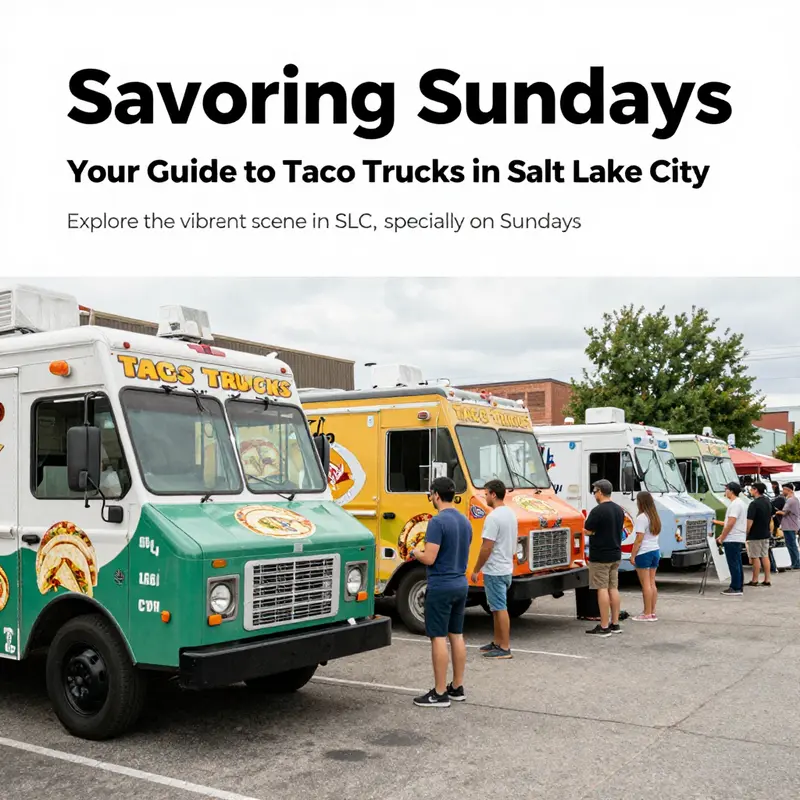
Taco trucks have become a beloved staple of Salt Lake City’s food landscape, embodying vibrant flavors and a sense of community. If you’re a city dweller or an outdoor enthusiast looking for a quick and satisfying meal on Sunday, you’re in luck! Many taco trucks operate on Sundays across popular areas like Downtown SLC, Sugar House, and Liberty Park. This article breaks down everything you need to know about taco truck availability, prime locations, vendor hours, and reliable resources to help you enjoy your taco truck experience to the fullest. Let’s dive into how you can get your taco fix this coming Sunday in Salt Lake City!
Sunday Taco Truck Patterns in Salt Lake City: Where and When to Find Them

Sunday taco truck patterns in Salt Lake City tend to be consistent enough that locals and visitors can plan around them. Across downtown, neighborhood hubs, and weekend hotspots, many taco trucks treat Sunday like any other day of the week. They often serve lunch through evening, and some even operate into late night. Still, availability varies by vendor. Building a sense of what to expect on a typical Sunday helps you budget time, avoid disappointment, and savor the best tacos SLC has to offer.
Salt Lake City’s taco truck scene clusters in predictable places. Downtown areas and commercial corridors draw steady foot traffic. Neighborhoods such as Sugar House and Liberty Park attract families and weekend strollers looking for easy, flavorful eats. The Gateway area and nearby plazas host rotating trucks, often creating mini food courts that feel lively on Sunday afternoons. You can expect to see mobile vendors lined along main streets near transit stops and parks. Many operators pick spots with high visibility and repeat customers. That pattern makes Sunday a reliable day to find several options in one place.
Yet the word reliable is important. Not every truck opens every Sunday. Food trucks are small businesses run by people with finite resources. Owners sometimes close for family commitments, rest, repairs, or to recover after a busy festival weekend. Seasonal changes also affect schedules. In winter months, some trucks reduce hours or pause service during severe weather. Conversely, warmer months bring robust Sunday lineups near outdoor events and farmers markets. When a truck appears at the same spot week after week, it often becomes a community fixture. But many vendors use flexible schedules, so checks before heading out save time.
A few practical habits make finding a Sunday taco truck easy. First, follow favorite trucks on social media. Most operators use platforms with real-time updates to announce their location and hours. A quick look at the morning post can tell you whether a truck plans to open, where it will be, and what special items are on the menu. Second, consult community-driven apps and review sites. These platforms aggregate vendor data and often display whether a truck is open now. They also list popular locations where trucks typically gather. Third, lean on local resources. The city maintains a list of permitted mobile food vendors, and local food truck associations share schedules and event notices. Combining these methods reduces guesswork and keeps your plans flexible.
On a typical Sunday, taco trucks concentrate around lunchtime and dinner windows. Expect peak activity from about 11 a.m. to 2 p.m. as people head out for midday meals. A second wave appears between 5 p.m. and 9 p.m., when families and nightshift workers look for quick, satisfying dinners. Some trucks that serve breakfast adjust to earlier hours. A handful operate late into the night, especially near nightlife districts. Remember that peak hours can shift on holidays, event days, and during city festivals. If you aim to avoid crowds, consider hitting a truck right after it opens or just before it closes.
Menu variety on Sundays mirrors weekday offerings, with staple tacos supported by rotating specials. Many trucks maintain consistent core items, such as grilled meat, slow-cooked fillings, and vegetarian options. On Sundays, vendors often feature family-style platters or weekly specials that encourage larger orders. Some trucks prepare special salsas or seasonal tortillas for weekend customers. Prices on Sunday rarely differ from weekday rates, though trucks at events or private gatherings may charge premium prices. If you want to try something rare, ask the server about items they reserve for weekend traffic.
Payment and service logistics are also worth noting. Most trucks accept cash and card. A growing number use mobile payment solutions, shoulder-to-shoulder with portable card readers. On busy Sundays, lines move quickly, but they can also build up during peak hours. If you prefer faster service, choose a less crowded location or check if a truck offers preordering through its social channels. Trucks serving park areas or event zones will sometimes set up table seating or partner with nearby businesses for additional seating. Bring small bills when possible to speed transactions and support vendors who appreciate cash flow.
Accessibility and transit matter on Sundays. Many taco trucks park near public transit stops to attract riders. Downtown and central neighborhoods are usually walkable, making it easy to find a truck without driving. Parking constraints matter too. Trucks often choose locations with curbside spots, loading zones, or approved lots. On event Sundays, temporary permits may allow trucks to set up in park spaces or plazas. If you drive, plan for limited parking and bring patience. Bike riders and pedestrians will find more options closer to public parks and community centers.
A Sunday visit to a taco truck can be more than just a meal. It often feels like a small community event. Regulars bring neighbors and friends. Truck owners exchange recipes and tips with customers. Local musicians and artists sometimes set up nearby. These informal gatherings add a cultural layer to Sunday meals and create a sense of belonging. If you enjoy the social aspect, arrive early, stay a while, and chat with your server. Many owners welcome feedback and enjoy sharing the story behind signature dishes.
Weather and city regulations shape Sunday operations. Mild weather boosts turnout, while heavy rain or snow can prompt temporary closures. City rules require permits and designated setups for mobile vendors, and trucks must comply with health inspections and signage rules. These regulations are enforced year-round and apply equally to Sundays. When a truck advertises an unexpected closure, the reason is often maintenance, health regulations, or permit-related issues. Staying aware of these factors helps set realistic expectations.
For visitors planning an exploratory Sunday, crafting a route helps. Start with areas known for clusters of trucks, like downtown plazas or neighborhood parks. Use a vendor’s social posts to confirm start times. Factor in transit or parking time, and keep a backup option if a favored truck is closed. If you want a specific flavor profile, contact trucks ahead or look for menu posts online. Weekend events can dramatically expand choices, so check event calendars if you want the fullest selection of trucks in one place.
Community resources make Sunday outings easier. Local associations and city pages publish permitted vendor lists and event calendars. These resources provide official information on where trucks can operate legally on Sundays. They also list special event permits that allow trucks to set up in nonstandard locations. A single city page offers dependable scheduling and permit information. It is a good reference before you step out for Sunday food truck hunting.
Sustainability and community practices are increasingly visible among Sunday operations. Many truck owners adopt eco-friendly habits, such as compostable packaging and responsible waste management. Some coordinate with local groups for compost pickup or recycling. These practices often appear in truck posts and help customers make informed choices. If sustainability matters to you, check truck profiles for their environmental commitments. This can influence where you choose to eat on a Sunday and supports vendors aligning with community values. For more on these practices, consult resources about sustainable practices for mobile food trucks.
Finally, plan for flexibility. Sundays are often less predictable than weekdays. A favorite truck might be open, or it might be taking a rare day off. The best approach is to blend advance checking with on-the-ground curiosity. Use social media updates, community platforms, and the city’s vendor listings to guide your plan. Then enjoy the spontaneity that comes with street food culture. With a little preparation, Sunday in Salt Lake City can deliver authentic, delicious tacos and a welcoming atmosphere that feels uniquely local.
For official listings and current schedules of permitted mobile food vendors in Salt Lake City, see: https://www.slc.gov/food-trucks
null

null
Sunday Stops: Why Taco Truck Hours in Salt Lake City Change and How to Find Them

Across Salt Lake City, Sundays bring a rhythm all their own to street food culture. Many taco trucks treat Sunday like any other busy day, parking where the crowds gather and serving hungry locals and visitors. Yet, beneath that visible activity lies a complicated set of choices and constraints that shape whether any particular truck will be open. Understanding those forces helps you predict availability, find the best windows to visit, and avoid disappointment when your favorite truck is unexpectedly closed.
Operators make scheduling decisions for simple, practical reasons. Sunday is attractive because foot traffic often increases. Families eat out, events run later into the weekend, and people have more leisure time to explore neighborhoods. For many vendors, this creates reliable demand for lunch and dinner shifts. Still, not every owner treats Sunday as a default workday. Some run a six-day schedule and rest on Sunday. Others rotate teams so staff get weekends free. When a truck is closed on Sunday, the reasons are usually predictable: staffing limits, family commitments, or the need to rest and restock after a busy week.
Seasonality and weather also shape Sunday hours. In summer, evenings stay warm and people linger outdoors, so trucks may extend hours into the late night. In winter, when snow or cold reduce outdoor dining, some vendors cut back or take seasonal breaks. Rain and unexpected storms can trigger last-minute closures. Trucks with small crews or limited shelter for customers are particularly vulnerable to sudden weather-driven schedule changes. If you plan to chase a specific menu item on a Sunday, consider the season and local forecast.
Regulatory and logistical factors matter too. Food trucks operate under permits and local rules that dictate where and when they can park. Popular public spaces may limit vendor access on certain days or require special permits for events. Private lot owners may offer prime Sunday locations near parks or markets, but those spots can also be reserved for festivals or private rentals on any given weekend. In such cases, vendors must choose where to be, sometimes prioritizing an event that brings bigger sales over a routine Sunday shift.
Special events and community calendars cause regular variation. Markets, concerts, sports events, and neighborhood gatherings draw crowds and create temporary hubs for mobile vendors. On event Sundays, many taco trucks concentrate at those locations. That makes it likely you’ll find taco options, but not always the same vendors. Conversely, a citywide festival can pull vendors away from their usual spots, leaving some neighborhoods quieter than usual.
Vendor size and business model influence Sunday decisions. Established operations with multiple staff members or several trucks can cover more days. They often offer consistent weekly schedules, including Sundays, because they have the staffing depth to rotate shifts. Smaller, independent operators must balance labor, supplies, and personal time. Some run irregular schedules by necessity, opening only on high-traffic days or when the owner is available. That flexibility is part of the charm of mobile food culture, but it also means reliability varies across vendors.
Supply chains and ingredient sourcing subtly shape the Sunday picture. Trucks that rely on daily fresh produce may need to coordinate deliveries and prep time. If a vendor sources perishable ingredients from a particular market that closes on Sunday, they might skip opening or offer a reduced menu. Conversely, trucks that plan ahead and secure weekend supplies can meet Sunday demand without issue. This interplay of procurement, prep and staff availability often determines whether a truck runs its full menu or a shortened version on Sunday.
Communication is the practical key for anyone planning a Sunday visit. Most vendors maintain active social media profiles or update location apps. These channels are where owners announce weekly schedules, pop-up appearances, and last-minute changes. A quick check before you leave saves time and ensures you find the truck when it’s actually serving. Many customers have turned to a habit of checking a vendor’s social feed or map listing the morning of their planned visit.
Technology has simplified discovery in ways that make weekends easier for customers. Real-time location services on mapping apps show a vendor’s current position and often list operating hours. Food truck aggregators and local directories compile schedules and user reviews. These tools help you identify which trucks favor Sunday shifts in certain neighborhoods. They also show patterns: which vendors reliably serve downtown or near parks on weekends, and which rotate across multiple neighborhoods.
Neighborhood dynamics create distinct Sunday scenes. Areas with parks and weekend foot traffic tend to host more trucks at midday. Downtown zones draw early crowds and late diners. Residential neighborhoods may see a single local favorite that parks in roughly the same place each Sunday. Park-adjacent areas and plazas are especially popular, because they attract families, dog walkers, and weekend strollers. If you want to plan a taco crawl, target those zones and time your visit for peak lunch or early evening.
Understanding a vendor’s rhythm helps you predict when they will be open. Many taco trucks concentrate on two main shifts: a lunch rush from late morning through mid-afternoon, and a dinner crowd from early evening into the night. On Sundays, lunch tends to be strong because people are out for brunch and family outings. Dinner shifts vary more, depending on events and weather. If a vendor runs both shifts during the week, it is more likely to run them on Sunday too.
Practical strategies make Sunday visits smoother. First, check the vendor’s most recent schedule posts or map listing. Second, allow for a flexible plan: have a primary target and a backup nearby. If a truck is closed, another vendor might be just a short walk away. Third, consider timing. Arriving early in a lunch window reduces the chance of a mid-shift sellout. Fourth, if you are planning to attend an event, review the event’s vendor list. That confirms whether your chosen truck will participate.
For truck owners and operators, Sunday scheduling is a balancing act. It demands careful staffing, reliable suppliers, and often a willingness to test new patterns. Owners who prioritize consistent Sunday presence usually invest in systems that support reliability. They coordinate deliveries, maintain backup staffing, and secure dependable parking spots. Those who choose to keep Sundays closed often do so to protect work-life balance or to consolidate energy for peak week days.
Customers can support consistent Sunday service in subtle ways. Frequenting a vendor on varied days, leaving clear feedback on listing platforms, and following social channels all contribute to a more predictable schedule. Vendors pay attention to demand signals. A regular influx of Sunday customers can encourage an owner to make that shift a staple.
An additional consideration is sustainability and operational efficiency. Many operators are adopting practices that reduce waste and streamline prep. Those changes can make it easier to run longer hours or more consistent days, including Sundays. If you care about the environmental choices of your favorite trucks, look for signs of sustainable practices in their operations and menus. For a deeper look at such efforts among mobile vendors, see this discussion of sustainable practices for mobile food trucks.
In short, Taco trucks in Salt Lake City commonly operate on Sundays, but it is not uniform. Expect variation across vendors, seasons, neighborhoods and special events. The most reliable way to know whether a specific truck will be open is to check the vendor’s real-time updates or mapping listings before you go. With a little planning and flexibility, Sundays can be one of the best days to explore the city’s mobile taco scene, enjoy diverse flavors, and support the small operators who bring them.
For official, up-to-date information on permitted food trucks and their operating schedules, consult the city’s food truck resources: https://www.slc.gov/food-trucks
Finding Sunday Taco Trucks in SLC: Practical Tools and Real-World Tips

Sunday taco trucks in Salt Lake City are usually open, but knowing which ones and when requires a little strategy. Many vendors choose Sunday as a reliable sales day. They often serve lunch and early evening crowds. Still, hours vary by truck. Some start around late morning. Others open after midday. A few close earlier than weekday hours. Irregular schedules are common for smaller operators. Weekend-only vendors sometimes appear for events, then disappear for a weekday. That uncertainty makes verification essential before you head out.
Locals rely on a mix of official resources, community updates, and direct vendor posts to confirm who is open. The city maintains information about permitted mobile food vendors. That list shows who is licensed, and where trucks may legally operate. It is a good first check when you want legitimacy and general scheduling. But licensing data rarely reflects last-minute changes. That is why community-driven trackers fill the gap. These platforms compile real-time locations, hours, and notes from customers and vendors alike. They capture pop-ups, special weekend hours, and temporary closures.
Social media has become the instant confirmation tool. Most truck operators post daily updates. They announce delays, route changes, and special weekend menus. A quick glance at a truck’s latest posts tells you whether it plans to be on a regular route, at a private event, or taking the day off. Stories and short posts are especially useful. Vendors often post photos of their setup, a menu, or a short message that confirms arrival time. If a truck has a reputation for consistency, past posts create predictable patterns you can rely on.
Mobile apps and mapping services add another layer of convenience. Searchable lists let you filter by cuisine, distance, and open-now status. Some apps include ratings and recent user comments. Those comments often mention wait times and whether the truck was still serving at closing. Real-time check-ins from customers can confirm operation even when a vendor forgets to post public updates. Use those reports as a cross-check, especially on Sundays when schedules shift for staffing or festivals.
Events and locations shape Sunday availability. Farmers markets, parks, and weekend festivals draw trucks intentionally. Downtown gatherings and neighborhood markets often include rotating vendors. Trucks that focus on event customers plan their Sunday routes to match those crowds. If you know where a festival is scheduled, expect trucks nearby. Conversely, trucks that stick to regular parking spots may not appear at events that pull them away.
Weather and season matter. Rain, wind, or extreme cold can change plans fast. Vendors sometimes shorten hours or skip a day when conditions reduce foot traffic or create unsafe conditions. Summer Sundays usually see longer hours. People dine later and the demand supports extended service. Winter days, especially cold mornings, push start times later and end service earlier. Holidays also change behavior. Long weekends and special calendar dates generate either heavy demand or unexpected closures, depending on the vendor.
Private bookings reduce public availability. Trucks often accept catering work for private parties and corporate events. When booked for a private function, a truck may not serve its usual public spot that day. That can be the reason a favorite truck is absent. If you find a truck missing from its usual location, check for a note about a private event. Vendors usually announce bookings in advance, especially when they will serve private clients instead of the public.
Permits, parking rules, and local restrictions influence where trucks can park on Sundays. Cities sometimes allow trucks in specific zones only. Permits may require trucks to leave certain neighborhoods during defined hours. On Sundays, rules may relax in park areas but tighten in residential zones. Larger public events can temporarily alter permitted locations. Understanding this framework helps explain sudden shifts in where trucks show up.
Planning a taco run on a Sunday becomes straightforward when you combine a few quick checks. First, glance at a trusted community tracker for real-time locations. Then, review the truck’s recent social posts for any last-minute notes. Finally, consult a mapping app if you want directions and an estimate of how busy a spot might be. This three-step approach minimizes surprises and saves time.
If you prefer a hands-on approach, call ahead. A brief phone call gives direct confirmation of hours, menu items, and any expected changes. Phones sometimes provide the clearest answer when posts are sparse. Many vendors use phone numbers for private bookings and customer questions, so calling doubles as a way to support their business.
There are also smart habits that make Sunday visits more satisfying. Arrive during the first hour of service. Trucks often sell out of popular items later in the day. If a vendor posts special weekend items, try them early. Bring cash and digital payment methods. Most vendors accept cards, but smaller trucks might prefer cash. Bring small bills to speed the line, and consider bringing a companion to share different tacos without waiting too long.
Respecting community etiquette helps preserve truck culture. Trucks rely on repeat local customers and word-of-mouth. Follow local guidelines for lines and seating. If a truck parks in a shared lot, avoid blocking driveways or private spots. Keep dogs leashed and dispose of trash properly. These small actions keep vendors welcome at their favorite locations and encourage them to return on Sundays.
For newcomers, understanding how to read vendor posts saves time. Look for definitive language. Phrases like “serving from noon” mean the truck plans to be available from that time. Words such as “maybe” or “might” indicate uncertainty. If a post announces a new location, expect a short grace period while the vendor settles in. Follow-up posts often confirm that service has started.
If you plan a group outing, message the truck directly. Let them know your party size and arrival window. Some vendors can prepare larger orders with a short notice. Others can provide a rough wait-time estimate. This improves the experience for everyone and reduces strain on the crew during peak Sunday hours.
Sustainability practices are also part of how many trucks operate. Vendors use seasonal ingredients and reduce waste where possible. Truck operators that highlight these practices often post about sourcing, packaging, and recycling. If sustainability matters to you, look for those notes in vendor profiles and posts. For broader ideas about eco-friendly operations, consult resources focused on mobile food sustainability. One practical source on this topic explains how trucks reduce waste and operate responsibly. (See the linked resource below for more.)
Finally, remember that community recommendations remain powerful. A personal tip from a friend can lead you to a truck that rarely appears on trackers but reliably serves excellent food on Sundays. Locals who follow vendors closely develop informal calendars of favorite trucks and their likely appearance times. Building a small network of such tips makes Sunday planning even easier.
Use these practices together and you will find Sunday taco trucks in Salt Lake City with confidence. Check a real-time tracker, scan the vendor’s social posts, use mapping or apps for directions, and call when in doubt. Respect local rules and the truck crew’s needs, and you will enjoy more dependable service and better food. For a live, community-driven view of truck locations and hours in Salt Lake City, refer to the tracker maintained by local contributors and vendors at the link below.
External resource for real-time truck locations and hours:
https://www.tacotrucksofutah.com
Internal resource on eco-friendly mobile food practices: sustainable practices for mobile food trucks
Final thoughts
Taco trucks in Salt Lake City provide a tantalizing option for your Sunday dining desires. With many vendors operating regularly, especially in popular areas, your next taco fix is just a short trip away. Be sure to check each vendor’s schedule and explore the recommended resources for real-time updates. Happy taco hunting this Sunday!