
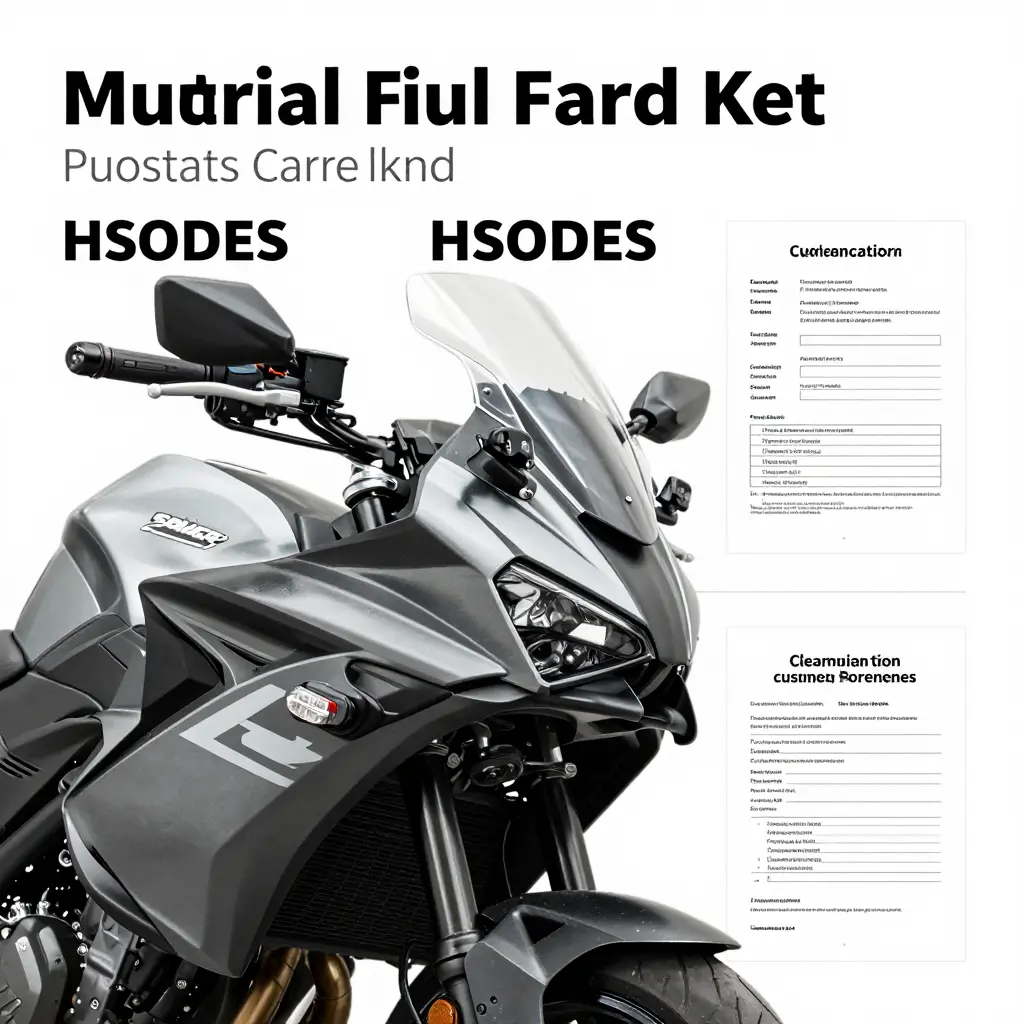
Customs classification for a fairing kit means choosing the Harmonized System (HS) code that describes a set of motorcycle body panels and mounting hardware as it crosses a border. That code sets the import duty rate and affects how long customs holds the shipment. For importers, brokers, and logistics managers, it is a cost decision, not just a filing step.
Two importers can ship nearly identical fairing kits and pay different duty rates because one filed the goods as a motorcycle part while the other filed them as generic plastic. Each HS code carries its own tariff line, inspection profile, and paperwork, so a wrong choice raises landed cost and can stall a shipment for days. Getting it right the first time protects both margin and delivery schedule.
This article lays out the realistic code options for motorcycle fairing kits, the duty each one carries, and the clearance timeline that follows. It gives you a way to make the classification call before the goods move.
What Is an HS Code, and Why Fairing Kits Are Hard to Classify
An HS code is the number customs uses to identify a product. The World Customs Organization maintains the system behind it. The Harmonized System gives every traded good a shared name, so an officer in one country reads a product the same way as an officer in another. The code then drives duty rates, paperwork, and clearance speed.
The 6-Digit Global Standard, Plus Country Digits
Every HS code starts with six digits that mean the same thing worldwide.
| Digits | Level | What It Names |
|---|---|---|
| 1-2 | Chapter | Broad product family |
| 3-4 | Heading | Narrower group of goods |
| 5-6 | Subheading | Specific type of item |
Those first six digits are fixed. Countries add extra digits, called a suffix or national tariff line. The US uses 10 digits; the EU uses 8 under the Combined Nomenclature and 10 for TARIC. Because the suffix is national, two buyers of the same item can end up paying different duties.
Why One Motorcycle Fairing Kit Fits Many Headings
A fairing kit is an assembly, not a single material. It usually mixes molded plastic panels, metal brackets, and painted surfaces, and each material points toward a different heading on its own:
- Plastic body panels suggest heading 3926, other articles of plastics.
- Metal brackets and fasteners can point to base-metal headings.
- Painted finishes raise questions about declared value and surface coverage.
That is why brokers rarely quote a code from a photo. A kit entered as loose plastic panels invites a plastics classification, while the same kit described as a dedicated part for a named motorcycle belongs in 8714.10. When a mixed set has no single heading that covers everything, customs falls back on the General Interpretative Rules and asks which component gives the goods their “essential character.” Material mix, function, and packaging decide the description, and the description decides the duty, inspection risk, and delay.
Candidate HS Codes for a Motorcycle Fairing Kit
The table below lists the headings that come up when a fairing kit is classified, and what each one actually covers. Duty figures are US general rates; other markets differ. For how these charges feed equipment budgets, see managing equipment costs and tariffs in trucking.
| HS Heading/Subheading | What It Actually Covers | US General Duty | Documentation Burden | Clearance Risk Level |
|---|---|---|---|---|
| 8714.10 | Parts and accessories of motorcycles, including mopeds. Fairings fall under the statistical line 8714.10.0050, “Other.” | Free | Low | Low |
| 3926.90 | Other articles of plastics, not elsewhere specified. The fallback when a kit is entered as loose plastic panels instead of a motorcycle part. | 5.3% | Low | Moderate |
| 8708.29 | Other parts and accessories of bodies for motor vehicles of headings 8701-8705 (cars, trucks, buses). Does not cover motorcycles. | 2.5% | Moderate | High if filed for a motorcycle |
| 8707.90 | Bodies, including cabs, for motor vehicles of headings 8701-8705. Motorcycles have no separate body heading. | 4% | Moderate – High | High if filed for a motorcycle |
| 8708.99 | Other parts and accessories of motor vehicles of headings 8701-8705. Again, not a motorcycle heading. | Varies by line | High | High if filed for a motorcycle |
Read this as a map of errors, not a menu. A fairing kit made for a motorcycle belongs in 8714.10, where the US general rate is Free. Filing it as generic plastic (3926.90) means 5.3%. Filing it under 8707 or 8708, which cover bodies and body parts of cars, trucks, and buses, is simply wrong for a motorcycle and invites reclassification. Paint does not create a separate heading; the finish affects declared value, not the chapter.
Duty figures are illustrative and vary by country, trade agreement, and origin. Confirm the current tariff schedule for your destination before you file.
How HS Code Choice Changes the Duty Payable
The heading you file sets the duty you pay. Ad valorem duty is charged as a percentage of the goods’ value, not a flat fee per unit. That is why a higher rate multiplies against the invoice value, and why a 5.3% rate versus a Free rate is the difference between paying duty and not paying it on the same shipment.
Preferential trade agreements add another variable. If a fairing kit qualifies under a free trade agreement such as USMCA, the duty may be reduced or eliminated, but only if the goods meet the origin rules and you hold the documentation. The same product from a non-qualifying source pays the full rate.
Anti-dumping and countervailing duty orders are the third exposure. Some steel and auto-parts lines sit inside AD/CVD scopes, which stack additional duties on top of the standard rate. A kit classified into a named scope inherits that liability, sometimes retroactively.
Classification is a legal declaration, and the tariff schedule rewards precision. A broad heading may look convenient, but it often carries a higher rate or a dumping risk that a narrower, accurate subheading avoids. Brokers who map products line by line land lower, cleaner costs. For a wider view of how these charges reshape margins, see how tariffs affect trucking equipment costs.
The pricing implication is direct. Before you quote, confirm the code, verify the rate, and build the landed cost from duty, brokerage, and any AD/CVD margin. Price from that figure, not the ex-works number, so the margin survives customs.
What Determines the Right Code for a Fairing Kit
Classification starts before the entry is filed. These are the factors customs officers and auditors actually weigh when they decide which heading the goods belong to.
-
Primary material composition. A kit molded mostly from ABS lands differently from one built around aluminum brackets, because officers focus on the material that gives the goods their essential character. Record the weight and value of every component before you self-classify.
-
Whether the kit is a complete assembly or separate parts. A finished fairing set is usually treated as one article, while loose panels, screws, and mounting hardware can each fall under their own codes. Splitting a kit into unassembled parts changes the duty rate and adds line items to the entry.
-
Painted versus unpainted finish. Paint and primer add value, and the commercial invoice should state the finish stage. A painted fairing is still a fairing under 8714.10; the finish affects declared value rather than the heading. Unpainted panels are not raw plastic articles as long as they are identifiable motorcycle fairing parts.
-
Intended motorcycle use. Fairings designed for a specific motorcycle model are parts of that vehicle rather than generic plastic items. A clear product description is what lets customs match the kit to the right motorcycle-parts heading.
-
Packaging method. Retail-ready packaging for a complete kit supports a single-article classification; loose bulk packing suggests separate parts.
-
Country-specific rulings. The US, EU, and Canadian authorities each publish their own binding rulings and explanatory notes, so the same kit can be treated differently in each market. Check the rulings for every market where you import or export.
-
Essential character rules. For a mixed set that no single heading covers, the General Interpretative Rules require a judgment about which component gives the goods their essential character. That judgment drives the heading and the duty.
-
Supporting documentation and origin. Bills of material, technical drawings, and country-of-origin certificates back up your chosen code if customs questions it. Weak paperwork is the most common reason a correct classification still gets delayed at the border.
Material, finish, assembly state, and intended use all feed the classification, and misreading one of them can stall a shipment or inflate landed costs. Brokers who document each factor before filing move freight faster and avoid costly reclassifications. Reviewing how these cross-border regulatory issues play out in practice keeps your entries accurate.
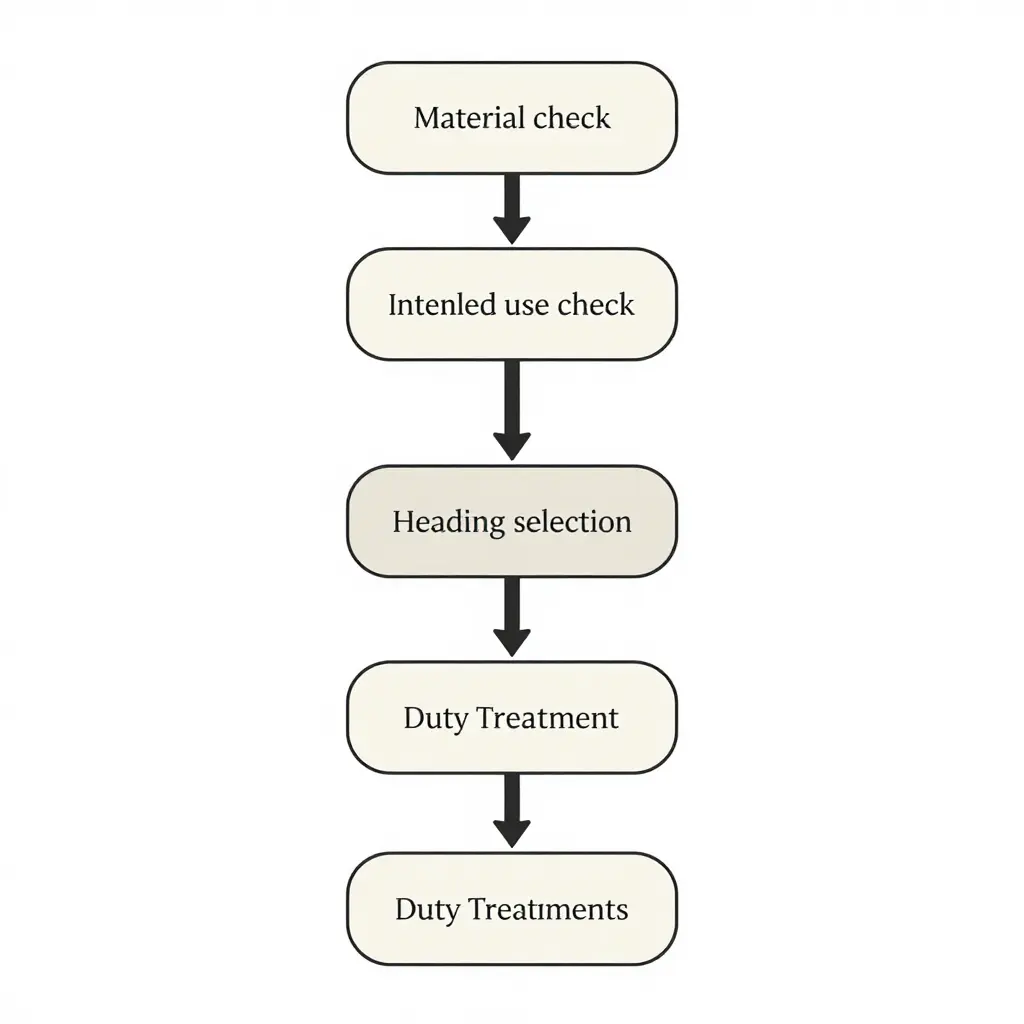
This schematic maps the classification workflow, tracing a fairing kit from material and intended-use checks through heading selection to the final confirmation of duty treatment.
Documentation and Total Cost Impact
The code you declare is only as strong as the paperwork behind it. When customs questions a classification, documented files win the argument; thin ones cost money.
Three documents do most of the work. A commercial invoice should describe the kit precisely: material composition, function, dimensions, unit value, and country of origin. Vague labels such as “truck parts” invite reclassification. A supplier material declaration confirms whether the kit is molded ABS, fiberglass, or metal, which is the largest single factor in code selection. A binding ruling request gets you an advance written decision from customs before shipment, which locks in the code and removes the guesswork.
Incomplete documentation costs twice. Officials may reclassify the goods into a higher-rate category and assess duty plus penalties, and clearance slows while the shipment sits in inspection, storage, and demurrage.
To size the exposure, add two figures. Extra duty equals the corrected rate minus your filed rate, multiplied by declared value. Delay cost equals demurrage plus warehousing plus idle-asset revenue lost per day, times the number of hold days. One reclassification can quietly erase a quarter’s margin.
For most importers, the cheapest insurance is a precise invoice and a ruling on file. Managing equipment costs and tariffs in trucking shows where duty fits into the total cost model, and understanding cross-border regulatory issues in trucking helps you anticipate hold patterns before they disrupt delivery schedules.
Frequently Asked Questions
Which HS code applies to a motorcycle fairing kit?
Motorcycle fairings and most other motorcycle parts are classified under heading 8714, and specifically under subheading 8714.10, “Of motorcycles (including mopeds),” in the current Harmonized System. In the US, fairings fall under statistical line 8714.10.0050, “Other,” and the general duty rate is Free. Older schedules used 8714.11 and 8714.19 for motorcycle saddles and other parts; those were merged into 8714.10, so a reference to 8714.19 is out of date. National suffixes vary, so confirm the final code with your local customs authority.
Does paint change the classification?
Not at the heading level. Paint is a finishing treatment, and a painted fairing is still a fairing under 8714.10. Paint does raise the declared value, and a broker may need to document the finishing process, but it does not move the goods into a plastics heading. Unpainted panels are not raw plastic articles either, as long as they are identifiable motorcycle fairing parts.
How long does customs clearance take with the wrong code?
A wrong HS code can add days or weeks. Customs may flag the shipment for verification, request extra documentation, or hold it while the classification is corrected. Delays typically range from two business days for a quick fix to more than two weeks when penalties or formal rulings are involved. A correct code keeps clearance on standard timelines.
Can you request a binding ruling?
Yes. Importers can request a binding ruling from CBP in the United States or the equivalent agency elsewhere, submitting a written description, sample details, and a proposed classification. The ruling is legally binding on that transaction and reduces future disputes. CBP’s target is roughly 30 to 120 days depending on whether the request is expedited, so file early for recurring imports.
How do brokers reduce classification risk?
Brokers reduce risk by reviewing product specs, referencing the Harmonized Tariff Schedule, and confirming codes before filing. They keep databases of prior rulings and flag ambiguous items for a binding decision. A reliable broker also documents the reasoning behind a classification, creating an audit trail that holds up under review. Applying compliance best practices for cross-border trucking regulations strengthens that protection.
Conclusion
The HS code on a fairing kit decides two things at once: the duty percentage applied to its value and how quickly it clears customs. That makes classification a decision for before shipping, not after. A code confirmed in advance keeps costs predictable; a code debated at the border invites avoidable delays and adjustments.
Three points are worth carrying into the next purchase order. The code sets the duty rate, because tariff schedules attach specific percentages to specific headings. The same code affects clearance time, because vague or inconsistent entries draw inspection and documentation requests. And timing decides the cost, because verifying a code before dispatch is cheap while correcting it after arrival is slow, costly, and sometimes irreversible. Put the code, the reasoning, and the supporting documents in the order file before the goods move.
For buyers who want a supplier that treats classification as a pre-shipment step, summitfairings.com sells motorcycle fairings for export. The site lists more than 3,000 styles covering most motorcycle models, advertises prices 10-40% below other sites, and says it answers inquiries within six hours. For importers who want predictable duty exposure and faster clearance, those are worth checking.
Related Reading
For readers who want more on the customs, tariff, and regulatory forces behind trucking and equipment costs, these articles cover import duty management, cross-border compliance, and North American freight trends in more detail.
- How a 25 percent tariff reshapes heavy truck pricing and fleet procurement decisions
- Volvo tariff surcharge strategies for truck fleet and equipment buyers
- Best practices for surviving complex cross-border trucking compliance and regulation
- North America trucking trends and 2025 outlook analysis
- Import duty management fundamentals for customs brokers and logistics teams